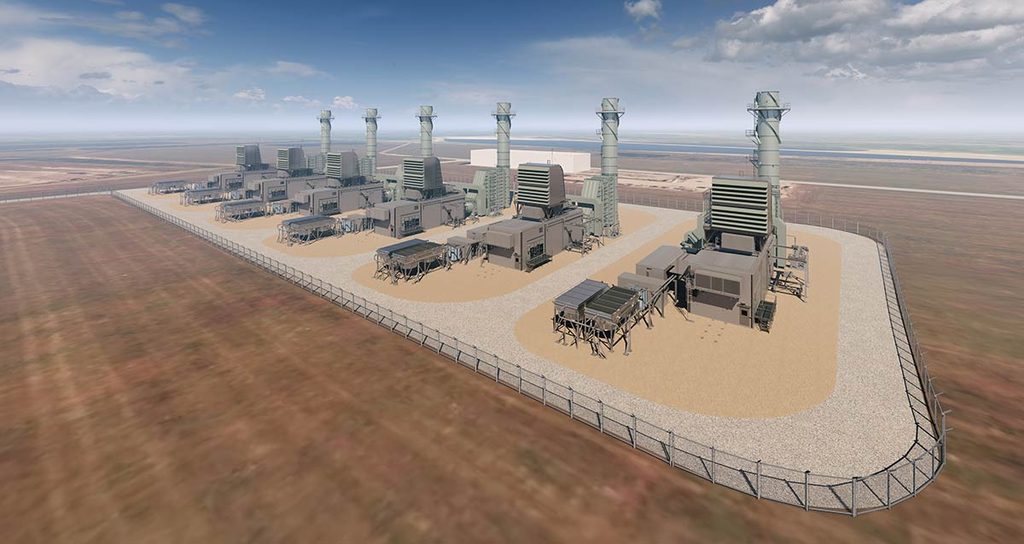
Faced with higher demand and reserve requirements, Western Farmers Electric Cooperative is adding 400 megawatts of natural gas to its coal-based Hugo Plant site to help ensure reliability and keep its energy costs competitive well into the future.
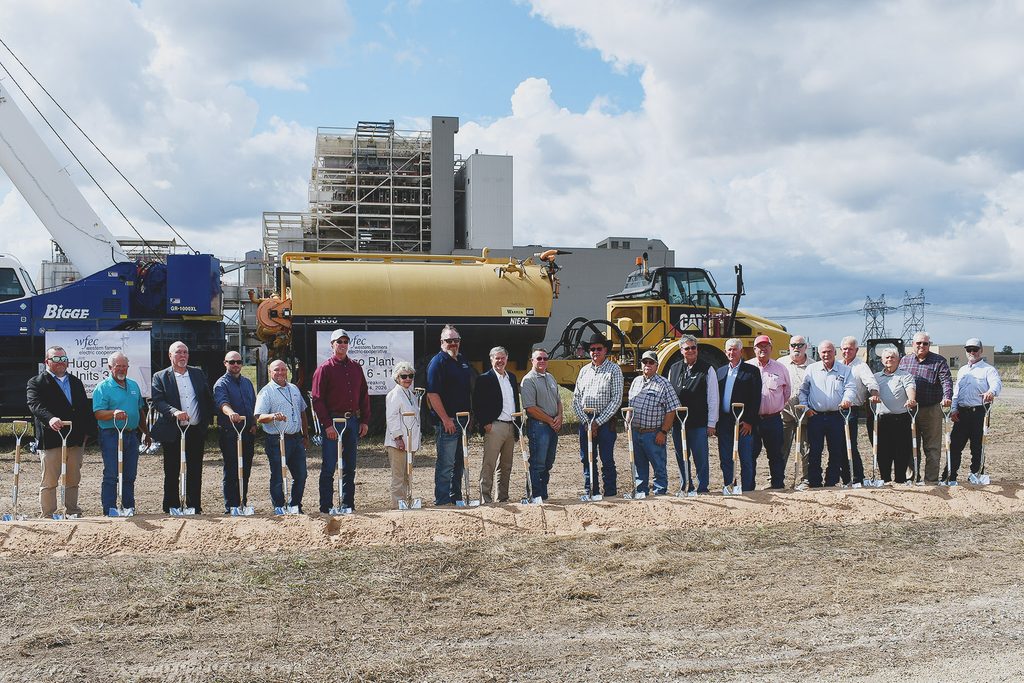
The Anadarko, Oklahoma-based generation and transmission co-op broke ground Oct. 14 on the $1 billion nine-unit gas project in the rural southeastern part of the state. Construction begins in January 2027 on the roughly 30-month build.
“This is the most inexpensive, long-term reliable solution that we could find,” said WFEC CEO Gary Roulet. “We’re trying not to build for the next year or two, but to build for the long term—that keeps us reliable and low cost for a long period of time.”
The G&T provides electricity to 17 distribution co-ops and the Altus Air Force Base in Oklahoma plus four co-ops in New Mexico, which includes the Permian Basin, the busiest oil and gas field in the country and the root of WFEC’s accelerating load growth.
At the same time, the co-op has greater winter reserve margins to meet for the Southwest Power Pool. The regional transmission organization sharply increased the winter generation amounts utilities must maintain during winter peak times. The SPP rules essentially doubled the winter reserve generation for WFEC to 36%.
That’s where the G&T sees the new gas units and its 43-mile pipeline playing a strategic role.
About 35% of the energy WFEC sells to its members through the SPP Market comes from wind and solar. The gas units will support the G&T’s participation in the SPP by helping balance these intermittent renewable resources with schedulable fossil fuel resources.
“These units fit in a highly saturated wind and solar market,” said Roulet. “They’re quick-start units that can get to full output in less than 10 minutes.”
WFEC’s 400-MW coal-based Hugo Plant site is ideal for the units because it already has plenty of land, water rights and access to extra-high-voltage power lines. The co-op selected a pipeline company to construct and deliver a natural gas connection with multiple gas sources from Oklahoma and Texas and enough firm pipeline capacity to support another 1,000 MW at the site.
“The pipeline being built has a lot more security and a lot more flexibility in terms of changing the way the gas flows into it,” said Roulet. “Looking way into the future, we’re contracting firm delivery natural gas pipeline capability to accommodate future units that we might put there.”
The project will require a workforce up to 600 during the next two years, providing an economic boost in the area.
“There will be a lot of money spent in the Hugo area for a while,” said Roulet. “The addition of these new natural gas units and natural gas pipeline will double the generation capacity at this location, utilize existing infrastructure, and provide additional reliable, affordable electricity for rural Oklahoma for the future.”
Cathy Cash is a staff writer for NRECA.