The Department of Energy must avoid delays to critical generation and transmission projects and preserve electric reliability and affordability as it implements a White House order to guard the bulk power sector against potential threats from foreign-made equipment, NRECA said Oct. 9.
In August, President Donald Trump declared a national emergency to secure the U.S. bulk power system, saying “certain foreign actors are increasingly creating and exploiting vulnerabilities” in that system.
While the executive order does not immediately require electric cooperatives to take any action, it directs DOE to develop a process for identifying and restricting installation of certain foreign-sourced bulk power system equipment that could pose national security risks. The order could also apply to previously purchased or installed bulk power sector equipment but exempts distribution equipment.
The DOE is gathering input from NRECA and other stakeholders as it develops that process and is expected to provide additional direction by the end of December. Until then, it remains unclear what equipment may be affected and whether utilities will be required to take any action.
Electric cooperatives support the White House’s goals of strengthening the security and resilience of the bulk power sector. But the order issued in August “could have significant impacts on billions of dollars of equipment” needed to meet unprecedented power demand growth, NRECA said in response to a DOE request for information.
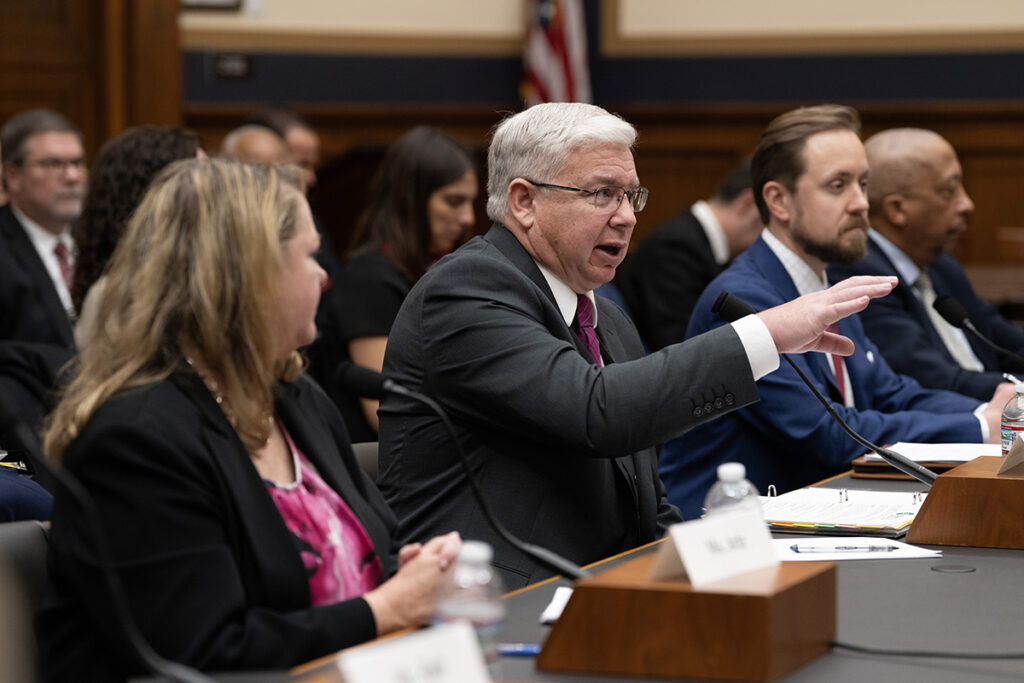
“The implementation of the [executive order] could have far-reaching implications for the availability, cost and deployment timelines of critical bulk-power-system equipment, with direct consequences for the administration’s efforts to expand domestic energy production, accelerate infrastructure development and meet growing electricity demand,” NRECA Regulatory Affairs Director John Ransom said.
NRECA urged the DOE to “carefully account for the realities of utility infrastructure planning and procurement,” noting that major transmission and generation equipment is often designed and ordered years in advance and co-ops already face lengthy lead times for critical equipment such as transformers, breakers and relays.
In a recent survey, generation and transmission co-ops anticipated at least $88 billion in total capital expenditures to meet the growing energy needs of their communities. This investment will support thousands of megawatts of new generation and transmission that could be delayed or result in billions of dollars in stranded costs if they are not allowed to move forward.
For existing infrastructure, large-scale replacement mandates could create substantial capital expenditures, engineering challenges, construction delays and reliability risks, NRECA added.
The association outlined several key considerations that the DOE should make when carrying out the order:
- Build upon the power sector and government’s existing cyber, physical and supply chain security programs and practices rather than create unnecessary requirements with limited additional security benefits.
- Recognize the scale of existing utility investments and protect generation, transmission and grid modernization projects already underway.
- Acknowledge the existing limitations on domestic manufacturing capacity and the related challenges they pose to cost and timelines for domestic energy projects.
- Provide clear federal guidance to co-ops on prohibited suppliers, technologies and transactions.
NRECA also requested additional opportunities for public review and comment of any proposed regulations or guidance tied to the White House’s order.
“NRECA and its member cooperatives look forward to continuing to work with DOE to develop an implementation framework that strengthens the security of the [bulk power system] while preserving the reliable and affordable electric service upon which rural America depends,” Ransom said.
Molly Christian is a staff writer for NRECA.