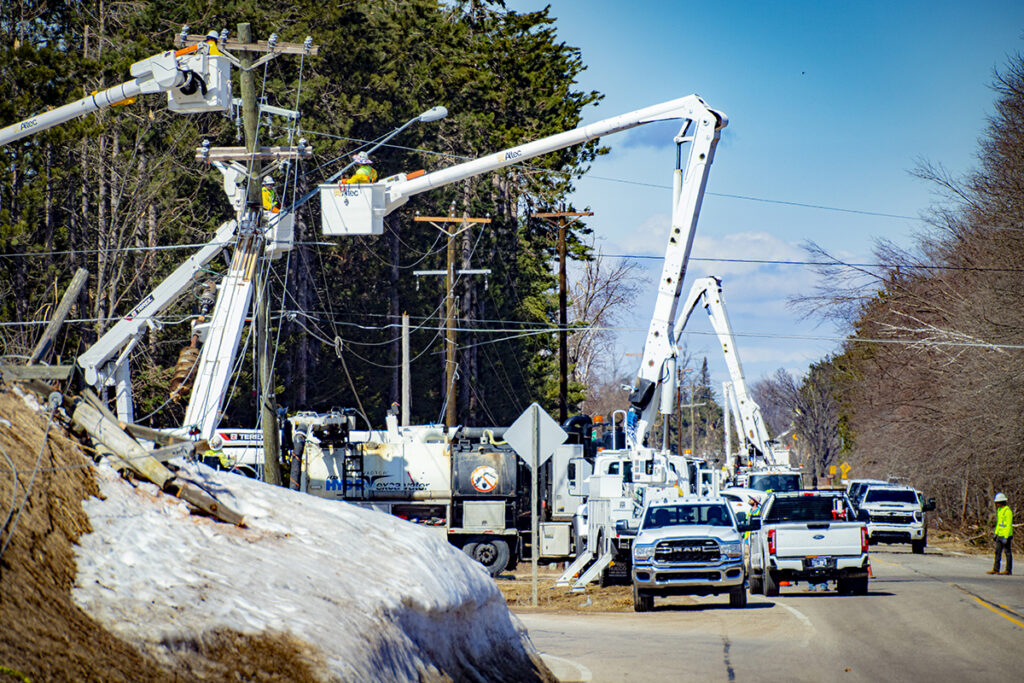
After months of advocacy by NRECA and Michigan electric cooperatives, the Federal Emergency Management Agency has made two co-ops in the state eligible to receive additional funding to cover restoration efforts for a massive March 2025 ice storm.
At the direction of President Donald Trump, FEMA recently approved the state of Michigan’s request for Category F funding under the agency’s public assistance program to cover permanent repairs to utility infrastructure from the historic storm. The decision enables eligible utilities to seek reimbursement for up to 75% of qualifying expenses.
Access to Category F public assistance could provide more federal support for both Great Lakes Energy and Presque Isle Electric & Gas Co-op, helping the co-ops to offset storm recovery costs, reduce pressure for future rate adjustments and harden their systems against future disasters.
“For co-ops, FEMA’s Public Assistance Category F is a lifeline; it’s the key that unlocks federal funding to permanently rebuild critical infrastructure after disasters,” NRECA Regulatory Affairs Director Kelli Phillips said. “NRECA advocates for this—and for smart FEMA policy that help keep recovery costs down to protect and strengthen the resilience of the communities our members serve.”
FEMA’s March 13 decision “is an important step for the electric cooperatives and communities still recovering from the devastating 2025 ice storm,” Michigan Electric Cooperative Association CEO John Kran said.
“This progress did not happen by accident. It reflects strong coordination among Michigan’s electric cooperatives, MECA, NRECA, elected officials, and co-op consumer-members who spoke up and helped keep attention on the need in northern Michigan. That partnership mattered.”
Kran said there is still more to learn about what funding will ultimately be approved and how long reimbursement will take, but “this decision is a meaningful step toward reducing the long-term financial impact of the storm on the cooperatives and the members they serve.”
In late March 2025, a multiday ice storm caused widespread outages across 13 northern Michigan counties. The storm knocked out power to nearly 100,000 customers of Boyne City-based GLE and Onaway-based PIE&G for periods of four to 20 days and forced the co-ops to rebuild major parts of their systems.
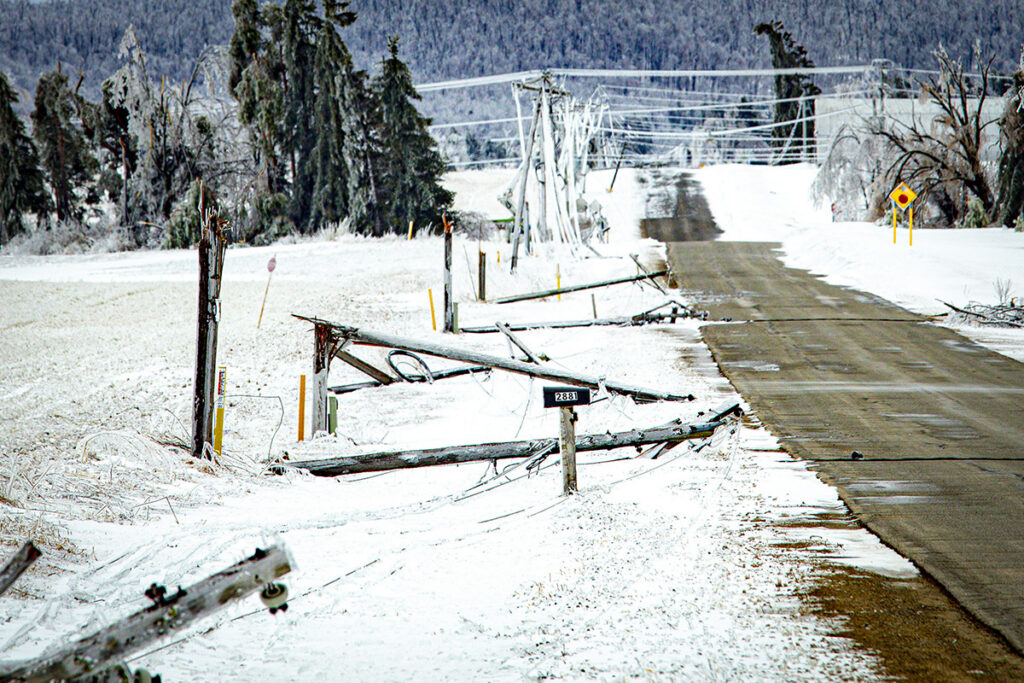
Altogether, the weather event affected 8,116 miles of power line and required the repair or replacement of many substations and transformers. GLE also had to replace over 3,155 poles, well above its annual average of 800. PIE&G replaced 2,700 poles compared with a yearly average of 500.
Each of the co-ops have spent roughly $150 million on restoration, not including interest on recovery loans.
In July, the president declared a major disaster declaration and authorized reimbursement of emergency power restoration work related to the storm. But at the time, the administration did not approve the state of Michigan’s request for Category F support.
Since the storm, NRECA has partnered with the co-ops, MECA, lawmakers and other partners to rally for access to increased FEMA funding. As not-for-profit utilities, co-ops must pass any costs to their consumer-members.
Last September, Voices for Cooperative Power—a grassroots network of co-op advocates—asked Michiganders in GLE and PIE&G’s service territories to sign a petition urging Trump to approve funding for permanent repairs. Altogether, 10,400 people from the two co-ops’ territories signed the petition, along with 2,022 concerned citizens in other parts of the country.
Following this multipronged effort, FEMA on March 13 amended its major disaster declaration for Michigan’s ice storm to include Category F funding after approval from the president.
Although the decision marks a major step in Michigan co-ops’ efforts to rebuild, NRECA is seeking broader reforms at FEMA to make the agency’s public assistance program more efficient for all co-ops.
The association is lobbying to advance legislation in Congress called the Fixing Emergency Management for Americans (FEMA) Act, which would speed up delivery of disaster relief funds to co-ops and allow them to be reimbursed on interest for recovery loans they take out while awaiting FEMA funds.
“Congress, and particularly Rep. Jack Bergman (R-Mich.), has been a key partner in securing the additional public assistance designation for northern Michigan and advocating for broader FEMA reform efforts to help his affected co-ops,” said NRECA Legislative Affairs Director Will Mitchell, who lobbies Congress on FEMA issues.
“The FEMA Act’s clarity around loan interest reimbursement would be particularly helpful for GLE and PIE&G, so we will be continuing to make a strong push for the bill and comprehensive FEMA reform heading into NRECA’s Legislative Conference in late April,” Mitchell added.
Molly Christian is a staff writer for NRECA.