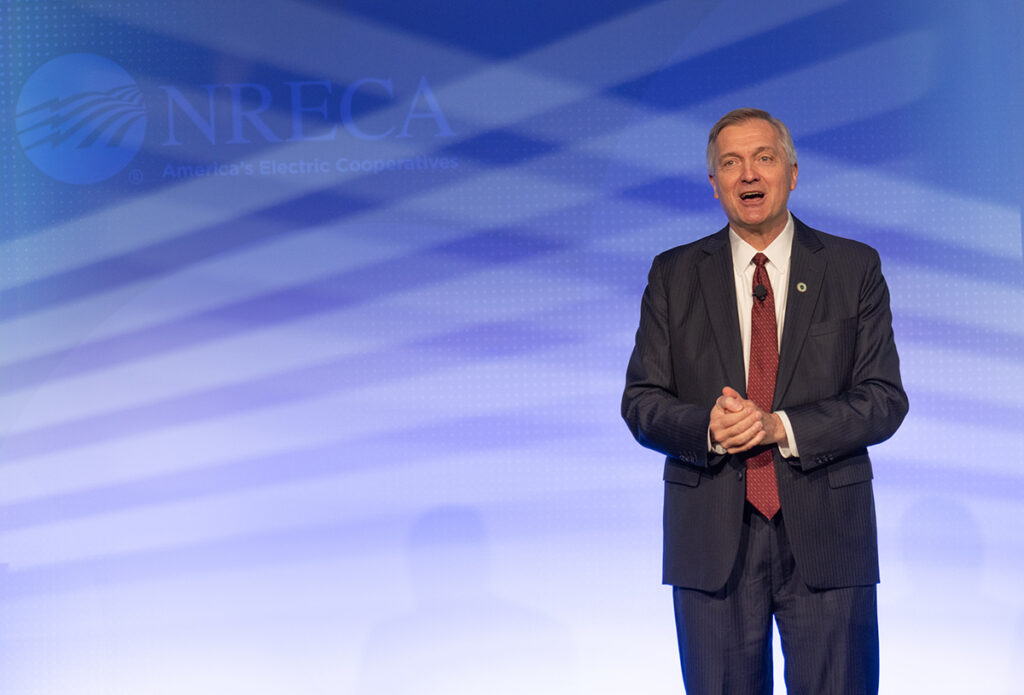
WASHINGTON—More than 1,500 electric cooperative leaders gathered at NRECA’s Legislative Conference this week to meet with lawmakers and agency officials and push for policies that will keep the lights on for 42 million Americans.
NRECA CEO Jim Matheson told co-op leaders Monday that they are viewed as truthtellers by policymakers, giving them a unique advantage as they advocate for top co-op priorities. The key, he said, is that co-ops deliver a consistent message about the need for reliable, affordable power, no matter which political party is in control of Congress or the White House.
“Policymakers know we’re not of Washington,” Matheson said. “We’re laser-focused on doing the right thing for the communities we serve. That’s a powerful differentiator.”
This year’s conference focused on four issues: streamlining the federal permitting process, mitigating the risk of wildfires, expediting disaster relief from the Federal Emergency Management Agency and increasing funding for the Rural Utilities Service Electric Loan Program.
Co-ops can have a huge impact on policymakers by telling real-life stories about how these issues affect their consumer-members and by promoting commonsense solutions to broken federal policies, NRECA leaders said.
“Make no mistake, lawmakers want to hear from you,” Louis Finkel, NRECA’s senior vice president of Government Relations, told co-op leaders. “Your voice is powerful.”
Natural Resources chairman: ‘We desperately need permitting reform’
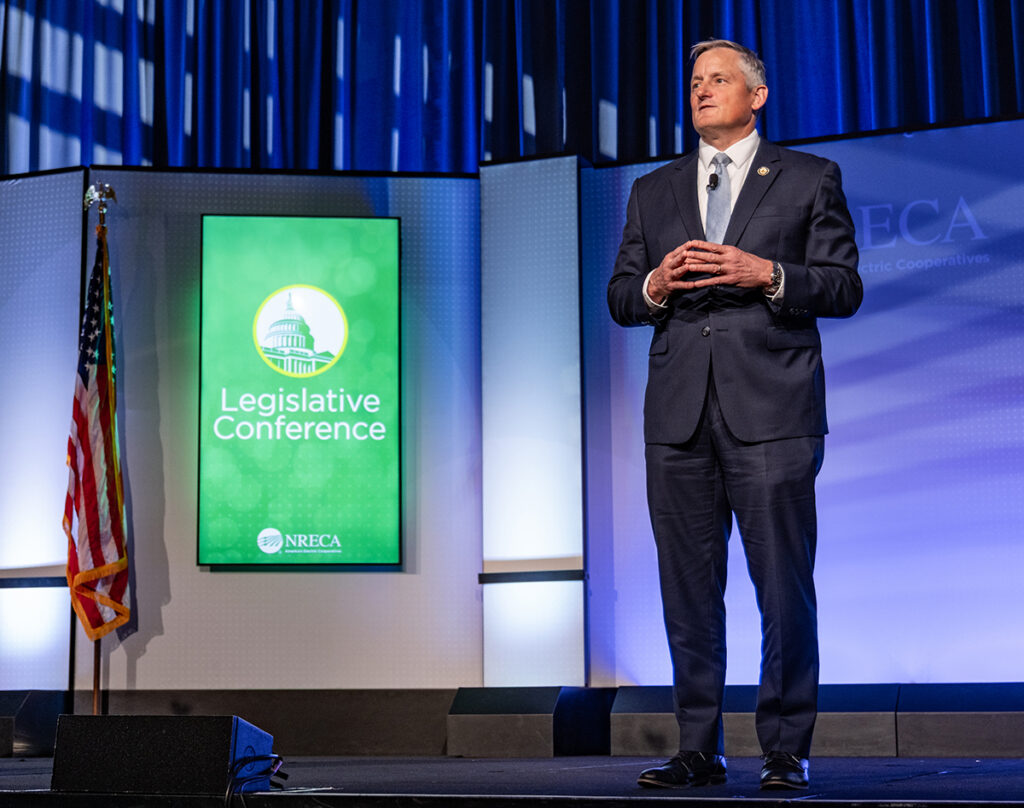
House Natural Resources Chairman Bruce Westerman, R-Ark., said the time is right for reforming the cumbersome federal permitting process that delays electric co-ops’ efforts to improve their systems and meet rising demand for power.
“We need to make it so you can grow and provide more energy,” he said.
Westerman helped lead the House to passage of two significant, NRECA-backed permitting reform bills late last year.
The SPEED Act would streamline the requirements imposed by the National Environmental Policy Act on co-ops applying for permits to build new generation, transmission and distribution capacity, strengthen existing systems or perform crucial maintenance work.
The PERMIT Act would improve permitting under the Clean Water Act by cutting red tape and providing greater regulatory certainty for co-ops that obtain permits.
Westerman, who worked as an engineer and forester before going into politics, was also a lead sponsor of the bipartisan Fix Our Forests Act. The NRECA-backed bill—which the House passed last year—would expedite federal approvals to allow co-ops to harden their grids against wildfires and remove the hazardous vegetation that fuels blazes.
He urged co-op leaders to press the Senate to pass the bills.
“If we’re going to step up to meet the growing demand for energy, we desperately need permitting reform,” Westerman said. “The timing is right. What we don’t want to do is miss this opportunity.”
CEQ chairman cites permitting progress, underscores need for lasting reform
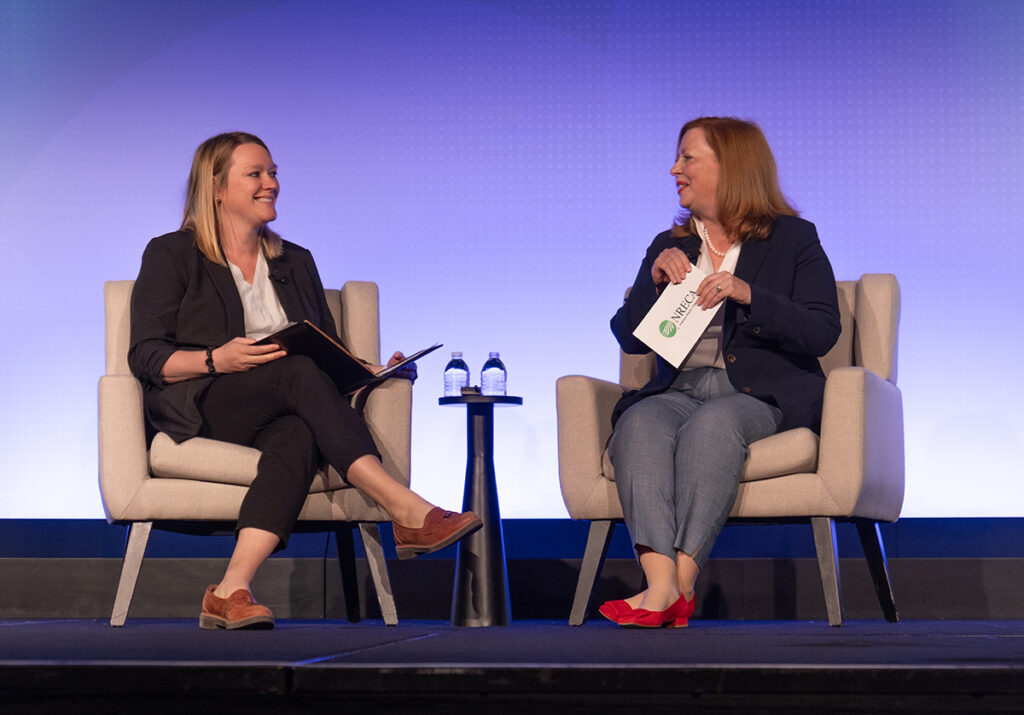
While Congress works to pass permitting reform, the Trump administration is doing what it can to streamline the process, said Katherine Scarlett, chairman of the White House Council on Environmental Quality.
She said her job is to coordinate federal agencies to make sure they are all on the same page and aren’t forcing electric co-ops and other businesses to jump through more hoops than necessary to get permits.
The environmental reviews required to build a transmission line are moving much faster now, Scarlett said.
“We’ve stripped it down to what the statute requires,” she said. “We want to allow for the most expeditious route possible.”
Still, she said, lasting reform will only come if Congress passes it into law.
“On the Hill, they are right in the heat of permitting changes, so keep advocating,” she said. “Right now, I’m more optimistic about a permitting deal than I ever have been.”
Colorado congressman: Give lawmakers a reality check

Rep. Jeff Hurd, R-Colo., said the best way for co-ops to persuade lawmakers to support their priorities is to focus on the realities of how federal policies are affecting them.
“Tell them: ‘Here’s my project. Here’s the delay. Here’s what it’s costing us. Here’s what would fix it,’” said Hurd, who was an attorney representing several electric co-ops in rural Colorado before being elected to Congress in 2024.
“The most effective advocacy I have seen is grounded in reality. It’s better than any single statistic. It helps me convince my colleagues to support the bills you need to help you do your job.”
In addition to supporting permitting reform and wildfire mitigation bills, Hurd is co-sponsoring the Fixing Emergency Management for Americans Act. The legislation, passed by the House Transportation and Infrastructure Committee last fall, would streamline FEMA and dramatically speed up delivery of crucial disaster relief funds to co-ops devastated by wildfires, hurricanes, ice storms and other natural disasters.
“You are all responsible for something most of us take for granted: reliability,” Hurd said. “When people flip a switch, they expect the lights to come on. Our job in Congress is to make sure the process works.”
North Dakota congresswoman: Data centers should pay their way
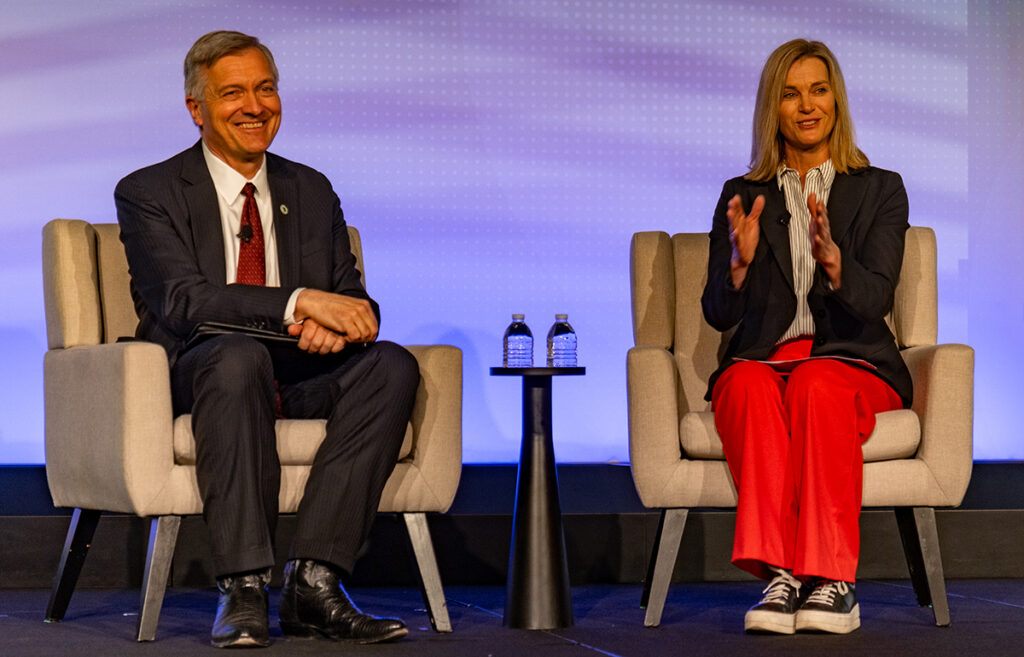
Rep. Julie Fedorchak, R-N.D., said she is especially sensitive to keeping consumers’ electricity rates down as a former member of the North Dakota Public Utilities Commission.
Despite rising demand from data centers that serve artificial intelligence, Fedorchak believes that electric co-ops and other utilities can keep rates down for existing customers by holding big tech companies responsible for paying for the extra power and infrastructure they need.
“We can generate enough power to meet their demand and keep rates down,” she told Matheson as they discussed the issue on stage. “Whoever needs [the energy] needs to pay for it.”
Erin Kelly is a staff writer for NRECA.