Call it an organic twist on the farm-to-table movement.
In Illinois, a fifth-generation family farm has developed a grain-to-bottle initiative with help from its local electric cooperative.
Silver Tree Beer & Spirits is the outgrowth of Cow Creek Farm, an 800-acre organic farm in Paxton, Illinois, about two hours south of Chicago. It is the only organic farm distiller in the state, and its featured whiskey, Tillers, is so finely attuned to the Land of Lincoln that it will sell out within an hour of its release this summer.
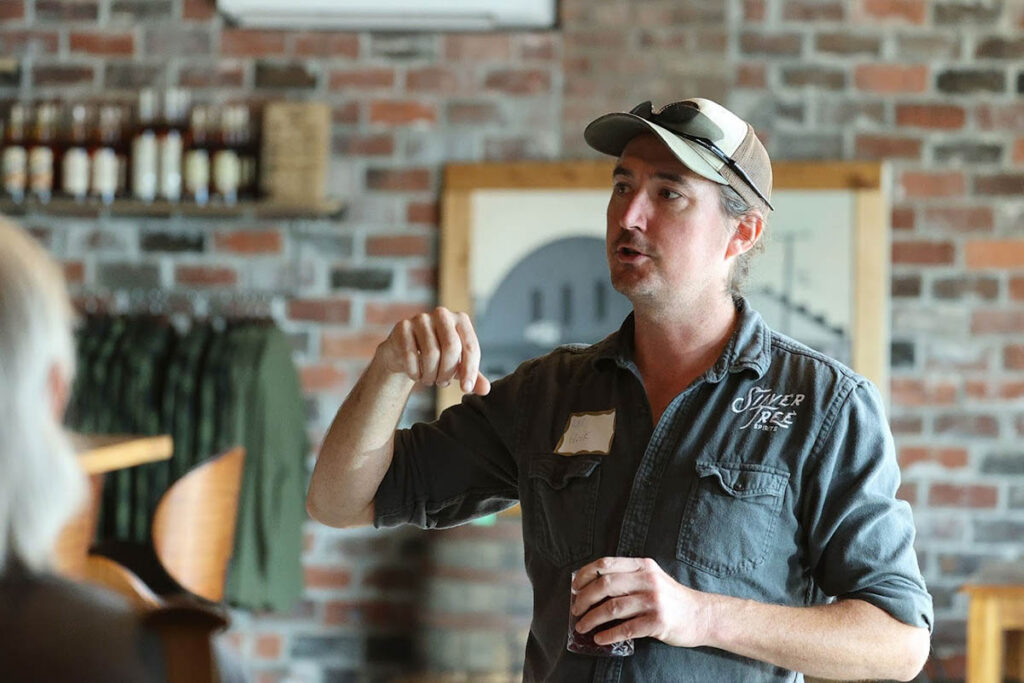
“Corn, wheat, rye and oats can be grown organically and make phenomenal spirits,” said Will Glazik, one of four siblings who have built the business as a way of diversifying the output from the farm and attracting tourism to Paxton.
“We’ve been in distribution for a while with vodka but only two years with whiskeys. Things are really going well above expectations. It’s very rewarding.”
In fact, the endeavor has its roots in a co-op publication. Cow Creek has been on co-op lines since 1938 when the predecessor to Paxton-based Eastern Illini Electric Cooperative wired its first farms—Glazik said his 93-year-old grandfather recalls that momentous occasion.
In 2001, Glazik’s parents read an article in their co-op’s magazine about organic farming. Intrigued, they reached out to the farmer and followed suit on their own property, growing feed-grade corn, soybeans and wheat with a strong direct-market cattle business.
“It was through the magazine that my family was introduced to organic. My siblings and I grew up on this organic farm; Mom and Dad paved the way to do things outside of normal, to find a niche and do well with that,” Glazik said. “Certified organic has worked out really well for us. I know it’s not for everybody but it’s a good thing for us and our family.”
A learning process
Glazik and three siblings went to the University of Illinois, about a half-hour south on Interstate 57, where they started learning about the business side of things and making connections that would pay off.
Not to mention a love of craft beer. Glazik recalled that he and his brothers considered opening a brewery about 10 to 15 years ago. That fit the model developed by his parents: Grow the farm. Innovate. Find your niche. What worked for one generation might not be right for the next.
It would have worked except for one slight detail. “We learned quickly that it’s extremely hard to grow organic, malt-quality barley in Illinois,” Glazik sighed.
From that experience, though, they sold organic wheat to Old Bakery Beer Company, a sustainable craft brewery in nearby Alton and picked up tips from small craft distiller Adam Stumpf at Old Monroe Distilling in Columbia, proof of the value of small-town connections.
“Like organic farming, craft distilling is a fun group, generally young, that likes friendships and connections and is very open to sharing. So we have been extremely fortunate to have made some excellent friends who told us some of the problems that they’ve encountered so we didn’t have to, and we do the same with them,” Glazik said.
Still, early on, there was as much error as trial in organic craft distilling. For example, the way you grow grains for food consumption differs from the way you grow for bulk commodity or feed, Glazik said. “There are so many things we learned wrong as far as grain selections and grain handling go. Learning all that took some time, but the mistakes got corrected down the road.”
Co-op connections
Silver Tree worked with Stumpf on its initial production runs, now around 10 or so barrels a week. “We knew that if we’re 70% corn and 30% wheat, that’s a common recipe that makes a good bourbon. But then we also have our single grain estate lines. So those would be one grain crop, one year, like in a vintage.”
Glazik said primary distribution is among local small bars, liquor stores and restaurants. Most notable among the products—Tillers Four Grain Whiskey, the only all Illinois-made whiskey. The trees were grown in Illinois. The barrel maker, known as a cooper, is Crozehead Cooperage in Monee, south of Chicago. The bottles are Illinois born. The Glaziks are responsible for the grain and the distillation.
“Because there’s so much that goes into it, there’s only so many barrels released every few years,” Glazik said.

Want a sample? Then you’d better get your act together quickly. Tillers will sell out within an hour of its release this summer at the Silver Tree tasting bar, to be promoted on social media.
That’s where Eastern Illini Electric steps in. The co-op provided a $30,000 loan from its revolving Rural Economic Development Loan and Grant (REDLG) fund to help the tasting room, which is open to the public on the third Fridays and Saturdays of the month and hosts numerous private and social events.
“We built our own bar and tables but then we used it to help finish the electricity, the plumbing, the floor and the chairs,” Glazik said.
Mike Wilson, vice president of member and community relations at Eastern Illini Electric and admitted whiskey fan, was familiar with the Glaziks’ venture and said REDLG participation in the grain-to-bottle concept made all the sense in the world. Again, he said, it was a matter of the co-op knowing the community and the people in it.
“They needed some help getting the building ready to be open to the public,” he said. “What really drove us to them is that all of their farms are on our co-op lines. They’re local, they’re helping the community and this is already something that had proven to be good tourism for our town because people come from around the area to visit them.”
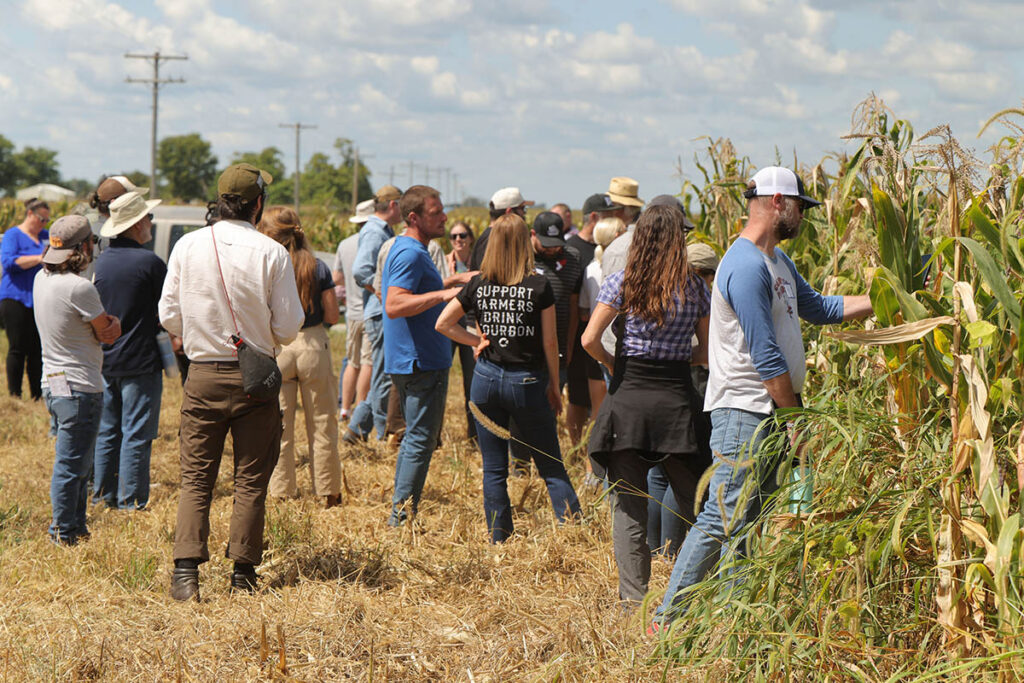
Glazik said he appreciates the long-term relationship with Eastern Illlini Electric, noting that maintaining the quality of its specialty crops requires a lot of air circulation and power. “Our farm operation wouldn’t work if it wasn’t for the co-op,” he said.
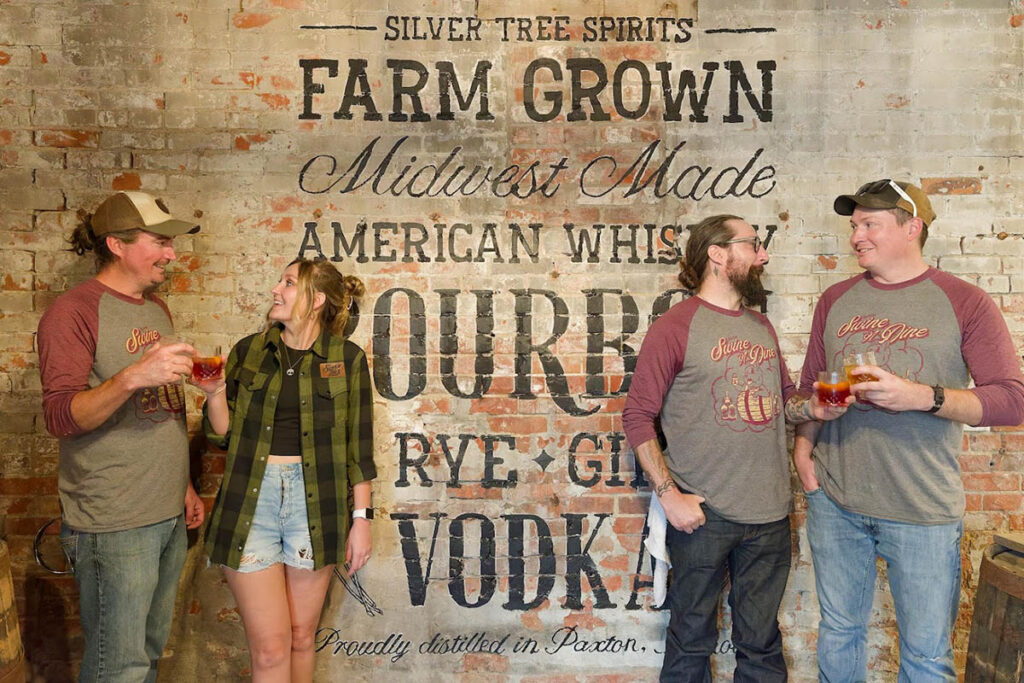
At the distillery, Will, the oldest sibling, handles farming and operations. With an advertising background, Clayton tackles marketing in addition to blending. Dallas is responsible for distilling and operations while researching new alcohol recipes, and Abby supervises the tasting room and taps into her background in agricultural communications.
And if you do get a chance to pass through Paxton and sample a shot of the Silver Tree line, you’ll also be taking a shot at a carbon offset. Glazik said the family farm has been able to sequester about two tons of carbon dioxide per year by growing nitrogen through cover crops, longer crop rotations, avoiding synthetic inputs and integrating its livestock as part of a carbon model.
That translates roughly to one mile of commute per shot of whiskey, he said—taking a shot at an offset. “It’s just a fun way to think about it. We really take a lot of pride in it.”
Steven Johnson is a contributing writer for NRECA.