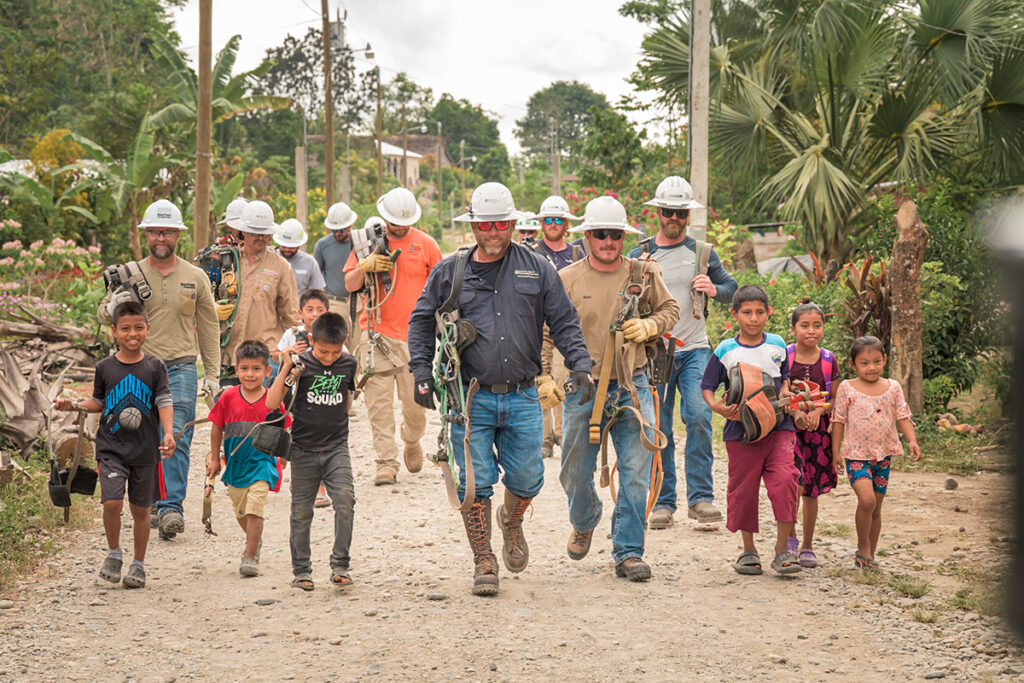
Residents of a remote Guatemalan village will no longer have to fill their small homes with toxic smoke every time they cook, thanks to life-changing electricity brought to them by volunteers from North Carolina’s electric cooperatives.
In the village of El Plan Nuevo Amanecer near the Mexican border, women and girls were cooking over flaming wood fires, breathing in thick smoke that irritated their eyes and lungs and lingered inside their houses.
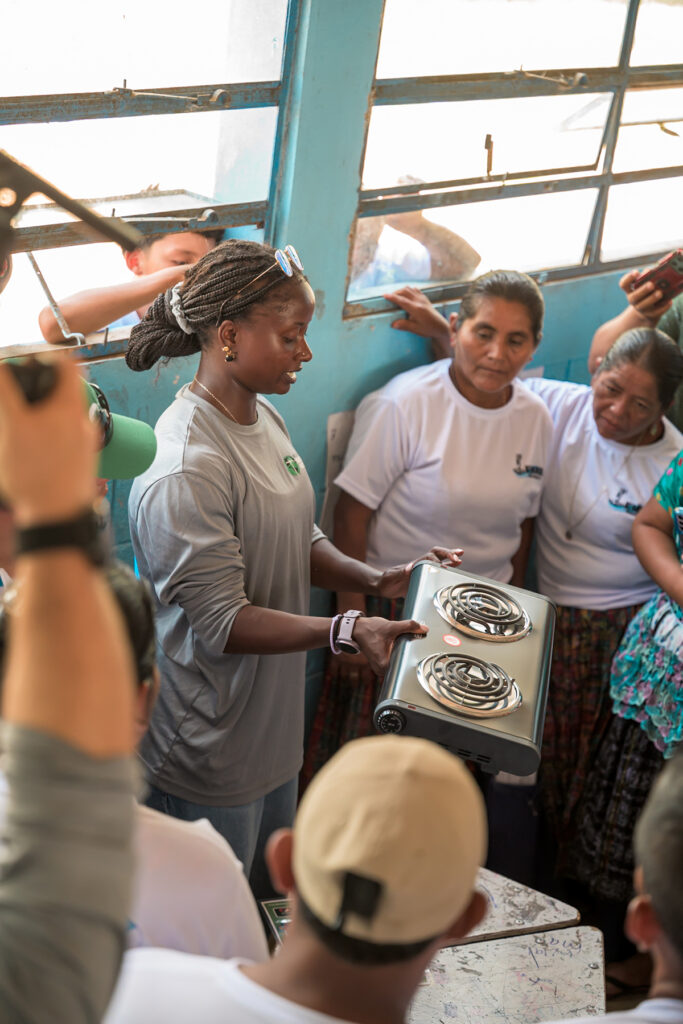
“Several of the children have this kind of chronic cough that you would hear throughout the village,” said Cara Johnson, who is working with North Carolina’s Electric Cooperatives as an Energy Innovator Fellow through the Department of Energy.
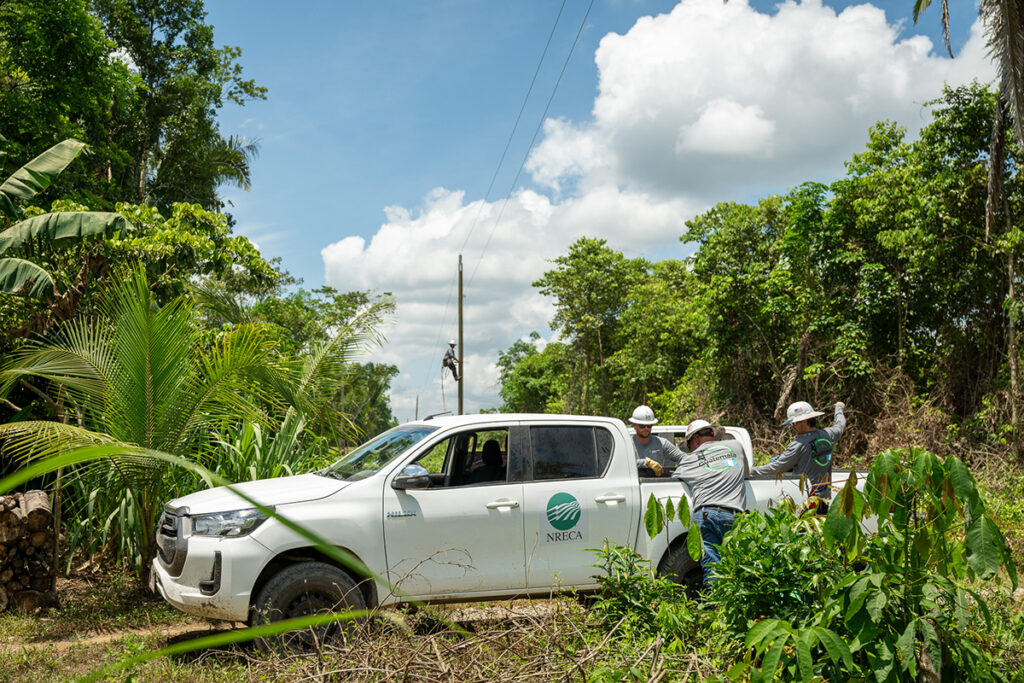
Solving the problem became part of the mission for Johnson and volunteers from eight North Carolina co-ops who traveled more than 2,500 miles to work on the NRECA International project for three weeks in April.
Lineworkers constructed more than three miles of line by hand, wiring 55 homes to receive electricity for the first time and ensuring that residents could put that power to quick use by providing portable electric stovetops.
The two-burner, plug-in Black+Decker stovetops, purchased from a local supplier in Guatemala, were compact enough to fit on little tables in the villagers’ homes.
Johnson, who is fluent in Spanish, educated residents about the health and safety benefits of the electric stovetops. She joined 15 lineworkers on the trip as part of the statewide association’s Brighter World Initiative.
“I spent the majority of the trip speaking with the women in their homes, learning about their lives and families and gaining their trust. They even taught me how to make tortillas by hand,” Johnson said.
“Most of the houses are about 20 feet by 20 feet spaces with no interior walls, so there’s one room to live, eat, cook and sleep in. There’s no ventilation, so the smoke from the fire just collects and sits in the air. When you walked in, your eyes and throat would burn. And the temperature was already upwards of 90 degrees in April, even without the fire.”
In addition to the stovetops, medical supplies for the community’s health clinic were delivered by representatives from Statesville-based EnergyUnited, Buxton-based Cape Hatteras Electric Cooperative, the statewide association and CoBank.
Donations included a new exam table, a stretcher, a heart monitor, a stethoscope and more, said Jenn Eberhart, NCEC’s director of member engagement. She said the statewide association raised nearly $280,000 for the overall electrification project, which included $67,500 in grants from CoBank’s Sharing Success program and a $70,000 contribution from National Rural Utilities Cooperative Finance Corp.
“I think if you look at who we were as electric co-ops nearly a century ago, we were in the position that these Guatemalan villages are in now,” Eberhart said. “We all feel passionately that the cooperative principle of concern for community extends beyond the members we serve.”
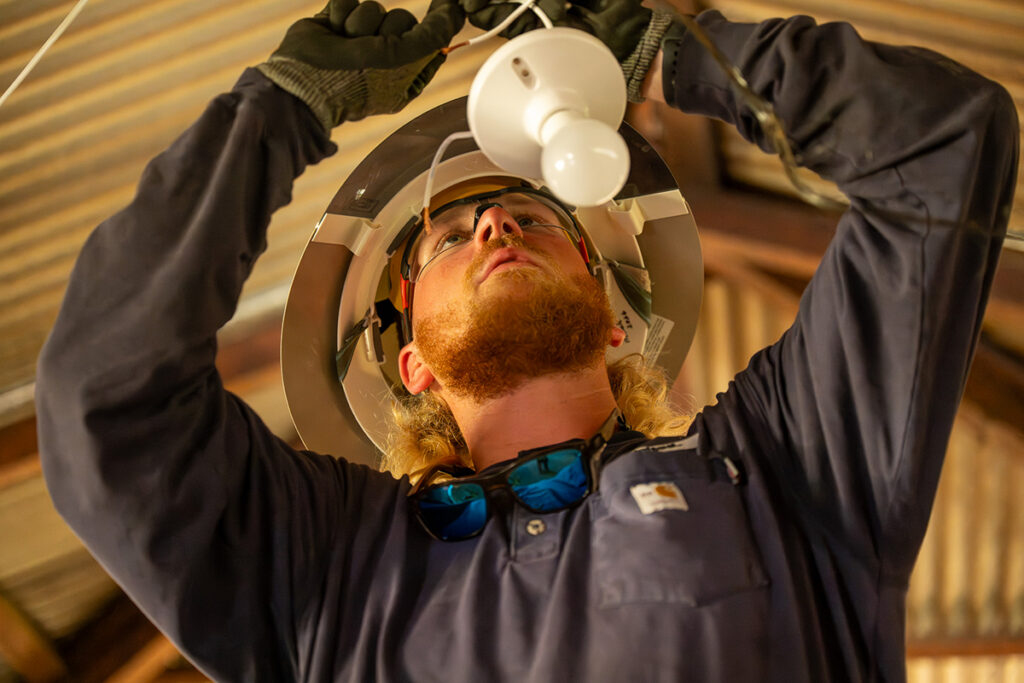
Josh Morrison, a line crew supervisor from Monroe-based Union Power Cooperative, led the volunteer crew through challenges that included sweltering heat and unfamiliar terrain. The lineworkers climbed more than 50 wooden poles to connect the village’s homes, health center and school to electricity, creating opportunities for improved education, medical care and economic growth.
“Just to see the smiles on the people’s faces when the lights came on for the first time is what made it for me,” Morrison said.
“I went back at night to see them with all the lights on at their houses, the school and the health center. Everyone was cooking and celebrating. That was the most excited I’ve ever seen people getting power.”
Adults in the village talked about how much electricity would improve their children’s lives.
“There was an 80-year-old gentlemen who was completely blind and would sit on a hammock every day and talk about what the village was like when he was a kid,” said Josh Conner, the statewide association’s multimedia communications strategist, who traveled to Guatemala with the lineworker construction crew to document the project.
“He said one of the biggest things that electricity is going to do is keep the kids from moving away because there’s more opportunity there for them now.”
One mother said the new electric stovetop will improve her children’s health and prevent them from getting badly burned like she did.
“Half of her eye was burnt from flames that blew into her face on a windy day as she was cooking over her open fire stove,” Johnson said. “She didn’t want that same thing to happen to her daughters.
“The clean-cooking initiative felt meaningful beyond just the kitchen. Not only were we bringing electricity, but we were giving the community a tangible resource they could use with that electricity that will improve their health and hopefully their children’s future.”
Erin Kelly is a staff writer for NRECA.