
WASHINGTON—NRECA and electric cooperative leaders joined officials from the U.S. Department of Agriculture on Wednesday to celebrate the 90th anniversary of the Rural Electrification Act, the law that helped deliver power across rural America.
The REA was a New Deal Era-effort to provide low-cost federal loans for building electric distribution systems in rural areas, part of efforts to revive America’s economy in the wake of the Great Depression.
The law drove the creation of electric cooperatives throughout the U.S. and laid the foundation for the USDA’s Rural Utilities Service, which provides financing for co-op infrastructure to this day. That support is crucial as co-ops gear up to meet growing demand while maintaining reliable, affordable service for households and businesses.
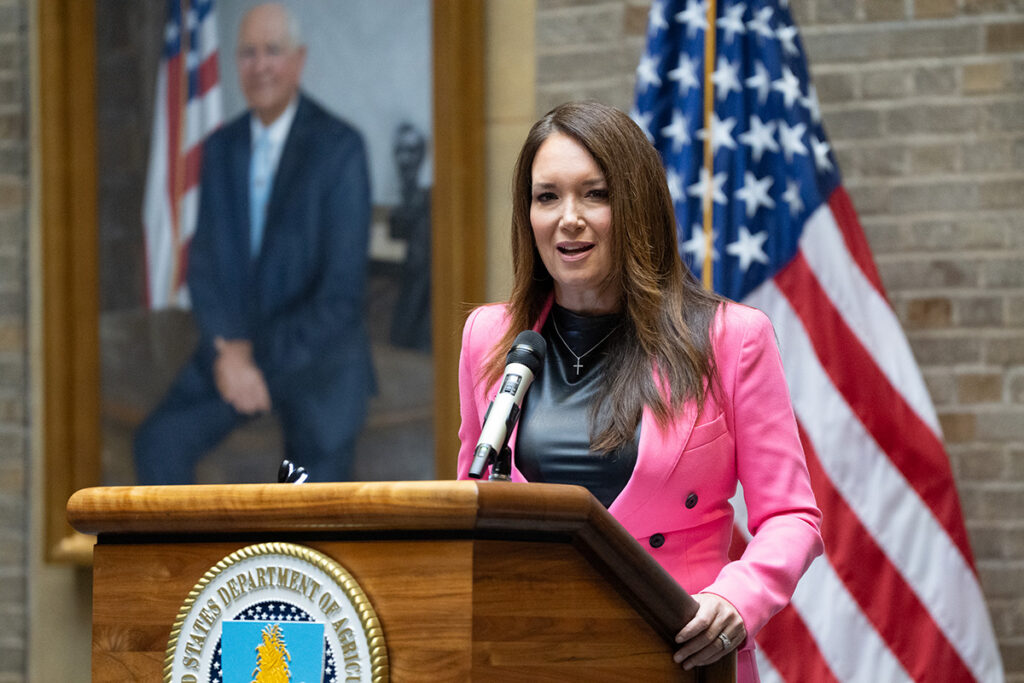
“I’m thankful every day for the work that you all do,” Agriculture Secretary Brooke Rollins said during the event at USDA’s headquarters.
The work of co-ops together with RUS “is the best of us, and that is what will keep America strong and the American dream available for all moving forward.”
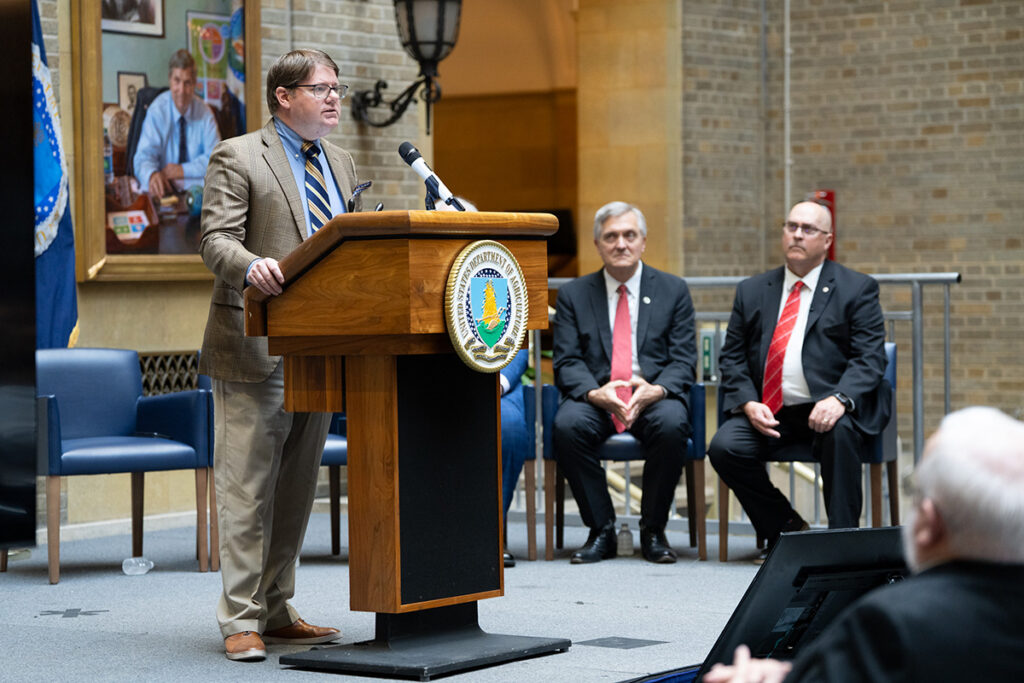
That partnership “is more important today than it’s ever been. These investments in rural America still matter greatly,” NRECA CEO Jim Matheson said. “They’re critical to promoting reliability, affordability, economic opportunity and quality of life in rural America.”
History of the REA
The REA, which was signed into law on May 20, 1936, was one of the most impactful pieces of President Franklin D. Roosevelt’s New Deal reforms.
When the REA was enacted, only 10% of U.S. farms and rural homes had electricity. Today, about 99% of the nation’s farms have electric service.
The law helped transform the Rural Electrification Administration—the forerunner to the modern-day RUS—from a relief agency to a lasting program to provide loans for rural electrification, supporting the creation and growth of co-ops.
The REA “allowed us to truly stitch our country together,” Agriculture Deputy Secretary Stephen Vaden said.
“It was our quick adoption of electric power throughout rural America that helped to create the innovation and the great economic growth that our country experienced throughout the 20th century.”
Today, over 900 electric co-ops are operating across the country and modernizing their systems to improve cost and reliability for the 42 million Americans they serve. About 200 electric co-ops are also building or operating broadband networks to deliver high-speed internet access to rural America.
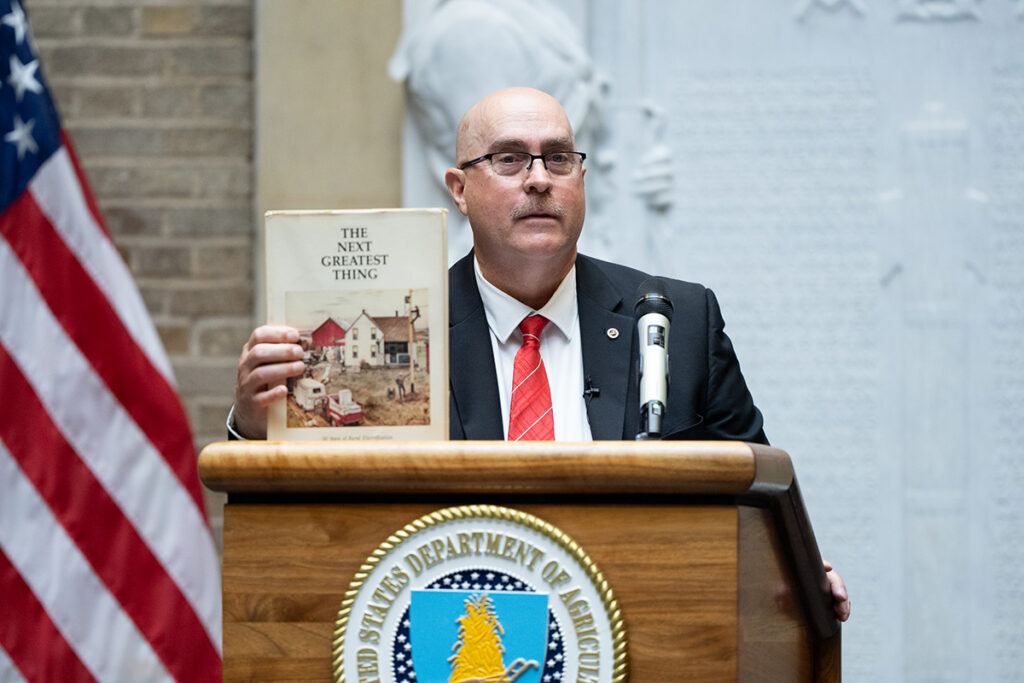
“You’re the future. All of you,” RUS Administrator Karl Elmshaeuser said at the May 27 event. “It’s your ideas that are creating the next power in America.”
In 1994, Congress reorganized the Rural Electrification Administration into RUS, which delivers on the REA’s original mission through three core programs to support electric, telecommunications and water infrastructure.
“Investment in rural utility infrastructure…is as important to rural life and the national economy today as it ever was,” said Chris McLean, assistant administrator for the RUS Electric Loan Program. “I dare say that few federal programs have been as successful as the Rural Electrification Act.”
Some co-ops have been RUS borrowers since the 1930s, but the agency is also serving first-time borrowers, including some of the newest co-ops in the country, McLean said.
“Today we not only celebrate our history; we also celebrate our bright and shining future,” he said.

The partnership continues
Even with the strides co-ops have made to power rural America, the partnership between RUS and co-ops remains essential, attendees said at the USDA event.
“Having the USDA support rural America like they do through the utility service, whether it be electric, broadband, water, telephone… is very important because it allows us to borrow money at a cheaper rate to keep America rolling,” said Troy Amoss, CEO and general manager of Chariton Valley Electric Cooperative in Albia, Iowa.
The RUS electric loan program ensures co-ops can build and upgrade the infrastructure needed to power a changing rural America while keeping rates affordable. The program is also a good deal for the federal government, with co-ops repaying the loans with interest.
“Let’s celebrate the past 90 years, but let’s also celebrate the fact that this partnership between electric co-ops and RUS is incredibly well positioned to continue this meaningful work for the future,” Matheson said.
Watch a related podcast episode with Matheson and Elmshaeuser: