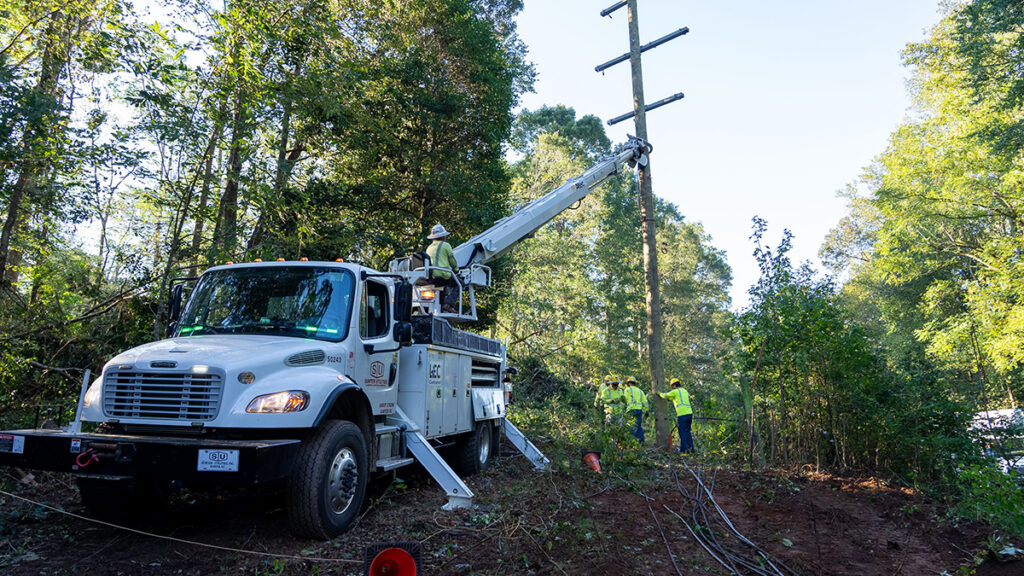
Amid the devastation of Hurricane Helene in 2024—the deadliest storm to hit South Carolina in 100 years—electric cooperative members showed up at their local co-op offices with homecooked meals for employees working hard to restore power.
Unfortunately, a handful of people who were angry about outages also came. And they delivered threats and intimidation.
“We had an individual who threatened our people,” said Gary Stooksbury, CEO of Aiken Electric Cooperative. “He called in and basically told them that if they didn’t get his lights back on right away, he was going to come down there and shoot the place up.
“When he showed up at our office, we called the local sheriff’s department, and they arrested him. After spending the night in jail, he said he didn’t mean it, he was just kidding. But we have to take these threats seriously and protect our people.”
Leaders of the South Carolina Legislature agree.
A bill introduced in the state House and Senate in January would make it a felony “to willfully and knowingly assault or engage in behavior that could endanger a worker restoring critical services or destroy, damage, or tamper with an electric utility system.”
It would also be a misdemeanor to “harass or threaten” critical service workers, including lineworkers, gas workers, water and sewer workers, and road crews.
The proposed law would take effect whenever the governor declares a state of emergency, which routinely happens after a natural disaster like Helene. The hurricane killed 49 people in South Carolina and damaged about 5,000 homes.
“I wish we didn’t even have to have such a law, but there’s always somebody who ruins it for everybody,” said Rep. Tommy Pope, a former state policeman and prosecutor who serves as speaker pro tempore of the South Carolina House.
“Being a lineworker is a dangerous enough job as it is,” said Pope, whose son is a lineman for York Electric Cooperative. “And then someone is going to endanger them more? To me, that’s just unacceptable. Let them do their jobs.”
Keith Avery, president and CEO of Newberry Electric Cooperative, said his line crews were getting equipment together to go out and restore power during Helene when they were confronted by some members who drove into the co-op yard.
“The folks were belligerent, trying to intimidate the linemen to come and restore their power first,” Avery said. “It’s a dangerous situation. You’ve got a forklift and booms going. It just creates a big safety hazard.
“One of my guys did a good job of trying to de-escalate the situation. He talked calmly and informed them that ‘I go where they send me’ to restore the most power as quickly as possible. We understand that people get frustrated when the power is out, but the crews shouldn’t have to deal with that.”

Senate President Thomas Alexander said he hopes the legislation will pass both chambers of the state legislature this year and serve as a deterrent to prevent mistreatment of lineworkers. The 2026 legislative session runs through early May.
“We just had Co-op Day here at the Capitol. We love our co-ops,” Alexander said. “We want to make sure these dedicated, committed servants of the people are protected.”
State Rep. Jeff Johnson, whose district includes Horry Electric Cooperative in Conway, is chairman of the House Judiciary Subcommittee on Criminal Laws and plans to hold a hearing on the bill soon.
“I think creating this law would make it clear to the police that they can arrest someone who is stopping crucial services,” he said. “Right now, the law is kind of vague. This bill should help police officers and prosecutors.”
Ultimately, the legislation would keep the public safe by ensuring that lineworkers can get critical power back on as quickly as possible, said John Frick, senior vice president for public policy at the Electric Cooperatives of South Carolina.
“These crimes are amplified because of their impact on the public,” he said. “It affects restoring power to people who need it most, whether it’s because they’re freezing in winter, they need their air conditioning in the summer heat or they have medical issues that require them to plug in an oxygen machine. Endangering critical workers endangers the people they serve.”
Erin Kelly is a staff writer for NRECA.