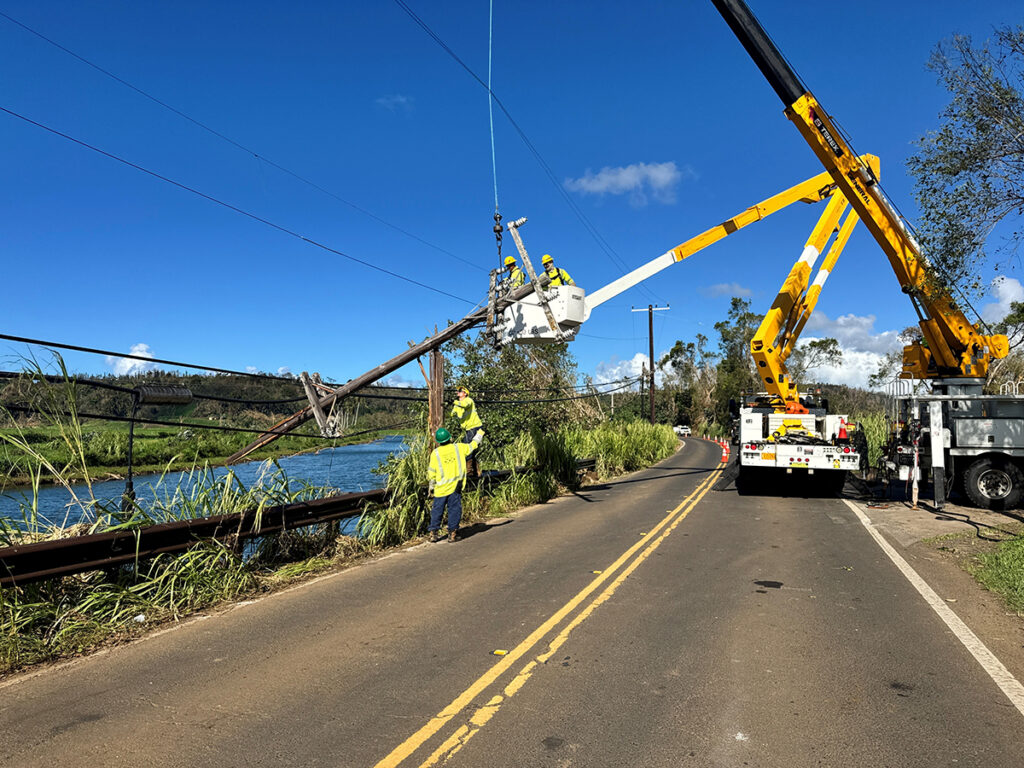
When Hurricane Lowell knocked out power and internet service for days in the remote, mountainous regions of Kauai’s north shore, Kauai Island Utility Cooperative CEO David Bissell had just one way to let consumer-members living in the area know what was going on: He went there and met with them in person.
“Communication is so important,” he said. “You’ve got to be transparent in a disaster and tell people what’s happening. They need to know that we’re doing everything we can to get their power back on.”
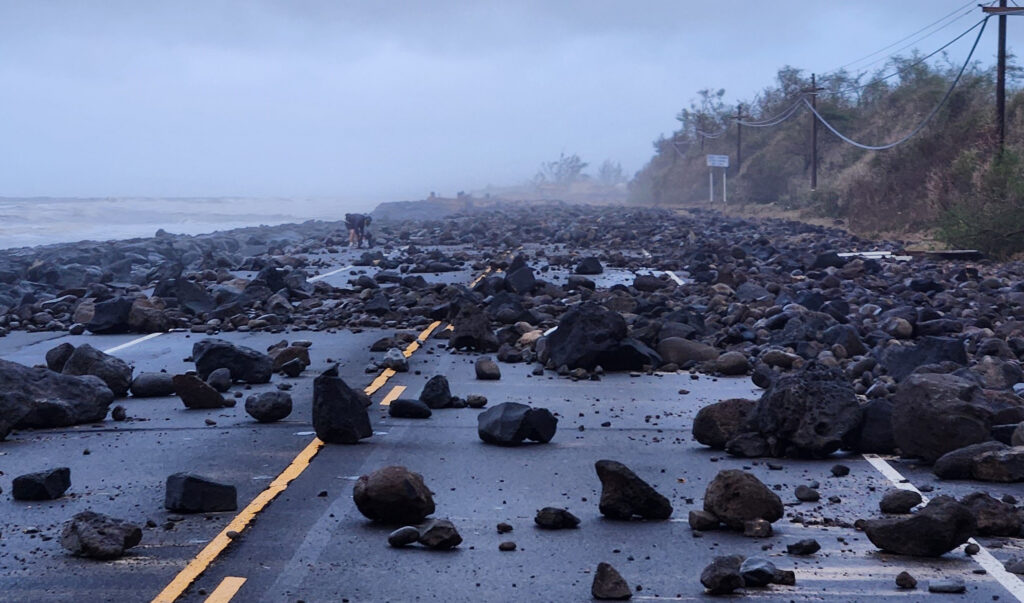
Although the Category 2 hurricane never made landfall on Kauai, it came as close as 80 miles west of the island late on Labor Day, bringing wind gusts up to 90 mph, dangerous surf, rockslides and a deluge that closed roads and forced more than 300 people to evacuate from homes along the coast. At least two people died as a result of the hurricane, news reports say.
At its peak, Lowell knocked out power to 33,319 of KIUC’s 36,333 members—or nearly 92%. By Monday, Sept. 21, co-op employees and mutual aid crews had slashed outages to about 900.
“We don’t want to do a victory lap until everyone has power again,” Bissell said.
Advance preparation by the co-op, help from other utility companies and a little luck prevented the crisis from being even worse, he said.
“We were very lucky that HECO [Hawaiian Electric Company] didn’t get hit,” Bissell said. “They were able to get over here fast.”
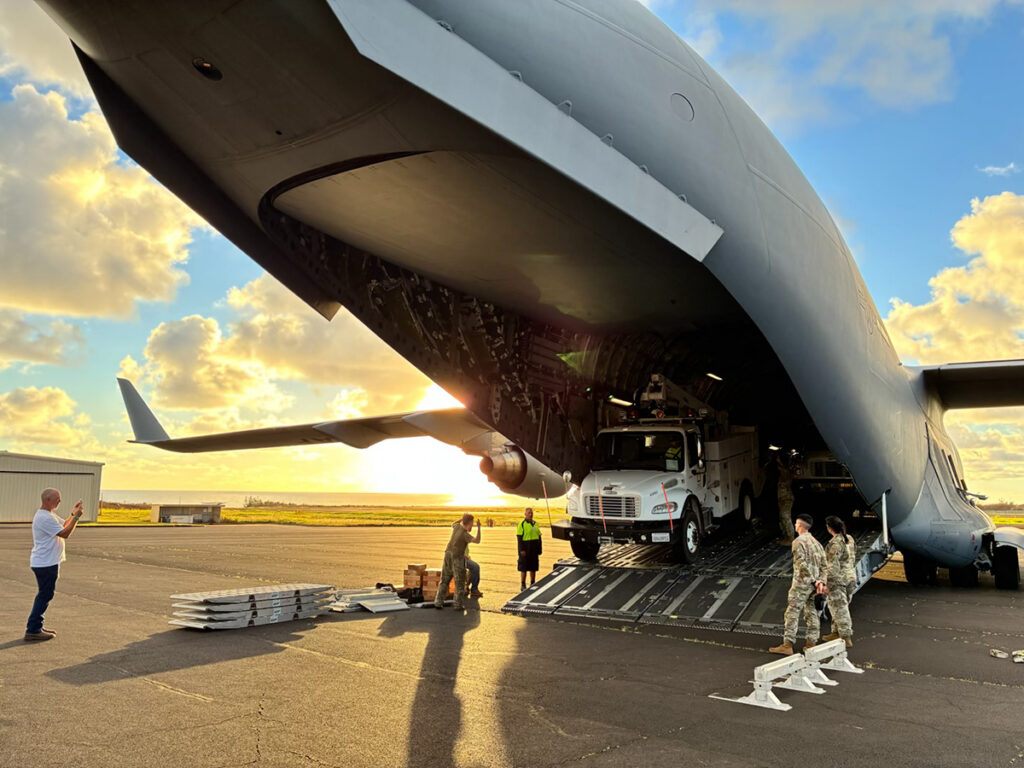
HECO, which was hit hard by Hurricane Lala in mid-August, escaped significant destruction from Lowell, enabling the utility to send mutual aid crews to Kauai. They were joined by employees of Southern California Edison, which had been helping HECO after Lala.
An estimated 100 mutual aid volunteers, including employees of HMS Construction Inc., worked with about 150 co-op employees and contractors around the clock to restore power. KIUC housed the mutual aid workers at some of the hotels on the south shore that were vacated by fleeing tourists as the hurricane approached.
Hawaii Gov. Josh Green partnered with the National Guard and the U.S. Air Force to airlift HECO and SCE crews along with their utility trucks and other equipment to Kauai.
“It has been a real team effort,” said Beth Amaro, the co-op’s manager of member services and communications.
KIUC, which was affected by a wildfire in July 2024 that burned more than 1,100 acres and threatened about 200 homes, also benefited from its wildfire mitigation efforts during the hurricane. As part of those efforts, pole replacements and equipment upgrades have been accelerated. And the co-op has stockpiled extra supplies of power poles, transformers, wires and other crucial equipment in advance of hurricane and wildfire season, Bissell said.
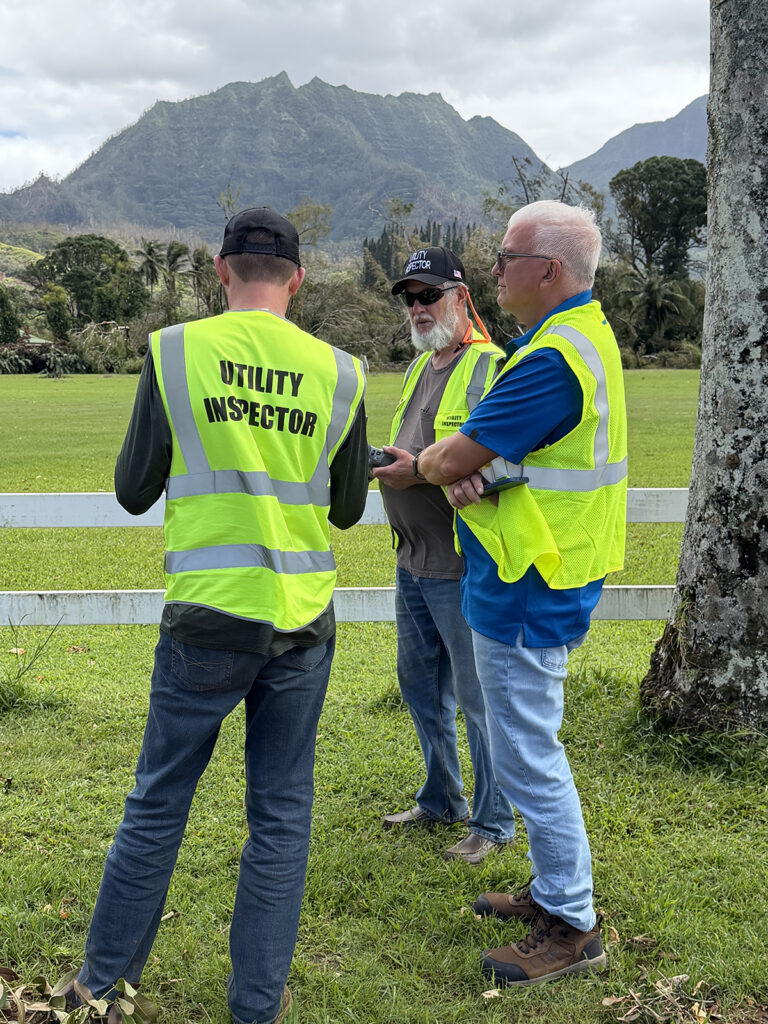
The co-op also brought in contract crews ahead of the hurricane, including drone operators who could inspect KIUC’s lines and poles for damage, Amaro said.
“They were already here and could hit the ground running,” she said.
The co-op staff focused on getting the transmission lines back up as quickly as possible—the first essential step in restoring power to neighborhoods, Bissell said. He credited Chief of Operations Brad Rockwell, Transmission and Distribution Manager John Cox and Engineering and Technology Manager Cameron Kruse with leading the response.
“I couldn’t be prouder of our employees,” he said. “You’re always going to have some hiccups in a disaster, but I don’t think we could have restored power any faster.”
Co-op members have been overwhelmingly patient and gracious, bringing coffee and meals to crews, Amaro said. Several local construction companies even donated personal protective equipment to lineworkers, she said.
“We’ve been so blessed by the generosity of our community,” Amaro said.
The few residents who complained publicly about the pace of the restoration were quickly admonished by those who lived through 1992’s Hurricane Iniki, the most devastating hurricane to hit Kauai in recorded history. The Category 4 hurricane destroyed more than 90% of the buildings on Kauai, killed an estimated seven people and injured more than 100.
“People who were here doing Hurricane Iniki talked about how they were out of power for over a month,” Bissell said. “They said, ‘this is nothing. We’ve been through a lot worse.’”
Now, like then, residents have rushed to one another’s aid, he said. People who were evacuated from their homes during Hurricane Lowell were taken in by friends, family and neighbors.
“We are vulnerable to a lot of threats here,” Bissell said. “We’re a small community but we’re resilient. We take care of each other.”
Erin Kelly is a staff writer for NRECA.