As the U.S. electric grid faces new opportunities and challenges, electric co-ops are hubs of innovation, unlocking new ways to power and empower local communities. Co-ops leverage groundbreaking research, next-generation energy technologies and first-of-a-kind solutions as they revolutionize the energy industry.
Where we stand
With deep local roots and a focus on people, not profits, electric co-ops embrace locally led solutions that strengthen America’s electric grid, meet the needs of their members and help their communities thrive.
The way we power our world is changing. The future calls for a more reliable, resilient and responsible energy system that both powers—and empowers—local communities. America’s not-for-profit electric cooperatives are building this future today. They’re strengthening our nation’s power grid while pioneering innovative ways to live, learn and earn in communities across the country.
Through pivotal partnerships, research initiatives and infrastructure investments, electric co-ops are ensuring energy reliability, embracing responsibility and empowering consumers with next-generation technologies. And they’re doing it in ways that make sense for their communities. It’s what they’ve always done: Keep the lights on at a cost their members can afford while paving new pathways to prosperity for their communities.
Ensuring Energy Reliability
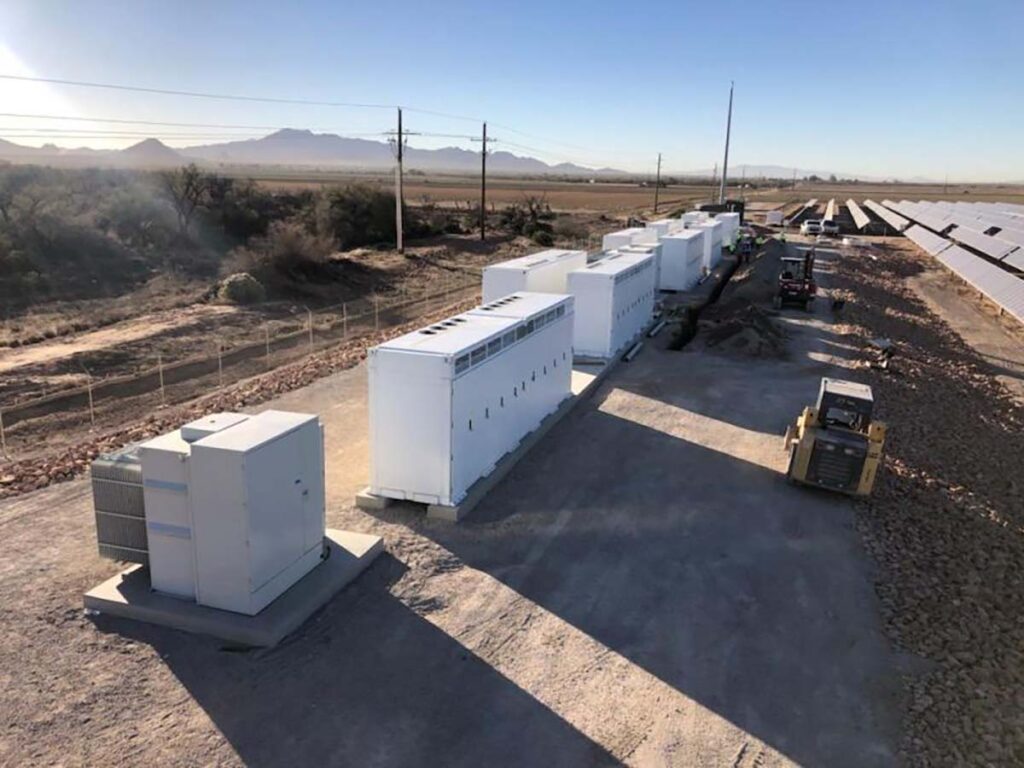
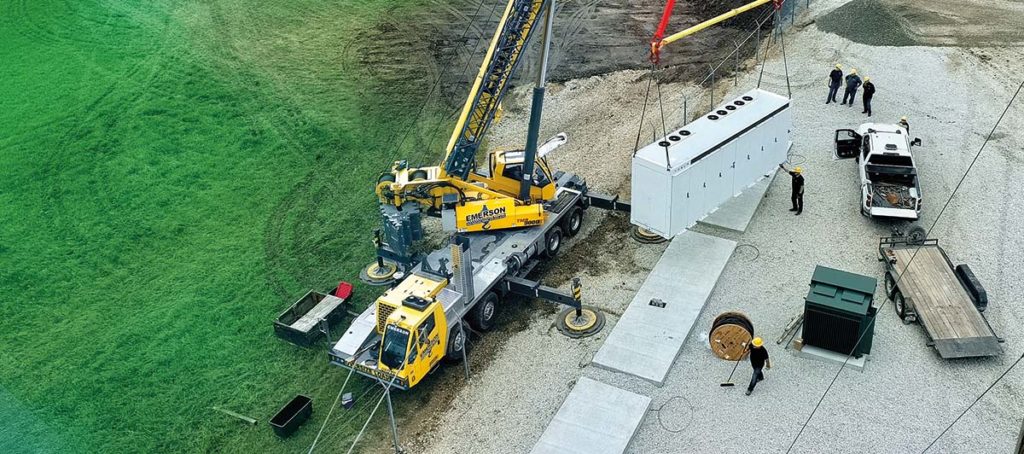
From state-of-the-art power plants and transmission lines, to long-duration battery storage and microgrid systems, to the use of innovative technology to prevent outages and hasten recovery after storms, electric co-ops are delivering more reliable services to consumers while making our electric grid more resilient.
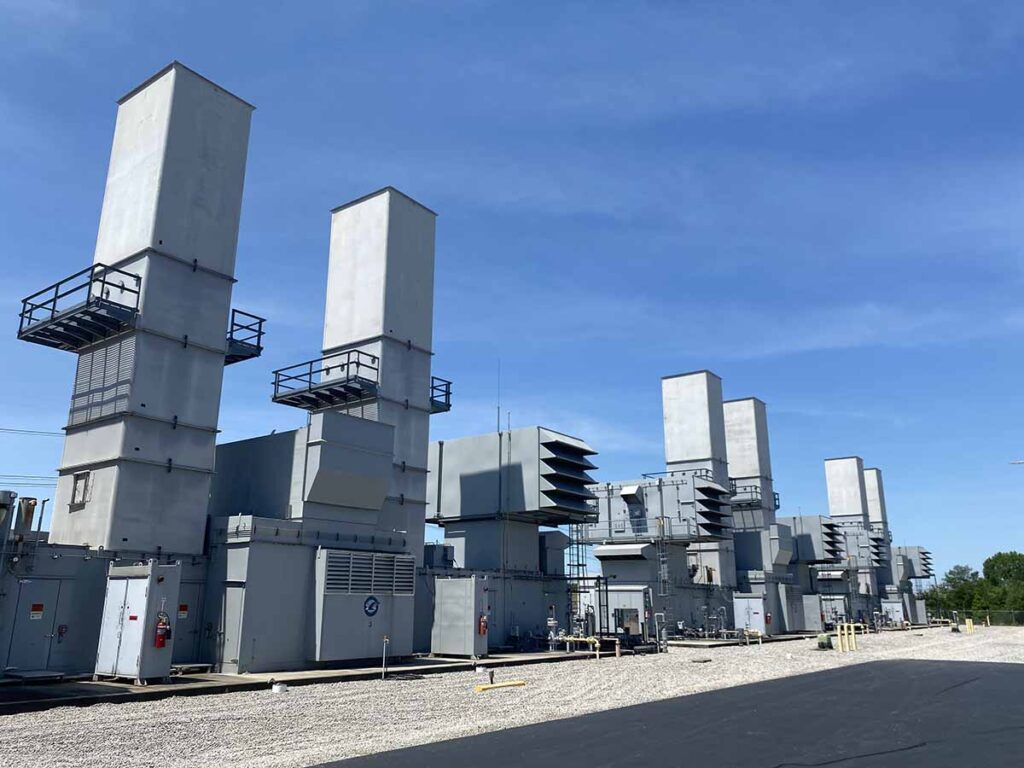
Big Rivers Electric Corp.: A coal-to-gas conversion at the Robert D. Green Generating Station in Kentucky now ramps up twice as fast using natural gas, maintaining reliability while reducing emissions.
Jeff Davis Electric Cooperative: Construction of a 105-mile transmission line in Louisiana, including 10 substations and two switching stations, will improve storm resiliency. Completion is expected by June 2025.
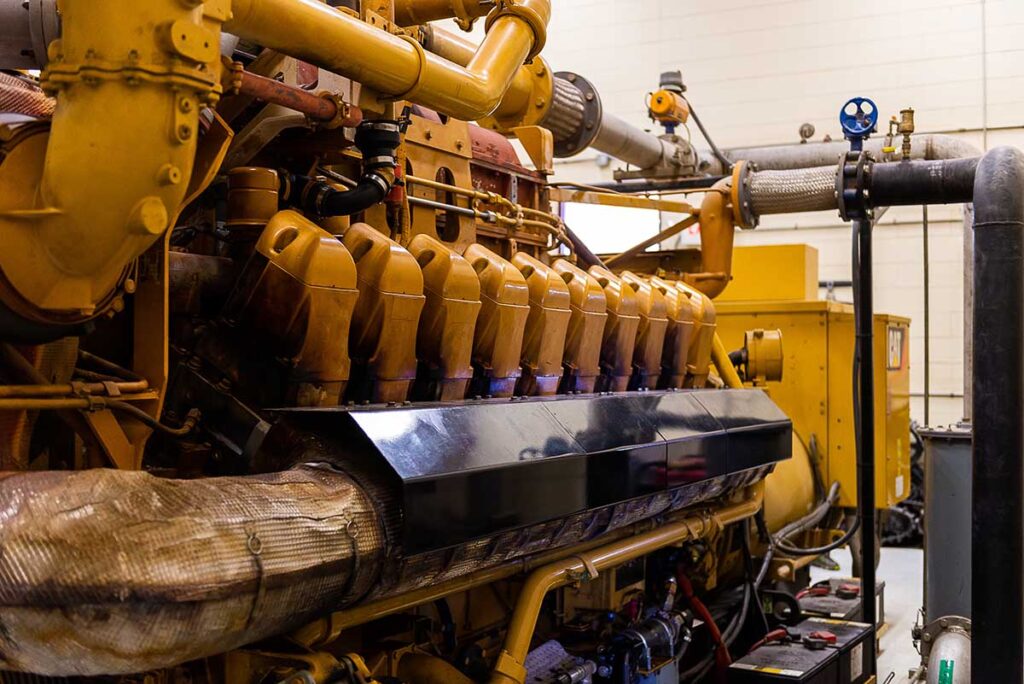
Flint Energies: A microgrid consisting of 15 natural gas generators provides up to two weeks of backup power for a U.S. Army base in Georgia.
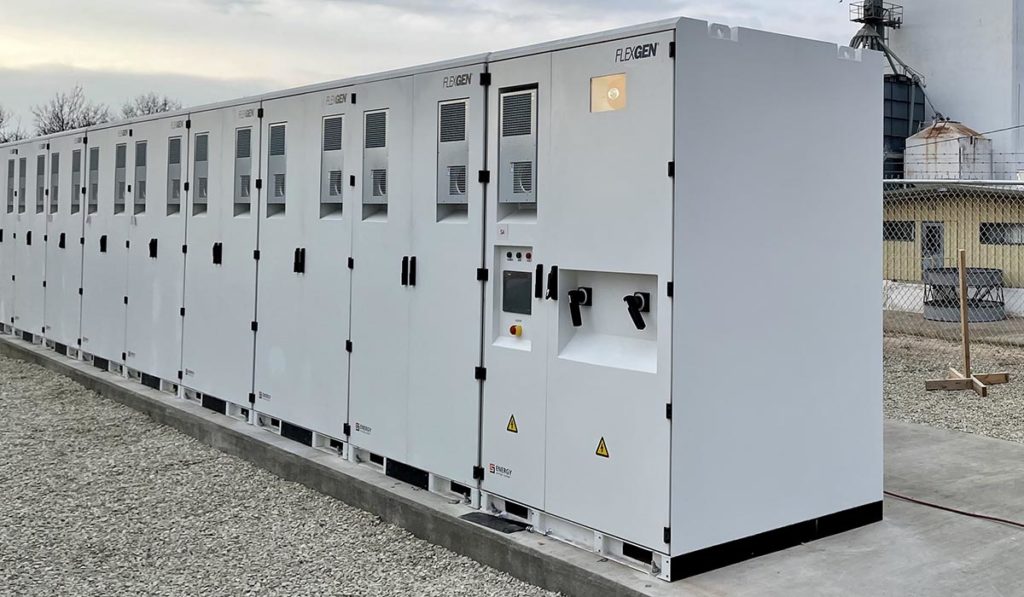
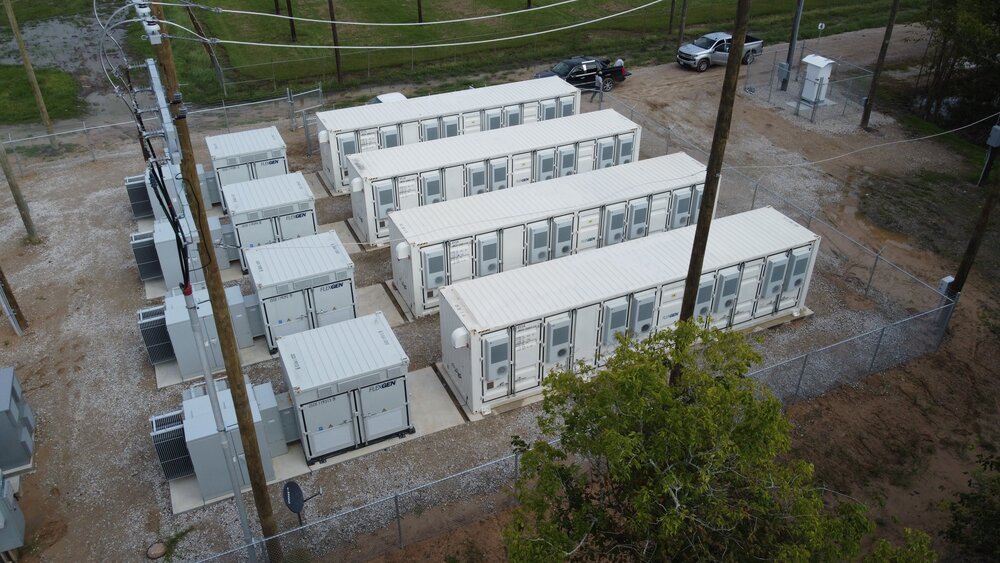
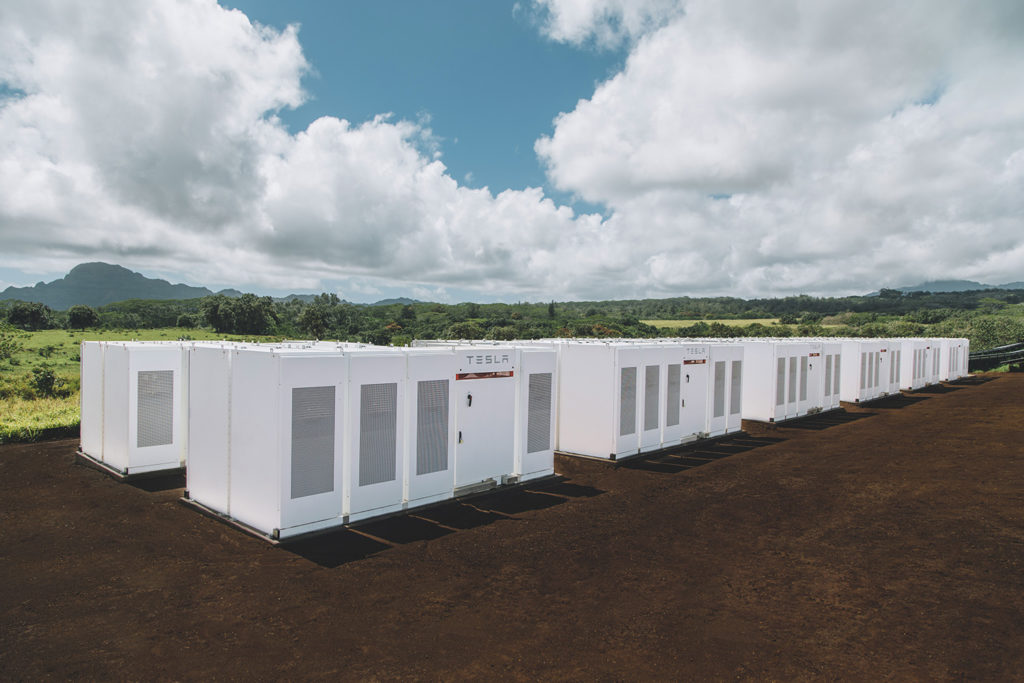
Rappahannock Electric Cooperative: The Brokenburg Battery Energy Storage System can power 1,000 homes for eight hours. It’s the first grid-scale energy storage project by a Virginia electric co-op.
Northeastern Rural Electric Membership Corp.: Members of this Indiana co-op are saving money thanks to Northeastern REMC’s battery storage project, one of the largest in the region. The batteries are charged when electric costs are low and can help meet electric needs during times of peak demand.
Pedernales Electric Cooperative: This Texas electric co-op uses an unmanned aerial system to complete line inspections 23 times faster than manual inspections.
Wildfire Assessment and Resilience for Networks: The WARN project uses advanced analysis to reduce wildfire risks in 39 areas served by co-ops in 16 central and western states.
Great River Energy: More than 370,000 residential appliances including air conditioners, water heaters and heat pumps have been voluntarily enrolled into demand response programs operated by Great River Energy and its 27 member cooperatives. Great River Energy can “cycle” these appliances to reduce electricity demand during periods of high stress in exchange for a reduced electric rate or other incentives.
Delaware Electric Cooperative: The Beat the Peak program helps keep electric rates affordable by asking members to conserve energy when the cost to purchase and produce power is high. Members receive billing credits for enrolling thermostats and electric vehicles and can use an app to track the money they’re saving.
Embracing Responsibility
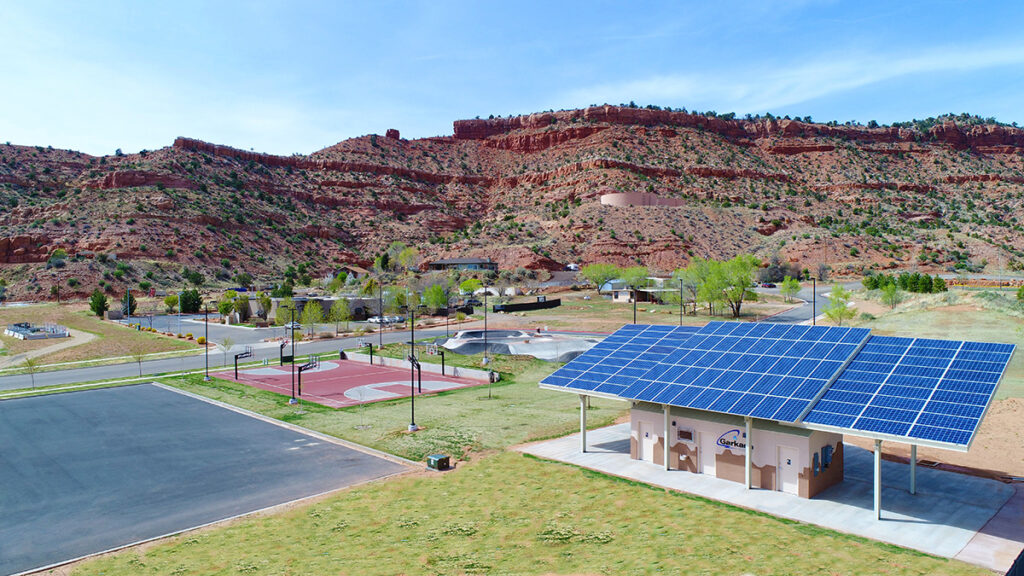
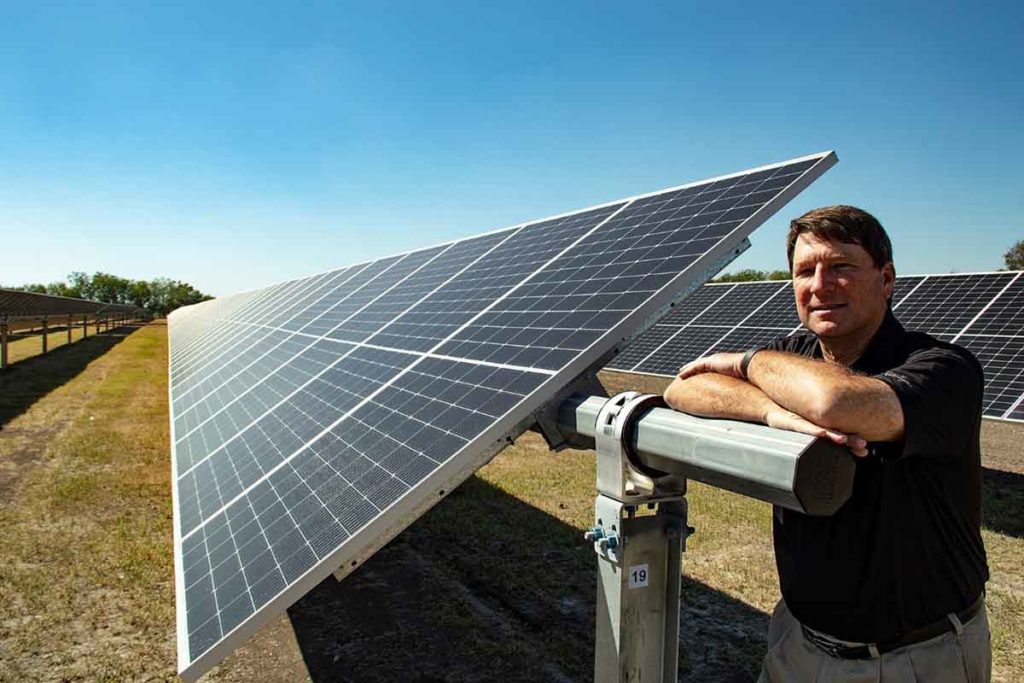
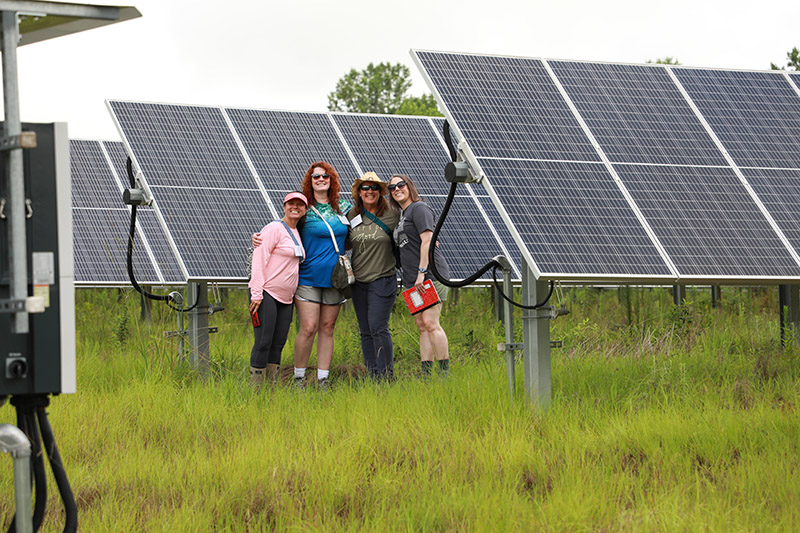
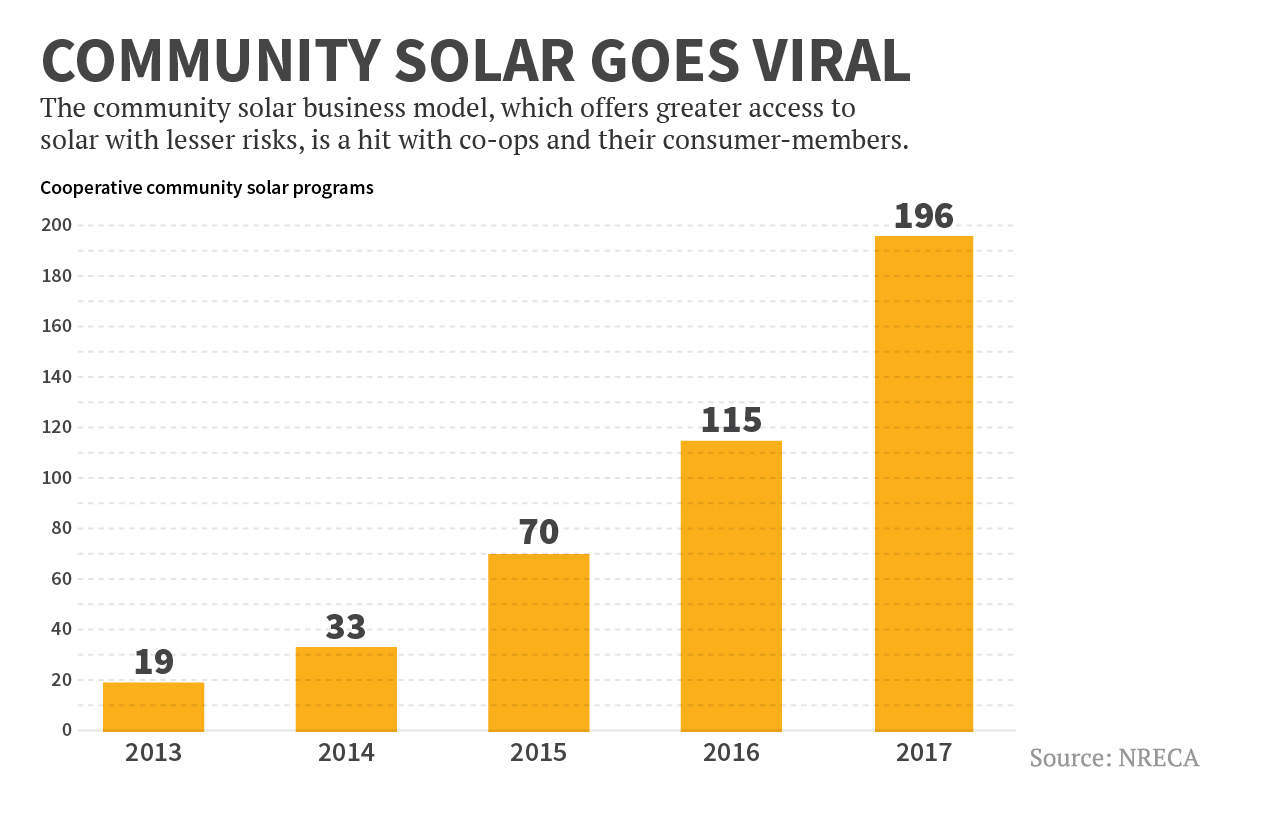
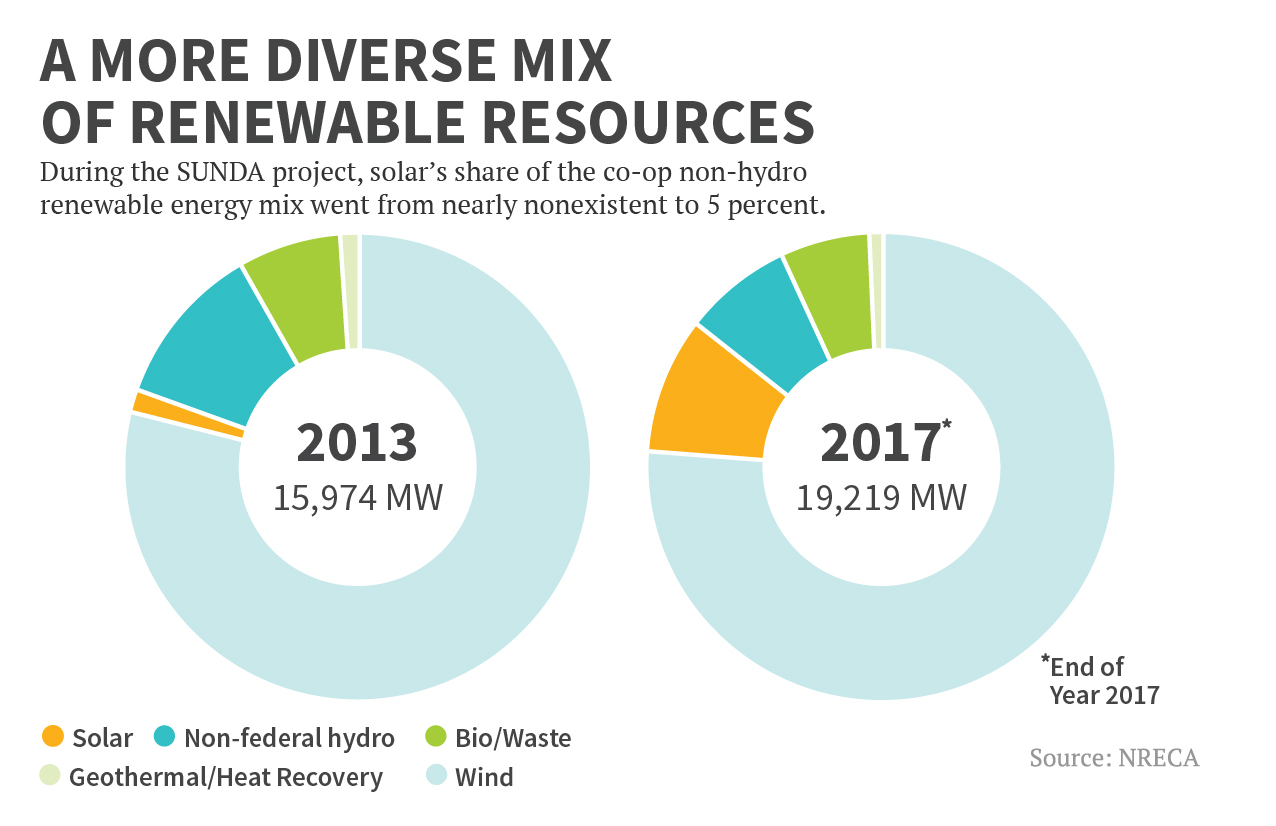
Co-ops are advancing cutting-edge carbon management and other technologies to reduce their environmental impacts—and supporting their communities as they do the same. Over the past decade, electric co-op renewable energy capacity has skyrocketed 192%, with co-ops owning or purchasing about 10% of renewable capacity in the U.S. Co-ops also lead the electric utility sector in the number of community solar programs nationwide.
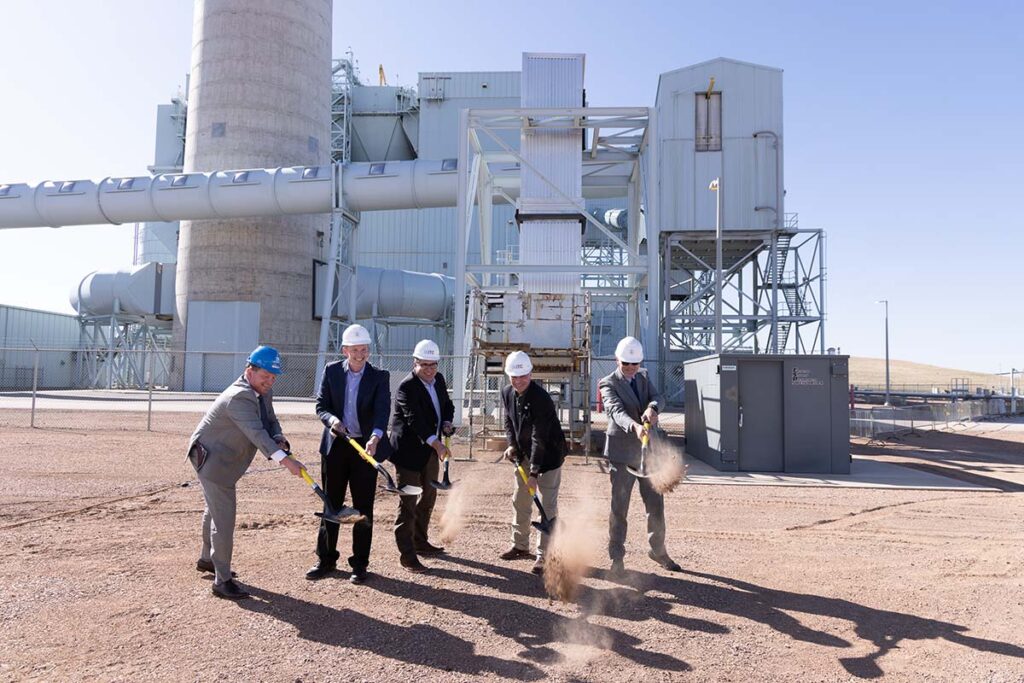
Minnkota Power Cooperative:Project Tundra, one of the world’s largest carbon capture facilities, will capture and permanently store 4 million metric tons of carbon dioxide annually in North Dakota. That’s the equivalent of taking 890,000 gasoline-powered cars off the road.
Basin Electric Power Cooperative: The CarbonSAFE Project, funded by the Department of Energy, is studying the feasibility of underground carbon dioxidestorage in Wyoming.
Buckeye Power: This Ohio generation co-op—among others—converts a byproduct of sulfur dioxide into synthetic gypsum, which is used in wallboard, fertilizer and other products.
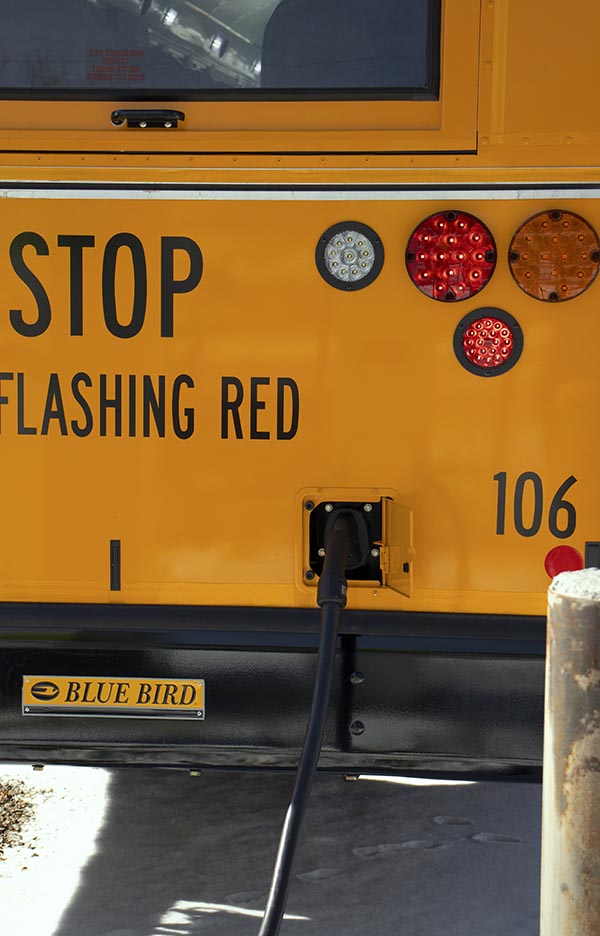
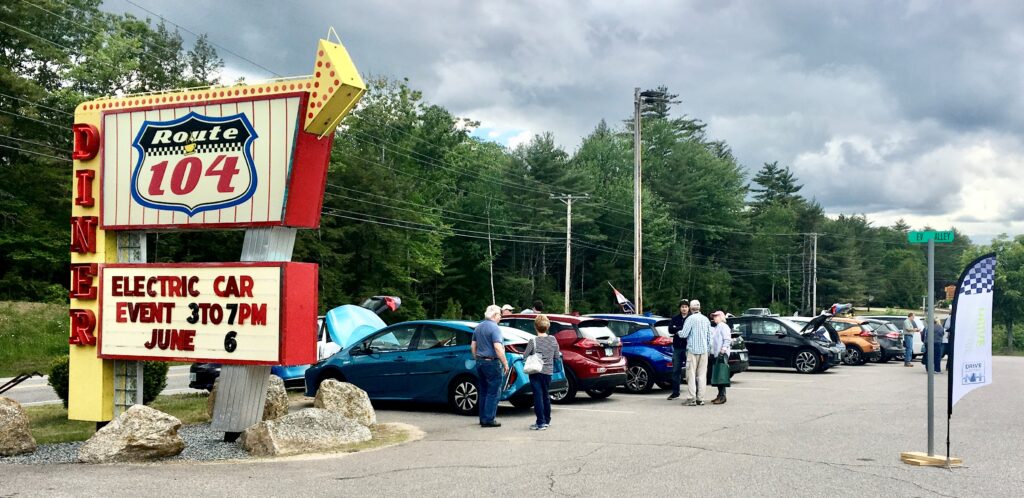
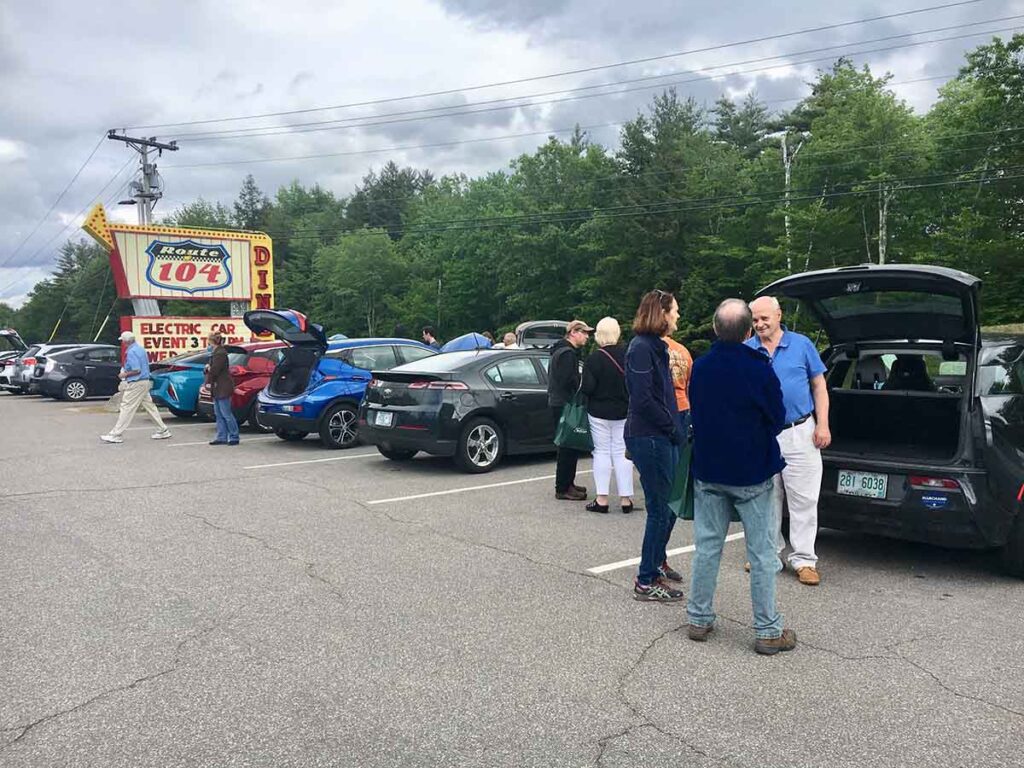
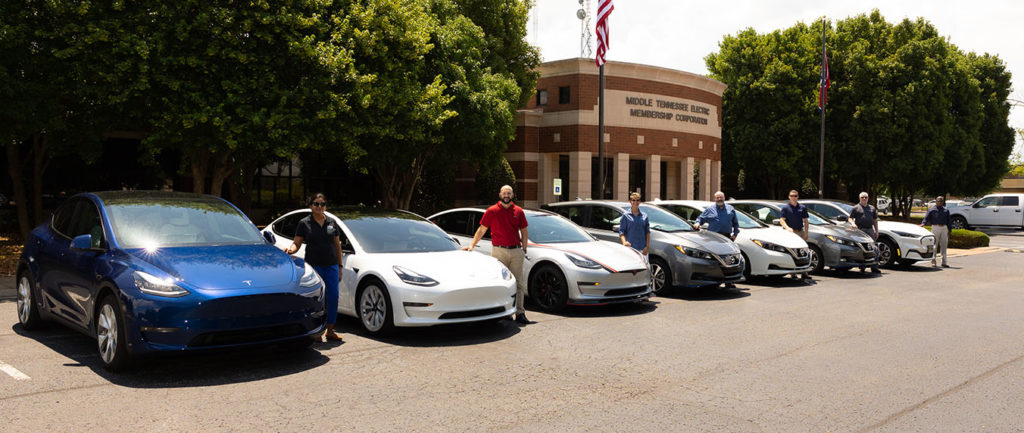
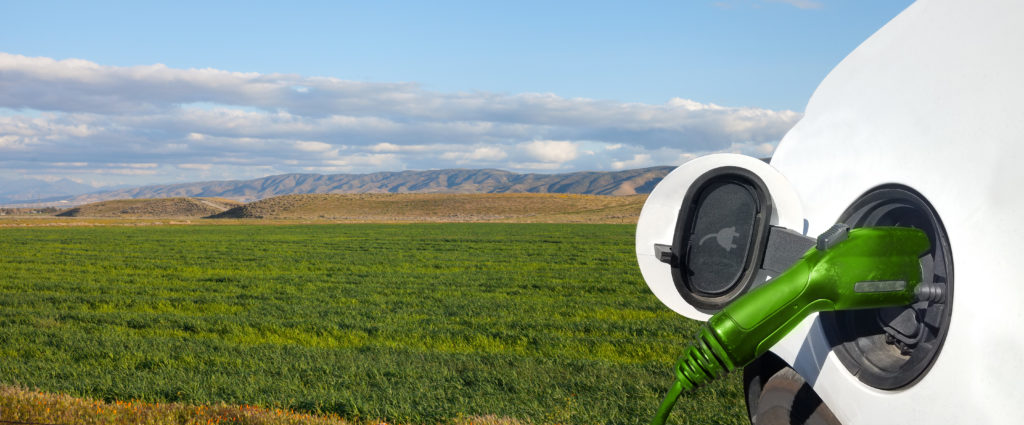
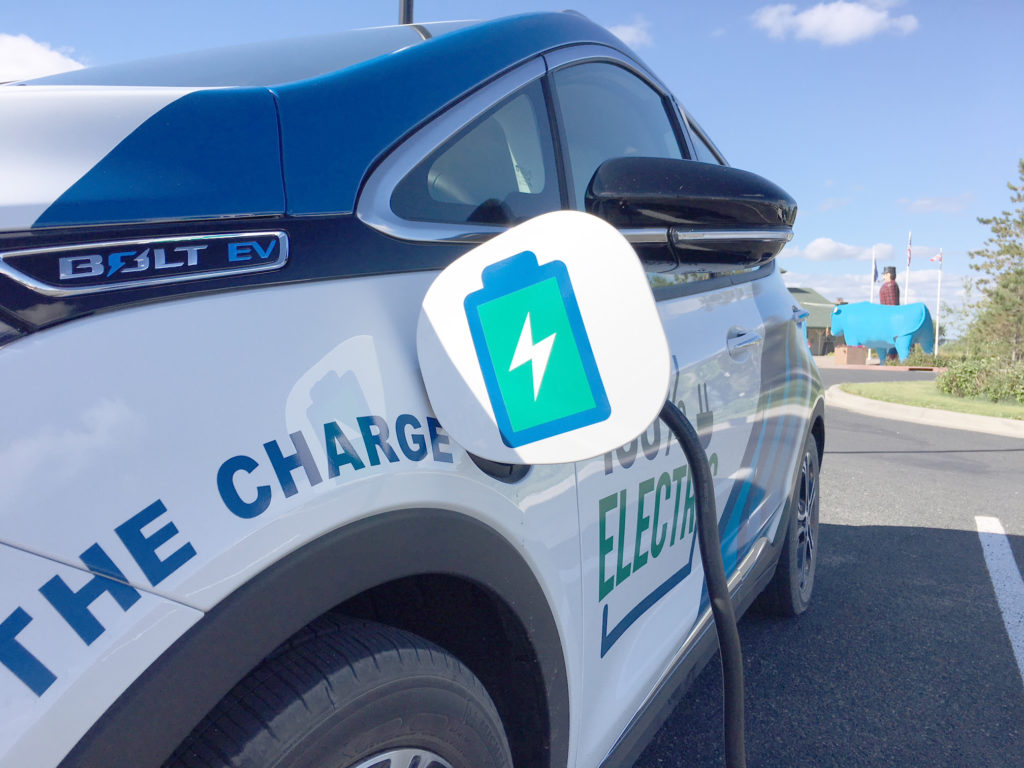
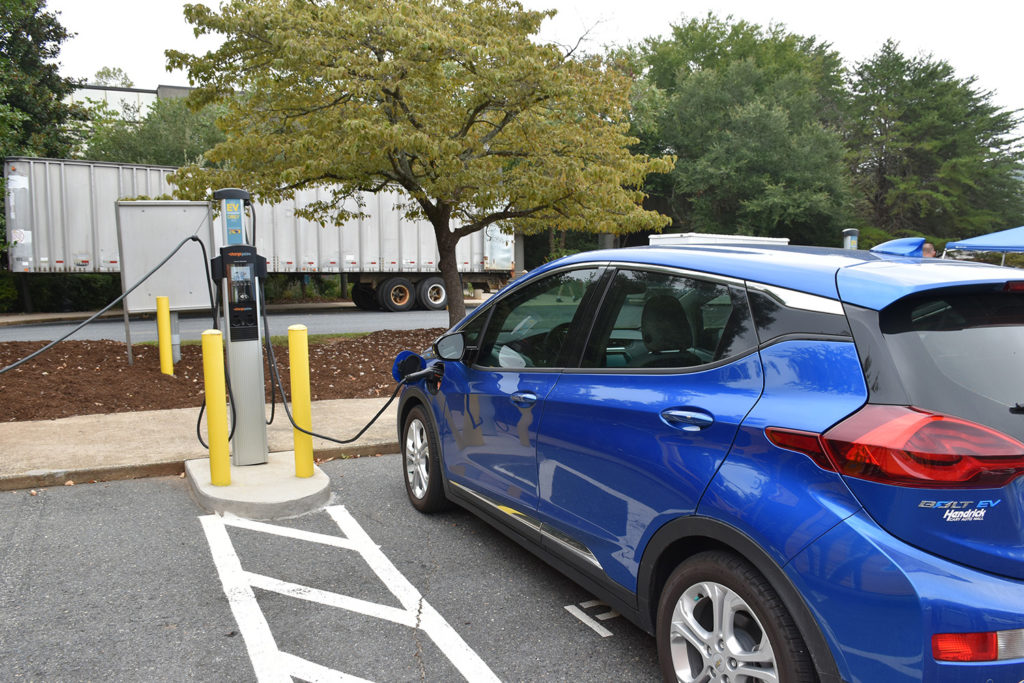
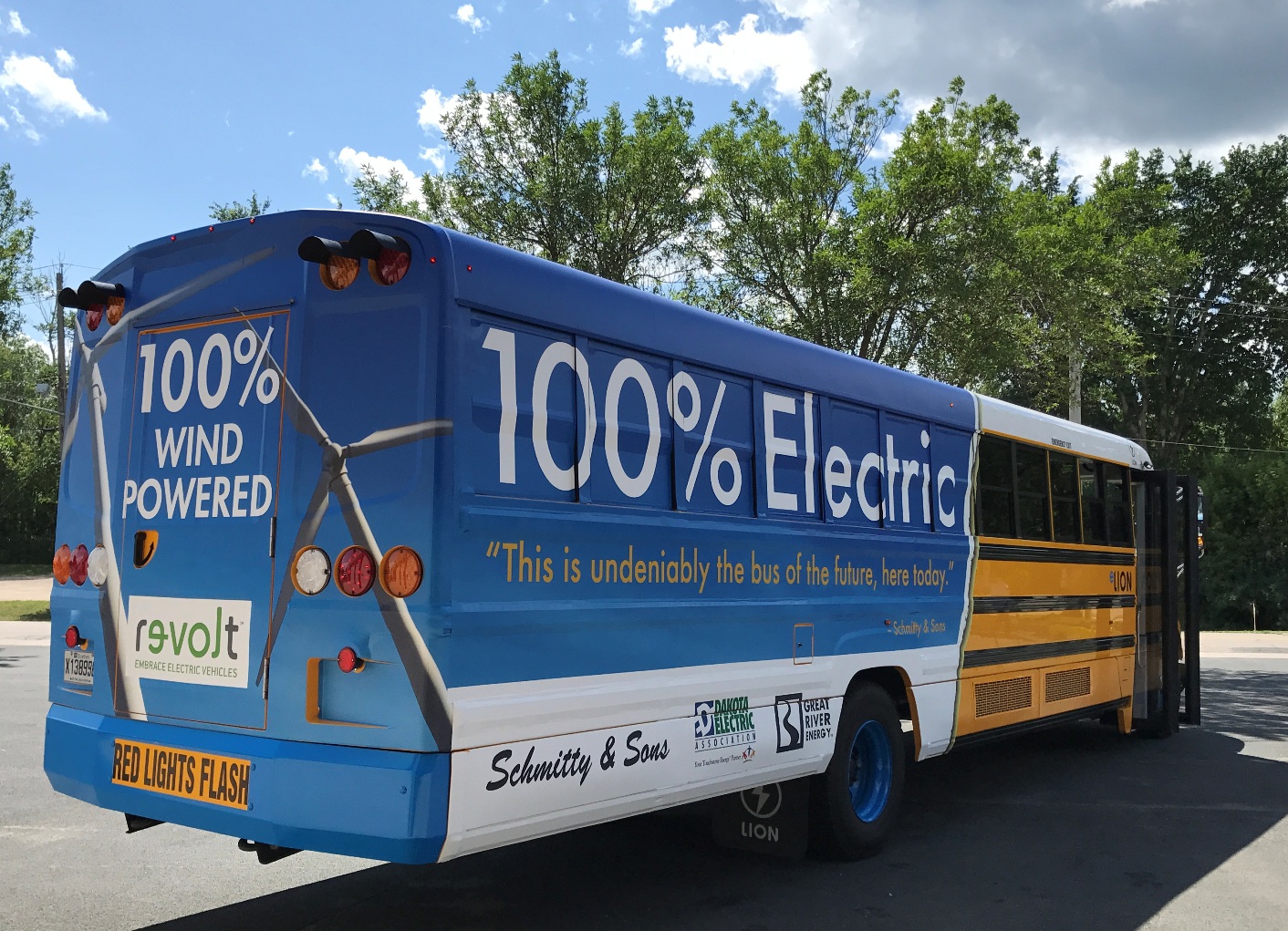
Lewis County Rural Electric Cooperative: Students across the country are getting a clean ride to school thanks to electric school buses funded through the bipartisan infrastructure law. Lewis County Rural Electric Cooperative helped bring the first one to Missouri and partners with schools to support their adoption.
Wolverine Power Cooperative and Hoosier Energy: Two Midwest generation and transmission co-ops reached a historic deal to recommission a nuclear plant for the first time in the nation.
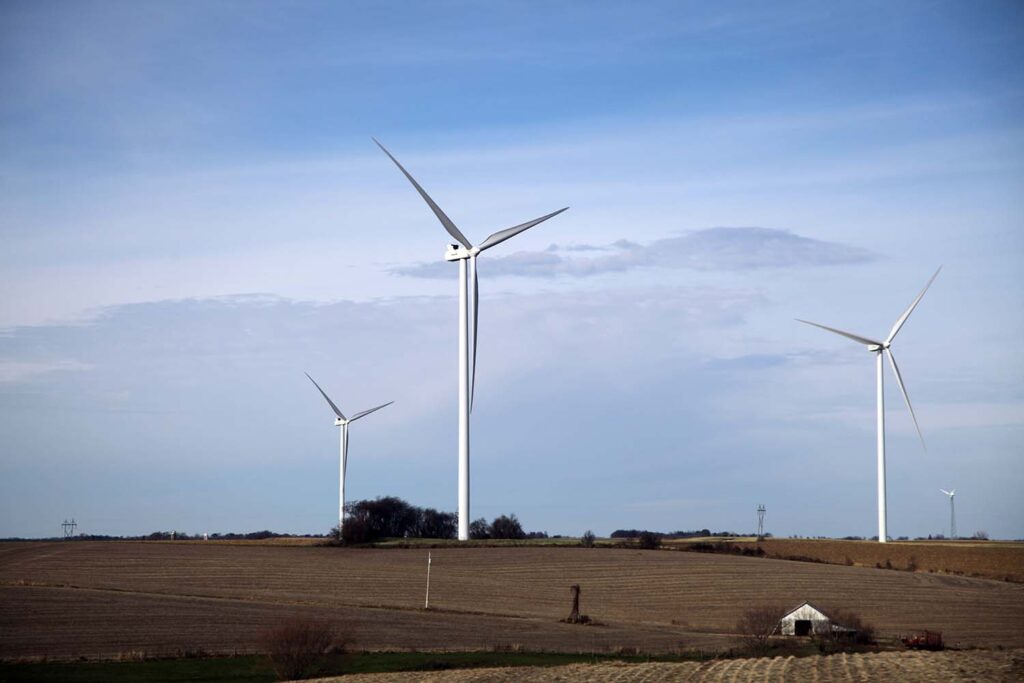
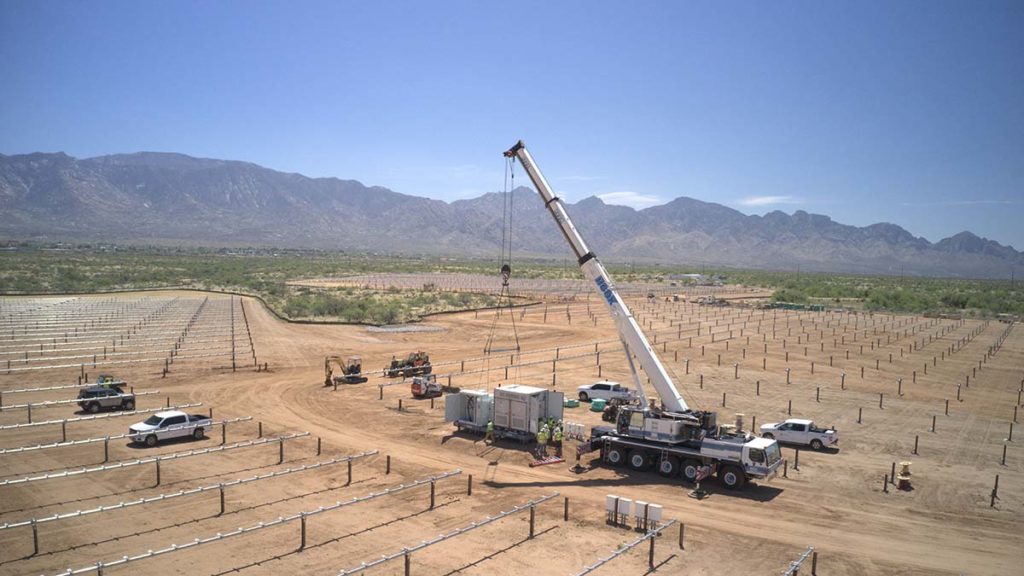
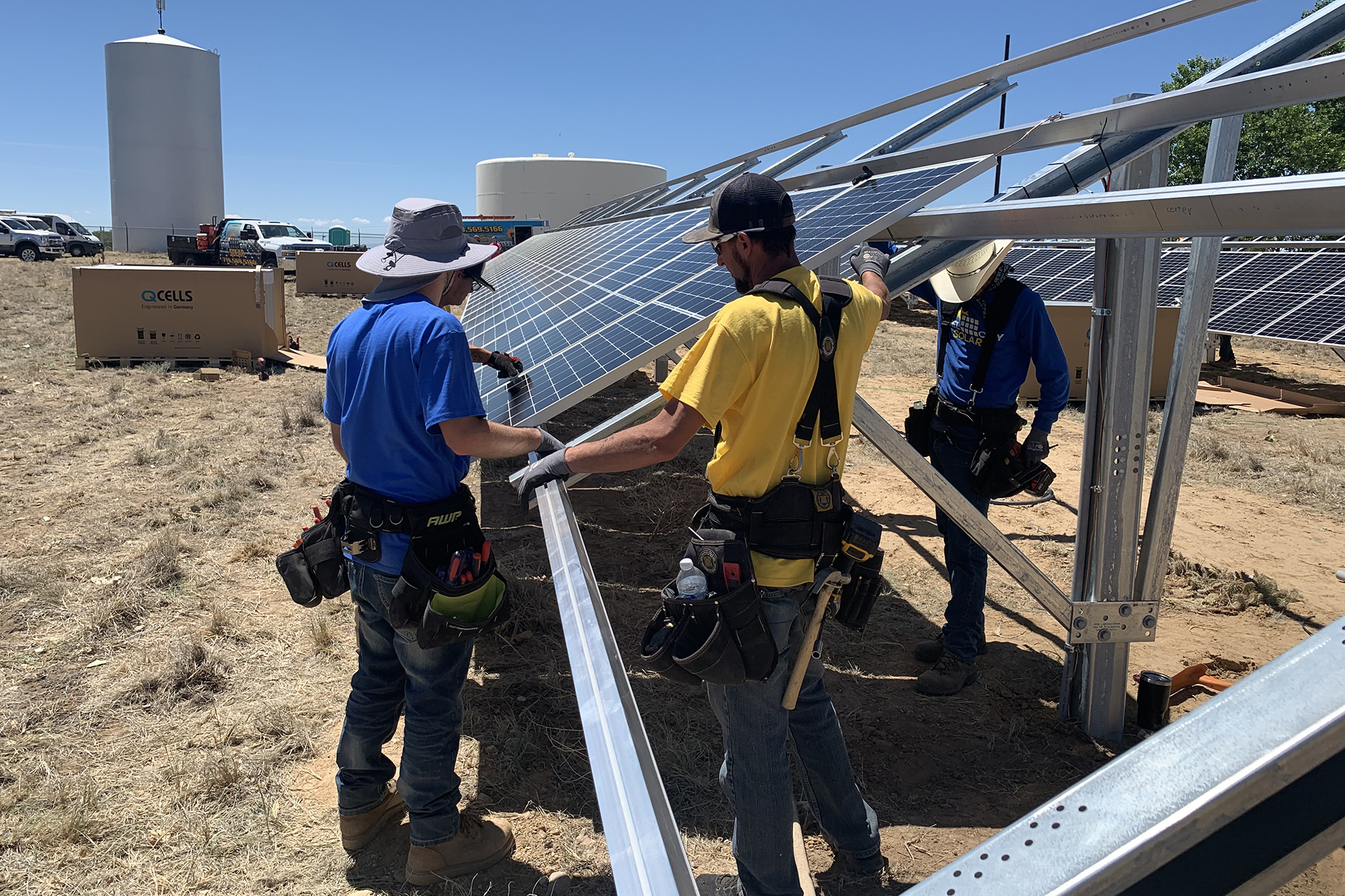
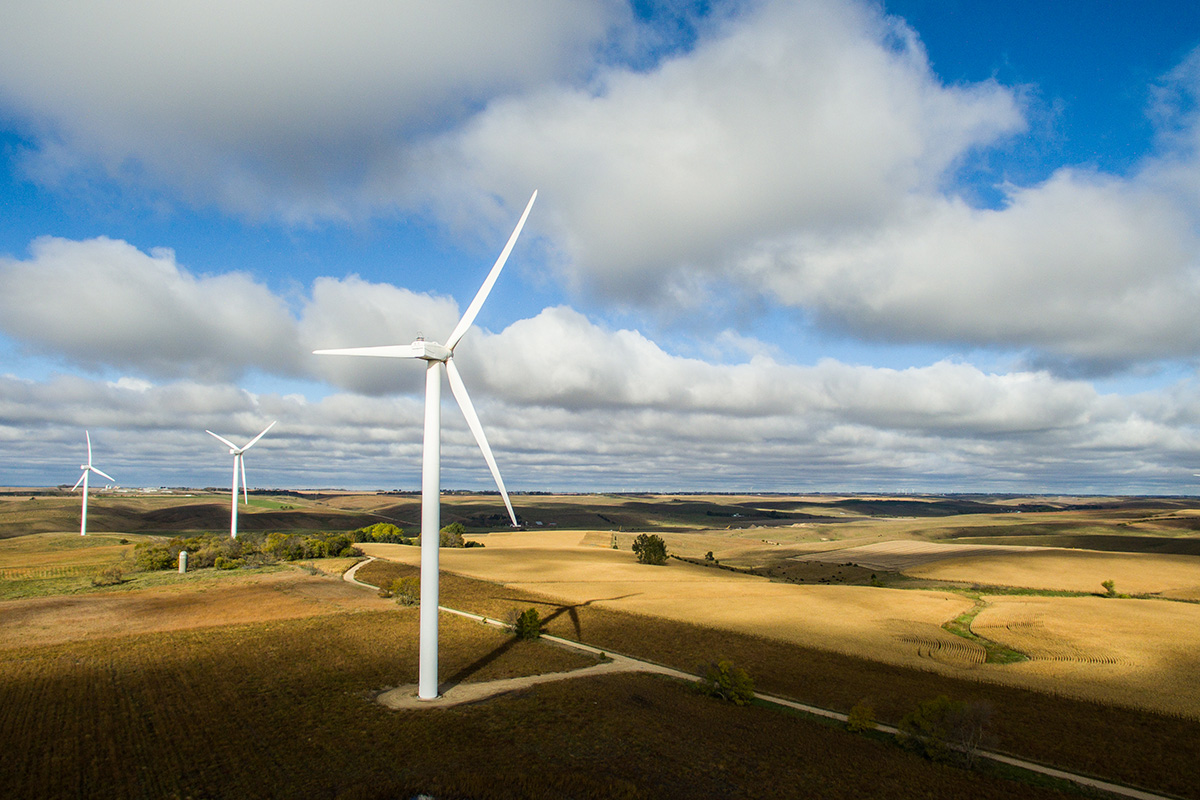
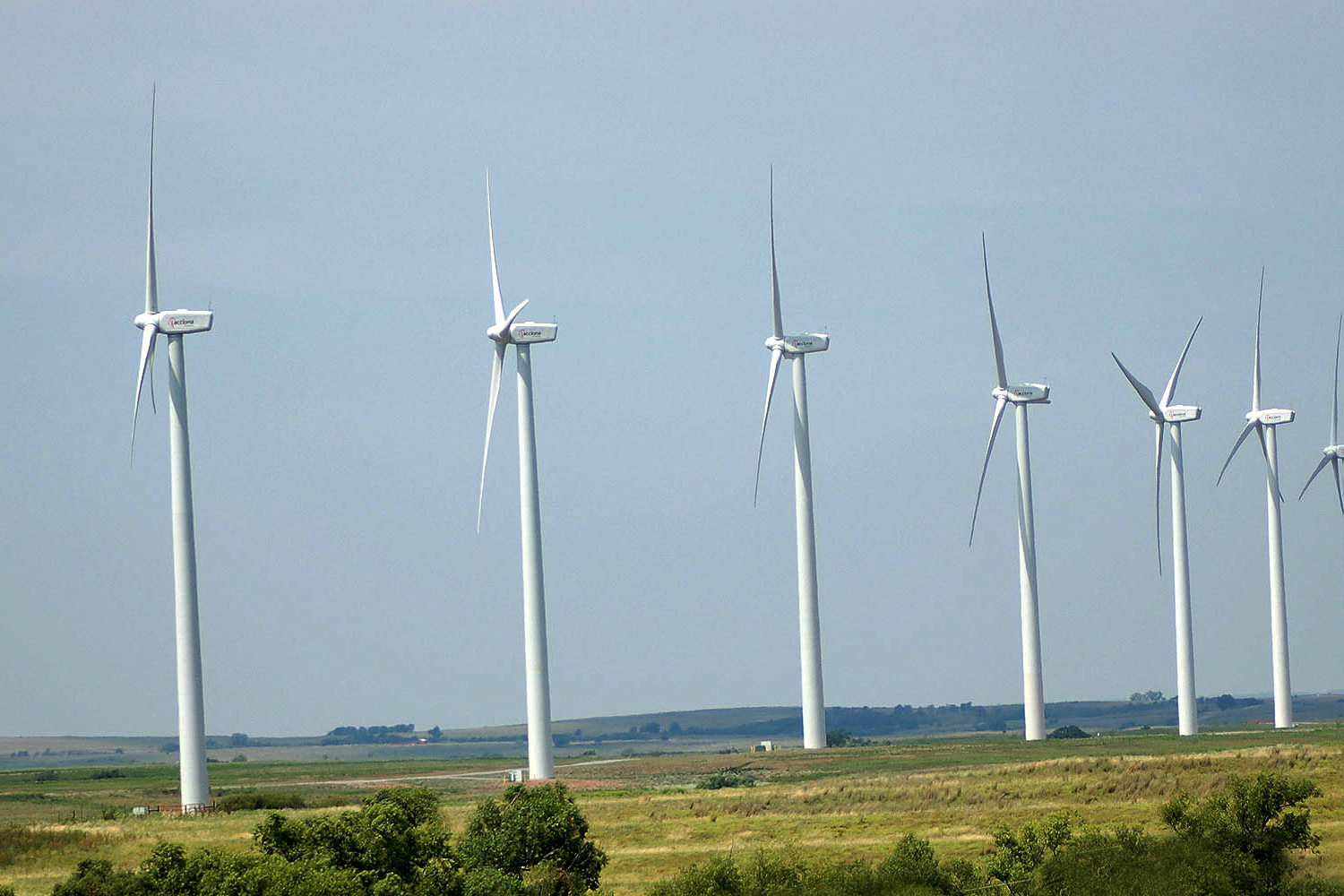
Western Farmers Electric Cooperative: This Oklahoma co-op is developing the Skeleton Creek Project, the nation’s largest combined wind and solar energy and battery storage site.
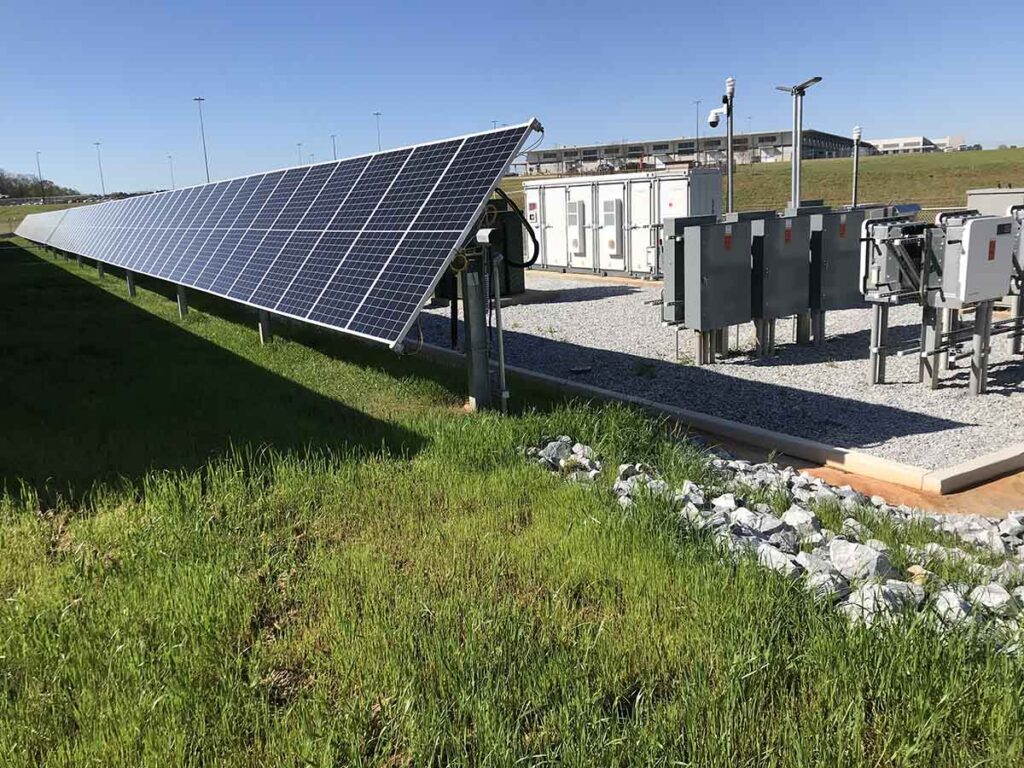
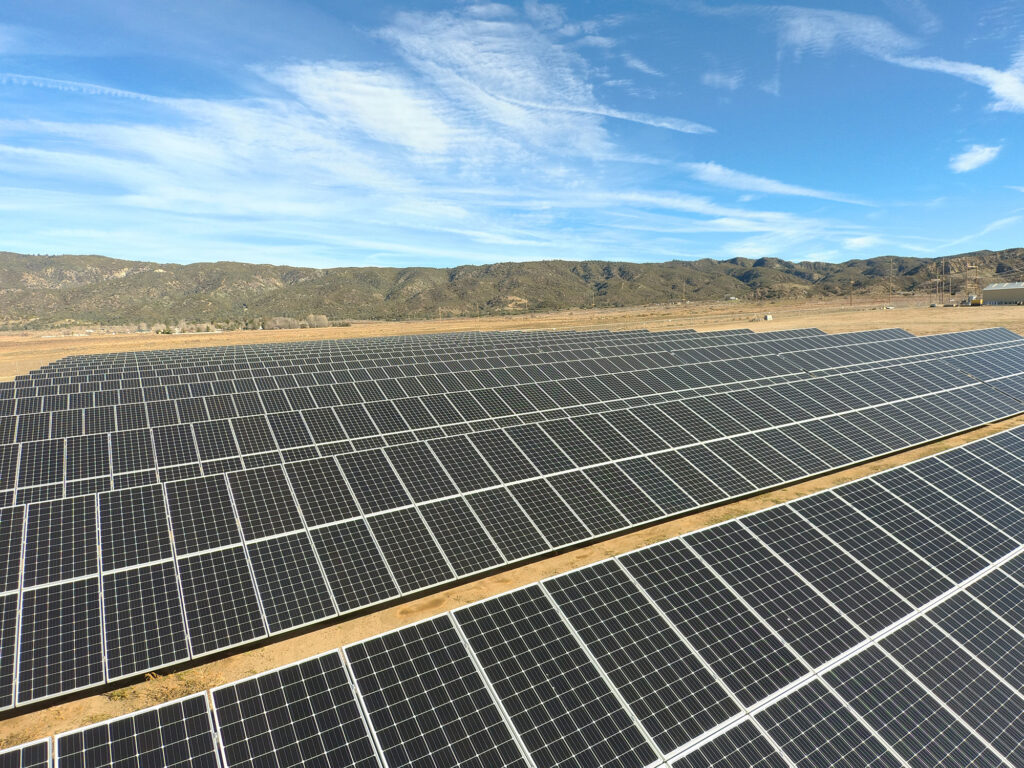
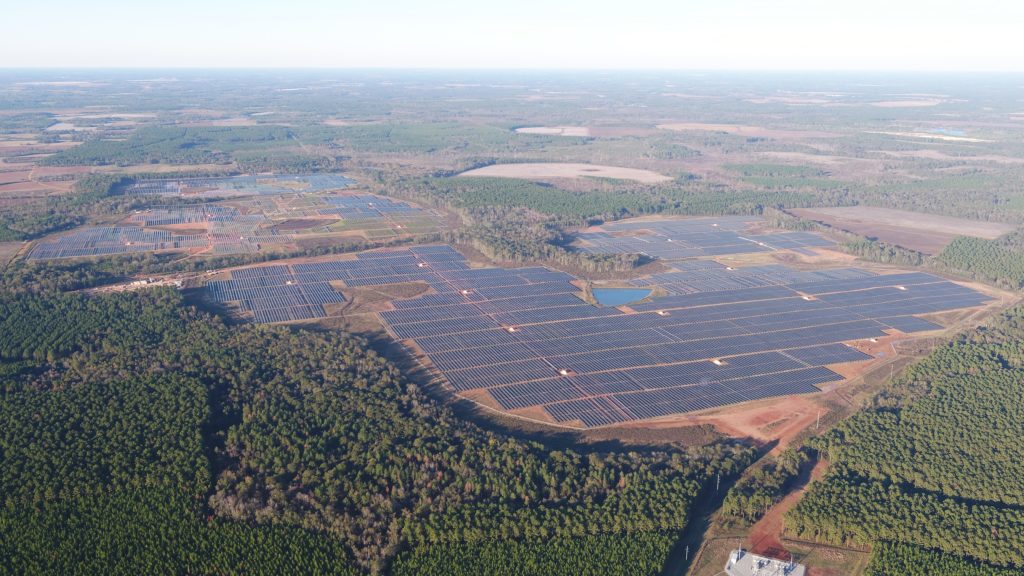
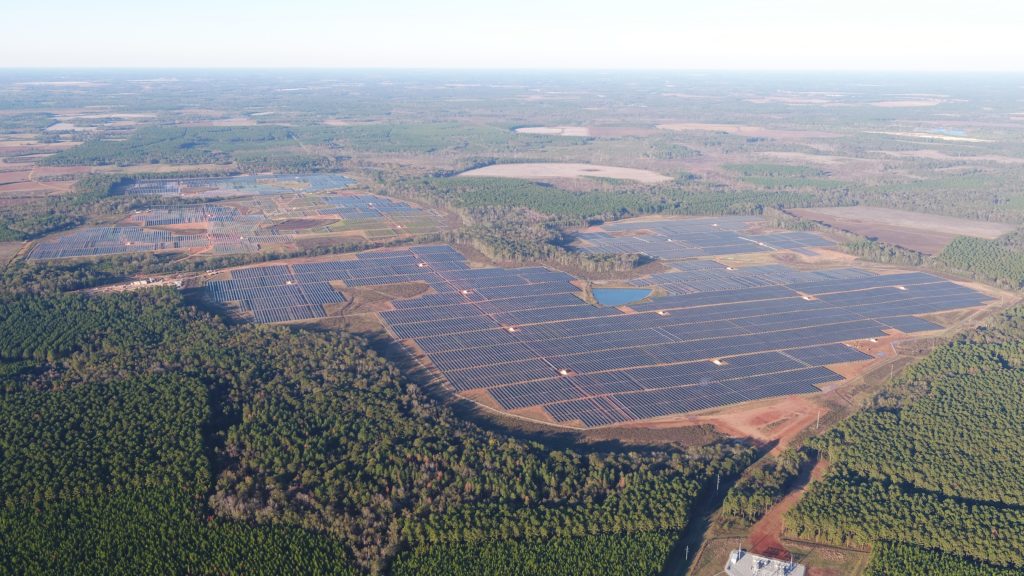
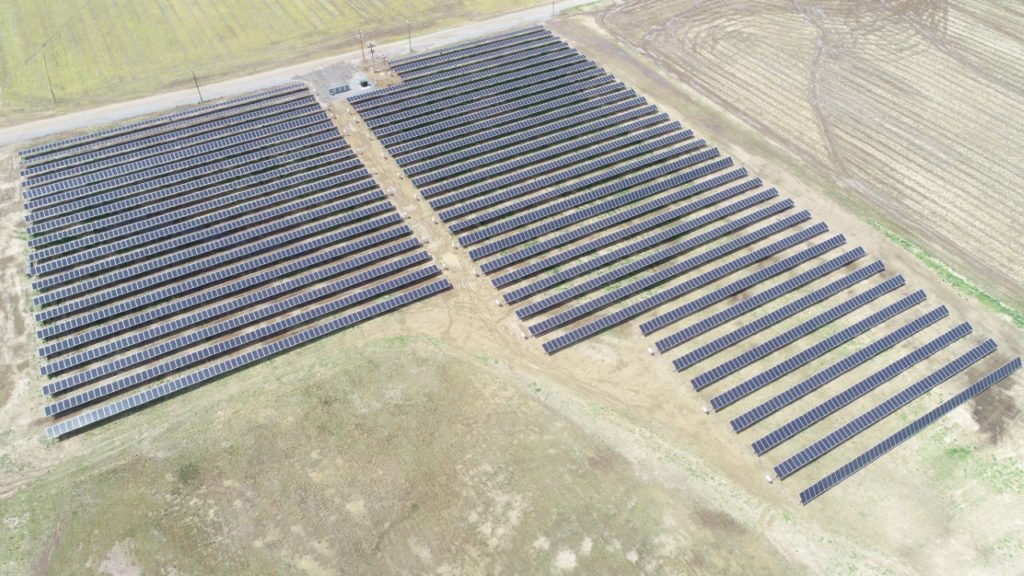
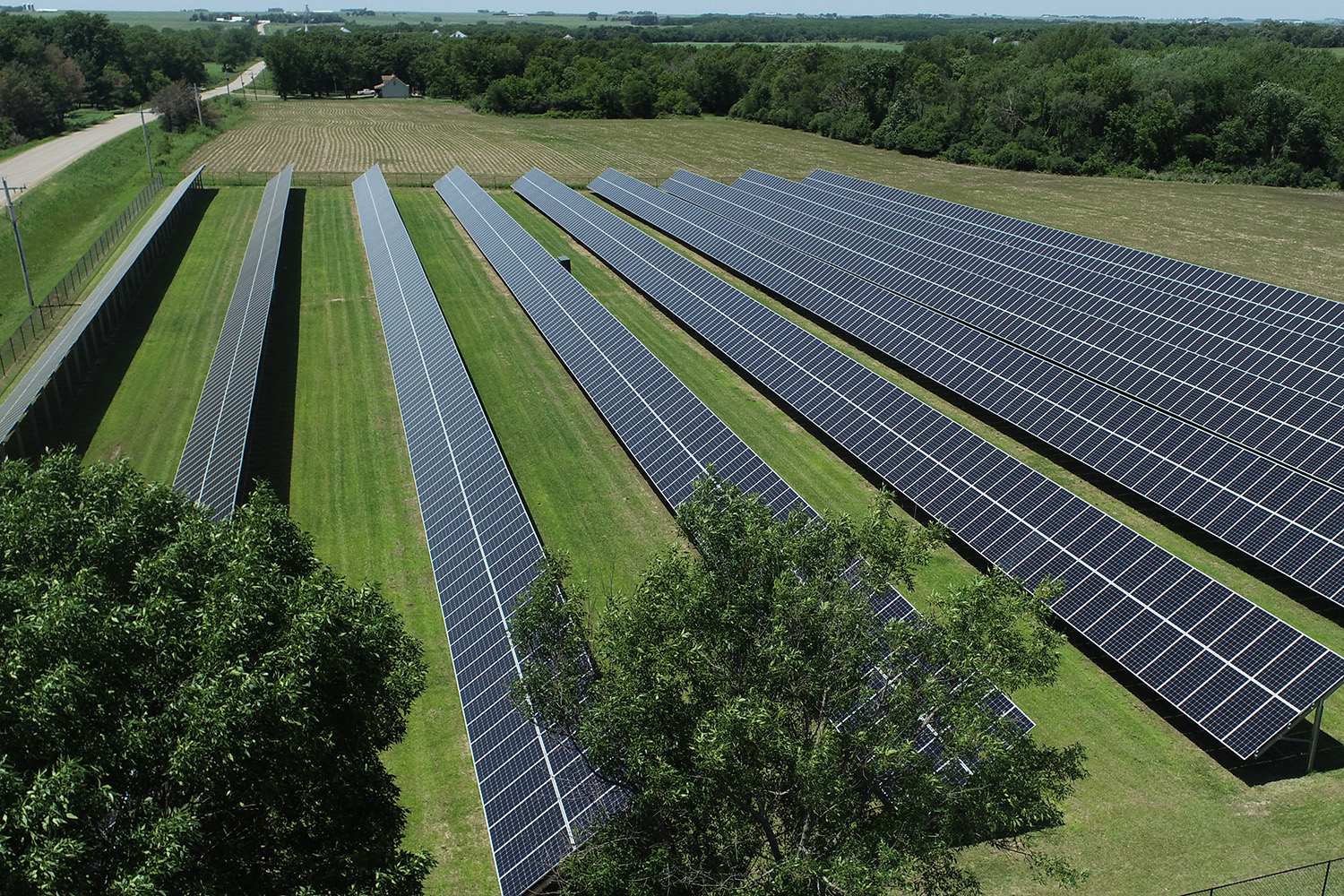
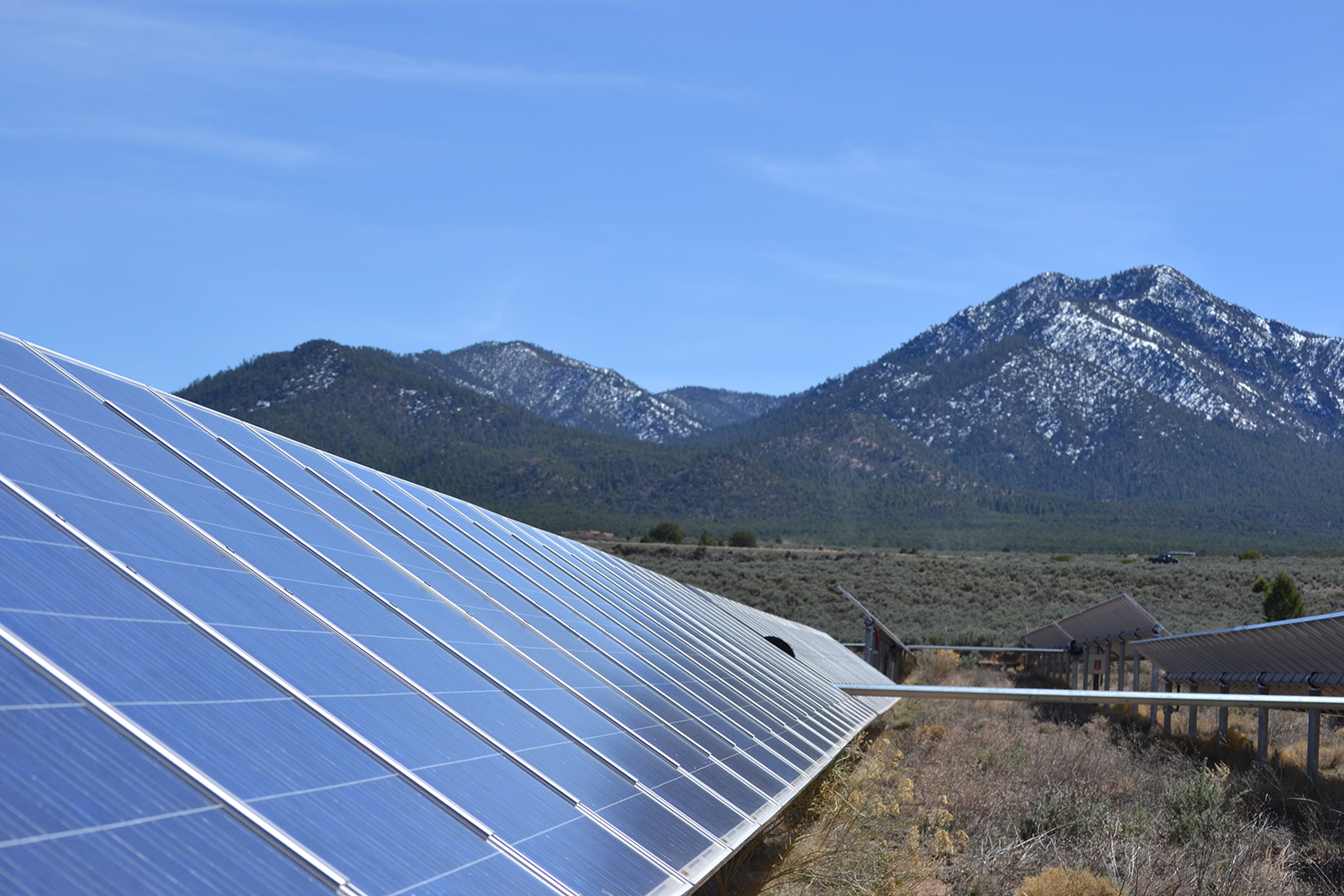
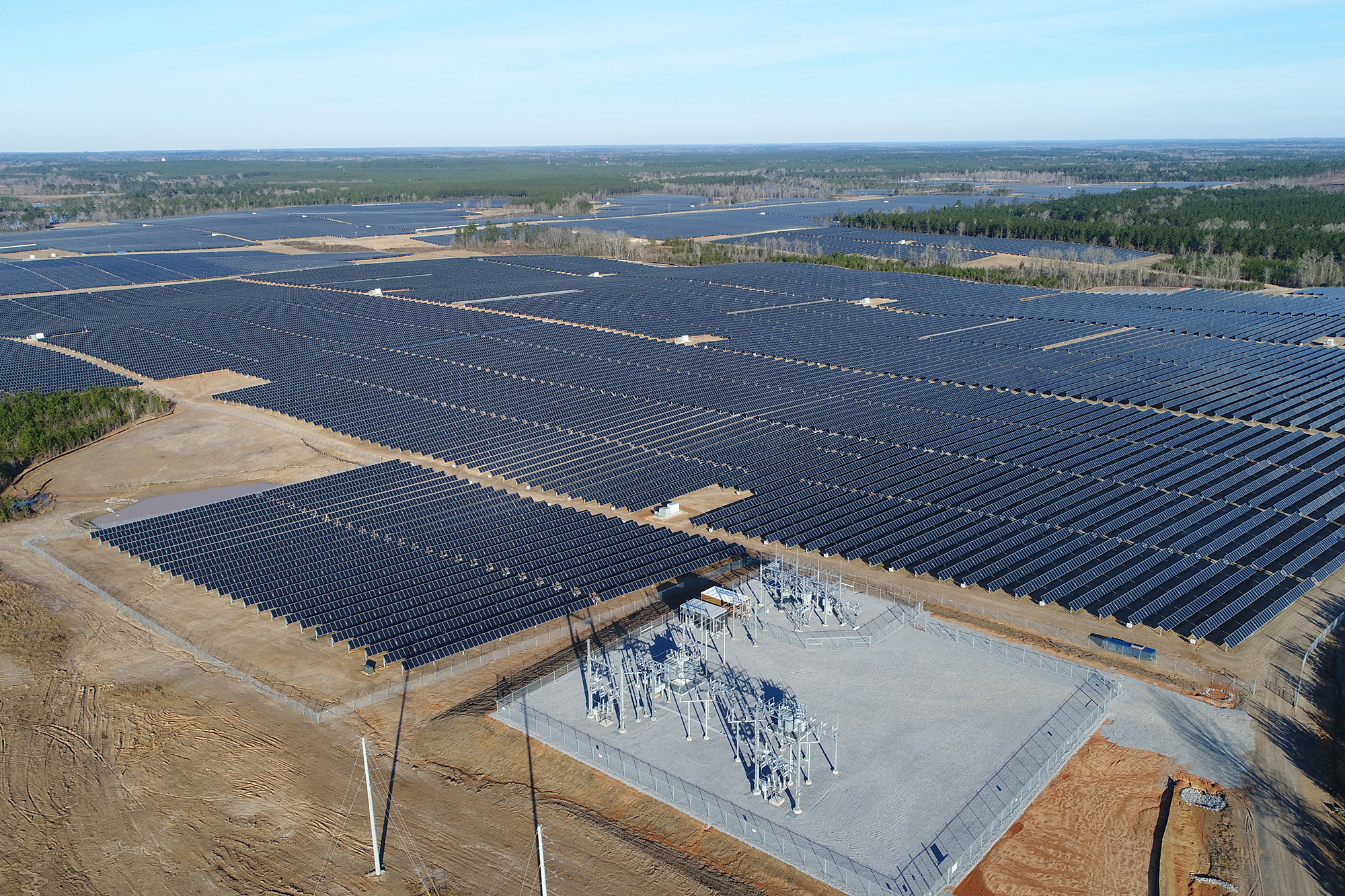
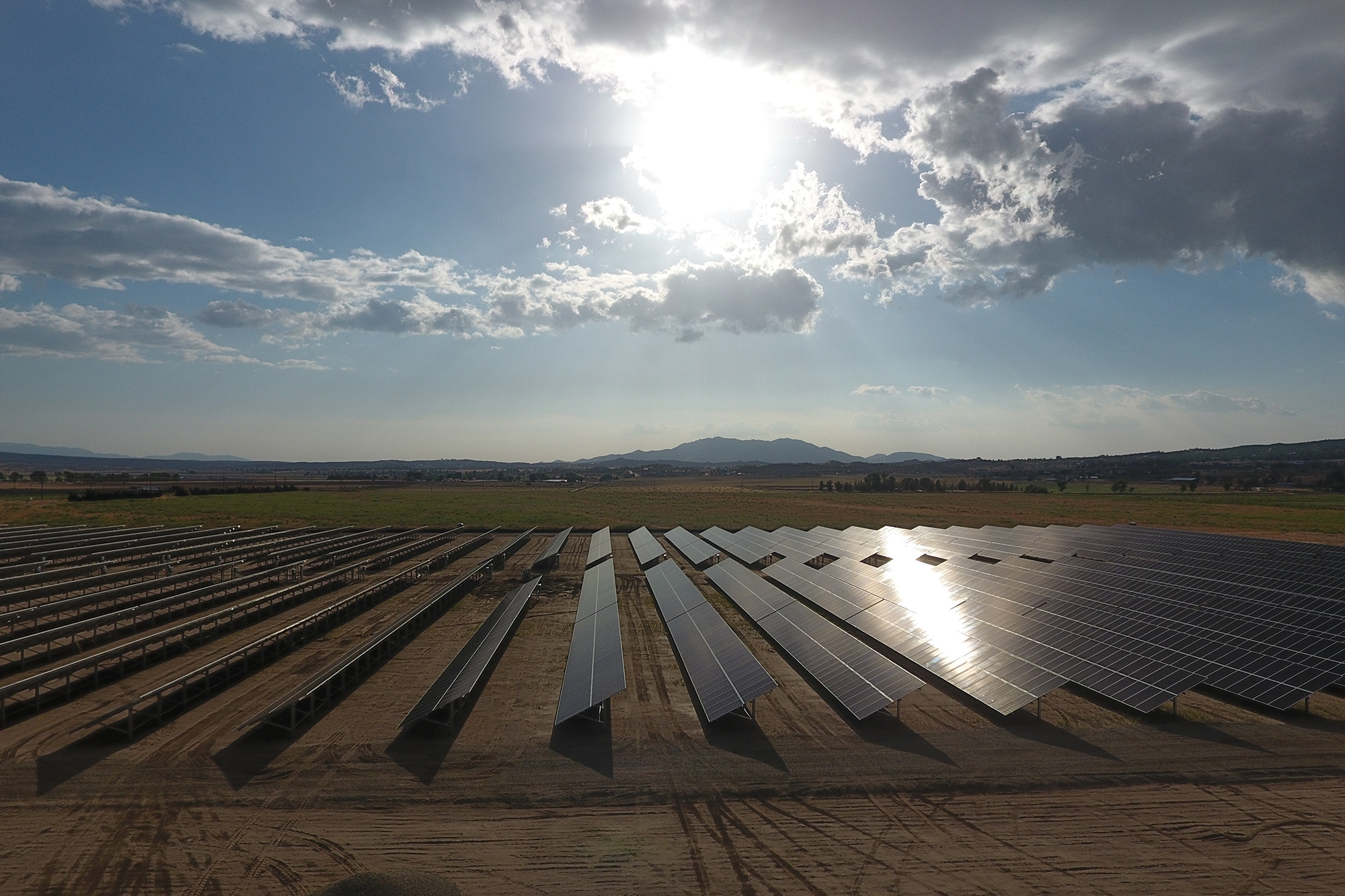
Central Iowa Power Cooperative: The Wapello Solar Project is the largest in Iowa and one of the largest in the Midwest. It can power 21,000 homes.
Laclede Electric Cooperative: This Missouri co-op has signed a contract with Fort Leonard Wood to help the U.S. army base transition its non-tactical vehicles to all-electric by 2035.
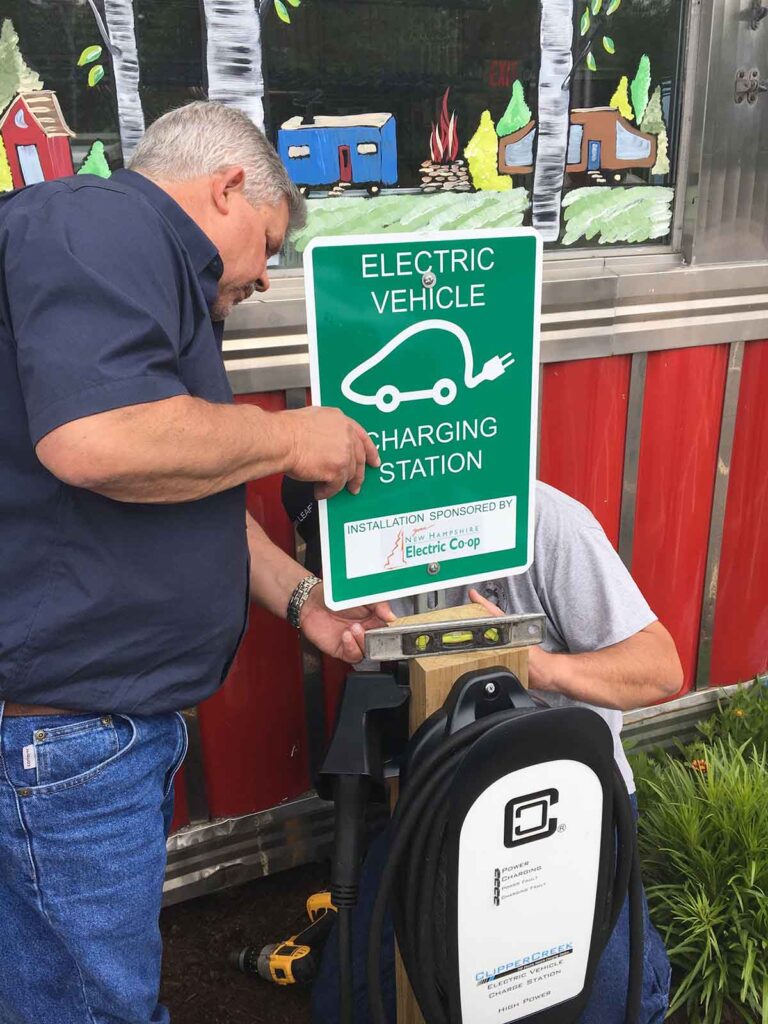
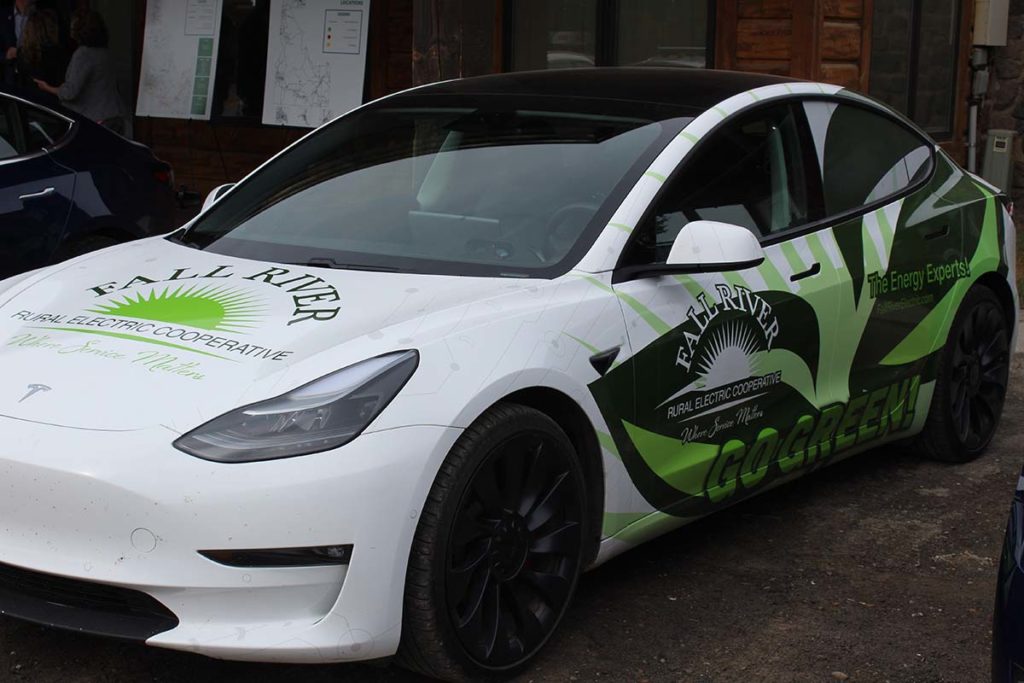
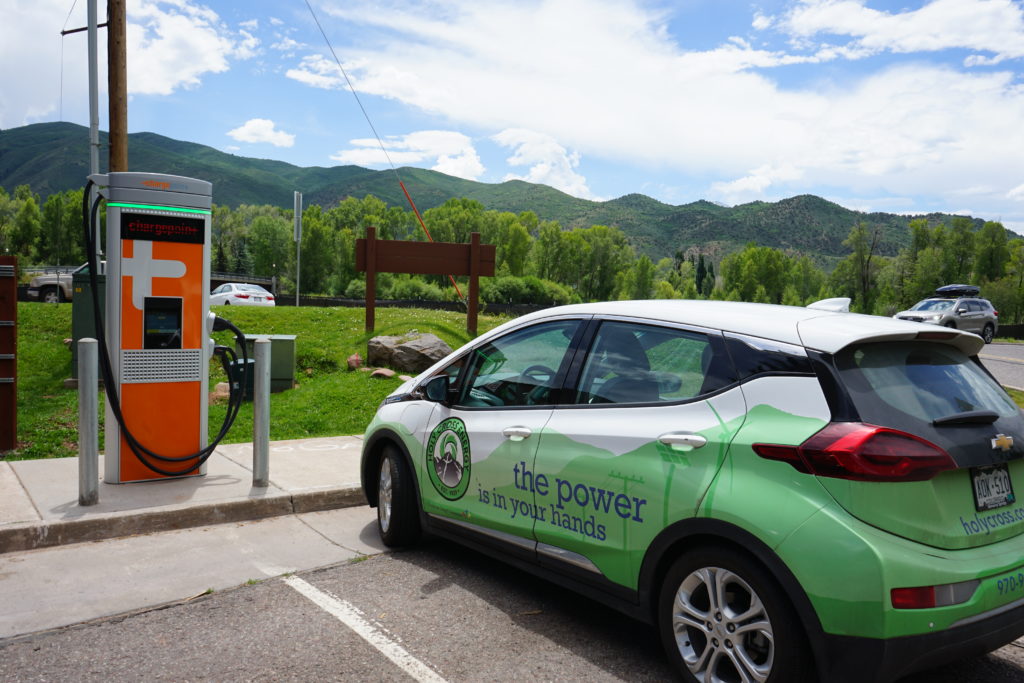
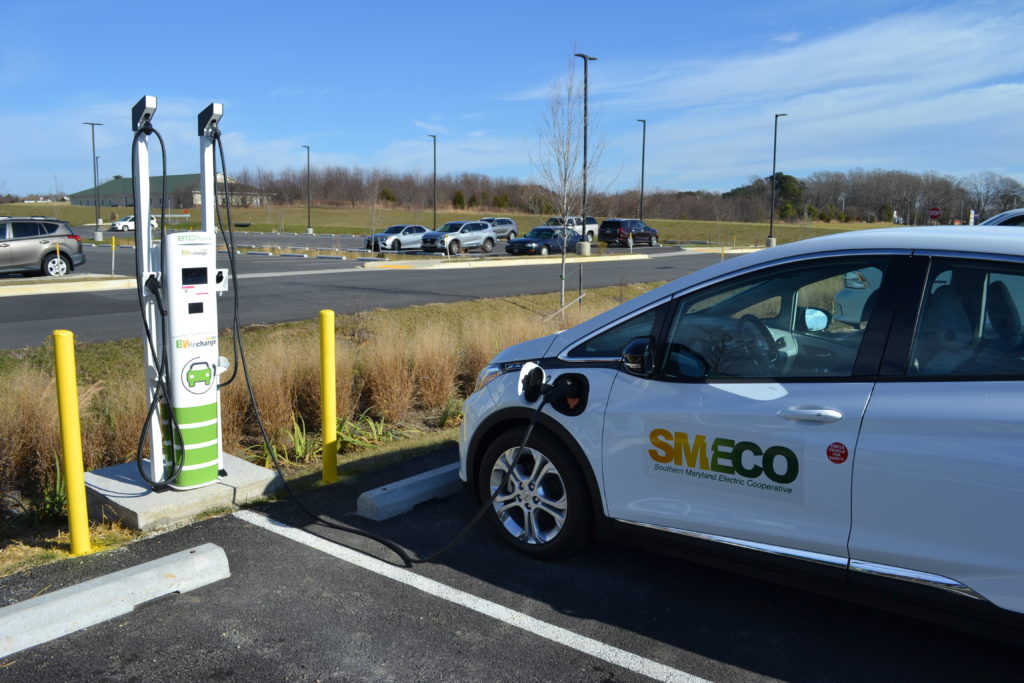
Fall River Rural Electric Cooperative: An $865,000 investment helped create ChargeWest, a vehicle charging network through eight states with chargers near Yellowstone and Grand Teton National Parks.
Seminole Electric Cooperative: This Florida co-op—which already operates its Cooperative Solar facility—is working with Florida Renewable Partners to build new solar generating facilities that will power approximately 60,000 homes.
Empowering Consumers and Communities
Innovative co-op programs are empowering consumers to make more informed energy choices. Electric co-ops are also on pace to connect 3.6 million homes with world-class gigabit fiber optic broadband by 2027, alongside other investments that support economic growth. These investments ensure that co-op communities remain great places to live, learn and earn.
Ouachita Electric Cooperative: The HELP PAYS program offers Arkansas homeowners a financing tool for energy efficiency upgrades, with average monthly savings of 20%.
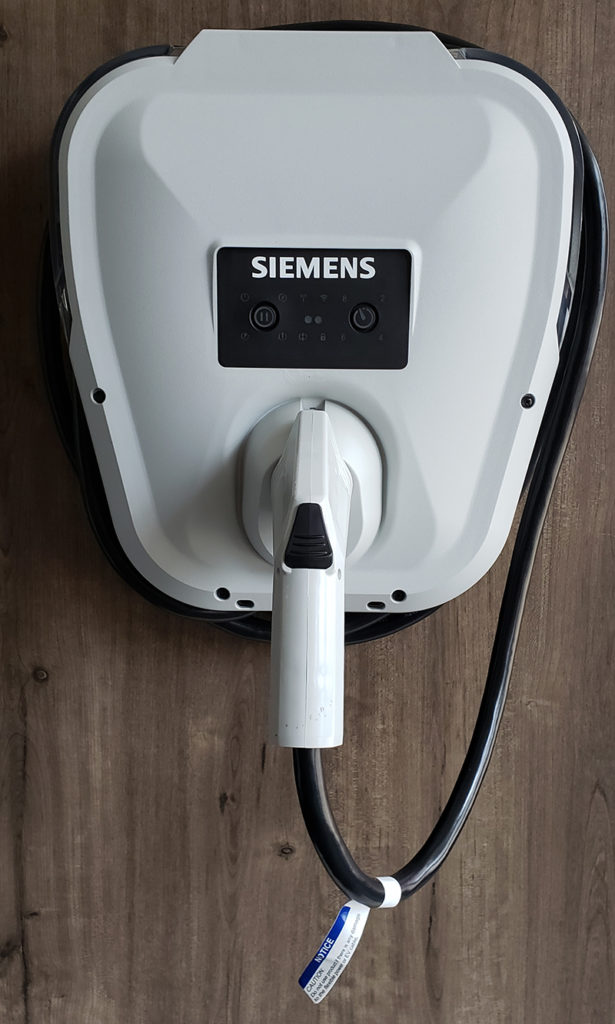
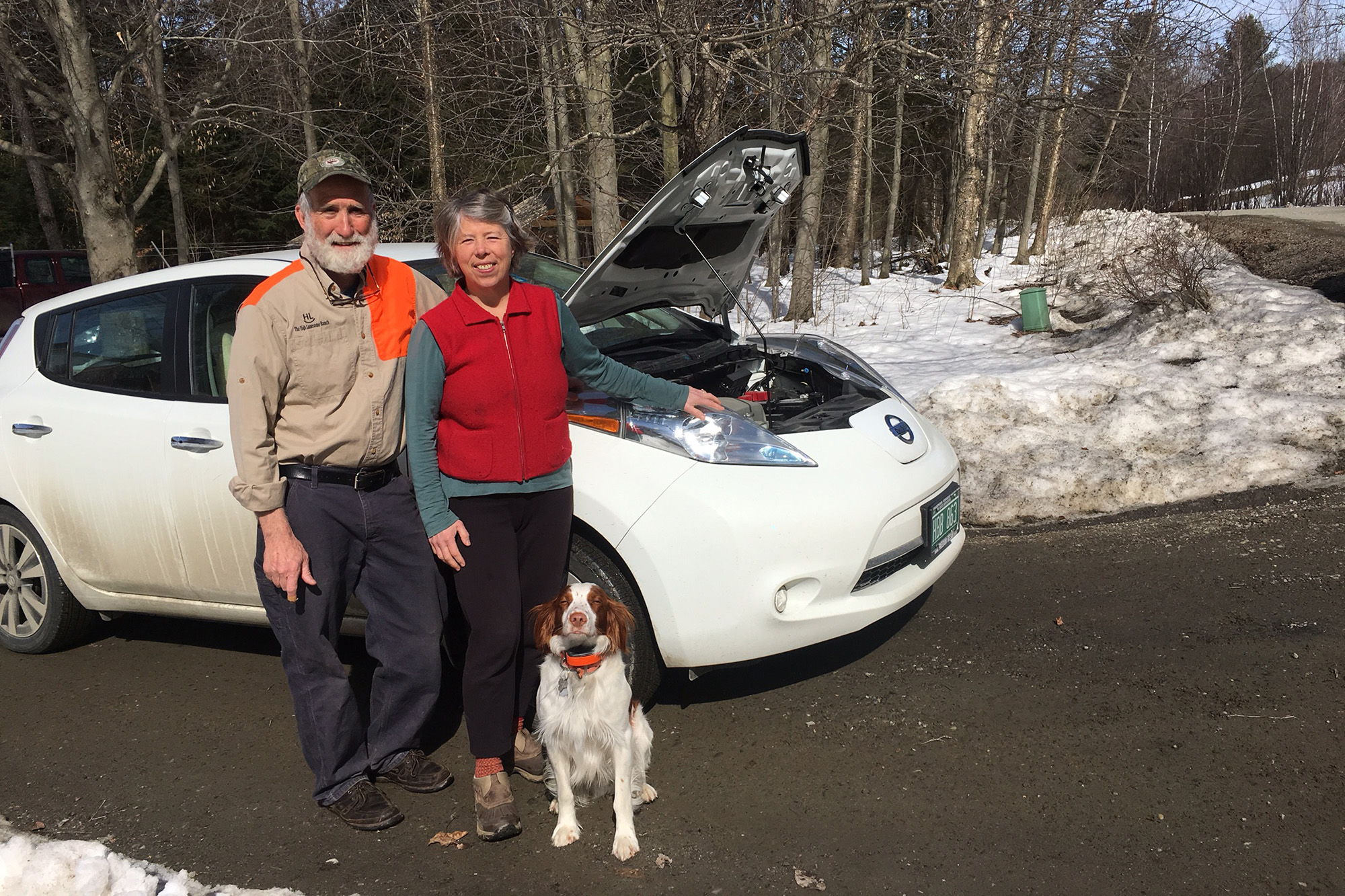
Vermont Electric Cooperative: The co-op’s Energy Transformation Program offers free Level 2 chargers and bill credits for induction cooktops, plug-in EVs, heat pumps, pellet stoves and more.
Bandera Electric Cooperative: This Texas co-op’s trademarked Apolloware app allows consumers to monitor and control their electricity usage in real time.
Diamond State Networks: In May 2022, 13 Arkansas electric cooperatives joined together to invest $1.6 billion in fiber network infrastructure to serve 600,000 new locations.
The Broadband Cooperatives of South Carolina: Eight electric co-ops joined forces with local telephone cooperatives to bring high-speed internet to unserved areas.
North Carolina Electric Cooperatives:Cooperative Ready Sites is an online resource that identifies development-ready lots for commercial and industrial investment in North Carolina.
ARLINGTON, Va. – National Rural Electric Cooperative Association CEO Jim Matheson today issued the following statement after U.S. Secretary of Agriculture Brooke Rollins announced next steps to release previously obligated funding under the Rural Energy For America Program (REAP), Empowering Rural America (New ERA) and Powering Affordable Clean Energy (PACE) programs. “These programs provide important tools for […]
ARLINGTON, Va. – National Rural Electric Cooperative Association CEO Jim Matheson issued the following statement on the election results. “We congratulate President Trump on his election, and we look forward to working with him and Congress on a pro-energy agenda that protects affordability and reliability,” Matheson said. “America is at an energy crossroads and the reliability of […]
ARLINGTON, Va. – National Rural Electric Cooperative Association CEO Jim Matheson today welcomed the U.S. Department of Agriculture’s second round of awards for electric cooperatives under its Empowering Rural America (New ERA) Program. The roughly $1 billion in new funding was announced by Deputy Secretary of Agriculture Xochitl Torres Small today in Colorado, along with $2.5 billion […]
NRECA and a consortium of electric cooperatives have been selected to bid for more than $45 million in Bipartisan Infrastructure Law funding to deploy microgrids.
ARLINGTON, Va. – National Rural Electric Cooperative Association (NRECA) CEO Jim Matheson today issued the following statement after overwhelming interest by electric cooperatives in the U.S. Department of Agriculture’s (USDA) $9.7 billion New ERA program to promote energy innovation. “The demand for the New ERA program illustrates the innovative spirit of electric cooperatives as they […]
ARLINGTON, Va. – National Rural Electric Cooperative Association (NRECA) CEO Jim Matheson today applauded the U.S. Department of Agriculture’s (USDA) workable guidance for electric co-ops seeking to access $9.7 billion in energy innovation funding. “This is an exciting and transformative opportunity for co-ops and their local communities, particularly as we look toward a future that […]
ARLINGTON, Va. – NRECA Research, the research and development arm of the National Rural Electric Cooperative Association (NRECA), today applied for Bipartisan Infrastructure Law funding from the U.S. Department of Energy (DOE). If approved, the application will accelerate the deployment of next-generation smart grid technologies at 69 electric co-ops that serve 6.5 million consumers across […]
National Rural Electric Cooperative Association (NRECA) CEO Jim Matheson applauded the inclusion of major electric cooperative policy priorities in the House-passed Inflation Reduction Act.
National Rural Electric Cooperative Association (NRECA) CEO Jim Matheson heralded the inclusion of major electric cooperative policy priorities in the Senate-passed Inflation Reduction Act.
NRECA has won a $1 million, three-year grant from the Department of Energy to research the best ways for electric cooperatives to extend the benefits of solar power to low-income members. “Eighty-five years ago, when there was no electricity in rural America, rural electric cooperatives were borne out of the need to address the lack […]
NRECA will team with co-ops around the country to increase understanding of the potential benefits of distributed wind and reduce market barriers for the adoption of these technologies in rural areas.
Western Farmers Electric Cooperative announced the agreement with NextEra Energy in late July, with plans to have all the elements in place within five years.
NRECA CEO Jim Matheson requests that leaders of the House Energy and Commerce Subcommittee on Energy "urge the Federal Energy Regulatory Commission (the Commission) to respect state and local regulatory authority when 'behind-the-meter' and other distributed energy resources (DERs) located on local utility distribution systems are aggregated for purposes of participating in wholesale electricity markets."
NRECA CEO Jim Matheson commends the House Subcommittee on Energy for its hearing on "Modernizing Energy and Electricity Delivery Systems: Challenges and Opportunities to Promote Infrastructure Improvement and Expansion."
NRECA filed objections in two FERC proceedings, arguing FERC is overstepping its statutory authority by requiring both the Midcontinent Independent System Operator and the Southwest Power Pool to include broad refund obligations in their tariffs.
The Community Storage Initiative today announced the support of key industry groups, including the nation’s utility trade associations, environmental groups, manufacturers and more than a dozen individual utilities.
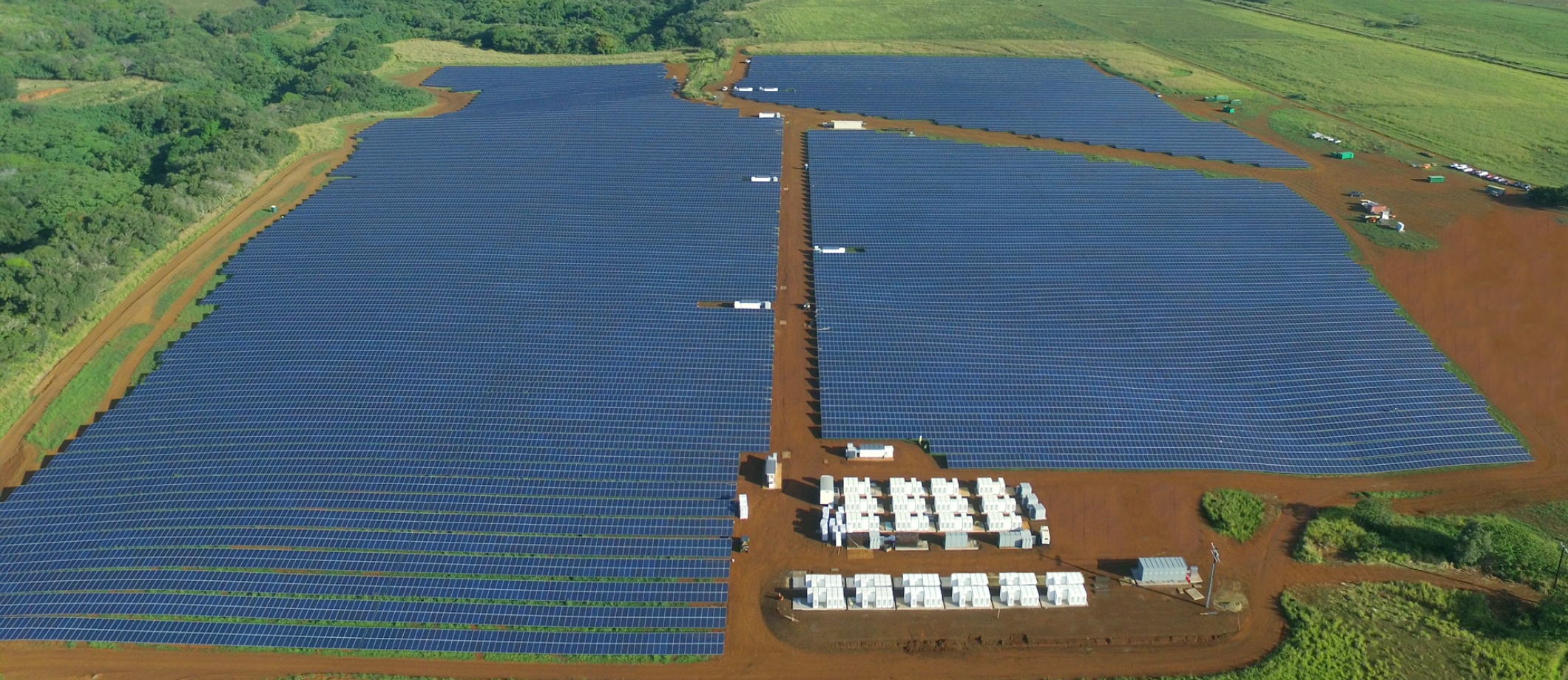
Newly Approved Solar-Plus-Storage Project Will Save Millions for Kauaʻi Co-op
PublishedMarch 30, 2026
Author
Cathy Cash
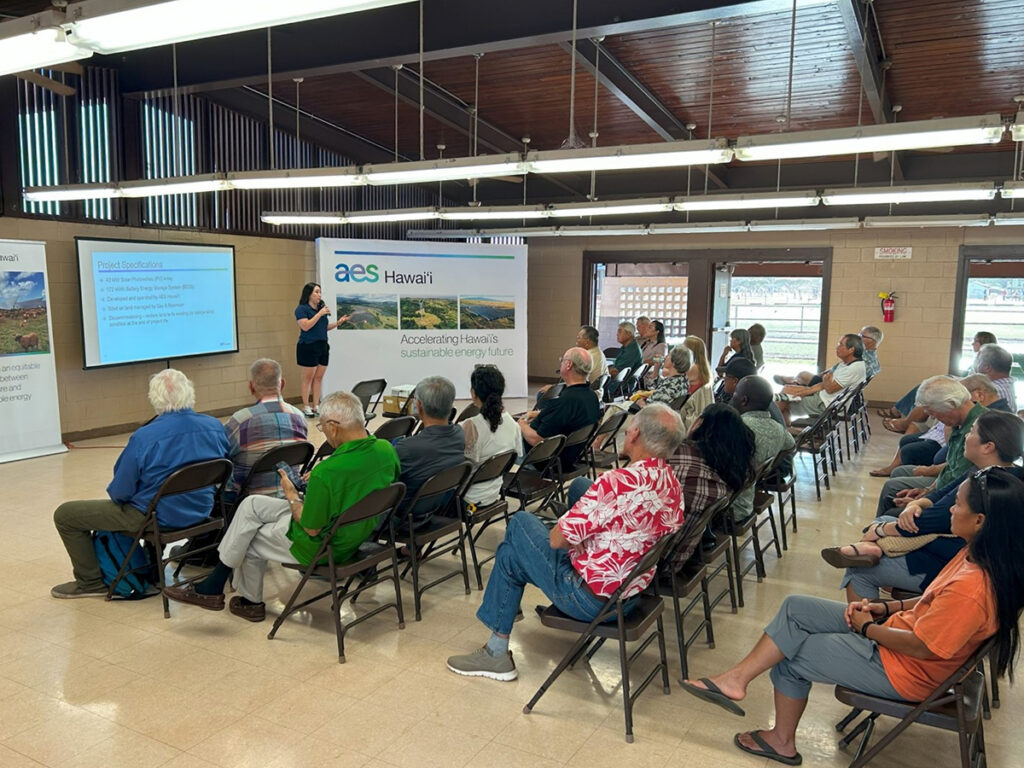
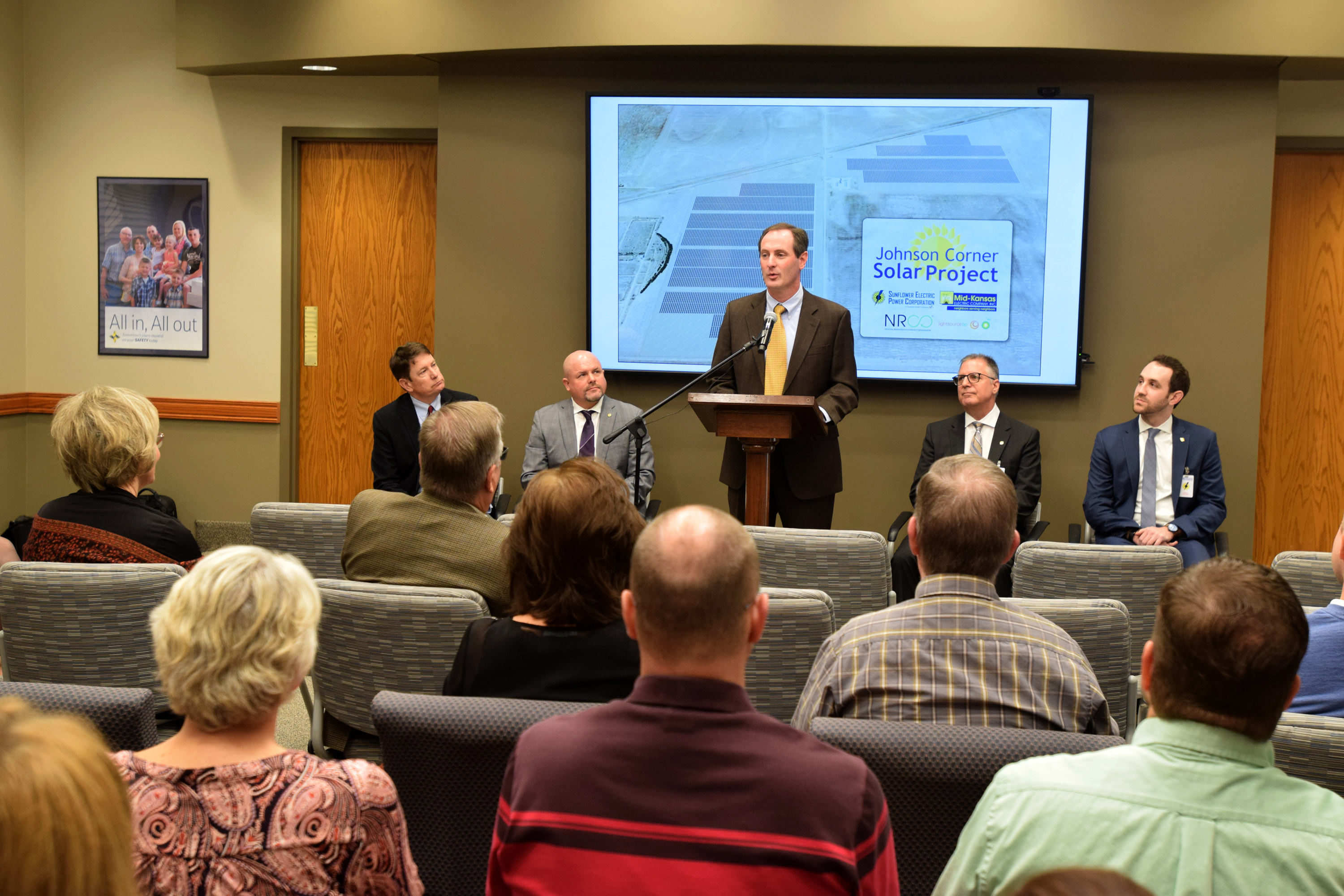
AES Hawai‘i and KIUC hold a community outreach meeting to tell members about a 25-year PPA to meet 17.5% of the co-op’s load from a large solar-plus-storage project. (Photo Courtesy: AES Hawai‘i)
Regulatory approval of a large solar-plus-storage energy project moves Kaua‘i Island Utility Cooperative significantly closer to achieving Hawaii’s requirement for 100% renewable generation by 2045—all while saving members hundreds of millions of dollars.
The Hawaii Public Utilities Commission on March 5 greenlighted AES Hawaiʻi’s Kaawanui Solar project. The Lihue-based cooperative has signed a 25-year fixed-price power purchase agreement with AES for the project to meet 17.5% of its annual load, which equates to powering about 16,000 homes.
KIUC estimates that the PPA will save the co-op and its members $365 million over the course of the contract.
Beginning in 2030, residential co-op members can expect to see their bill reduced by $4.26 per month, a savings that will rise to about $21.08 per month in the last year of the PPA.
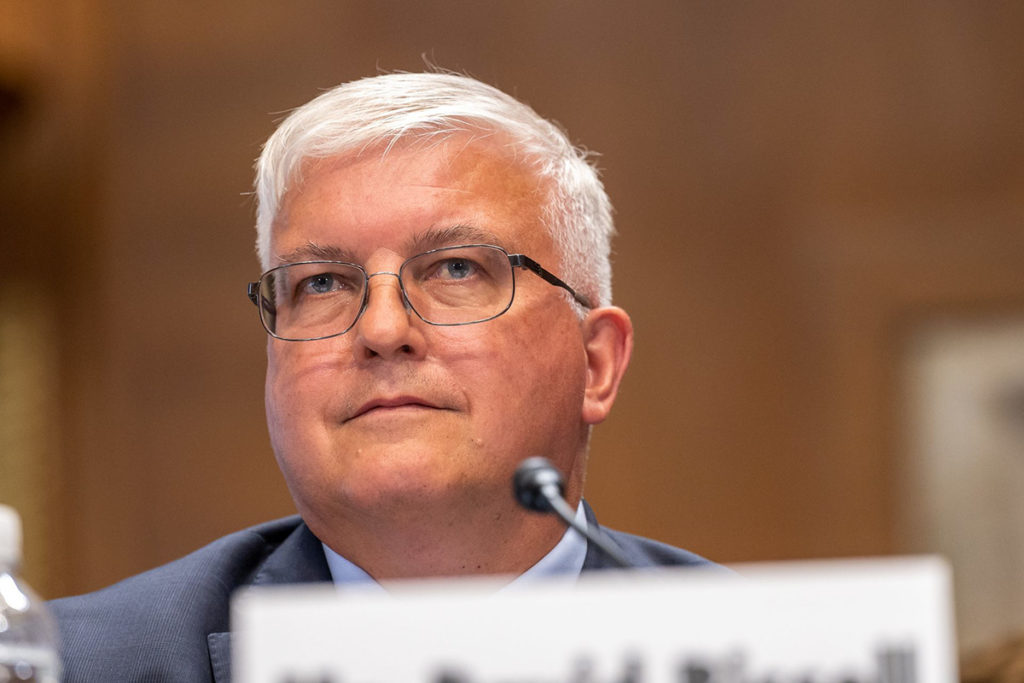
David Bissell, KIUC president and CEO, sees the agreement as key to delivering affordable and reliable energy to co-op members while meeting its renewable energy goals.
“When KIUC was formed in 2002, our rates were by far the highest in the state of Hawaii and among the highest in the nation,” Bissell said. “Due to our journey to achieve 100% renewable generation, our rates are now often some of the lowest in the state of Hawaii, and are much more stable. The Kaawanui Solar project will contribute even further to this progress.”
AES Hawaiʻi will build and operate the project, KIUC’s largest to date. It involves a 43-megawatt photovoltaic array and four hours of lithium-ion battery energy storage systems that can store 172 megawatt-hours of dispatchable energy.
Bissell said KIUC routinely operates solely on renewables on sunny days, but its “main challenge in reaching the state’s mandate of 100% renewable by 2045 is eliminating our fossil fuel use during non-solar periods. Projects like this are critical to reaching that goal.”
KIUC will decommission two outdated substations and build a modern switchyard, Kaawanui Substation, to connect the new solar-plus-storage project to the grid.
Making members aware of the numerous benefits of meeting demand by low emission resources goes a long way toward taking a project such as this to the finish line, said Bissell.
“Large-scale renewable projects such as this one can also help to stabilize rates, provide jobs, improve economic activity, and support local agriculture,” he said. “KIUC and AES Hawaiʻi have held multiple outreach events to gather input from community members and answer questions about the project, which has helped inform the best approach for success.”
The co-op projects that more than 179 million gallons of fossil fuel will be offset through the life of the PPA and about 2.3 million metric tons of carbon dioxide emissions will be avoided.
Georgia Co-op Pilots Cutting-Edge Long-Duration Energy Storage Technology
PublishedJanuary 20, 2026
Author
Cathy Cash
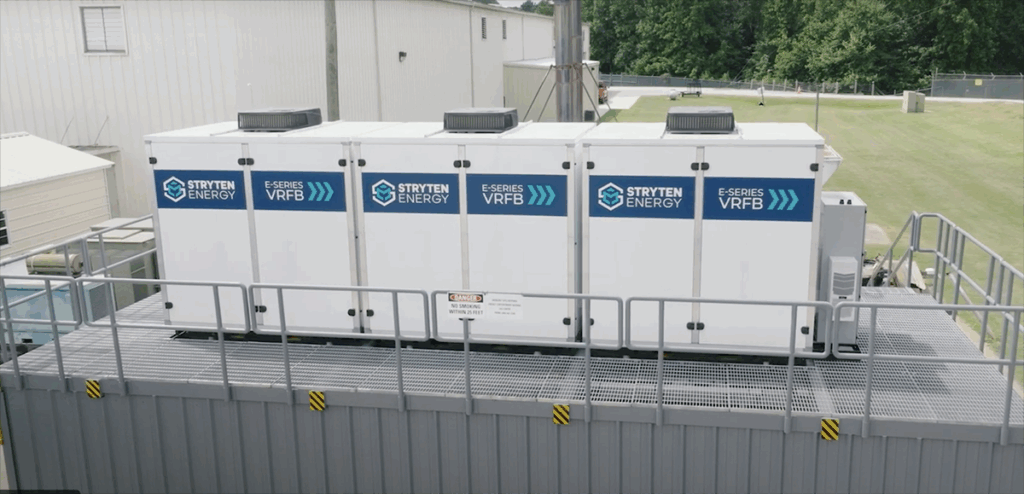
Snapping Shoals EMC is piloting a long-duration, scalable vanadium redox flow battery built by Stryten Energy in the first such project in Georgia. The battery can store six hours of energy and operate for about 20 years. (Photo Courtesy: Stryten Energy)
Amid skyrocketing demand from residential growth and large industrial loads, an electric cooperative near Atlanta is helping test advanced long-duration energy storage technology to enhance reliability, maintain affordability and support new energy resources.
Covington, Georgia-based Snapping Shoals EMC welcomed the opportunity from technology developer Stryten Energy in neighboring Alpharetta to demonstrate a small vanadium redox flow battery (VRFB) for safely storing electricity for up to six hours.
“The state of the electric grid today is evolving every day, and our equipment has to be able to change and respond much quicker than electric systems in the past,” said Shaun Mock, CEO of Snapping Shoals EMC.
“The Holy Grail is long-duration energy storage. Having a piece of equipment like a long-duration battery can help stabilize fluctuations and enable us to provide better service and manage costs.”
The VRFB system at Snapping Shoals is the first system manufactured and installed in the state of Georgia. While VRFB is in use in Australia and China, there are only a handful of such systems in the United States, making the co-op’s pilot significant to the advancement of the technology, Stryten said.
“Snapping Shoals has just been a tremendous help to us to take that first step and the second step and start to prove to the world that we need a new technology,” said Scott Childers, vice president of essential power at Stryten.
So how does VRFB work and what makes it different from the lithium-ion batteries that utilities across the country are using to run microgrids, shave energy demand peaks and fill in generation gaps?
The completely liquid-based VRFB is composed of two tanks of electrolytes—one positively charged, the other negatively charged—and a stack assembly where ion exchange and electron movement from one tank charges the system. The battery’s power is determined by the quantity of stacks, and its duration is based on tank size.
Childers likens the VRFB’s setup to that of an automobile. “If you want more horsepower, you get a bigger engine. Here, the number of stacks that you have in the system gives you your power that can be discharged at a given time,” he said. “If you want longer duration or more total energy, you just get bigger tanks filled up with more liquid.”
Unlike lithium-ion batteries, a VRFB is scalable to meet a utility’s growing needs. Stacks and tanks can be reconfigured independently to increase the amount of power and storage duration for up to 10 hours. A lithium-ion battery can store electricity for one to four hours and must be fully replaced with a larger one or multiple batteries to increase energy storage capacity.
Another significant difference is that a VRFB can last up to 20 years without losing capacity despite multiple daily charges and discharges. Lithium-ion batteries tend to be replaced within four years due to more wear-and-tear with each use.
“There’s really no limit to VRFB’s capacity,” said Childers. “It’s really kind of a question of how big a field do you have to put tanks in.”
Snapping Shoals offered clean concrete generation pads for the company to install a 20- kilowatt/120 kilowatt-hour system when it agreed to pilot the battery technology last August.
“This is what cooperative innovation looks like when the grid has no time to wait,” said Jennah Denney, senior program manager of technology integration at NRECA. “As demand accelerates from growth, electrification and large loads, co-ops are actively testing solutions that can scale, adapt and perform over decades.”
As new houses, businesses, rooftop solar, electric vehicles and large industrials, including data centers, proliferate across the co-op’s system, Mock envisions multiple applications of the technology to reduce the strain on the grid.
VFRB may provide prepacked solutions for redundancy to hospitals, schools or large industrial or commercial consumers. It can also help reduce outage times, blunt power market price spikes and back up intermittent renewables, he said.
“The flexibility of our power supply structure enables us to explore new technologies,” said Mock. “The world is changing, and we all need to have every available resource to us in order to meet the demand.”
Kansas Co-op Wins National EV Award for Education, Infrastructure Efforts
PublishedJanuary 2, 2026
Author
Erin Kelly
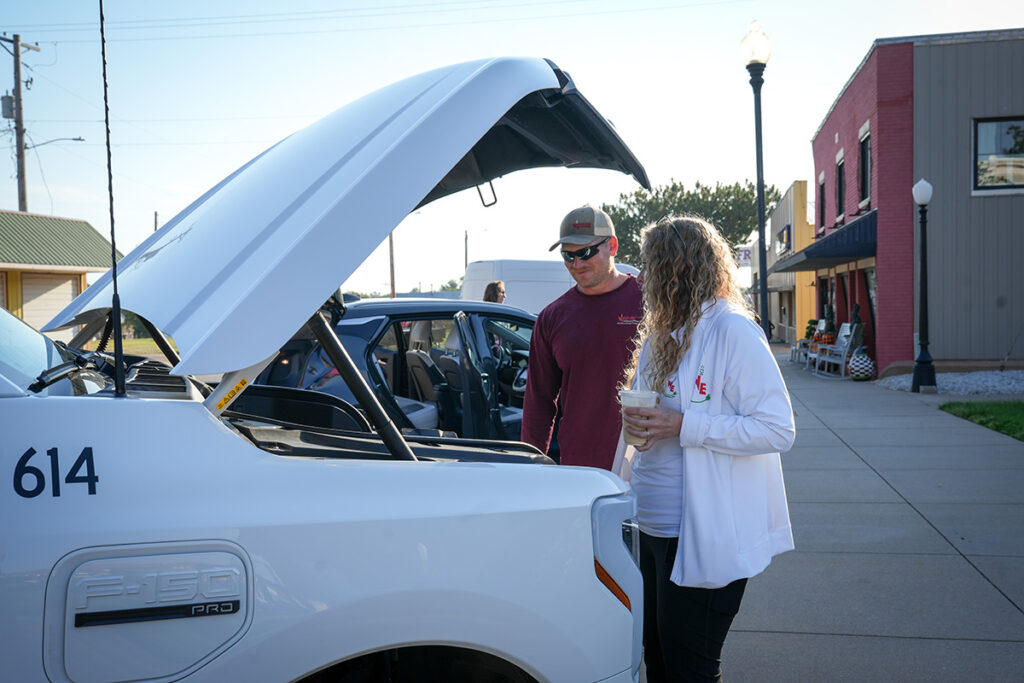
Students from Scott City Middle School in Kansas sit in the front trunk of Wheatland Electric Cooperative’s Ford F-150 Lightning during the co-op’s EVs & Espressos event on Sept. 24, 2025. The free public event, hosted in the school’s parking lot, sparked curiosity among students and gave co-op members a chance to enjoy a cup of coffee while learning more about EVs during National Drive Electric Month. (Photo Courtesy: WEC)
Wheatland Electric Cooperative has won a national award for educating its communities about electric vehicles and installing public chargers to help close a 100-mile gap between stations in southwest and central Kansas.
The 21,000-member, Scott City-based co-op beat out three large investor-owned utilities in Michigan, New York and New Jersey in the final round to win top honors in the utilities category of the 2025 Drive Electric Awards. The awards are given by Plug In America, a national, nonprofit organization that advocates for affordable, accessible EVs and charging stations.
“Though small, Wheatland Electric Cooperative leads with innovation—bridging the gap in rural America and proving no community is too small, too rural, or too remote to be part of the clean transportation future,” the group said in announcing the award.
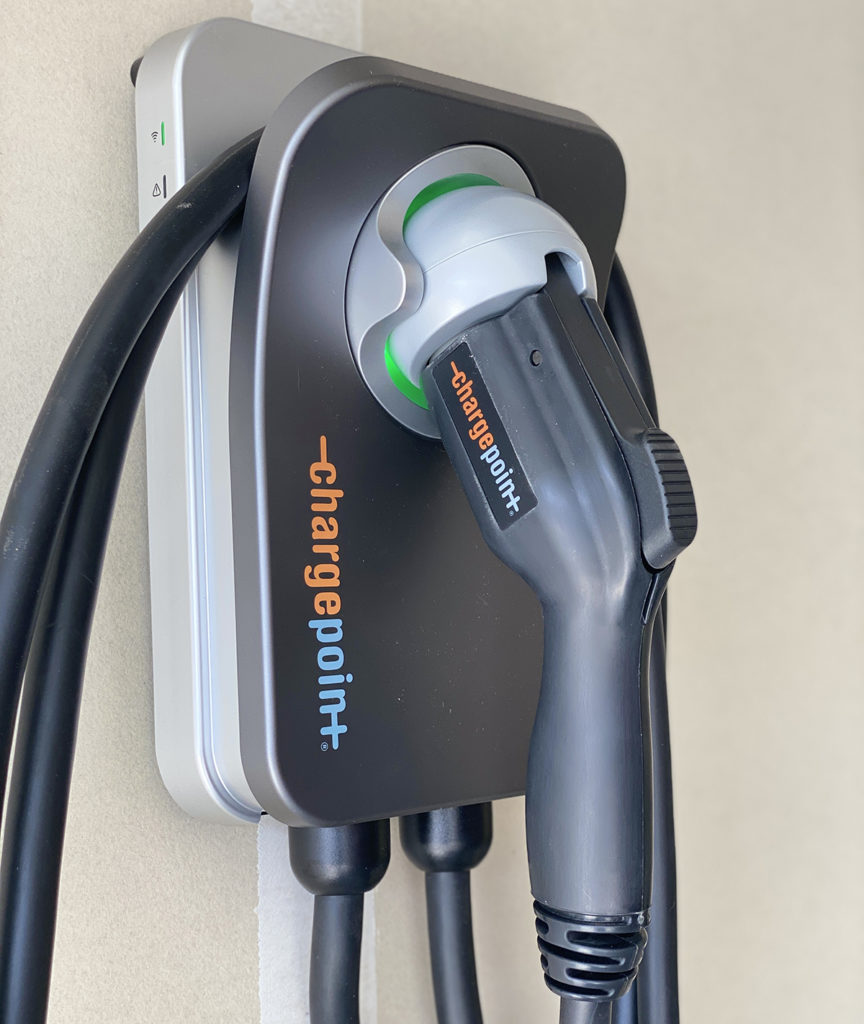
Since 2021, WEC has installed three ChargePoint® Level 2 public charging stations—with two charging ports each—across an area where no chargers existed within a 100-mile radius. As of October, the stations have supported more than 1,500 charging sessions by nearly 670 different drivers. The co-op created them at its own expense.
“We’re in a part of the country that’s often overlooked, simply because we’re so rural,” said Shajia Donecker, the co-op’s multimedia specialist. “We are always striving to put our region on the EV maps, and I think Plug In America recognized that.”
The co-op also invites community members to test drive EVs at special events, which included a “Dine and Drive” lunch in 2024 in Great Bend that attracted 150 people for a free lunch and a chance to get behind the wheel of three different types of EVs.
The co-op brought its own two electric vehicles—a Hyundai Kona and a Ford F-150 Lightning—and an employe shared his Tesla Model Y. The co-op’s member services team won NRECA’s 2025 Service Excellence Gold Award for creating the “best external event.”
Mary Hoisington, member services and key accounts manager at Wheatland Electric Cooperative, discusses EV performance with Derek Callaway, WEC journeyman lineman, at the co-op’s EVs & Espressos event in Caldwell, Kansas, on Oct. 1, 2025, during National Drive Electric Month. (Photo Courtesy: WEC)
This year, the co-op held “EVs & Espressos” events at or near several local coffee shops, providing free coffee to help entice people to explore EVs as part of National Drive Electric Month.
“Our whole goal is to make EVs more approachable,” said Alli Conine, WEC’s director of member services and corporate communications. “When we give people those hands-on experiences, their perspectives change. We want them to have fun while learning more about EVs.”
EVs are still relatively scarce in the area and no local car dealers display them, making the co-op events the only chance many residents have to test drive an EV, Donecker said.
“We try to meet people where they are,” she said. “You get all kinds of reactions. Some people will say, ‘no, absolutely not, I don’t want anything to do with an EV.’ But you also get, ‘wow, I had no idea how much power an EV has.’ About 99% of the time, the reaction is good after they get a chance to drive.”
WEC’s grassroots efforts have focused on EV “accessibility, reliability, and cost savings to resonate locally,” Plug In America said.
“Beyond consumers, Wheatland has provided training and education to first responders, chambers of commerce, and civic leaders. The co-op is also electrifying its fleet, mentoring cooperatives in Kansas and Oklahoma, and providing a replicable playbook for other rural coops across the U.S.”
NRECA: Treasury Should Keep Start-of-Construction Rules for Energy Credits
PublishedJuly 22, 2025
Author
Molly Christian
NRECA is asking the Treasury Department to give electric co-ops certainty as they pursue elective-pay credits for certain energy projects. (Photo Courtesy: Trico Electric Cooperative)
NRECA is urging the Treasury Department to maintain its current rules for determining whether electric cooperatives and other utilities have started construction on new wind and solar projects in time to qualify for crucial federal tax credits.
Any changes to Treasury’s “beginning of construction” rules would complicate co-ops’ ability to access the credits, raising costs or forcing co-ops to abandon projects at a time of growing electricity demand, NRECA CEO Jim Matheson warned.
“The tax credits help to make projects possible for electric cooperatives that would otherwise not pencil out or would result in steep rate hikes for their consumer-members,” Matheson said in a July 15 letter to Treasury Secretary Scott Bessent.
The One Big Beautiful Bill Act, which President Donald Trump signed into law July 4, moved up deadlines for wind and solar projects to start construction in order to qualify for energy tax incentives but did not take away co-ops’ ability to access those credits through an elective-pay option.
NRECA asked Treasury to implement the new law without changing its existing start-of-construction rules, which consider construction to have begun if significant physical work on the project has started or the developer meets a “safe harbor” test where it has paid or incurred at least 5% of the total project cost.
In an executive order on July 7, the White House directed Treasury to restrict safe harbors for wind and solar facilities “unless a substantial portion of a subject facility has been built.” The order gave Treasury 45 days from the new law’s signing to issue guidance.
Matheson said keeping Treasury’s current start-of-construction rules is “critical to mitigating the inevitable risk that comes with building any energy infrastructure—from permitting delays to supply chain challenges to severe weather—all of which can impact construction schedules.”
“Changing the rules now would significantly alter the financing structures for these long-planned projects and likely result in cooperatives abandoning the projects or incurring more debt to cover the increased costs—which must ultimately be passed on to their consumer-members,” Matheson said.
Under the One Big Beautiful Bill Act, wind and solar projects can qualify for the full value of the current tax credits if they are already under construction or start construction within a year of the bill’s signing. Projects that begin construction after that 12-month window must be placed in service by the end of 2027 to be eligible for a tax credit.
The new law maintains credits past 2030 for nuclear energy, carbon capture, batteries and hydropower.
“At a time when the grid needs every megawatt possible, these tax credits provide a critical tool to America’s electric cooperatives as they strive to add energy to the grid and support President Trump’s vision for Unleashing American Energy,” Matheson concluded.
Along Those Lines: Co-ops Using Elective-Pay Credits to Meet ‘Unique Future Goals’
PublishedMay 19, 2025
Author
NRECA
North Carolina’s Electric Cooperatives built this 5-megawatt battery energy storage system with Pantego, North Carolina-based Tideland Electric Membership Corp., a project that has benefited from elective-pay tax credits. (Photo Courtesy: Tideland Electric Membership Corp.)
After years of advocacy from NRECA, Congress passed legislation in 2022 that allows electric co-ops to access federal tax credits for certain energy projects, including new renewable power facilities, through an elective-pay option. The incentives can sharply reduce costs for co-ops to build, own and operate eligible generation and energy storage projects. They also level the playing field between co-ops and other utilities that have long been able to tap federal energy tax incentives.
In this episode, Hill Thomas, vice president of legislative affairs for NRECA, will discuss how co-ops gained access to the incentives and why they are so important. We’ll also hear from North Carolina’s Electric Cooperatives Chief Financial Officer Doug Browne on the ways that co-ops in the state are leveraging elective pay.
Listen to the episode below:
You can also listen and subscribe to Along Those Lines on your preferred podcast service, such as Apple Podcasts or Spotify.
Elective-Pay Credits Bearing Fruit for Co-ops and Their Members
PublishedMay 6, 2025
Author
Molly Christian
Arizona G&T Cooperatives recently completed a 15-megawatt battery storage project in Fort Mohave, Arizona, that will help provide affordable, reliable energy to communities served by Mohave Electric Co-op. The project is eligible for elective-pay tax incentives. (Photo By: Stephanie Spencer/Topaz Photography)
Electric cooperatives are starting to receive the value of federal tax credits for innovative energy projects, helping them provide affordable, reliable power to their members and leveling the playing field with other utilities that already had access to such incentives.
With input from NRECA and after years of advocacy, Congress in 2022 passed legislation enabling co-ops and other tax-exempt entities to access federal tax credits for certain energy projects through an elective-pay option. The incentives can sharply reduce costs for co-ops to build, own and operate eligible generation and energy storage projects.
The credits also put co-ops on more even footing with energy developers that have long been able to tap federal tax credits for many of those resources.
“Having access to these incentives levels the playing field so cooperatives can meet the evolving needs of our members, just like investor-owned utilities have been able to do for their customers,” said Doug Browne, chief financial officer for North Carolina’s Electric Cooperatives. “Co-op members deserve innovation that strengthens the grid and provides benefits to rural communities, and these incentives allow us to do that while protecting affordability.”
The Treasury Department issued a final rule on elective pay in 2024. Raleigh-based NCEMC then applied for and received a direct payment of $10.4 million to support the costs of the first tranche of battery energy storage systems that NCEMC and 10 of its distribution co-ops are building at substations.
The battery storage systems total 40 megawatt/80 megawatt-hours and will enhance grid resilience in rural communities.
The elective-pay credits reduced total project costs by more than 20%, “a benefit shared by all NCEMC members and their consumers,” Browne said. “Investment tax credits like these provide significant value to the 2.8 million North Carolinians served by the state’s electric cooperatives.”
Co-ops can also use elective pay to access nuclear power production tax credits through 2032. NCEMC is a co-owner of the Catawba nuclear plant in South Carolina and expects to claim about $18 million for its share of the facility with this year’s filing of its 2024 Form 990, Browne explained.
Although future tax credit amounts may vary, “we will continue to apply for these credits through 2032 to manage costs to our members and their consumers,” he said.
North Carolina’s Electric Cooperatives built this 5-megawatt battery energy storage system with Pantego, North Carolina-based Tideland Electric Membership Corp., a project that has benefited from elective-pay tax credits. (Photo Courtesy: Tideland Electric Membership Corp.)
‘An important thing’
Before Congress authorized elective pay, co-ops often turned to third-party energy developers with tax liabilities to build wind and solar power and other innovative resources. Co-ops would then contract for that electricity through power purchase agreements.
Having access to federal tax credits not only enables co-ops to build and own more of that capacity, it will allow them to negotiate better rates on PPAs, said Chris Jimenez, chief development officer at Arizona G&T Cooperatives.
“In the past as a co-op, we didn’t have that mechanism… so the developer didn’t really have an incentive to pass on that benefit to [us],” Jimenez said. “Now they do.”
Sierra Southwest Cooperative Services Inc., a subsidiary of the Benson, Arizona-based G&T, recently completed battery storage projects on behalf of three members that are estimated to be eligible for 40% investment tax credits through elective pay. The projects will help the co-ops rely more on solar power as Arizona grapples with limited natural gas import capacity.
Arizona G&T will file for the tax credits as part of its 2024 tax filing and expects to get those benefits in 2026, CFO Pete Scott said.
“The credits really help bring the levelized costs of energy for these resources down to an area where we can actually include them in the portfolio,” Jimenez said.
The tax credits, which can be stacked with federal grants and loans, “really provide for an environment where our members and we as a G&T can really develop competitive resources,” Jimenez said.
“Without those two things in place, it becomes a difficult situation for folks to finance these types of projects,” he said, adding that elective pay is “an important thing to keep in place.”
Lowering costs, improving reliability
The state of Colorado is working to transition to 100% clean electricity by 2040. For Delta-Montrose Electric Association, access to elective-pay credits is crucial to reaching that goal affordably and reliably.
“These tax credits are really meaningful and absolutely necessary for us to make this happen in that kind of timeframe,” said Kent Blackwell, chief administrative officer of the Montrose, Colorado-based co-op.
DMEA is planning to use elective-pay investment tax credits to help fund a $96 million project that includes a 20-MW solar photovoltaic array with an additional 80 MWh of battery storage.
Without the tax credits, “there’s just no way this project would be financially viable for an entity like us,” Blackwell said.
Reliability and cost are also behind two projects that Pahrump, Nevada-based Valley Electric Association is pursuing with help from federal tax incentives.
VEA is planning to build a 35-MW energy storage system in Pahrump to hedge its power market exposure by allowing the co-op to procure power when prices are low and discharge power at higher-priced times.
The second project is a 1-MW solar power/1-MW, four-hour battery storage project that will improve reliability in VEA’s remote Fish Lake Valley region. The area is currently served by a 55-kilovolt radial line that crosses an area of extreme wildfire risk, raising the potential for blackouts.
The co-op is looking to start commercial operations on the projects near the end of 2026, after which it can file for elective-pay credits.
“For a rural cooperative, we typically don’t have access to this kind of technology, whether it’s due to cost [or] other factors,” said Gabe De Guzman, VEA’s director of transmission services and load management. “Having this elective-pay tax credit essentially will pay off this project much sooner, and it will impact members less from that perspective.”
Listen to a related podcast episode on elective-pay credits:
Legislative Conference: Co-ops Get Policy, Funding Insights From Federal Agencies
PublishedApril 30, 2025
Author
Molly Christian
WASHINGTON—Federal agency officials gave updates on a host of policy issues affecting electric cooperatives at NRECA’s 2025 Legislative Conference.
The meetings, held Tuesday, touched on the Environmental Protection Agency’s plans for key power sector regulations, as well as the direction of infrastructure funding programs at the Agriculture Department and Department of Energy.
The developments will be pivotal for electric co-ops as they prepare for increased electricity demand from data centers, manufacturing and other sources.
“Thanks to each and every one of you … for what you do every day to keep the lights on in rural America,” said Christopher McLean, assistant administrator for electric programs at the USDA’s Rural Utilities Service.
RUS ‘Open for Business’
Co-ops get updates on Department of Agriculture grant funding and loans from Christopher McLean, assistant administrator of electric programs for USDA’s Rural Utilities Service, during NRECA’s 2025 Legislative Conference. (Photo By: Denny Gainer/NRECA)
McLean touted the USDA’s announcement in late March that it will honor previously obligated funding under its $9.7 billion Empowering Rural America (New ERA) and $1 billion Powering Affordable Clean Energy (PACE) programs. The programs provide grants and loans for innovative co-op energy projects.
“This is a very good piece of news because the amount of leverage that that investment is creating in rural America is very exciting,” he said.
In January, President Donald Trump directed agencies to review funding programs such as New ERA and PACE to determine whether they are consistent with his executive orders on energy.
On March 25, Agriculture Secretary Brooke Rollins gave co-ops 30 days to review and make voluntary changes to their New ERA and PACE project plans so they better align with the administration’s policy goals.
That 30-day period just closed, McLean said, and the department is reviewing the submissions and moving projects forward in the process. He added that some New ERA and PACE funds should start to flow in the near future.
McLean also noted that RUS is still processing loans under its traditional electric loan program and at interest rates that are “very, very good.”
“We are open for business,” he said.
DOE Gives More Time on GRIP Negotiations
Nick Elliot (right), director of the Energy Department’s Grid Deployment Office, talks about the DOE’s priorities with NRECA’s Stephanie Crawford. (Photo By: Denny Gainer/NRECA)
Nick Elliot, the director of DOE’s Grid Deployment Office, gave co-ops a status update on the agency’s $10.5 billion Grid Resilience and Innovation Partnerships (GRIP) program.
Co-ops tapped for funding under the second round of GRIP previously faced an April 30 deadline to finish negotiations on their conditional awards. But Elliot said the DOE is providing an extra 120 days to wrap up negotiations in light of the administration’s review of GRIP.
“It’s great to hear that DOE is working through extending that out to allow more time as this funding review goes forward,” NRECA Regulatory Affairs Director Stephanie Crawford said at the meeting.
Elliot also gave his views on the Grid Deployment Office’s mission as co-ops gear up for higher demand.
“If you look at [President Donald Trump’s] agenda, he has this word dominance,” Elliot said. “For me, that means supply. How do we get more supply online, how do we get more transmission online, how do we get the right type of generation online?”
He also encouraged co-ops to engage with the DOE.
“Please, come see us,” Elliot said.
EPA to Revise Water Rules
Peggy Browne, acting assistant administrator at the Environmental Protection Agency, answers questions about EPA water rules at NRECA’s Legislative Conference on April 29. (Photo By: Denny Gainer/NRECA)
Conference attendees also heard from the acting head of the EPA’s Office of Water, who used to work at an electric co-op.
“I kind of feel like I’m coming home to my people right now,” said Peggy Browne, acting assistant administrator of the EPA’s Office of Water. Prior to joining the EPA, Browne was manager of key accounts and government relations for Oregon Trail Electric Cooperative in Baker City, Oregon.
Browne said she supports having reliable, affordable power while protecting America’s waters. The EPA is looking to revise the Biden administration’s power plant wastewater rule finalized in 2024.
The EPA also recently sought input on ways to revise its definition of federally protected waters. NRECA submitted comments to the agency on how it could update the Biden administration’s Waters of the United States rule to provide clarity to co-ops.
“We don’t want regulation to unduly burden this sector,” Browne stated.
“It was heavily emphasized while working at Oregon Trail Electric Cooperative that it was our member-owners who would be directly affected by regulations,” she said. “Those are the people that will be paying the bills. So, every day as I approach water policy, I keep that in mind.”
As the EPA looks to craft new water rules, Browne stressed the need for durable policies that give co-ops more certainty.
“We’re trying to ensure that we’re hearing from everybody,” including energy producers, she said.
New NRECA Report Details How Co-ops Are Meeting Members’ EV Needs
PublishedApril 16, 2025
Author
Erin Kelly
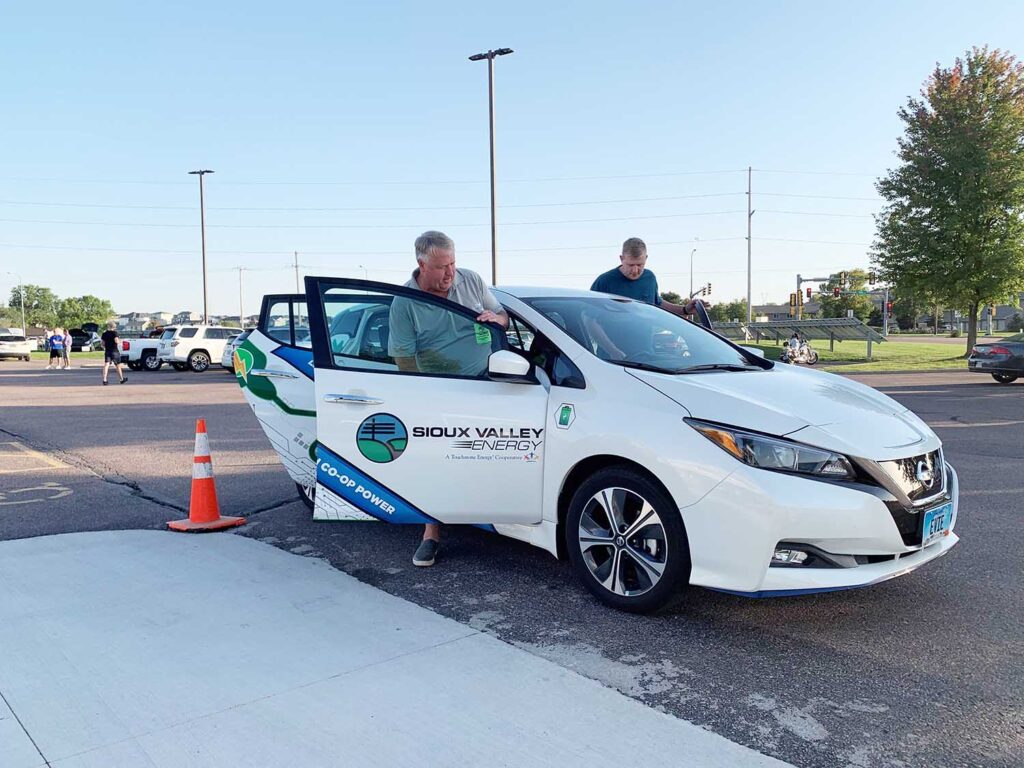
Sioux Valley Energy in Brandon, South Dakota, is one of many electric co-ops that have held “ride and drive” events to give consumer-members a hands-on experience with electric vehicles. (Photo Courtesy: Sioux Valley Energy)
Electric cooperatives throughout the country are developing electric vehicle programs to meet the needs of their consumer-members, who are increasingly buying EVs for personal use and electrifying commercial and industrial fleets, a new NRECA report says.
The report’s findings are based on a recent survey of electric co-ops on a wide range of EV issues, including education and outreach; rebates, rates and incentives; the development of charging infrastructure; interconnection policies; and the electrification of co-op fleets.
“By learning from shared experiences and proactively addressing challenges, cooperatives can better support their members, enhance grid management, and prepare for the future growth of electric vehicles,” wrote report author Jennah Denney, NRECA electric vehicle strategy and solutions manager.
“The insights gathered from this survey will be invaluable in shaping future EV initiatives and ensuring the reliability and sustainability of cooperative grid infrastructure.”
Education
As EVs become a more common sight on America’s roadways, co-ops have shifted their member education efforts from explaining the basics of how EVs work to focusing on the best ways to charge them, the report says. Today, co-ops educate members about where to find charging stations, the best times to charge and how much it costs.
“This knowledge is essential for integrating EVs into everyday life and helping consumers make informed decisions about purchasing EVs,” the 34-page report says.
It also benefits co-ops by educating members about “grid-friendly charging behavior,” like charging their vehicles in the middle of the night when overall demand for electricity is low. EV owners can program their vehicles to start charging at home after they’ve gone to sleep.
“Targeted outreach and education efforts can foster an understanding of how individual charging behaviors impact the broader energy ecosystem,” the report says. “By promoting responsible charging practices, cooperatives can help mitigate potential grid issues and support members adopting EVs.”
Member engagement programs
Co-ops are increasingly hosting “ride and drive” events that allow members to test drive an EV or ride in one as a passenger. Some co-ops also have loaner programs that offer members the chance to borrow an EV for a few weeks or even a month to get a feel for how the vehicles would fit into their normal routines.
“This hands-on experience can be invaluable in helping potential owners understand the practicalities and realities of EV ownership and be well-informed at the time they purchase their own EVs,” the report says.
Incentives offered by co-ops
One of the most common incentives that co-ops provide to potential EV owners is to offer them rebates for installing chargers at their homes. Some co-ops also offer rebates to EV owners who agree to charge their vehicles during off-peak hours. And a unique program created by a few co-ops provides rebates to homebuilders who pre-wire developments for EV chargers.
“The survey results show that EV rate, rebate, and incentive programs significantly boost member satisfaction and engagement,” the report says. “Offering a variety of rate options and potential savings not only keeps members happy but also strengthens their loyalty.”
Developing charging stations
The report says that “workplace charging is a crucial area where cooperatives can significantly influence the adoption of electric vehicles.”
“By promoting and facilitating the installation of charging stations at workplaces, cooperatives can support the growing number of employees and businesses transitioning to electric vehicles.”
Co-ops can help by offering “workshops, informational sessions, and partnerships with local businesses to create a comprehensive approach to workplace charging that benefits everyone involved.”
By promoting workplace charging, co-ops can also improve grid stability by shifting some EV charging load away from peak evening demand to earlier daytime hours, the report says.
Electrifying co-op fleets
Some co-ops are leading by example, purchasing EVs for educational purposes and to learn more about the technology themselves.
According to the survey results, the types of EVs used by co-ops range from passenger vehicles like the Chevy Bolt and Ford Mach-E to light-duty pickups like the Ford F-150 Lightning. Some co-ops are also looking into the possibility of buying hybrid bucket trucks.
“These initiatives are aimed at enabling the cooperatives to share accurate and practical information with their members, and to demonstrate their expertise in EVs,” the report says.
USDA Takes Steps to Release Co-op Funding That Will ‘Unleash American Energy’
PublishedMarch 31, 2025
Author
Molly Christian
Electric co-ops have been advocating for the Department of Agriculture to support programs that will provide crucial funds to co-ops, including for power purchase agreements that will help restart the Palisades nuclear plant in Michigan, pictured above. (Photo By: Kristen Hartley/Cherryland EC)
The Department of Agriculture on March 25 announced next steps to release previously obligated funding under key programs that will help electric cooperatives modernize their systems.
The announcement advances the Trump administration’s review of funds awarded through the USDA’s Empowering Rural America (New ERA), Powering Affordable Clean Energy (PACE) and Rural Energy for America (REAP) programs. Agriculture Secretary Brooke Rollins is giving co-ops 30 days to review and make voluntary changes to New ERA and PACE project plans so that they better align with the letter of the law and President Donald Trump’s policy agenda.
“These programs provide important tools for co-ops to invest in their systems, unleash American energy and help meet skyrocketing energy needs,” NRECA CEO Jim Matheson said. “We thank Secretary Rollins and the Trump administration for recognizing the importance of these programs and outlining next steps to release these funds.”
The move comes after NRECA and over 40 co-ops delivered nearly 50 letters to Rollins on March 20 describing energy projects that will benefit from the $9.7 billion New ERA and $1 billion PACE programs. The programs, which Trump paused as part of a Jan. 20 executive order, provide grants and low-interest loans for co-ops to pursue generation, energy storage and other projects to provide reliable, affordable power.
The letters followed Rollins’ appearance at NRECA’s PowerXchange and TechAdvantage in Atlanta earlier in the month, where she vowed to move quickly on the program reviews.
The New ERA and PACE projects “will help electric cooperatives leverage diverse energy portfolios to reduce costs and meet the future energy demands of rural communities,” the co-ops said in their letters. The projects will also “address growing power supply needs in rural areas by creating a more reliable power grid,” they added.
Bloomington, Indiana-based Hoosier Energy and Wolverine Power Cooperative in Cadillac, Michigan, were awarded New ERA grants to help cover power purchase agreements with the Palisades nuclear plant in Michigan. The PPAs will help plant owner Holtec International restart the idled 800-megawatt nuclear facility and provide reliable baseload power to Midwestern consumers.
“Palisades’ restart is vital to electric reliability in the Michigan region and will demonstrate a proven path to U.S. energy dominance,” Wolverine Power CEO Eric Baker said. “The essential baseload energy produced at Palisades will power nearly 100 rural counties in Michigan and Indiana.”
Hoosier said the PPAs will also give Holtec the confidence to proceed with developing small modular reactors at the site, with Hoosier and Wolverine holding the rights to power from the planned SMRs.
“The certainty required by Hoosier Energy, Wolverine Power, and Holtec International to continue making these investments is bolstered by continued federal support through the New ERA program and awards like ours,” Hoosier Energy CEO Donna Walker said in her letter.
Since its selection for a New ERA grant, the Indiana co-op has also moved forward with other generation investments for its system.
“Hoosier Energy’s New ERA award allows us the freedom to invest even more in what America needs: an affordable, reliable, and resilient electric grid,” Walker said.
New ERA funding would also help Grand Forks, North Dakota-based Minnkota Power Cooperative deploy a “world-leading” carbon capture and storage project. Project Tundra is aimed at capturing and permanently storing 4 million tons per year of carbon dioxide and could help maximize use of coal reserves while furthering efforts to use captured CO2 for enhanced oil recovery in North Dakota’s Bakken oil formation.
“Projects like [Tundra] would strengthen U.S. energy security, create jobs and fuel economic growth in energy-producing regions,” Minnkota CEO Mac McLennan said.
Altogether, the co-op projects highlighted in the March 20 letters will unleash over 13 GW of energy in rural communities and “help realize the Trump administration’s goal of American energy dominance,” Matheson said.
NRECA Applauds Secretary Rollins’ Next Step Towards Releasing Critical USDA Funding
PublishedMarch 26, 2025
Author
Media Relations
ARLINGTON, Va. – National Rural Electric Cooperative Association CEO Jim Matheson today issued the following statement after U.S. Secretary of Agriculture Brooke Rollins announced next steps to release previously obligated funding under the Rural Energy For America Program (REAP), Empowering Rural America (New ERA) and Powering Affordable Clean Energy (PACE) programs.
“These programs provide important tools for co-ops to invest in their systems, unleash American energy and help meet skyrocketing energy needs,” Matheson said. “We thank Secretary Rollins and the Trump administration for recognizing the importance of these programs and outlining next steps to release these funds. ”
The National Rural Electric Cooperative Association is the national trade association representing nearly 900 local electric cooperatives. From growing suburbs to remote farming communities, electric co-ops serve as engines of economic development for 42 million Americans across 56 percent of the nation’s landscape. As local businesses built by the consumers they serve, electric cooperatives have meaningful ties to rural America and invest $15 billion annually in their communities.
New Ag Secretary Brooke Rollins Addresses Electric Co-op Priorities at PowerXchange
PublishedMarch 13, 2025
Author
Erin Kelly
Agriculture Secretary Brooke Rollins addresses the closing general session of PowerXchange in Atlanta on March 12. (Photo By: Denny Gainer/NRECA)
ATLANTA—Agriculture Secretary Brooke Rollins is pushing to quickly wrap up the Trump administration’s review of infrastructure project funding for co-ops, including the New ERA program, she told electric cooperative leaders at PowerXchange.
“I’m pressing to wrap up the review of the obligated New ERA, PACE, and REAP projects … as quickly as possible,” she said in her remarks during the closing general session of NRECA’s annual meeting on March 12. “I know this is very important to a lot of you and my team is working day and night with the goal of bringing you the certainty you deserve.”
Co-ops that were selected for funding from those programs are waiting to find out if they can proceed with their projects.
New ERA is a $9.7 billion voluntary energy innovation program created exclusively for co-ops. The funding will help co-ops invest in new energy resources to meet tomorrow’s energy needs.
The Powering Affordable Clean Energy (PACE) program provides partially forgivable loans for co-op energy projects in rural areas. The Rural Energy for America Program (REAP) funds renewable energy and energy efficiency programs.
Less than two months after the start of the second Trump administration, the U.S. Department of Agriculture’s Rural Utilities Service has already approved 14 “core” Rural Electrification Loans valued at more than $1.27 billion, Rollins said.
“These projects include investments in a natural gas plant, upgrades to an existing coal facility, transmission and distribution infrastructure,” she said.
Rollins also announced a new initiative aimed at boosting the economies of rural communities.
“You’re the first Americans to hear this, and I’m excited to share it with you: We’re working with our federal, state and local partners to develop a bold strategy to revive rural America,” she said. “You’ll be hearing more from us on this in the weeks to come.”
Rollins, who served as director of the Domestic Policy Council in the first Trump administration, said she will continue to support the USDA’s ReConnect program to help rural communities get connected to high-speed internet service. The program began during President Donald Trump’s first term and “has proven to be a tremendous success,” she said.
“Your rural electric cooperatives were essential to this success” by bringing broadband to consumer-members, Rollins said.
The USDA is also “actively cutting red tape and leveraging the president’s executive order on the energy emergency to expedite electrical generation and infrastructure projects of direct concern to both rural America and your cooperatives,” she said.
“We are furthermore speeding the turnaround time for environmental and historic preservation reviews, knowing full well that bureaucratic delay is not just morally unacceptable—it risks crippling American vitality if unchecked.”
NRECA CEO Jim Matheson praised Rollins’ support for speeding up the permitting process.
“We especially appreciate Secretary Rollins’ commitment to cutting bureaucratic red tape by expediting environmental permitting reviews for infrastructure projects that allow cooperatives to maintain and expand their energy systems,” he said. “We look forward to working with the secretary to achieve these goals and to our continued partnership with USDA under her leadership.”
Matheson told co-op leaders that the fact that Rollins came to PowerXchange as one of her first official acts as secretary proves just how important electric co-ops are to the nation.
Along Those Lines: The Electric Co-op Policy Outlook in a Rapidly Changing Washington
PublishedFebruary 11, 2025
Author
NRECA
Photo By: AdamParent/Getty Images
The 2024 elections were pivotal for policies affecting electric cooperatives. President Donald Trump’s victory and Republicans’ majorities in Congress could bring major changes to environmental rules, permitting requirements, funding programs and tax incentives that touch on co-ops’ daily operations.
This episode is sponsored by Power & Tel.
On this episode of Along Those Lines, we’ll talk with Louis Finkel, NRECA’s senior vice president of Government Relations, about what those changes could be and what they mean for co-ops. He also offers tips on how co-op leaders can engage with policymakers and ventures a guess on where we could be a year from now in the policy space.
Dairyland Transmission Line, Other Projects a ‘Victory’ for Midwest Consumers
PublishedJanuary 24, 2025
Author
Molly Christian
Dairyland Power Cooperative’s partly owned Cardinal-Hickory Creek transmission line, seen here crossing a river in Cassville, Wisconsin, will help reduce energy congestion in the Midwest and improve grid resilience and reliability. (Photo by: Dave Kettering/Dubuque Telegraph-Herald)
Wisconsin-based Dairyland Power Cooperative is upgrading its system with a slate of new investments to bolster electric reliability and affordability, including a recently completed major transmission line that will improve grid flexibility in the Midwest.
The projects underscore Dairyland’s commitment to growth and innovation while mitigating financial risk, said Brent Ridge, president and CEO of the La Crosse-based co-op, which serves 24 distribution cooperatives and 27 municipal utilities.
In late September, the 102-mile Cardinal-Hickory Creek Transmission Line entered service after more than a decade of planning and construction. The 345-kilovolt power line, which Dairyland co-owns with ITC Midwest and American Transmission Co., will reduce grid congestion in the Midcontinent Independent System Operator (MISO) region and improve system reliability and flexibility as fossil fuel plants retire.
“The safe completion of Cardinal-Hickory Creek is a victory for energy consumers and the environment,” Ridge said. “As a backbone interconnection, the line will finally serve as the vital link to a long waiting list of regional renewable energy projects. [It] also strengthens grid reliability and resilience at a time of great change in the energy industry.”
As of June 2024, 160 renewable generation projects totaling 24.5 gigawatts across Wisconsin, Iowa and the Upper Midwest were depending on completion of the line to deliver power. That is enough energy to power millions of homes and businesses, according to Dairyland.
The line is “a huge boon to reliability,” said Kevin Nordt, Dairyland executive vice president and chief strategy officer. “By expanding and beefing up the transmission networks across MISO, that is also a very important contributor to the overall reliability of MISO and the Eastern Interconnection and all MISO’s members.”
The project, which involved over 10 years of planning and construction, is a success story for Dairyland and the power sector broadly. Many high-voltage transmission lines can take a decade or longer to complete or are scrapped due to permitting and cost allocation challenges. Those hurdles are slowing efforts to expand the nation’s transmission capacity, which some experts say may need to double or triple by 2050 to meet power demand growth forecasts and accommodate more weather-dependent energy resources such as wind and solar.
To ease permitting challenges, more than 95% of the Cardinal-Hickory Creek line in Wisconsin was co-located within existing infrastructure rights of way. Dairyland and its utility partners also provided opportunity for public comment and sought to minimize environmental impacts to the Upper Mississippi River National Wildlife and Fish Refuge, including using a robust set of mitigation and restoration measures.
“Getting Cardinal-Hickory Creek approved and bringing it to fruition took longer than we expected,” Ridge said. “Despite litigation that delayed progress, I applaud our teams for being focused on our end goal of building a transmission line to enable the development of more clean, reliable energy and growth for our communities.”
Brent Ridge, left, president and CEO of Dairyland Power Cooperative, with then-Rural Utilities Service Administrator Andy Berke at a September event in Wisconsin announcing a major funding award for Dairyland. (Photo Courtesy: Dairyland Power Cooperative)
The transmission line isn’t the only new development for Dairyland, which provides power to about 700,000 people through the co-ops and municipal utilities it serves.
Dairyland is part of an NRECA consortium that, along with Georgia Transmission Corp., is negotiating $97.9 million in Department of Energy funding for transmission upgrades, including use of advanced overhead conductors to increase line capacity.
Also last fall, the co-op was tapped for a $15.6 million loan from the Department of Agriculture to build solar-and-storage facilities and $28 million in DOE funding to develop three long-duration battery storage facilities in rural parts of Illinois, Iowa and Wisconsin.
The co-op’s biggest funding award, announced in September, was $579 million from USDA to help Dairyland purchase over 1,000 megawatts of wind and solar power, and battery energy storage. It will also allow Dairyland to refinance existing coal assets at low interest rates to help pay them off.
Dairyland currently buys power from the 98-megawatt Quilt Block wind farm in southwestern Wisconsin under an agreement with EDP Renewables North America. The G&T plans to expand its total contracted renewable energy capacity with help from new federal funding. (Photo Courtesy: Dairyland Power Cooperative)
The renewable and storage assets will help serve significant demand growth, including from new data center loads, while providing flexible, competitively priced power, said Nordt. They will also make renewable energy represent more than half of Dairyland’s resource mix within the next decade compared with roughly a quarter now.
“Renewables in particular are very nicely priced for us, so much more so with the grant,” he said. And with new storage capacity, “we’re able to store lower-priced energy and avoid having to make a higher-priced purchase to serve our members during peak time. That is a huge economic benefit.”
Along Those Lines: Inside the Palisades Nuclear Plant Recommissioning
PublishedDecember 10, 2024
Author
NRECA
The Palisades nuclear power plant in Covert, Michigan. (Photo By: Michigan Sky Media)
The restarting of a decommissioned nuclear power plant is an unprecedented achievement in the United States, where cost, permitting and safety concerns have marginalized the industry since the early 1980s.
But a groundswell of new support for nuclear energy, driven by increasing demand for power combined with an ongoing rush to close or curtail fossil fuel generation, has put the mothballed Palisades nuclear station in southwest Michigan on an ambitious path to be repowered by late 2025.
This episode is sponsored by NRECA Broadband.
The 800-megawatt plant, located on the banks of Lake Michigan, was shut down in May 2022 after nearly 50 years of service. But new clean energy funding and other support from the state of Michigan and the U.S. Department of Energy convinced Holtec International, the plant’s owner, to pursue recommissioning of the facility.
The linchpin in this historic project was finding a buyer for the power Palisades would generate. That came in late 2023, when Wolverine Power Cooperative and later Hoosier Energy signed long-term power purchase agreements with Holtec.
On this episode, we’re joined by Eric Baker, CEO of Wolverine Power Cooperative, and Donna Walker, CEO of Hoosier Energy, to talk about how co-ops became involved in this project and how this kind of co-op vision, creativity and leadership is starting to garner worldwide attention.
Co-op Works With Produce Company to Test Electric Transport Refrigeration
PublishedNovember 12, 2024
Author
Victoria A. Rocha
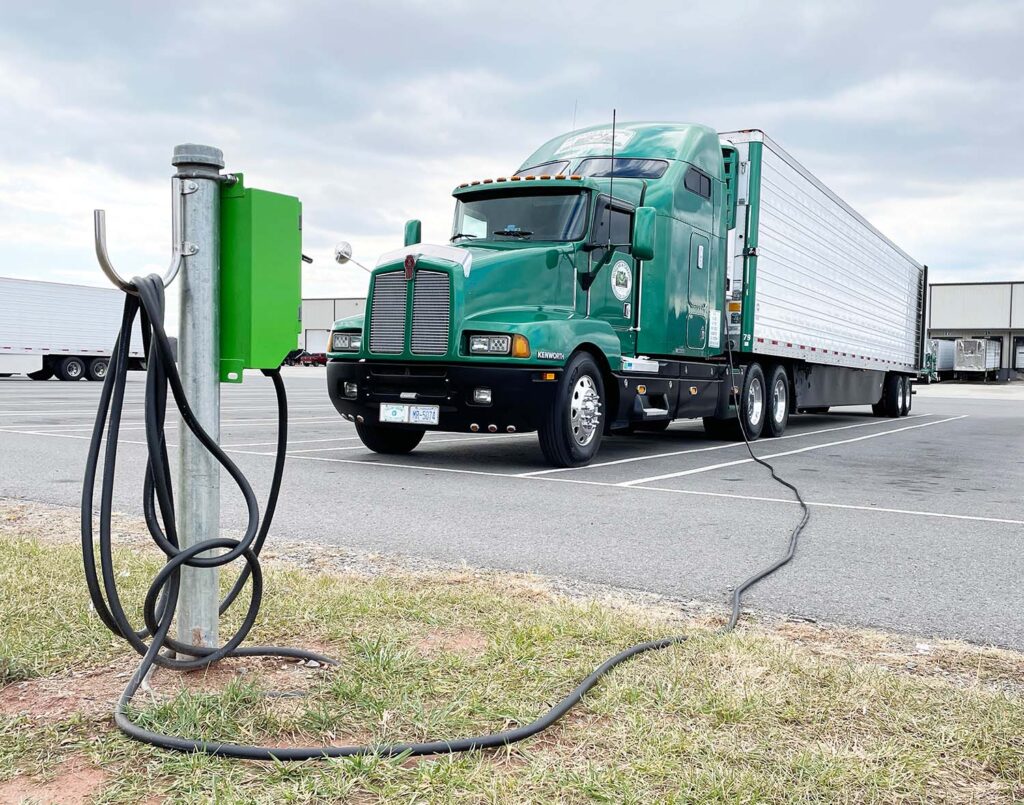
In Mount Airy, North Carolina, a produce company trailer uses electricity to fuel up its refrigeration unit. The eTRU project is a collaboration between Surry-Yadkin EMC, North Carolina’s Electric Cooperatives and Hollar & Greene Produce Co. (Photo Courtesy: NCEMC)
If Hollar & Greene Produce Co.’s cabbages aren’t chilled at just the right temperature, Walmart, one of its largest customers, can’t use them.
“If it’s more than 1 or 2 degrees off, they can reject the whole load. That’d be 1,000 boxes rejected, and that wouldn’t be good,” said Tony Greene, the fleet manager of the Boone, North Carolina-based company, a commercial member of Surry-Yadkin Electric Membership Corp. in Dobson.
But keeping cabbage pulps chilled at 36 degrees Fahrenheit takes a lot of electricity. And until recently, the family-owned business’s food warehouse in Mount Airy burned expensive diesel fuel to run the refrigeration units nonstop.
Now, thanks to an award-winning co-op pilot based on the principles of beneficial electrification, one of the nation’s largest fresh cabbage shippers is spending less on fuel and reducing emissions and noise pollution by switching to an electric transport refrigeration unit (eTRU) to chill the produce. Wedged between the driver’s cab and trailer, the unit plugs into equipment at a company warehouse.
Annual savings per trailer in fuel and operations and maintenance “are expected to be significant,” according to co-op estimates.
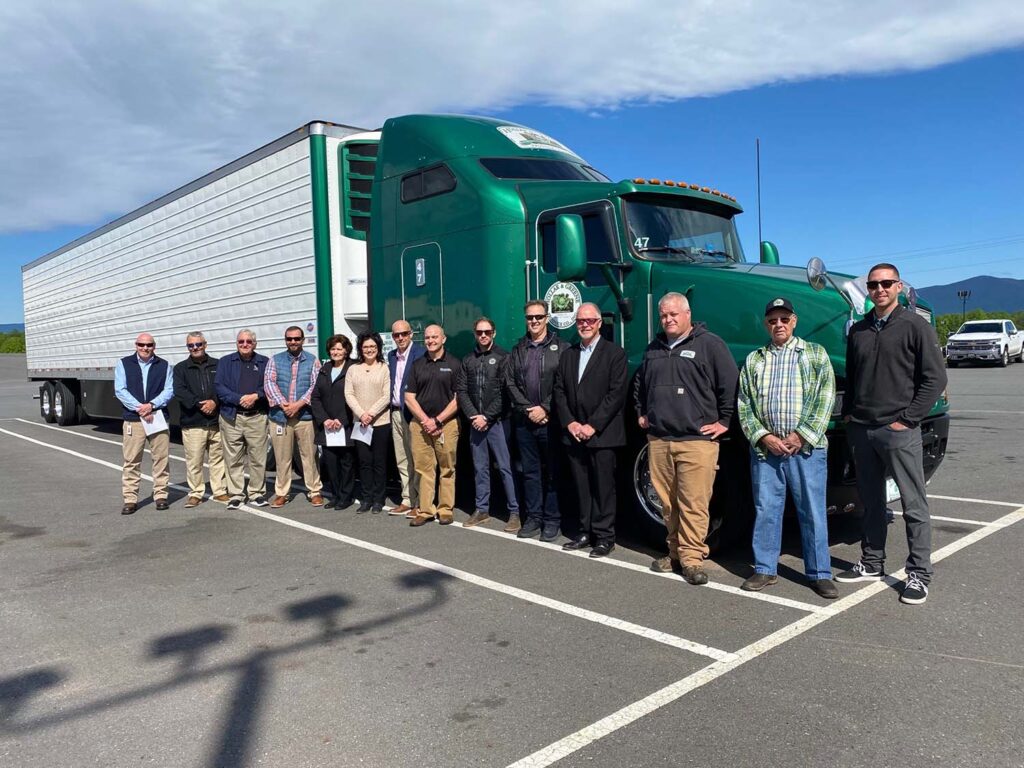
In Mount Airy, North Carolina, officials from Surry-Yadkin EMC and Hollar & Greene Produce Company at the ribbon-cutting for the joint electric refrigeration unit project. (Photo Courtesy: SYEMC)
“It’s a no-brainer,” Greene said. “It works really well for us because when we were using diesel, we’d load the trucks in the morning and the driver wouldn’t be leaving until as late as 9 or 10 p.m. that evening for delivery the next day. On hot days, the trailer traps the heat from the outside, so you have to keep the unit running.”
Encouraged by the pilot’s success, North Carolina’s Electric Cooperatives wants to take the project statewide, creating a playbook that key accounts advisers at the state’s 26 co-ops can distribute to commercial and industrial members next year.
While only about 10% of co-op key accounts in North Carolina are transportation-related, co-ops can find ways to package the technology with other energy solutions.
“We want to put our distribution co-ops in a position where they can be ahead of the curve and help their members achieve goals” of reducing emissions, noise and fuel prices, said James Musilek, vice president of innovation and business development at the Raleigh-based statewide association and generation and transmission cooperative.
Last year, the Research Triangle Cleantech Cluster awarded Surry-Yadkin EMC and Hollar & Greene an innovation award in the transportation category.
“Because transportation sources account for 36% of North Carolina’s greenhouse emissions, this type of program has the potential to help meet the state’s carbon targets,” according to the group’s website.
Key accounts managers at North Carolina co-ops are working with other businesses to electrify agricultural and commercial processes through irrigation and equipment and, at a local community college, agricultural hydroponics.
Burgaw-based Four County EMC and James Sprunt Community College launched a smart farm inside a shipping-container-turned-greenhouse. They are testing agricultural hydroponics, a method of growing plants in a nutrient-rich water solution instead of soil.
“A large portion of our members work in the agriculture field, and we saw this partnership as an opportunity to introduce technology that could benefit an industry that is very important to eastern North Carolina,” said Greg Sager, vice president of member services at Four County EMC.
America’s Electric Co-ops Ready to Work with Trump Administration, New Congress to Strengthen Rural Communities
PublishedNovember 6, 2024
Author
Media Relations
ARLINGTON, Va. – National Rural Electric Cooperative Association CEO Jim Matheson issued the following statement on the election results.
“We congratulate President Trump on his election, and we look forward to working with him and Congress on a pro-energy agenda that protects affordability and reliability,” Matheson said. “America is at an energy crossroads and the reliability of the electric grid hangs in the balance. Critical generation resources are being retired faster than they can be reliably replaced. At the same time, electricity demand is skyrocketing as power-hungry data centers and new manufacturing facilities come online. Smart energy policies that keep the lights on are more important than ever.”
Among electric co-ops’ ongoing policy priorities:
Safeguarding Electric Reliability. Protecting the electric grid from increasing threats to reliability, such as the Environmental Protection Agency’s Power Plant Rule.
Reforming Federal Permitting. Modernizing and streamlining the federal permitting and siting process in a manner that eliminates excessive regulatory burdens and ensures more predictable and timely decisions from federal agencies.
Enhancing Wildfire Protection. Passage of legislation such as the Fix Our Forests Act (H.R. 8790) that includes crucial improvements to grid hardening and wildfire mitigation procedures that will help co-ops better address wildfire hazards on utility rights-of-way.
Defending Direct Pay. Maintaining direct pay tax credits, which provide direct federal payments to electric co-ops when they deploy new energy technologies, including carbon capture, nuclear, energy storage, renewables and more.
Maintaining New ERA Funding. Protecting funding for innovative energy projects from the U.S. Department of Agriculture’s Empowering Rural America (“New ERA”) Program.
Promoting Infrastructure Modernization. Improving the nation’s electric infrastructure, including transmission facilities critical to maintaining a reliable electric grid.
Deploying Rural Broadband. Delivering quality, affordable broadband to rural communities through programs such as the Broadband Equity, Access, and Deployment (BEAD) Program.
The National Rural Electric Cooperative Association is the national trade association representing nearly 900 local electric cooperatives. From growing suburbs to remote farming communities, electric co-ops serve as engines of economic development for 42 million Americans across 56 percent of the nation’s landscape. As local businesses built by the consumers they serve, electric cooperatives have meaningful ties to rural America and invest $15 billion annually in their communities.
Second Round of USDA New ERA Funding Showcases Electric Co-op Innovation
PublishedOctober 25, 2024
Author
Media Relations
ARLINGTON, Va. – National Rural Electric Cooperative Association CEO Jim Matheson today welcomed the U.S. Department of Agriculture’s second round of awards for electric cooperatives under its Empowering Rural America (New ERA) Program.
The roughly $1 billion in new funding was announced by Deputy Secretary of Agriculture Xochitl Torres Small today in Colorado, along with $2.5 billion in grants and loans to Tri-State Generation and Transmission Association under the first funding round, announced last month.
“Electric cooperatives excel at finding innovative ways to meet the needs of their members and power their communities, while strengthening America’s electric grid,” NRECA CEO Jim Matheson said. “The New ERA program is a transformative opportunity for electric co-ops that allows them to tailor energy solutions to meet local needs.
“We are grateful to USDA and our allies in Congress for working with us to ensure the program supports a wide variety of co-op projects and delivers tangible benefits to the communities they serve.”
NRECA was heavily involved in shaping the $9.7 billion New ERA Program, which was created specifically for electric cooperatives interested in purchasing or building new energy systems. The wide range of eligible projects – including carbon capture, renewable energy, storage, nuclear, and generation and transmission efficiency improvements – allows each cooperative to determine its path based on its unique circumstances.
The National Rural Electric Cooperative Association is the national trade association representing nearly 900 local electric cooperatives. From growing suburbs to remote farming communities, electric co-ops serve as engines of economic development for 42 million Americans across 56 percent of the nation’s landscape. As local businesses built by the consumers they serve, electric cooperatives have meaningful ties to rural America and invest $15 billion annually in their communities.
Along Those Lines: Federal Funding Accelerates Energy Innovation Among Co-ops
PublishedOctober 14, 2024
Author
NRECA
Federal energy programs created in the past three years have helped co-ops fund new generation, storage and transmission projects. (Photo Courtesy: TJ Accola/Intermountain Rural Electric)
Electric cooperatives have always been leaders on energy innovation, but a surge in public funding is taking that innovation to the next level.
This episode is sponsored by ITG Communications.
The Inflation Reduction Act of 2022 contained nearly $10 billion for the Empowering Rural America (New ERA) program, an initiative to support clean energy and efficiency projects in rural areas. The IRA also created the $1 billion Powering Affordable Clean Energy (PACE) program, which provides partially forgivable loans for projects that reduce emissions. These two programs represent the largest single investment in rural electrification since the New Deal.
In addition, the bipartisan infrastructure law of 2021 funded a wide range of programs that benefit co-ops, including the Department of Energy’s GRIP program to enhance grid flexibility and reliability.
To learn more about how co-ops are leveraging these opportunities, we’ll hear from Lauren Khair, senior director of energy research and resilience with NRECA’s Business and Technology Strategies department, as well as Travis Million, president and CEO of Golden Valley Electric Association in Alaska, and Jason Williams, assistant general manager for engineering operations and power at Flathead Electric Cooperative in Montana.
Wolverine, Hoosier Awarded $1.3 Billion to Aid Nuclear Plant Restart
PublishedOctober 1, 2024
Author
Molly Christian
Wolverine Power Cooperative President and CEO Eric Baker gives remarks at a Sept. 30 event to celebrate Wolverine and Hoosier Energy’s selection for a combined $1.3 billion in funding from the U.S. Agriculture Department to support the restart of the Palisades nuclear plant in Michigan. (Photo By: Matthew Mitchell/Matthew Mitchell Photo Studio)
Two Midwestern electric cooperatives will receive over $1 billion in federal support to help reopen the idled Palisades nuclear plant in Michigan, a project the co-ops say will bolster reliability and deliver carbon-free power in the region.
The U.S. Department of Agriculture announced Monday that Wolverine Power Cooperative and Hoosier Energy will receive a combined $1.3 billion from the USDA’s Empowering Rural America (New ERA) program to fund power purchase agreements with Palisades’ owner, Holtec International.
Once reopened, Palisades will be the first nuclear plant in the U.S. to be recommissioned.
“The New ERA program showcases what is possible when the government prioritizes voluntary, flexible decision-making and allows electric co-ops to take a tailored approach to respond to local needs,” NRECA CEO Jim Matheson said.
The Sept. 30 announcement included an awards ceremony at the 800-megawatt plant attended by co-op officials, Deputy Agriculture Secretary Xochitl Torres Small, Deputy Energy Secretary David Turk and other Biden administration officials.
NRECA was heavily involved in shaping the New ERA Program, which was created by the Inflation Reduction Act of 2022. It was designed specifically for electric cooperatives to purchase or build new energy systems and is being administered by USDA’s Rural Utilities Service.
Wolverine will receive over $650 million to buy about 435 MW of energy from Palisades. Hoosier will receive more than $675 million to support the purchase of about 370 MW of Palisades’ capacity as well as about 250 MW of solar energy to serve members in Indiana and Illinois.
The awards will cover about a quarter of the co-ops’ power purchase agreements with Holtec, a senior Biden administration official said during a call with reporters.
The Palisades restart is also receiving federal support from the Department of Energy. The DOE said Monday that it had closed on a previously announced $1.52 billion loan guarantee for Holtec to support recommissioning Palisades. The loan guarantee was the first to close under the IRA’s Energy Infrastructure Reinvestment program, which provides financing to repower or replace closed energy infrastructure or reduce or avoid greenhouse gas emissions at existing energy facilities.
“The New ERA grant opportunity inspired Wolverine to think big about decarbonization,” said Eric Baker, president and CEO of the Cadillac, Michigan-based generation and transmission cooperative. “The power purchase agreement, essential for the historic restart of the Palisades plant, required an innovative and creative spirit that I believe is unique to cooperatives.”
Donna Walker, CEO of Bloomington, Indiana-based Hoosier, said the Palisades project “is a tremendous win for electric cooperatives and demonstrates our ability to collaborate and innovate for our members and the hundreds of thousands of member-consumers we serve.”
Holtec suspended operations at the Palisades plant in May 2022, with plans to decommission the facility. But the need for reliable baseload power and Michigan’s clean energy goals—eventually culminating in a state mandate for 100% carbon-free energy by 2040—prompted Wolverine and Hoosier to look at helping Holtec revive the plant.
The two G&Ts have roughly 30-year power purchase agreements with Palisades, with each committed to buying about half the plant’s electric output.
“The primary elements of our strategic objectives are all addressed with this,” Baker said. “It’s price stability, price competitiveness, electric reliability … investment in our local communities, and our goals to advance decarbonization efforts. This deal is the best opportunity we have to address all five of these objectives.”
The member-owned nature of co-ops also allowed the G&Ts to act swiftly on the plan, he added.
“I can’t imagine another business structure that could move as quickly as cooperatives when we work together,” Baker said.
Walker echoed those sentiments. “The Palisades agreement is an ideal fit for Hoosier Energy’s long-range resource plan priorities, delivering baseload reliability and resource adequacy, portfolio diversity, rate stability and predictability, low wholesale rates, and environmental sustainability,” she said.
Baker said Holtec is aiming to reopen the plant in the fall of 2025. The plant’s restart is projected to create or retain up to 600 jobs in Michigan and support more than 1,000 jobs during the facility’s regularly scheduled refueling and maintenance periods every 18 months, according to the DOE.
The Palisades New ERA awards are part of $7.3 billion in funding under the first round of the program, with more announcements expected soon.
Electric Co-ops Win $7.3 Billion in New ERA Funding for Clean Energy
PublishedSeptember 5, 2024
Author
Erin Kelly
President Joe Biden addresses the crowd at Vernon Electric Cooperative in Westby, Wisconsin, at a Sept. 5 event celebrating the first round of New ERA funding awards. (Photo Courtesy: Dairyland Power Cooperative)
Sixteen electric cooperatives from throughout the nation have been selected for more than $7.3 billion in grants and loans from the U.S. Department of Agriculture’s New ERA program to finance new and innovative clean energy systems, federal officials announced Thursday.
The first co-op to be chosen was Dairyland Power Cooperative in La Crosse, Wisconsin, which has been awarded $579 million to purchase solar and wind power, putting the co-op on track to slash its carbon emissions by over 70% by 2031.
The funding—secured by NRECA in the Inflation Reduction Act—will make it much faster and more affordable for Dairyland to transition to a cleaner energy future, said Brent Ridge, the generation and transmission co-op’s president and CEO.
Dairyland hosted President Joe Biden, Agriculture Secretary Tom Vilsack, Rural Utilities Service Administrator Andy Berke and NRECA CEO Jim Matheson at Vernon Electric Cooperative in Westby, Wisconsin, on Thursday afternoon to make the announcement. Vernon EC is one of Dairyland’s member co-ops.
“If we look at what we were able to accomplish prior to receiving New ERA funding, it was similar to driving 20 mph on a country road versus getting on the interstate going 70,” Ridge said in an interview.
The 16 co-ops selected for funding will leverage private investments of more than $29 billion to build more than 10 gigawatts of clean energy for rural communities across the country and will reduce and avoid at least 43.7 million tons of greenhouse gases annually, the USDA said. That’s equivalent to taking more than 10 million cars off the road each year, the agency said.
Dairyland Power had set a goal of reducing its carbon emissions 50% by 2030, but it will now be able to achieve a reduction of at least 70% by 2031, he said.
Brent Ridge, left, president and CEO of Dairyland Power Cooperative, with Rural Utilities Service Administrator Andy Berke at the Wisconsin event announcing billions for co-ops’ clean energy projects. (Photo Courtesy: Dairyland Power Cooperative)
And it can keep consumer rates down in the process while also creating new job opportunities in the region by attracting large manufacturers and data centers looking for affordable rates and sustainable power, Ridge said.
“It’s a win-win-win,” he said. “It’s good for Dairyland members, the environment and the economy of rural communities.”
New ERA—short for Empowering Rural America—is a $9.7 billion voluntary program created exclusively for co-ops after strong lobbying by NRECA, which convinced Congress to include it in the IRA in 2022.
The program proved popular with co-ops, which flooded the USDA with requests for funding. New ERA provides grants and loans to co-ops for new and innovative clean energy systems, including carbon capture, energy storage, renewables, nuclear energy and generation and transmission efficiency.
“The New ERA program showcases what is possible when the government prioritizes voluntary, flexible decision-making and allows electric co-ops to take a tailored approach to respond to local needs,” said Matheson. “It is a transformative opportunity for electric cooperatives.”
Dairyland Power, which serves 24 distribution co-ops and 27 municipal utilities, currently gets 37% of its power from coal, 39% from natural gas, 16% from wind and solar, 6% from other renewables and 2% from other sources. By 2031, renewables will rise to be around 50% of the co-op’s resource mix, Ridge said, and coal will be less than 25%.
The New ERA funding will also allow the co-op to refinance its coal assets at very low interest rates to pay them off, he said.
Dairyland Power will contract with developers through power purchase agreements to acquire 593 megawatts from four wind installations, 427 MW from four solar installations and 60 MW of battery energy storage—enough renewable energy to power 240,000 homes.
The co-op is still negotiating with developers in the four states it serves to finalize those deals. Some of the installations already exist while others are emerging, Ridge said.
Two more rounds of New ERA funding will be announced in the months to come. In addition to Dairyland Power, the co-ops selected for this first round of funding are:
Nevada Co-op Receives $80.3 Million PACE Loan for Solar, Storage Systems
PublishedSeptember 3, 2024
Author
Molly Christian
U.S. Department of Agriculture Deputy Secretary Xochitl Torres Small announces a new loan award for Valley Electric Association under the PACE program on Aug. 29 in Pahrump, Nevada. (Photo Courtesy: Valley Electric)
A pair of cooperative projects in Nevada that will provide clean energy while bolstering grid resilience and reliability received a new loan award through the Department of Agriculture’s $1 billion Powering Affordable Clean Energy program.
USDA awarded an $80.3 million PACE loan to Valley Electric Association to help build a 35-megawatt energy storage system to serve Pahrump and a 2-megawatt solar power and energy storage system to serve the Fish Lake Valley region. The projects will produce enough electricity to serve around 3,500 homes and help mitigate price volatility and grid resilience risks in the area.
Fish Lake Valley is fed by a 55-kilovolt radial line that crosses an area of extreme wildfire risk, raising the potential for public safety power shutoffs for co-op members.
The investment was part of $140 million in new PACE support announced Aug. 29 and follows a string of co-op awards under the program.
“These projects are projected to greatly benefit Valley’s members. Resiliency and reliability concerns will be addressed specifically at Fish Lake Valley,” Valley Electric CEO Mark Stallons said in a joint statement with Gabe DeGuzman, the co-op’s director of transmission services and load management.
Agriculture Deputy Secretary Xochitl Torres Small (center, in blue jacket and yellow shirt) is flanked by Valley Electric leaders and staff during her visit to announce the $80.3 million loan.
Construction on the projects is slated to start in the second half of 2025 and finish by the first quarter of 2027.
The PACE program, created through the Inflation Reduction Act, provides partially forgivable, low-interest loans for new clean energy and storage projects in rural America.
Valley Electric will receive 20% loan forgiveness as part of its PACE award. In addition, the projects can qualify for direct-pay tax credits championed by NRECA for inclusion in the IRA. The projects are expected to get a 30% direct-pay investment tax credit, with one project also eligible for a 10% bonus incentive for being located in an “energy community” that has lost jobs or revenue from the energy transition.
The partial loan forgiveness and federal tax incentives will cover about $47.3 million of the $80.3 million investment, Valley Electric said.
“With the passage of direct pay legislation and cooperative access to the PACE initiative, our path to owning power supply assets became obvious,” Stallons and DeGuzman said. “Advocacy and policy efforts from NRECA laid the foundation for Valley Electric to receive this award. It truly has been a team effort.”
So far, the USDA has announced more than $655 million in PACE investments, including awards for several co-ops. The department said it expects to announce additional awards through the program in the coming months.
Co-ops to Help Host DOE’s Largest Class of Clean Energy Fellows
PublishedAugust 30, 2024
Author
Molly Christian
Mark Stubbs, CEO of Greenville, Texas-based Farmers Electric Cooperative, is pictured with distribution interconnected solar assets that are part of Farmers’ existing distributed energy resources portfolio. (Photo Courtesy: Farmers Electric Cooperative)
Electric cooperatives are among the 68 organizations chosen to host clean energy fellows under the latest round of a U.S. Department of Energy program.
The fellows will support co-op efforts to evaluate or deploy battery storage, distributed energy resources, microgrids and other clean energy innovations.
“These fellowships really are a win-win—by providing cooperatives with additional staff to support innovative projects underway while also developing the workforce of the future and highlighting the benefits of being a part of the cooperative family,” said NRECA Regulatory Affairs Director Stephanie Crawford.
DOE’s Clean Energy Innovator Fellowship (CEIF) program recruits recent college graduates and energy professionals to spend up to two years backing host organizations’ projects. The 2024 fellowship class, which the DOE announced Aug. 21, is the largest to date.
As part of that round, Tri-State Generation and Transmission Association Inc. in Colorado will host a fellow to analyze battery storage as a distributed energy resource for disadvantaged rural communities. The fellowship will be Tri-State’s third under the CEIF.
“Our fellows have been instrumental in helping create innovative energy solutions for our members, bringing a fresh perspective and energy that is making a real difference for our members,” Tri-State Chief Energy Innovations Officer Reg Rudolph said. “Our fellows offer refined skill sets for using data and analytics for more informed and strategic decisions and are purpose-driven, which resonates with our cooperative business model and vision of the future.”
The decision gives the state’s co-ops “another way to deliver on a commitment to powering a brighter future for our 2.5 million members and rural communities,” said Lee Ragsdale, senior vice president of energy delivery for NCEMC.
The fellow “will help accelerate the deployment of microgrids across the state by working with our team to implement a simplified, templated design for these innovative systems, ultimately enhancing grid resilience in communities throughout North Carolina,” Ragsdale added.
Other co-ops receiving new fellows include Farmers Electric Cooperative in Greenville, Texas, to expand its DER program; Rappahannock Electric Cooperative in Fredericksburg, Virginia, to grow its commercial/industrial clean energy DER integration programs for grid resilience and optimization; and Ahoskie, North Carolina-based Roanoke Cooperative to support efforts to operationalize its data analytics plan.
“Having a DOE fellow means Farmers has access to additional insights and valuable new work on projects as we build our distributed energy programs,” said Samantha Crouch, Farmers’ general counsel and senior director of power supply and energy services. “We’re also excited about the opportunity to encourage the professional growth and education of a future energy industry professional.”
North Carolina Co-op Powers First Electric School Buses in Its Territory
PublishedAugust 30, 2024
Author
Erin Kelly
Roanoke Cooperative officials join with school, county and state leaders to celebrate a new electric school bus at Bertie County High School in Windsor, North Carolina. It was the first electric school bus in the co-op’s service territory, but Roanoke expects to power a total of nine in the next two to three years. The two little girls in pink are the granddaughters of co-op board Chairman Allen Speller. (Photo Courtesy: Roanoke Cooperative)
Roanoke Cooperative has helped bring the first electric school buses to two of the most economically distressed school districts in North Carolina, giving children a cleaner ride to class while they learn more about EV technology.
“This initiative is not just about advancing technology; it’s about educating our students and community on the importance of renewable energy and sustainability,” Marshall Cherry, the co-op’s president and CEO, said at a recent ceremony unveiling a new 60-kilowatt, dual-port DC fast charger that Roanoke will use to power the first electric school bus in its service territory.
The bus, based with its charger at Bertie County High School in Windsor, is the first of five electric school buses that the Bertie County Schools system is slated to receive, Cherry said.
“The electric buses and this charging station will act as powerful learning tools, inspiring the next generation to explore careers in green energy and sustainable practices,” he said.
Halifax County Schools, also served by Roanoke, was close behind Bertie County in acquiring an electric bus—the second in the co-op’s territory. Halifax County is expected to get three more.
“Within the next two to three years, we should have nine buses total that we will be electrifying on our system,” Cherry said. “We’re really looking forward to that. The environmental friendliness of the buses is important to us.”
Roanoke Cooperative leaders help unveil a new 60-kilowatt, dual-port DC fast charger that the co-op will use to power the first electric school bus in its service territory. Marshall Cherry, the co-op’s president and CEO, stands just to the left of the charger. (Photo Courtesy: Roanoke Cooperative)
Roanoke Cooperative reached out to all the school districts in its territory to see if they were interested in acquiring electric school buses, Cherry said. The Aulander-based co-op then worked with school officials to support their applications for federal grants, and it helped arrange installation for the charger at the high school.
The Bertie County bus and charger, which cost a total of about $400,000, were funded at no cost to co-op consumer-members or taxpayers. The money came from the Volkswagen Clean Air Act Settlement. The German auto manufacturer agreed to spend $2 billion to promote zero-emission vehicles after the Environmental Protection Agency sued it in 2016 for falsifying emissions data about its diesel vehicles.
The remaining buses for both school districts are being funded by the EPA’s Clean School Bus Program, which was created by the bipartisan infrastructure law and provides $5 billion over five years to school districts throughout the nation.
“Roanoke serves one of the most economically distressed regions in the state, and these two school districts are among the most distressed in North Carolina,” Cherry said. “They have limited resources, so it’s especially gratifying to see them get these buses.”
It also helps the co-op, he said.
“Any kilowatt-hour that we sell benefits our members,” Cherry said. “It provides some growth on our system, and the source of that growth is cleaner transportation for kids in our community.”
DOE Official: Finding Common Ground Is Key for Reliable, Resilient Grid
PublishedAugust 27, 2024
Author
Molly Christian
Gene Rodrigues, the Department of Energy’s assistant secretary for electricity, shared his core principles for a strong grid at an NRECA meeting in Arlington, Virginia. (Photo By: Denny Gainer/NRECA)
The power sector and government are best at solving industry challenges—including how to ensure a stable, reliable grid—when they work together, a top Department of Energy official told electric cooperative leaders at an NRECA gathering in Arlington, Virginia.
Gene Rodrigues, assistant secretary for DOE’s Office of Electricity, spoke Aug. 21 at an inaugural meeting between NRECA’s Strategic Technology & Advisory Council and Member Advisory Groups (MAGs).
The council and MAGs are made up of co-op representatives and have leads within NRECA’s Business & Technology Strategies division. The MAGs focus on areas of innovation, including distributed energy resources, cybersecurity, generation and data analytics. Representatives of the Transmission and Distribution Engineering Council also attended the meeting.
As the power sector rapidly transforms due to emerging technologies and new demand sources, Rodrigues said four principles should anchor what DOE and co-ops do: reliability, resilience, security and affordability.
“The thing that makes NRECA effective … is that we work together around those four things,” he said. “Those principles are what I think are really important.”
But ensuring those attributes is increasingly difficult, according to Rodrigues.
“Reliability and resilience are no longer things that we can forecast accurately,” he said. “And that means we have to get better in this industry about being not just adaptable, but actually being a little more able to … allow judgment to replace a regulator’s economic model for what to do and how to approve it.”
Addressing those challenges also means collaborating across policy divides.
“As we think about all those things that are important to fight against, let’s find a way for this industry to come back to an area of … agreement,” said Rodrigues.
As an example, he pointed to a successful collaboration among DOE, NRECA and other stakeholders to craft final new energy efficiency standards for electric distribution transformers to provide stability to industry after DOE’s problematic initial proposal amid the ongoing supply chain crisis.
“In a perfect world, we would address every issue that way, instead of litigating and regulating, et cetera,” the DOE official said. “We don’t live in a perfect world. So, what we have to do is try to push the balance to as much upfront collaboration around those four principles as we can and just recognize that there are always going to be things that we argue about.”
That cross-sector cooperation will be key as the U.S. prepares for elections in November that could have a big impact on national energy policy.
“There is so much common ground,” Rodrigues concluded.
Co-op Energy Storage Projects Get Boost From New PACE Awards
PublishedJuly 9, 2024
Author
Molly Christian
A new loan award from the U.S. Department of Agriculture will help Alaska Electric and Energy Cooperative build a new energy storage system near the Soldotna substation pictured here. (Photo Courtesy: Homer Electric Association)
Electric cooperative energy storage projects in Alaska and Arizona have been chosen to receive a combined $255 million in loan funding under newly announced awards from the U.S. Department of Agriculture.
The awards stem from the Inflation Reduction Act’s Powering Affordable Clean Energy (PACE) program, a $1 billion initiative to provide partially forgivable loans for renewable power, storage and other clean energy projects serving rural areas.
As part of the USDA’s June 26 announcement, Alaska Electric and Energy Cooperative Inc. will get a $100 million loan to install a 45-megawatt, four-hour battery energy storage system near its Soldotna substation. The co-op is a subsidiary of Homer Electric Association in Homer, Alaska.
Declining supply and steep prices for natural gas in south-central Alaska are driving HEA to pursue more renewable resources for its system, and battery storage is crucial to adding that capacity.
Battery storage technology “really is that bridge to allow us to seek alternative [energy sources],” said Homer Electric CFO Sarah Lambe.
Under the terms of its award, HEA qualified for maximum loan forgiveness of 60%. And thanks to the IRA’s direct-pay option for federal tax incentives, the co-op plans to seek up to 40% in investment tax credits for the roughly $112 million project, Lambe said.
Without support from the PACE program, “there’s no way our members could afford [this project],” said HEA General Manager Brad Janorschke.
The USDA also tapped Fairbanks, Alaska-based Golden Valley Electric Association Inc. to receive a $100 million loan for a 46-MW battery system that will interconnect with GVEA’s Wilson substation. As part of the proposal, the co-op will also enhance its Nenana substation and install a half-mile long circuit to support a 16-MW solar power purchase agreement with the Nenana solar farm.
In February, GVEA’s board adopted an updated generation plan that included adding an energy storage system capable of integrating large-scale renewable resources—a goal furthered by the PACE award.
“This funding will allow GVEA to significantly advance initiatives under our strategic generation plan, benefiting our members and the broader community,” GVEA CEO Travis Million said in a press release. “We are committed to creating a sustainable energy future for Interior Alaska.”
GVEA said it also obtained the maximum 60% loan forgiveness and that the project can qualify for federal tax credits covering 30-50% of project costs.
The final co-op award announced June 26 was $55.2 million for Sierra Southwest Cooperative Services Inc. to finance three storage projects in Arizona totaling 35 MW with four hours of duration. Sierra is part of Benson-based Arizona G&T Cooperatives.
Both the Trico and Sulphur Springs Valley facilities have begun operation, with MEC’s project to be deployed before the end of summer.
“This support significantly bolsters our ongoing efforts to implement smart, affordable and reliable clean energy initiatives for the benefit of our cooperative membership and rural Arizona communities,” Sierra Southwest CEO Patrick Ledger said. “We look forward to continued collaboration with the USDA in driving these essential projects forward.”
The USDA said it expects to make additional PACE awards in the coming months.
Ag Secretary Announces $81 Million for Colorado Co-ops’ Solar Projects
PublishedJune 18, 2024
Author
Erin Kelly
Agriculture Secretary Tom Vilsack visits Poudre Valley REA in Fort Collins, Colorado, on June 17 to announce funding for clean energy projects being developed by PVREA and Delta-Montrose Electric Association in Montrose, Colorado. (Photo Courtesy: Poudre Valley REA)
Agriculture Secretary Tom Vilsack traveled to Poudre Valley Rural Electric Association in Fort Collins, Colorado, on Monday to announce $81 million in special loan funding to help PVREA and Delta-Montrose Electric Association in Montrose, Colorado, develop innovative clean energy projects that combine solar power and battery storage.
“The projects we’re announcing today will create good-paying jobs, lower energy costs for consumers, reduce greenhouse gas emissions and strengthen the resiliency of our nation’s electric grid,” Vilsack said during a news conference at the headquarters of Poudre Valley REA.
Delta-Montrose Electric Association will receive a $72 million low-interest, partially forgivable loan from the U.S. Department of Agriculture’s Powering Affordable Clean Energy (PACE) program to help finance a huge 20-megawatt solar photovoltaic array with an additional 80 megawatt-hours of battery storage. It is the second-largest PACE award in the nation so far, USDA officials said. The excess electricity generated from solar power can be stored in the battery and used as needed to ease peak demand.
The solar array will make up about 10% of DMEA’s overall load and produce enough energy to power about 7,000 homes when it is completed—most likely in 2030, the co-op estimated.
The total cost of the project is $96 million. The USDA is forgiving 40% of the co-op’s $72 million loan and—with additional funding opportunities from the 2022 Inflation Reduction Act that created the PACE program—DMEA will be seeking up to another 50% of the project costs in federal tax incentives, co-op leaders said.
“This is a monumental win for DMEA and our members,” said CEO Jack Johnston. “This investment not only enables us to produce affordable energy, further stabilizing member rates, but it also improves local grid reliability. The energy we generate right here at home can be efficiently delivered to our members, bypassing the reliance on distant power plants and extensive transmission lines.”
Poudre Valley REA will receive a $9 million loan from the PACE program to build two separate projects. The first will be a 1.5-MW utility-scale solar power distribution system that will be coupled with battery storage, said Jeff Wadsworth, the co-op’s president and CEO.
The second project will be a 2-MW community solar farm that will also be paired with battery storage. It will be the co-op’s fourth and largest community solar farm, he said.
“In the state of Colorado, it’s important to our members that we work through the energy transition in a responsible way that ensures reliability and affordability as well as a more sustainable grid,” Wadsworth said. “These are legacy projects that are going to benefit our community for years to come.”
PACE will provide a total of up to $1 billion to fund clean energy projects and energy storage in rural America. The program offers low-interest loans with up to 60% loan forgiveness to rural energy providers—including electric cooperatives—for projects that use wind, solar, hydropower, geothermal and biomass.
Minn. Co-op Works With Local College to Turn Vintage Truck Electric
PublishedMay 10, 2024
Author
Erin Kelly
Students at Riverland Community College transformed Freeborn Mower Electric Cooperative’s 1946 Chevy truck into an electric vehicle. The Minnesota co-op plans to use it in local parades and at other special events. (Photo Courtesy: Freeborn Mower EC)
Freeborn Mower Electric Cooperative in southern Minnesota has partnered with the local community college to transform the co-op’s World War II-era work truck into an electric vehicle that will soon make its debut in area parades.
“I think it will show the co-op’s initiative and dedication in looking at new technologies that might eventually benefit our members,” said Jim Krueger, the 18,000-member co-op’s president and CEO.
“Converting this vintage truck to electric shows us bridging the old times to the new times as co-ops adopt the latest innovations.”
The green 1946 Chevy delivery truck was sitting largely unused in a corner of the co-op’s warehouse when employees came up with the idea to turn it electric during a brainstorming session about a year ago, Krueger said.
Mary Nelson, Freeborn Mower’s director of cooperative relations, reached out to Riverland Community College in Albert Lea, where the co-op is also based, to see if the school would be interested in having its automotive technology students work on the project. The co-op also provided $30,000 to cover the cost of the transformation.
Now that the truck is electric, the co-op is considering giving it an exterior makeover. (Photo Courtesy: Freeborn Mower EC)
Olle Gladso, an automotive technology instructor at the college, and a half-dozen of his students took up the challenge.
“When you take something that old and try to marry it to modern components, there are going to be some problems along the way,” said Gladso, who started working on the truck conversion with his students in August of last year.
“The first thing we had to do was take it apart, remove the old engine, and then start over. It took a while to get all the different parts.”
One of the biggest challenges, he said, was the fact that the replacement transmission was taller than the original one, so it couldn’t be mounted in the same place. That made it necessary to have a longer drive shaft, which was difficult to find.
Despite such obstacles, the students were able to complete the project earlier this month, driving the newly electric truck in the college parking lot for the first time on May 2.
Gladso estimates that the truck—which could only accommodate a limited number of batteries—will have a modest range of about 50 miles when fully charged and will perform well when driven slowly in parades.
“I commend the students for their dedication and persistence,” he said. “They have really grown from this experience, and they have a tremendous sense of accomplishment.”
Now that the co-op has its truck back, it’s looking at ways to give it an exterior makeover to reflect the dramatic overhaul it has undergone on the inside, said Al Stadheim, the co-op’s director of engineering and operations.
The co-op expects the truck to be used in about six parades a year—the Fourth of July parade in Albert Lea and citywide parades in the small communities it serves.
“It’s been about 25 years since the truck has had any paint,” Stadheim said. “We need to decide whether we’re going to wrap it with graphics representing the new co-op logo. We’ll work with a vendor to fix it up. Now that it’s electric, our old truck should be quite the conversation piece.”
Co-ops Tapped to Negotiate DOE Grants for Clean Energy, Grid Projects
PublishedMay 3, 2024
Author
Molly Christian
The Department of Energy announced a tranche of projects to receive funding under a $1 billion program to support clean energy deployment in rural and remote areas. (Photo By: Denny Gainer/NRECA)
Six electric cooperatives were among the 19 energy project developers picked to potentially receive almost $80 million in combined grant funding as part of an April 30 announcement from the Department of Energy.
The awards, which are still subject to negotiation, stem from the $1 billion Energy Improvements in Rural or Remote Areas (ERA) program managed by the DOE’s Office of Clean Energy Demonstrations. The program, created through the bipartisan infrastructure law of 2021, seeks to address energy challenges in areas with fewer than 10,000 people by providing funds for clean energy projects and infrastructure improvements.
Altogether, co-ops were selected for $28.5 million of the funding announced April 30.
The ERA awards are “another great example of our members taking advantage of federal funding for much-needed investments in their grids and for other innovative technologies,” said Lauren Khair, NRECA senior director of energy research and resilience.
The two biggest awards for co-ops involved clean energy and grid improvement projects.
Camp Point, Illinois-based Adams Electric Cooperative was selected to receive $5 million to help install a 1-megawatt wind turbine and 1-MW solar photovoltaic array to provide power to about 7,500 families in former coal mining communities in the state. The project is expected to cut energy costs by about $200,000 annually for rural co-op members in seven counties.
The funding will also help Adams Electric partner with schools on a renewable energy curriculum.
With the award, the co-op “will be able to install very low-cost renewable energy generation for our members,” General Manager Jim Thompson said. “The grant also provides the added benefits of enhancing our educational opportunities and creating construction jobs in the community.”
DOE also announced a $5 million grant for Gunnison, Colorado-based Gunnison County Electric Association. The money would support replacing 30 miles of aging overhead distribution lines, with the goal of reducing outages and improving grid resilience and reliability. In the last two years, the co-op’s service territory experienced 76 outage events related to extreme weather and the threat of wildfires.
The potential government funding would pay for about 72% of total costs and minimize the impact on member rates for the project while “significantly improving grid reliability,” the co-op said in an April 30 press release.
“This is the first phase of a project to improve reliability and community resiliency for members south of Gunnison and in Lake City,” CEO Mike McBride told NRECA. “We are extremely excited about this grant for which there were 659 applicants and only 19 applications selected!”
The other co-op projects are:
Alaska Village Electric Cooperative (Anchorage, Alaska): $4.3 million to install a 500-kilowatt solar photovoltaic array, a 540-kilowatt-hour battery energy storage system and a microgrid controller in southwest Alaska, as well as support workforce development efforts.
PNGC Power (Clackamas, Oregon): $4.9 million to help build a battery storage system in Montana and promote education, mentoring and job-shadowing opportunities for local at-risk youth. The battery storage system will be at the Woodside substation owned by Ravalli Electric Cooperative, based in Victor, Montana.
Cumberland Valley Electric (Gray, Kentucky): $4.9 million for grid improvements, including vegetation management and replacement of inefficient fuses with self-restoring reclosers.
Randolph Electric Membership Corp. (Asheboro, North Carolina): $4.4 million for grid improvements, such as replacing deteriorating wooden transmission poles with galvanized steel poles. The money will also help Randolph Electric partner with Raleigh-based North Carolina Electric Membership Corp. on a transmission apprenticeship program.
The ERA program is one of several federal initiatives launched in recent years to help rural cooperatives deploy clean energy and upgrade grid infrastructure.
The U.S. Department of Agriculture could announce awards late this summer for its $9.7 billion Empowering Rural America (New ERA) Program, which will provide grants and loans for new and innovative clean energy systems. The USDA is also overseeing the $1 billion Powering Affordable Clean Energy (PACE) program to support renewable power and energy storage projects in rural America.
Both programs were created through the Inflation Reduction Act of 2022.
RUS Administrator: Co-ops Offer ‘Amazing Proposals’ for New ERA Funding
PublishedApril 25, 2024
Author
Erin Kelly
RUS Administrator Andy Berke talks about co-op funding opportunities at NRECA’s 2024 Legislative Conference. (Photo By: Denny Gainer/NRECA)
WASHINGTON—Electric cooperatives that have applied for funding under the U.S. Department of Agriculture’s $9.7 billion Empowering Rural America Program could begin to see award announcements in late summer, Rural Utilities Service Administrator Andy Berke told co-op leaders at NRECA’s Legislative Conference.
Projects proposed by 17 generation and transmission co-ops—representing more than 100 distribution co-ops—have so far been given the go-ahead by RUS to move to the next level in the application process, Berke said.
“We’re seeing amazing proposals from the co-op community,” he said.
The New ERA clean energy program, which is exclusively for electric co-ops, debuted in the 2022 Inflation Reduction Act. It provides grants and loans to co-ops for new and innovative clean energy systems, including carbon capture, energy storage, renewables, nuclear energy and generation and transmission efficiency.
“It’s the next type of forward-facing infrastructure that rural America needs,” Berke said April 23 at the conference attended by more than 1,200 co-op leaders.
The co-op response to the program has been overwhelming, with about $46 billion in requests coming in—or about five times the available funding. Project ideas, detailed in 160 letters of interest from co-ops, have included solar, wind, nuclear and carbon capture, Berke said.
“We are neutral about which technology co-ops should use,” he said. “We wanted to ensure you can do what works best for you.”
Berke said he hopes Congress will provide more money for co-ops in the future, given the intense interest.
“A lot of great ideas are not going to get funded because there’s just not enough money,” he said.
Co-ops have also tapped into the Powering Affordable Clean Energy (PACE) program, which provides a total of $1 billion for energy projects that use wind, solar, hydropower, geothermal, biomass or renewable energy storage.
“It’s inspiring to get to travel the country and talk to co-op leaders and see the areas you serve,” he said. “Co-ops just get it done every day.”
The core RUS program—the Electric Infrastructure Loan and Loan Guarantee Program that helps finance the construction of distribution facilities in rural areas—reached a record in funding obligations of $6.88 billion last year, Berke said.
“That is a huge amount of funding to ensure you can do the work you need to do,” he said.
Co-op Leaders Take Reliability Message to Capitol Hill, Federal Agencies
PublishedApril 23, 2024
Author
Erin Kelly
NRECA CEO Jim Matheson addresses co-op leaders at the opening general session of the 2024 Legislative Conference in Washington, D.C., on April 22. (Photo By: Denny Gainer/NRECA)
WASHINGTON—More than 1,200 electric cooperative leaders gathered in the nation’s capital this week to meet with members of Congress and Biden administration officials and push for policies that ensure reliable, affordable electricity for rural America.
“Your voices matter,” NRECA CEO Jim Matheson told co-op leaders Monday at the association’s 2024 Legislative Conference on Capitol Hill. He cited a list of recent policy victories that include unprecedented funding opportunities for co-ops to invest in innovative energy technologies.
Co-ops bring a unique message to Congress and federal agencies because they are not-for-profit and are owned by the consumer-members they serve, said Louis Finkel, NRECA’s senior vice president of Government Affairs.
“We’re about people, not profits,” he said.
That message was reinforced by Deputy Agriculture Secretary Xochitl Torres Small as she addressed the conference. She said the USDA listens to co-ops because they are so connected to their communities.
“You are deeply respected—not only in rural development, but across USDA,” she said.
As co-ops tap into an unparalleled amount of new federal infrastructure funding from the bipartisan infrastructure law and the Inflation Reduction Act, “we are sharing an historic moment with you,” Torres Small said.
“This is the single largest infrastructure investment since the Rural Electrification Act in 1936,” she said. “That’s why it’s so important we’re partnering today.”
Deputy Agriculture Secretary Xochitl Torres Small speaks to Legislative Conference attendees on April 22 about the unprecedented amounts of federal funding available to co-ops. (Photo By: Denny Gainer/NRECA)
As part of advocacy efforts by NRECA and its members, Congress included a provision in the IRA that created the Empowering Rural America (New ERA) program, which provides $9.7 billion in grants and loans to co-ops for new and innovative clean energy systems. Co-ops have embraced the opportunity, submitting applications for more than $46 billion in projects.
The legislation also included direct-pay tax credits to help deploy new energy technologies, including carbon capture, nuclear, energy storage, renewables and more.
“Electric cooperatives have been remarkably successful in this challenging political environment,” Matheson said.
NRECA recently helped convince the Department of Energy to dramatically scale back a proposed rule that would have made it difficult for co-ops to get the distribution transformers that are essential for them to modernize their systems and help communities recover from disasters.
But, as the demand for electricity grows, challenges to reliability “are being exacerbated by bad public policy,” Matheson said.
Carolyn Turner (right), executive director of the Nevada Rural Electric Association, and Heather Teilhet, senior vice president for external affairs at Oglethorpe Power Corp., take part in the Women in Power panel on the first day of NRECA’s 2024 Legislative Conference.(Photo By: Denny Gainer/NRECA)
The top priority for co-op leaders this week was to voice strong opposition to the Environmental Protection Agency’s power plant proposal, which threatens reliability by setting unrealistic deadlines and relying on technology that is not yet ready for wide-scale use, Matheson said. The EPA is expected to issue its final rule soon.
“We believe it’s unlawful, unreasonable and unachievable,” he said.
Co-op directors, CEOs and leaders of their statewide associations took that message to Congress as they met with lawmakers and their staffs.
Carolyn Turner, executive director of the Nevada Rural Electric Association, said it’s important for co-op leaders to meet regularly with their senators and House members, both in Washington and their home states, to ensure that the co-op message is heard.
“You’ve really got to make that personal connection,” she said, speaking as part of a panel at the conference’s Women in Power luncheon Monday. “It can make the difference in having that win at the end of the day.”
Co-op Consortium Selected for $45M in DOE Funding for Rural Microgrids
PublishedFebruary 27, 2024
Author
Cathy Cash
Anza Electric Cooperative in California’s beautiful southwestern Anza Valley is one of seven co-ops in a consortia led by NRECA that will negotiate with the Department of Energy for $45 million to build microgrids to support reliability in remote communities. (Photo By: Victoria A. Rocha/NRECA)
Seven electric cooperatives will join a nearly $58 million cost-share program with the Department of Energy to build a range of microgrids to improve grid resiliency and reliability for remote and economically challenged communities across the country.
DOE announced Feb. 27 that it will negotiate $45.2 million in funding for the co-ops under the Office of Clean Energy Demonstrations’ Energy Improvements in Rural or Remote Areas (ERA) Program, part of the bipartisan infrastructure law. The co-ops will provide an additional $12.6 million. The final budget for the five-year program will be determined after award negotiations are completed this year.
NRECA led the seven-co-op consortium in applying for funding for the Microgrids for Community Affordability, Resilience, and Energy Decarbonization (CARED) project. Project technologies will include solar PV and battery energy storage systems with distribution upgrades.
“These electric co-ops will build microgrids so vulnerable communities can mitigate extreme weather risk and end-of-the-line connectivity issues and support essential and emergency services,” said Tolu Omotoso, director of energy solutions at NRECA and principal investigator/program manager for the project.
“Without this investment by DOE, these critical projects would not happen.”
In addition to improving grid resiliency and reliability in needy areas, CARED objectives include establishing a forum for sharing information and creating new jobs that support the local economies served by the participating co-ops.
The project team estimates, for example, that the Volunteer Electric’s microgrid may provide an annual electricity savings of $400,000 for the town of Decatur, while Flathead Electric’s microgrid in Cooke City may slash power outages by 70%.
DOE also selected Brighton, Colorado-based United Power for $6 million in funding from the ERA program to build a microgrid with PV and battery storage to replace an aging diesel generator at a water treatment plant for the city of Fort Lupton. The microgrid will ensure reliable clean water for the community, and a 20-year agreement will keep the project affordable with United Power owning the microgrid and the city paying for its upgrades.
“This funding is an important step as electric co-ops work to improve access to affordable and reliable energy in rural America,” said NRECA CEO Jim Matheson. “By deploying microgrids in communities across the country, co-ops are exploring new ways to keep the lights on and meet tomorrow’s energy needs.”
NRECA, Consortium of Electric Co-ops Selected for Microgrid Deployment Funding
PublishedFebruary 27, 2024
Author
Media Relations
ARLINGTON, Va. – NRECA and a consortium of seven electric cooperatives across the country were today selected for negotiations for more than $45 million in Bipartisan Infrastructure Law funding from the Department of Energy’s (DOE) Office of Clean Energy Demonstrations (OCED) Energy Improvements in Rural or Remote Areas (ERA) program.
NRECA’s consortia bids enable smaller co-ops to work together to submit competitive applications for infrastructure funds. This specific consortium project will deploy microgrids to improve grid resilience and reliability in seven rural communities. The participating cooperatives will also leverage their experience to share learnings with other electric co-ops across the country.
“This funding is an important step as electric co-ops work to improve access to affordable and reliable energy in rural America,” said NRECA CEO Jim Matheson. “By deploying microgrids in communities across the country, co-ops are exploring new ways to keep the lights on and meet tomorrow’s energy needs.”
A microgrid is a power system that is detached from the main electric grid either full time or for a specific event, like a power outage. The seven consortium participants include:
Anza Electric Cooperative, Inc in California.
Blue Ridge Energy in North Carolina.
Flathead Electric Cooperative, Inc in Montana.
Minnesota Valley Electric Cooperative in Minnesota.
Missoula Electric Cooperative in in Montana.
Trico Electric Cooperative in Arizona.
Volunteer Electric Cooperative in Tennessee.
Examples of the anticipated impact from the microgrid projects include the potential for annual electricity savings of up to $400,000 in the town of Decatur, Tennessee and an up to 70% reduction in power outages in Cooke City, Montana.
The National Rural Electric Cooperative Association is the national trade association representing nearly 900 local electric cooperatives. From growing suburbs to remote farming communities, electric co-ops serve as engines of economic development for 42 million Americans across 56 percent of the nation’s landscape. As local businesses built by the consumers they serve, electric cooperatives have meaningful ties to rural America and invest $15 billion annually in their communities.
Colo. Co-op Explores Community-Scale Microgrids for Blizzard-Prone Towns
PublishedFebruary 20, 2024
Author
Cathy Cash
Silverton, Colorado, is one of four towns served by SMPA high in the blizzard-prone San Juan Mountains. The co-op is pursuing community-scale microgrid technology to keep their lights on when disaster strikes and line crews are delayed. (Photo By: Wirestock/Getty Images)
San Miguel Power Association is exploring community-scale microgrids to boost resiliency for four remote towns in Colorado’s San Juan Mountains where blizzards and avalanches have threatened reliability.
Silverton, one of those communities, sits nearly 10,000 feet above sea level along a single mountain road. Last winter it was hammered by what locals call a “snowpocalypse” that took out electricity for several hours.
SMPA developed a microgrid to temporarily back up the San Miguel County Sheriff’s Office in Telluride during a grid emergency. (Photo By: San Miguel Power Association)
“The snow was blowing sideways. It really was blizzard conditions,” said Alex Shelley, communications executive for the Nucla-based co-op. “All access to the town was cut off, and folks were cold.”
Fortunately, SMPA had seen the forecast and, to stem an eventual outage, sent a lineworker to Silverton prior to the storm to work with another lineworker, one of the town’s 650 residents. When disaster struck, the pair managed to repair the line and restore electricity within several hours. They later received a commendation from the mayor.
But the experience spurred the co-op to find a solid resiliency solution to meet the power needs of the whole community during an emergency.
“We’re owned by our members, and we are laser-focused on providing the best service that we can for them, and that includes reliability and safety and resiliency as well as affordability and environmental responsibility,” said Shelley. “All of those are parts of our mission, and microgrids have the potential to tick every one of those boxes.”
Microgrids provide temporary, limited electricity by employing small local generation and batteries for energy storage when there is a disconnection from the main power grid.
Electric co-ops nationwide have installed and operated custom microgrids for targeted resiliency at medical facilities, military bases, schools or specific neighborhoods during power outages.
SMPA has assisted with microgrids for the San Miguel County Sheriff’s Office and a school in Telluride, but “the ones we are proposing are all meant to back up the power needs of the entire community so if the grid went down, that system could isolate and produce power,” said Shelley.
In addition to Silverton, SMPA is proposing microgrids to provide four hours of power to the towns of Ophir, population 195; Rico, population 347; and Ridgway, with over 1,200 residents.
These larger microgrids could help people stay warm and charge their devices until repairs to the power lines can reconnect their communities to the grid, Shelley said.
The co-op obtained grant money for the Silverton microgrid from the Department of Energy’s Office of Clean Energy Demonstrations and from the state Department of Local Affairs for the other three.
SMPA is working with a consultant to propose the microgrid projects and account for variables of size, location and capabilities. “There’s no one-size-fits-all solution,” said Shelley.
After pre-build design, engineering and community outreach is completed this year, SMPA hopes to obtain construction grants from the state to break ground in 2025.
“For several reasons like increasing frequency and intensity of extreme weather events, proliferation and decreasing costs of DERs, microgrids are becoming essential building blocks of the future of the grid,” said Tolu Omotoso, NRECA energy solutions director. “Microgrids offer multiple ways to integrate renewables, improve reliability and support resilience of remote communities. It’s great to see electric cooperatives leveraging federal and state funding opportunities to develop microgrids to serve their members.”
Co-ops exploring microgrids can join NRECA’s Microgrid Consortium for unique opportunities to share ideas and lessons learned from deployments and find out about funding programs and ways to leverage innovative partnerships with technology.
Texas Co-op Launches Affordable Battery Storage Subscription Service
PublishedFebruary 5, 2024
Author
Derrill Holly
Since November, BEC has installed 10 battery storage systems, made available to subscribers at a very low cost, and hopes to increase overall subscriptions to 75 units soon. (Photo Courtesy: Bandera Electric Cooperative)
Bandera Electric Cooperative is enhancing the value of its distributed energy resources portfolio by adding affordable battery storage to the options it offers members who subscribe to its Energy Saver program.
“We launched Energy Saver in 2020, and now have about 663 Energy Saver customers and 553 Distributed Generation customers, all using Apolloware,” said John Padalino, general counsel and chief administrative officer of the Bandera, Texas-based distribution co-op. “Our battery storage program will provide subscribers with ‘whole house’ electricity for eight hours or more during extended power outages and help reduce our peak demand under normal operating conditions.”
Since November, the co-op has installed 10 battery storage systems, made available to subscribers at a very low cost, and hopes to increase overall subscriptions to 75 units soon.
“Our vision would be that every member will be eligible for this program over time,” said Padalino. “We’re a typical rural community with some high-income members, but most of our members are low to moderate income. Adding subscription storage to our Energy Saver program we’ve offered since 2020 will give members access to backup power without making large initial investments.”
The Apolloware energy assessment and monitoring application developed by BEC helps subscribers control their energy use. The app provides access to stored electricity it can tap for peak shaving and wholesale power cost control and diverts its full production and output to the subscriber’s systems whenever problems arise with the grid.
BEC officials say the new services offer a meaningful expansion of energy options and improvements initially financed with $35 million in Rural Utilities Service zero-interest loans. The co-op is leveraging tax credits authorized under the Inflation Reduction Act to finance its battery storage subscription program.
“As a nonprofit, our goal is always to earn more than we spend so we can return the savings to our members,” Padalino said. “Our Apolloware platform gives them a bill credit to make sure that they’re made whole and that we incur the cost to charge the battery.”
The Apolloware energy assessment and monitoring application developed by BEC helps Energy Saver subscribers control their energy use. (Photo Courtesy: Bandera Electric Cooperative)
The subscription program is designed to be scalable so that commercial and industrial customers who maintain some of their own generation will eventually be able to subscribe to help control their power costs.
“Some of our area auto dealerships have solar arrays in the 200- to 300-kilowatt range, so the batteries are ‘stackable,'” said Padalino. “We see this as an outage resiliency program that over time will allow members to offset their consumption and help ensure service reliability when power outages occur.”
Overall value from the subscription program includes options granting the co-op access to subscribed energy storage when wholesale costs are high and the ability to fully charge the batteries during off-peak periods. The subscribers have full access to both the storage and their daytime solar energy production whenever grid-based power is unavailable.
On top of that, BEC became the first cooperative or municipal-owned utility to register the subscription battery fleet with the Public Utility Commission of Texas for participation in the aggregate distributed energy resource pilot in the Energy Reliability Council of Texas. The ERCOT program enables the co-op to create additional revenues from the subscription batteries by offering the resource into the wholesale electricity market as a virtual power plant.
“Over time, we want to learn how can we offer more benefits from battery storage to the member behind the meter to help offset their consumption,” Padalino said. “We’ll have the aggregate savings in energy to regularly offset our wholesale power costs and the individual subscribers will benefit from improved reliability tailored to their individual needs.”
Co-ops Help Bring Electric Tractor to North Carolina Zoo for Pilot Project
PublishedDecember 11, 2023
Author
Erin Kelly
Laura Trantham, an interior horticulture technician at the North Carolina Zoo, uses an electric tractor to add mulch to rows of trees in one of the zoo’s browse gardens, which grow food for the zoo’s plant-eating animals. (Photo By: Randy Berger Photography)
The North Carolina Zoo has a new all-electric tractor that will help electric cooperatives gather data about the vehicle’s potential use for the state’s dairy farms, horse farms and greenhouses.
North Carolina’s Electric Cooperatives and Randolph Electric Membership Corp. reached out to the zoo early this year to see if it would be interested in partnering with them on a yearlong pilot project to learn more about how the electric tractor performs. The data to be collected includes how much energy the vehicle consumes, how often it needs to be charged, how well it does the job and how much money it saves on fuel and maintenance costs.
Michael Trent, vice president of member services and public relations at Randolph EMC, came up with the idea to collaborate with the zoo.
“I started out reading meters for the co-op 28 years ago, and I used to read meters at the zoo and knew that they do a lot of horticulture work there,” Trent said. “I thought the zoo would be a great fit.”
Zoo officials agreed, deciding to participate after Asheboro-based Randolph EMC and the statewide association arranged for employees to test drive the small, sub-compact tractor at the zoo. The zoo paid about half the $39,000 cost of the Solectrac e25 tractor and the co-ops covered the rest.
The project will help the zoo reach its goal of reducing greenhouse gas emissions by 30% by 2025, said Bob Langston, the zoo’s sustainability and conservation outreach coordinator.
The zoo has seven greenhouses where it grows plants native to North America and Africa to use in the habitats of animals from those regions. The new tractor—which has been in use since October—helps employees tend the plants and move them around the property. It will soon be in even more demand as the zoo expands to include exhibits featuring plants and animals from Asia, Langston said.
“The electric tractor is much quieter than the old diesel-powered tractor it replaced, and that’s great for the animals and great for our guests,” he said. “It also benefits our employees, who don’t have to wear PPE to protect their ears from the noise.”
Jim Musilek, vice president of innovation and business development at North Carolina’s Electric Cooperatives, said the project is part of the association’s focus on the electrification of the economy, especially agriculture—the state’s biggest industry.
“A huge number of our members’ consumers are farmers,” he said. “And one of the most iconic things you see on a farm is a tractor.”
Although large electric tractors for big crop farms aren’t readily available yet, the smaller tractors like the zoo’s model could work well for livestock operations, greenhouses and municipal maintenance crews, Musilek said.
The data collected from the zoo tractor’s computer will help co-ops advise farmers about what to expect, he said.
“You want them to know that they have another option, and that they can electrify if they want.”
Langston said the zoo also plans to reach out to farmers to provide tractor demonstrations.
“We want to be a model for others in our community,” he said.
Electric Co-ops Help Shape EV Planning Tools to Prepare for Grid Impacts
PublishedOctober 13, 2023
Author
Erin Kelly
NRECA and its member cooperatives are working with national labs, researchers and other key groups to help shape the planning tools needed to prepare for rising electricity demand as more electric vehicles hit America’s highways.
“We want to make sure that co-ops are prepared for the transition to electric vehicles as it grows at different rates throughout the country,” said Stephanie Crawford, NRECA’s regulatory affairs director.
The La Plata Electric Association in Durango, Colorado, and the Durango School District 9-R worked together to purchase and install the district’s first fully electric school bus and charging infrastructure in 2021. (Photo By: Jenny J Taylor/La Plata Electric Association)
“We want our members to have the tools they need to answer crucial questions around where and when they should expect EV charging infrastructure to be needed.”
Jennah Denney, NRECA’s manager of electric vehicle strategy and solutions, organized two recent webinars featuring federal officials and researchers who are developing tools to smooth the EV transition. A total of nearly 500 electric cooperative employees interested in using—and improving—those tools participated in the webinars to ask questions and offer suggestions.
“Fostering these relationships at the NRECA level helps co-ops have access to these resources to ensure that they have the right programs in place to manage EVs, whether they’re personal vehicles, school buses or the Domino’s EV fleet bringing us pizza on football night,” Denney said.
The first webinar gave co-op leaders a chance to review a tool called the EV U-Finder that the Joint Office of Energy and Transportation is updating to link utilities with businesses, school districts or local transit agencies that are planning to go electric with their car, truck or bus fleets. It’s crucial that fleet operators connect with their co-ops long before they want to begin charging their new EVs, Denney said.
“If they’re only talking to charging providers and haven’t reached out to their co-op early in the planning process, they could be waiting longer for new transformers and infrastructure upgrades,” she said.
A second webinar focused on the Department of Energy’s Caldera simulation tool, which will forecast EV charging demand on the grid. The tool, which is expected to be publicly available by year’s end, would allow utilities, fleet managers and charging companies to prepare for the best way to meet and manage demand.
By getting a preview of the tool, co-op leaders have a chance to help fill in gaps that could make it more useful to rural communities, Crawford said.
“As the government develops these tools, we want to make sure our members’ unique needs and interests are represented,” she said. “We want there to be a two-way conversation, where co-ops have a chance to highlight their specific needs and the government has a chance to ask us questions and get feedback about ways to make their tools better.”
Co-op feedback helped shape a new Rural EV Toolkit recently released by the Department of Transportation. About 60 members of NRECA’s EV consortium of co-op leaders came together in a kind of focus group to make sure the toolkit reflected the realities on the ground in co-op communities, Crawford said.
“It was a great show of co-op interest in EVs, and it highlighted the unique needs of rural areas,” she said. As of this month, the EV consortium had 216 members representing 131 co-ops in 38 states.
For another project, NRECA is represented on the advisory board for the DOE’s EVs@Scale Lab Consortium, which is bringing together national labs and key stakeholders to research ways to overcome barriers to providing high-power EV charging and wireless charging solutions and defending internet-connected EV charging infrastructure against cyberattacks.
NRECA is also represented on the advisory board of the EVs2Scale 2030 initiative by the Electric Power Research Institute. The three-year initiative is a collaboration among more than 500 government agencies and businesses, including Amazon and other companies with large fleets. It aims to prepare the grid to support an accelerated development of EV charging infrastructure and produce tools that utilities can use to plan for the new loads.
Federal Grant Will Help G&Ts Test Long-Duration Energy Storage
PublishedOctober 10, 2023
Author
Cathy Cash
North Carolina’s Electric Cooperatives plans to install a vanadium flow battery at its Hamlet Plant Power Station as part of a DOE energy storage project with NRCO. (Photo By: NCEMC)
Five generation and transmission cooperatives are poised to receive a total of nearly $30 million from the Department of Energy to test long-duration energy storage technologies in geographically diverse and remote areas in a project led by the National Renewables Cooperative Organization.
The co-ops will use the funds to buy and install vanadium flow batteries (VFBs) capable of discharging between 700 kilowatts and 3.6 megawatts of electricity for up to 20 hours. DOE’s Office of Clean Energy Demonstrations will fund up to 50% of each project.
“Electric cooperatives are innovators, and the five sites our members have selected will help demonstrate to other utilities the many beneficial uses for long-duration energy storage,” said Mike Keyser, CEO of Carmel, Indiana-based NRCO, which was formed by electric co-ops in 2008.
Participating G&Ts and their VFB demonstration sites are:
“NRECA appreciates DOE’s recognition of electric co-ops as capable and mission-driven recipients of these funds to pursue VFB technology and continued support of co-ops for infrastructure project funding,” said Tolu Omotoso, NRECA’s energy solutions director.
VFBs may provide energy storage significantly longer than lithium-ion batteries’ typical two- to four-hour duration, and that can be critical in rural areas when outages occur due to extreme weather or other events, he said.
Long-duration energy storage “will enable ODEC to provide more reliable, clean power during hurricane season, winter storms and other outages to our most remote members at the end of the line,” said Chris Cosby, senior vice president at the Glen Allen, Virginia-based wholesale power supplier.
“Batteries that have the ability to store and release energy at controlled times have great potential to benefit Smith and Tangier islands,” added Butch Williamson, president and CEO of ODEC member A&N Electric Cooperative, which serves the Chesapeake Bay communities from Tasley on Virginia’s remote Eastern Shore.
“While this selection for federal funding is a win for North Carolina’s electric cooperatives, it’s a major win for the members who rely on cooperatives to help power their lives,” said Jimmy Wilkins, vice president of energy portfolio for Raleigh-based NCEMC.
The Pacific Northwest National Laboratory will conduct techno-economic analyses of the entire NRCO project to examine the potential benefits of VFBs, and DOE’s Rapid Operational Validation Initiative will collect data from the battery sites. The technology provider is Invinity Energy Systems, a global producer of high efficiency VFBs.
Co-ops Overwhelm USDA With Project Proposals for $9.7B New ERA Program
PublishedSeptember 28, 2023
Author
Cathy Cash
Electric co-ops flooded USDA’s $9.7 billion New ERA clean energy program with proposals for hundreds of projects and billions in rural America investments. (Photo By: Neal Brown)
Electric cooperatives flooded the U.S. Department of Agriculture with interest in a new $9.7 billion clean energy program, submitting proposals for hundreds of projects that would require at least twice that amount and launch $93 billion in new investment across rural America.
USDA announced on Sept. 27 that it had received 157 letters of interest from electric co-ops for 750 projects seeking grants and loans from the Empowering Rural America program, also known as New ERA.
“The demand for the New ERA program illustrates the innovative spirit of electric cooperatives as they explore new ways to meet tomorrow’s energy needs and prepare for a future that depends on electricity to power more of the economy,” said NRECA CEO Jim Matheson.
“It’s no surprise to see electric co-ops oversubscribe the program, which is an exciting and transformative opportunity for co-ops and their local communities.”
USDA closed its 46-day window to file letters on Sept. 15 and is preparing to send application invitations to co-ops whose projects are deemed technologically viable, reliable and resilient.
Awards are expected to be made early next year. Grants may be up to 25% of a project’s cost, with a maximum amount of loans and grants limited to $970 million for any one co-op.
Eligible projects may include carbon capture, renewable energy, energy storage, nuclear energy and generation and transmission efficiency improvements.
USDA said the co-op proposals emphasized plans to serve the country’s most disadvantaged communities and would create a total of $93 billion in public and private investments in rural America.
“The program rightly prioritizes voluntary, flexible decision-making that allows electric co-ops to take a tailored approach to respond to local energy needs,” Matheson said.
Agriculture Secretary Tom Vilsack praised co-ops for their interest in New ERA and other programs for clean energy projects in their communities.
“The response from rural America and rural electric cooperatives to these programs is a resounding ‘Yes’ to federal funding for clean energy infrastructure to provide relief to farmers, rural small businesses and individuals by lowering energy costs and creating economic opportunity for generations to come,” he said.
NRECA Hails Co-op Interest in USDA New ERA Co-op Energy Innovation Program
PublishedSeptember 27, 2023
Author
Media Relations
ARLINGTON, Va. – National Rural Electric Cooperative Association (NRECA) CEO Jim Matheson today issued the following statement after overwhelming interest by electric cooperatives in the U.S. Department of Agriculture’s (USDA) $9.7 billion New ERA program to promote energy innovation.
“The demand for the New ERA program illustrates the innovative spirit of electric cooperatives as they explore new ways to meet tomorrow’s energy needs and prepare for a future that depends on electricity to power more of the economy,” Matheson said. “It’s no surprise to see electric co-ops oversubscribe the New ERA program, which is an exciting and transformative opportunity for co-ops and their local communities. The program rightly prioritized voluntary, flexible decision-making that allowed electric co-ops to take a tailored approach to respond to local energy needs.”
USDA announced record demand by electric co-ops for the New ERA program. According to USDA, co-ops submitted letters of interest for the program that are more than double the amount of available funding for grants and loans through the program.
NRECA worked to help shape the program, which was passed by Congress in the Inflation Reduction Act (IRA). It is designed specifically for electric cooperatives interested in purchasing or building new energy systems and will be administered by USDA’s Rural Utilities Service.
The wide range of eligible projects – including carbon capture, renewable energy, storage, nuclear, and generation and transmission efficiency improvements – allows each cooperative to determine its path based on its unique circumstances. Co-ops will be eligible to receive a grant for as much as 25% of their project cost, with a maximum amount of loans and grants limited to $970 million for any one entity.
The National Rural Electric Cooperative Association is the national trade association representing nearly 900 local electric cooperatives. From growing suburbs to remote farming communities, electric co-ops serve as engines of economic development for 42 million Americans across 56 percent of the nation’s landscape. As local businesses built by the consumers they serve, electric cooperatives have meaningful ties to rural America and invest $12 billion annually in their communities.
NRECA’s Work With Cobb EMC Earns Global Award for Microgrid Reliability Software
PublishedSeptember 15, 2023
Author
Cathy Cash
NRECA, Cobb EMC and three national laboratories have won global recognition for their work on microgrid control modeling software that can boost grid reliability by using distributed assets to mitigate power outages.
R&D World recently selected the PowerModelsONM tool for a 2023 R&D 100 award, a worldwide science competition judged by 45 industry professionals.
PowerModelsONM development was led by Los Alamos National Laboratory with contributions from NRECA, Cobb EMC in Marietta, Georgia, the National Renewable Energy Laboratory and Sandia National Laboratories.
The software helps distribution operators evaluate a grid’s resilience against extreme events and plan for recovery and restoration using every asset available—distribution automation, microgrids, and other distributed generators and controls.
“We appreciate the honor from R&D World and enjoyed collaborating with the national laboratories and Cobb EMC,” said David Pinney, NRECA principal for analytical tools and software products.
“We look forward to being a resource for co-ops that apply this tool to microgrids as they plan for challenges to a reliable grid.”
Cobb EMC provided a network model for a microgrid system where lab researchers could test the software. NRECA calculated the costs and benefits of the outage reduction, visualized the control action results, and integrated the tool with widely used cooperative grid-planning software.
“PowerModelsONM has the potential to be a very useful tool for any electric utility planning to develop single or networked microgrids integrating diverse distributed energy resources,” said Manish Murudkar, Cobb EMC’s director of DER strategy.
In a worst-case scenario such as the loss of a feeder, the PowerModelsONM system can help distribution operators call on all available DERs to restore power.
“This approach can significantly enhance the reliability of the system in various fault scenarios or line disturbances, ensuring that members receive a more dependable supply of electricity,” Murudkar said.
The project team conducted “hardware-in-the-loop” testing, which validated the software results against detailed grid models and real microgrid hardware.
“This allows engineers to thoroughly understand the performance of the inverters and the overall system prior to its deployment in the actual field environment,” Murudkar said.
“That will save utilities a significant amount of time and money because testing a microgrid is a challenging task. Simulation testing will simplify that challenging task.”
Cobb EMC began operating a microgrid in September 2022 at its headquarters. The system can function in both grid-connected and island modes. It comprises a 1.5-megawatt solar array, a 1-MW/4-megawatt-hour battery energy storage system, and a 1-MW natural gas generator.
“The award is really exciting news,” said Tim Jarrell, the co-op’s vice president of power supply rates and DER strategy. “We are thrilled about this award and the opportunity to work on such an innovative project.”
New Hampshire Co-op Hosts ‘EV Cruise Night’ to Educate, Engage Members
PublishedAugust 14, 2023
Author
Erin Kelly
New Hampshire Electric Cooperative hosts an EV Cruise Night at a local diner to educate members about the benefits of driving an EV. (Photo Courtesy: NHEC)
New Hampshire Electric Cooperative is giving a modern twist to the classic car cruise, swapping out vintage hot rods and muscle cars for electric vehicles that are proudly shown off by their owners in the parking lot of a 1950s-style roadside diner.
Co-op members receive email invitations to attend the annual “EV Cruise Night” to learn more about EVs and the rebates the co-op offers to members who drive them.
If participants are lucky, they may be offered a chance to ride in or drive an electric car or truck owned by one of their fellow co-op members. People seem to enjoy hearing directly from local EV owners, said Alicia Melanson, the EV program coordinator for the Plymouth-based co-op.
“It’s just a more real event for the members; it’s not like the car dealers talking in their faces,” she said. “The EV owners talk candidly about their experiences—the good, the bad and the ugly.”
New Hampshire Electric Cooperative invites representatives from charging companies and car dealers who sell EVs or plug-in hybrids to the EV Cruise Night. (Photo Courtesy: NHEC)
The co-op came up with the idea in 2017 and has been holding the event each year—except during the height of the COVID-19 pandemic. Details of this year’s event are still being worked out, but the co-op will hold it at the Route 104 Diner in New Hampton on a Wednesday or Thursday in late September in conjunction with National Drive Electric Week.
The theme seemed perfect for New Hampshire, where cruising vintage cars down the main thoroughfares is a popular pastime, said Gary Lemay, the co-op’s director of facilities and renewable energy engineer.
“There’s at least one cruise a week during the summer somewhere in the area,” Lemay said. “Some of them focus on specific vintage cars, like Corvettes or Mustangs.”
Last year, the co-op’s EV Cruise Night featured about three dozen EVs driven in by co-op members. About 40 people showed up on a weeknight to view them.
“We’ve had great success with people buying EVs after these events,” said Lemay, who brings his own Tesla to cruise night.
NHEC estimates that, based on the number who have received rebates, about 1,000 of its 83,000 members own EVs, although that does not include members who have vacation homes in New Hampshire and register their EVs in their home states. The co-op offers rebates to any member who owns or leases a new or used electric or plug-in hybrid vehicle or electric motorcycle. It also provides reduced rates for EV owners who charge their vehicles during off-peak hours.
This year’s EV Cruise Night, scheduled for late September, will once again take place at the classic Route 104 Diner in New Hampton. (Photo Courtesy: NHEC)
The co-op reaches out to members who have received EV rebates to invite them to bring their vehicles to EV Cruise Night. They are rewarded with gift cards to eat at the diner, and everyone who attends is eligible to enter a raffle for prizes such as an Apple iPad or a car cleaning kit.
The diner provides cookies or brownies to participants, and about a half-dozen co-op employees are there to answer questions and hand out bottles of water and educational pamphlets. The co-op also invites representatives from charging companies and car dealers who sell EVs or plug-in hybrids.
“In New Hampshire, our residents are stubborn, and they need proof that something is worthy of their money,” Melanson said. “EV Cruise Night is a fun part of our education campaign to show them the benefits of EVs.”
NRECA Has Earned DOE Grants to Advance Three Proposed Microgrid Projects
PublishedAugust 9, 2023
Author
Derrill Holly
Battery storage technology and utility scale solar arrays are among the components often included in the development of microgrids. (Photo By: Jackson EMC)
Microgrid feasibility study projects proposed by NRECA on behalf of three of its member cooperatives have been awarded a total of $100,000 following Phase I of the Department of Energy’s Energizing Rural Communities initiative.
The grant to NRECA will be used to advance projects that could improve overall reliability for co-op members and help maintain vital services when major outages occur.
“We expect microgrids to boost our overall reliability by as much as 80%, reducing prolonged outages and inconveniences after storms, and improve power quality in sparsely populated areas,” said Jimmy Sandlin, CEO of Holston Electric Cooperative. “They could also improve our broadband services, which are more important than ever with so many of our members working remotely.”
The Rogersville, Tennessee-based co-op has proposed a project that features a 10-kilowatt solar array and 20 kilowatt-hours of battery storage, backed up by generators. The co-op’s goal is to improve service to about one-third of its 31,000 meters, primarily for residents of one of its outlying districts.
“When the federal government makes funds available to advance new and emerging technologies, rural areas should be well represented,” said Sandlin. “Projects like the one we’ve proposed will provide meaningful operational experience that could improve power grid performance in the future.”
The DOE opened a juried competition for its Energizing Rural Communities initiative in February. Sixty-seven awardees are sharing about half of the $15 million available from the initiative, which is part of the $1 billion Energy Improvements in Rural and Remote Areas program created under the 2021 bipartisan infrastructure law.
“The awards will be used to pay for preliminary engineering studies for these microgrids,” said Tolu Omotoso, NRECA’s energy solutions director. The association’s Business and Technology Strategies unit looked at proposals from several distribution co-ops and selected three for inclusion in its grant application, based upon DOE criteria.
“Microgrids are becoming cheaper alternative solutions to expensive and time-consuming transmission and distribution projects,” Omotoso said.
Horry Electric Cooperative has proposed construction of a microgrid project at Conway High School to improve electric reliability in a portion of its territory. (Photo By: Jennifer Cummings/Horry EC)
South Carolina’s Horry Electric Cooperative has proposed siting a microgrid near the Conway High School campus, which serves as a community shelter during and after hurricanes and other major weather events.
“They have room for a solar field and, as a designated shelter, they also have backup generation in place,” said Reed Cooper, the Conway-based co-op’s manager of engineering. “We envision a project that could provide sustainable power for up to four weeks while major restoration could be under way.”
A microgrid could also help the school system charge electric school buses and other vehicles and provide electricity to nearby stores and service stations following major storms, he said.
“Power could also be available to community members who live nearby, and electricity being available in the area would help members get supplies and fuel during a storm if we had a microgrid in place,” Cooper said. “Officials are discussing building a middle school and hospital nearby in the future.”
Sumterville, Florida-based SECO Energy has proposed a microgrid at Lake-Sumter State College. The 40-acre site has the potential to improve service to many of the co-op’s members living nearby, said SECO CEO Curtis Wynn. The co-op is working with the college on workforce development projects and training local residents for jobs in the energy sector.
The Smart Energy Campus Microgrid Project will consist of a 1.40-MW solar photovoltaic array that is sized to generate at least as much energy as the facility consumes on an annual basis.
“That could make the LSSC campus net-zero [for carbon emissions], based on the college’s land space for the scalable array and battery system,” said Wynn. “In addition to the solar PV, the microgrid will incorporate an 876-kWh lithium-ion battery energy storage system to provide the facility with reliable power for up to three days.”
Phase II of the Energizing Rural Communities competition continues until next July. Awards of $200,000 each will be granted to winners based on their success in identifying community partners and potential investment that could help make their proposed projects financially feasible.
“Co-ops are focused on cost savings to their memberships, operational efficiencies and lower emission energy sources for facility hosts,” said Omotoso. “These studies will lay down a solid foundation upon which investment grade decisions can be made on whether to proceed with these projects and what the best mix of technologies should be.”
Wyoming Integrated Test Center Lands Corporate Tenants for Carbon Capture Projects
PublishedMay 30, 2023
Author
Derrill Holly
Representatives from Basin Electric Power Cooperative, the Wyoming Integrated Test Center and tenant clients broke ground for facilities at Dry Fork Station on May 8. (Photo By: Basin Electric Power Cooperative)
A Basin Electric Power Cooperative coal-based power plant in Wyoming is advancing efforts to ease the environmental impact of carbon dioxide and attracting international participation from both corporate and scientific researchers.
Representatives of Kawasaki Heavy Industries, the Japan Carbon Frontier Organization and Newark, California-based Membrane Technology and Research joined co-op and state officials in Gillette for a groundbreaking event at the Wyoming Integrated Test Center earlier this month for two facilities designed to use CO2 captured from the flue gas produced at Basin Electric’s Dry Fork Station.
“We are excited to be a part of the pursuit to find a means of reducing carbon while continuing to use coal to power the economy,” said Basin Electric CEO and General Manager Todd Telesz.
Launched as a public-private partnership in 2016, the $21 million Wyoming ITC is designed to collect CO2 from flue gas produced by the 405-megawatt, coal-based Dry Fork Station. It’s supported by funding from Bismarck, North Dakota-based Basin Electric, Denver, Colorado-based Tri-State Generation and Transmission Association, NRECA and the state of Wyoming.
“Carbon capture will be absolutely essential to ensuring baseload power continues to be available to the grid,” said Jason Begger, managing director of ITC, during the groundbreaking event.
MTR President Brett Andrews said his company will build and operate a large pilot program at the Wyoming ITC capable of processing 150 tons of CO2 a day. “This will be the largest non-solvent-based capture plant in the world, and it represents our final step toward commercial deployment.”
Kawasaki is teaming with Japan Carbon Frontier Organization to produce sorbent, a dry product used to absorb or adsorb liquids or gasses, attaching them to more substantial solid molecule.
“We shall focus on our efforts to promote zero-CO2-emissions technologies for coal utilization and not on coal phase-out,” said Tomohiko Sugimoto, general manager of Kawasaki Heavy Industries.
While many carbon capture technologies are being developed and studied in laboratory settings, the ITC is one of the few research facilities at an operating coal-fired power plant. That allows for real-world testing and alleviates typical concerns over being able to transfer technology from a lab to a plant.
Gov. Mark Gordon says Wyoming is well positioned to lead in reducing the impact of carbon waste produced by utility scale energy production. (Photo By: Basin Electric Power Cooperative)
“Partnerships such as these with Japan and the [U.S. Department of Energy] underscore the global leadership Wyoming has to offer regarding transitioning traditional energy development through the reduction of carbon emissions,” said Wyoming Gov. Mark Gordon at the groundbreaking.
While Dry Fork Station has only been in operation for a dozen years, Basin Electric has invested millions in projects designed to protect its investment and mitigate environmental impacts.
“Dry Fork Station is our newest power plant, and it made the most sense to continue with the research on that plant site,” said Jim Sheldon, Basin Electric’s manager of mechanical engineering. “We’re involved in these projects to educate ourselves, not only about capturing and storing carbon dioxide generally, but also specifically for the plant.”
NRECA Applauds USDA Rules for New Co-op Energy Innovation Program
PublishedMay 15, 2023
Author
Media Relations
ARLINGTON, Va. – National Rural Electric Cooperative Association (NRECA) CEO Jim Matheson today applauded the U.S. Department of Agriculture’s (USDA) workable guidance for electric co-ops seeking to access $9.7 billion in energy innovation funding.
“This is an exciting and transformative opportunity for co-ops and their local communities, particularly as we look toward a future that depends on electricity to power more of the economy,” Matheson said. “USDA has smartly structured this program in a way that will help electric co-ops leverage new tools to reduce costs and keep energy affordable while meeting the future energy needs of their rural communities. I’m grateful to USDA for listening to us throughout this process and for settling on rules that ensure the program is flexible and accessible to all electric cooperatives.”
NRECA worked to help shape the program, which was passed by Congress through the Inflation Reduction Act (IRA). It is designed specifically for electric cooperatives interested in purchasing or building new clean energy systems and will be administered by USDA’s Rural Utilities Service.
The wide range of eligible projects – including carbon capture, renewable energy, storage, nuclear, and generation and transmission efficiency improvements – allows each cooperative to determine its path based on its unique circumstances. Co-ops will be eligible to receive a grant for as much as 25% of their project cost, with a maximum amount of loans and grants limited to $970 million for any one entity.
The National Rural Electric Cooperative Association is the national trade association representing nearly 900 local electric cooperatives. From growing suburbs to remote farming communities, electric co-ops serve as engines of economic development for 42 million Americans across 56 percent of the nation’s landscape. As local businesses built by the consumers they serve, electric cooperatives have meaningful ties to rural America and invest $12 billion annually in their communities.
Along Those Lines: Powering Electric School Buses in Rural America
PublishedApril 13, 2023
Author
NRECA
(Photo by Jenny J. Taylor/La Plata Electric Association)
Electric school buses are becoming a more common sight in rural school districts, thanks in part to new federal funding created by the bipartisan infrastructure law. For electric cooperatives that serve these districts, what are the opportunities and challenges posed by this new demand for electricity?
Co-op Member’s Generosity Brings Energy Innovation to Block Island
PublishedApril 6, 2023
Author
Derrill Holly
Block Island Utility District CEO Jeffery Wright got a glimpse of his co-op’s new electric bucket truck at NRECA’s PowerXchange and TechAdvantage® Experience in Nashville, Tennessee, in March. (Photo Courtesy: Block Island UD)
Rhode Island’s Block Island Utility District is receiving a new electric bucket truck this month thanks to the generosity of one of its original members—and the family of the late Donald McCluskey is hoping that his legacy inspires others living in electric cooperative communities to help fund clean energy projects.
The truck donation is among $3 million in contributions from McCluskey for clean energy community projects over the past four years, said Jeffery Wright, the founding CEO of Block Island Utility District. The distribution co-op is a former investor-owned utility that became an electric cooperative in 2018 and joined NRECA a year later.
“Don’s impact on the co-op is making a tremendous impact on the island,” said Wright. “His quiet contributions not only improved our overall performance, helping us control our costs, but they also are helping to turn the island into a model environment for proving beneficial electrification concepts and reducing our overall environmental impact.”
At 33,000 pounds, the full-sized bucket truck from Terex Utilities has a charging range of 135 miles. The 55-foot boom has the reach to handle most work required on the co-op’s system, and with just 35 miles of paved roads in the 10-square mile community, Wright says it is ideal for daily use.
“With a sticker price of $620,000, there is no way we could have made the purchase on our own,” said Wright. “We can charge it once or twice a week, and it is ready and available anytime we need it.”
McCluskey
The co-op’s new bucket truck will be seen around the island by many of its 700 to 800 permanent residents. McCluskey also bought an electric school bus to transport local students, replacing costly diesel fuel with electric power costs of about $100 a month.
“During the summers, when the bus is not in use, we can back feed power from it to meet about 1% of our peak, shaving demand for power,” said Wright.
While McCluskey’s community support came without expectations for repayment, he always made it clear that any revenues or savings generated from his contributions be reinvested in green energy projects offering direct benefits to residents and visitors to Block Island.
“We take those revenues and we put them into a capital fund,” said Wright. “He also gave money for a pilot program for solar panels on poles. We will install them to see if the panels will hold up in our weather and use the power they produce as no-cost electricity to feed into our grid.”
The only school bus operating on Rhode Island’s Block Island is charged with electricity from the island’s electric cooperative. (Photo Courtesy: Block Island UD)
McCluskey, a former electrical engineer who founded and operated a successful electronics consulting firm, was 100 years old when Wright visited him for their first and only face-to-face meeting at his Block Island home in 2021. He sat on his porch and listened with keen interest to details of the modernization and upgrades that Wright, his staff and contractors pursued soon after the co-op was established. He smiled at hearing how some of his previous gifts were helping to make Block Island better, said Wright.
“He funded a 90-kilowatt solar array we built on the roof of our building. He also paid to have solar arrays installed on 20 affordable housing units and subsidized installation of heat pumps on more than 80 of the island’s homes,” said Wright.
Block Island was the Connecticut native’s adopted hometown. McCluskey sailed there with childhood friends and visited several times with his wife before building his retirement home there in 1978.
With his home off the grid and beyond the investor-owned utility’s lines, he adopted solar early and tried unsuccessfully to harness wind power, replacing noisy generators with the technology available at the time. Before he finally got connected to power lines, McCluskey hosted neighbors at his home while they waited for power to be restored during many outages. Once the co-op was founded, his interest in its operations offered him opportunities to actively express his commitment to cleaner energy.
The projects he funded were undertaken with little fanfare, with McCluskey requesting no acknowledgement and preservation of his privacy. It wasn’t until after his death last October at age 101 that his children began offering public details of his financial support.
“His gifts for green energy were an anonymous end-of-life effort,” said Martha McCluskey, one of his three surviving children. “He recognized that his generation was not leaving the planet or the island in good condition. He hoped to inspire a broader commitment to addressing the climate crisis, bridging the divisions that are hindering that work.”
But Block Islanders will learn more about the late World War II veteran this summer when the electric bus and the electric bucket truck are decorated for the annual Independence Day parade. Wright plans to drive the truck, with Martha McCluskey in the passenger seat.
A message permanently painted on the vehicle will note her father’s interest and support of the co-op: “This truck, and the solar energy used to power it, are tributes to the vision and generosity of Don McCluskey. May his example inspire others!”
Kansas Co-ops Boost STEM Education With Support of Wind Energy Contest
PublishedApril 5, 2023
Author
Derrill Holly
More than 20 teams competed in the 2023 Kansas KidWind Challenge finals held in Topeka on March 25. (Photo By: Shana Read/Kansas Electric Cooperatives)
Electric cooperatives in Kansas are helping the next generation learn more about renewable energy through sponsorship and support of the KidWind Challenge, in which students hone their science, technology, engineering and mathematics skills by building small wind turbines.
The Kansas Corporation Commission supports the KidWind Challenge, which is managed by Kansas State University’s Kansas Energy Program, with teacher training, materials and coordination of statewide activities. Electric co-ops assist with some of the expenses that are not covered by the state.
“We’re seeing entire schools embrace this program, and we’re reaching so many young minds, which hopefully will encourage participants to consider careers in science or engineering,” said Shana Read, director of education and training for Kansas Electric Cooperatives. The state’s Touchstone Energy® cooperatives have helped fund local KidWind projects and provided technical support for participating middle school and high school students.
Working with Kansas State University, student teams have access to 3D printers and portable wind tunnels for testing and refining their projects, including some that have taken more than a year to develop.
The Kansas KidWind Challenge provided competing teams with opportunities to discuss their projects before a large audience at the statewide finals. (Photo By: Shana Read/Kansas Electric Cooperatives)
Six regional competitions involving about 400 students from 55 schools were held in the state earlier this year. The statewide finals, held in Topeka on March 25, included 22 teams from 12 middle schools and 10 high schools. Six teams—the top three middle school teams and the top three high school teams—were invited to compete in the national competition at the University of Colorado Boulder in mid-May.
“We learned quite a bit about gear ratios. There’s a lot of math, and we have to determine what is more efficient,” said Charlie Burke, a high school student from Beloit.
During the tournament, judges scored the teams on various factors, including blade design and power output, and quizzed students about their projects.
“We learned to work together and communicate better,” said Zoey Schletzbaum, a student from STEM Magnet School in Hutchinson, adding that the project required students to recognize their individual strengths. “When we don’t communicate, it’s just chaos.”
Co-op support of KidWind in Kansas has been widespread, with a helping hand from the statewide association and direct sponsorships by the state’s 20 Touchstone Energy cooperatives. The Touchstone Energy co-ops funded development of another mobile wind tunnel, enabling more schools to offer the program to their students.
Portable wind tunnels provided the power to turn student-designed wind turbines, generating electricity during the Kansas KidWind Challenge statewide competition held in Topeka on March 25. (Photo By: Shana Read/Kansas Electric Cooperative)
Nearly a dozen co-op staff from around the state have served as judges or provided support at the regional events. Co-op involvement has also included facilitating a day at the state capitol, where the students display and demonstrate their projects for lawmakers.
At last year’s Kansas Capitol event on Sept. 21, 2022, Lt. Gov. David Toland had scheduled five minutes with each winning team for photo opportunities, but he spent about 45 minutes with each of the three groups, said Read. “He was so fascinated with their projects and how enthusiastic and knowledgeable the kids were.”
The KidWind initiative operates much like FFA/4H programs, providing opportunities to develop interests that could influence future educational and career decisions for the students. In addition to the teams represented at the state finals, hundreds of younger students and their families turned out to support the event and hear from participants.
“We learned how wind energy works and how gear ratios work. We learned how to do more stuff and how to work as a team,” said Callen Bogard, an elementary school student from Paola. “I now want to be an electrical engineer. Challenges are fun and I like problem solving.”
Ariz. Co-op’s Third Battery System to Cut Carbon, Manage Peaks, Save Money
PublishedMarch 24, 2023
Author
Cathy Cash
Trico Electric Cooperative in May plans to complete and commission a 15-MW/30-MWh battery at its Avion 10-MW solar farm in Marana, Arizona. (Photo Courtesy: Trico)
Motivated by its members, an Arizona electric cooperative is taking on its third battery project in two years to boost reliability, reduce carbon emissions, save money and deliver revenue from the wholesale electric power market.
Trico first installed a 15-MW/30-MWh battery system in 2022 at its Chirreon 10-MW solar and battery facility near a growing retirement community north of Tucson. This spring, the co-op plans to complete installation of an identical system at its Avion 10-MW solar farm in Marana. Both these projects are owned by Trico through subsidiaries.
Trico CEO Brian Heithoff cites members’ demand for innovation and value as the main driver for pursuing energy storage. Industry trends toward decarbonization, decentralization and digitization also prompted the co-op’s projects, he said. Trico has committed to reduce its carbon dioxide emissions by 50% by 2032.
“One of Trico’s core values is innovation, and so we have a history of continually trying to improve ourselves for our members’ benefit,” Heithoff said. “When we serve our members with our battery resources, we reduce our peaking resource needs and often we can free up our other resources to sell to other energy providers.”
With energy storage, Trico can use its excess capacity “to save members money by strategically selling resources into the wholesale power market during non-peak months,” he said.
“A typical deployment strategy might be to discharge the batteries during the evening peak,” Heithoff said. “But if we see that there’s going to be a peak and/or higher prices the next morning, we will hold some of that in the batteries and deploy it at a more beneficial time.”
Heithoff said he expects battery storage to grow in importance and encourages electric co-ops to explore the technology now.
“What is now strategic for us is going to become standard operating procedure in five or 10 years,” he said.
“It’s kind of like computers. When co-ops bought their first desktop computer back in the 90s, that was probably a strategic decision. Then in five to 10 years, almost everybody had a personal computer. What is new in energy storage to a lot of cooperatives is just going be a routine skillset.”
Electric Co-op Consortium Seeks Infrastructure Funds to Speed Next-Gen Smart Grid Deployments
PublishedMarch 17, 2023
Author
Media Relations
ARLINGTON, Va. – NRECA Research, the research and development arm of the National Rural Electric Cooperative Association (NRECA), today applied for Bipartisan Infrastructure Law funding from the U.S. Department of Energy (DOE).
If approved, the application will accelerate the deployment of next-generation smart grid technologies at 69 electric co-ops that serve 6.5 million consumers across 26 states. Co-ops will use the funds to complete high-priority grid modernization projects and increase the reliability and resilience of their electric power systems.
“Electric cooperatives are hubs of innovation and are always exploring new ways to meet their consumers’ evolving energy needs,” said NRECA CEO Jim Matheson. “This is an important opportunity for co-ops to partner with DOE to accelerate the adoption of new technologies to improve the resilience and affordable operation of the nation’s electric grid.”
NRECA Research’s consortium bid enables smaller co-ops to work together and submit a competitive application for infrastructure funds. It’s also the most effective way to ensure the funding benefits rural disadvantaged communities, a high priority for the administration.
Specific co-op projects in the consortium application cover a range of technologies, including advanced analytics, distribution automation, unmanned aerial systems and second-generation advanced metering infrastructure.
NRECA Research has organized consortia to foster collaboration between co-ops and submit competitive infrastructure funding applications. These consortia are organized around five topics:
Electric vehicles
Microgrids
Cyber and physical security
Natural hazards mitigation
Smart grids and data
The National Rural Electric Cooperative Association is the national trade association representing nearly 900 local electric cooperatives. From growing suburbs to remote farming communities, electric co-ops serve as engines of economic development for 42 million Americans across 56 percent of the nation’s landscape. As local businesses built by the consumers they serve, electric cooperatives have meaningful ties to rural America and invest $12 billion annually in their communities.
Along Those Lines: How Direct-Pay Incentives Will Change the Game for Co-ops
PublishedFebruary 21, 2023
Author
NRECA
A provision in last year’s Inflation Reduction Act for direct-pay incentives gives electric co-ops tax parity with industry counterparts when they deploy new energy technologies such as carbon capture, nuclear, energy storage and renewables. (Photo By: Alexis Matsui/NRECA)
Last year, electric cooperatives saw a major legislative victory with the inclusion of a provision for direct-pay incentives in the Inflation Reduction Act. The new law gives co-ops and other tax-exempt entities the ability to receive reimbursements from the government for deploying certain new energy technologies, putting them on a playing field with for-profit providers.
This episode is sponsored by Power & Tel.
How did co-ops secure this groundbreaking change in the tax code, and how does it change the game for them going forward? Hear from Paul Gutierrez, NRECA legislative affairs director, Mac McLennan, CEO of Minnkota Power Cooperative in North Dakota, and Eric Jung, CEO of Northeastern REMC in Indiana.
Montana Co-op Expands Its Use of Renewable Energy From Landfill Gas
PublishedFebruary 13, 2023
Author
Derrill Holly
Flathead Electric Cooperative’s success with a landfill gas-to-energy project developed in 2009 has prompted expansion of the facility, doubling its capacity. (Photo By: Flathead EC)
For more than a decade, members of Flathead Electric Cooperative have benefited from their own household waste as a source of electricity, and the co-op’s landfill gas project has been so affordable that it’s doubling the capacity.
The Kalispell, Montana-based co-op developed its methane-gas-to-energy project with zero-interest loans obtained through the Department of Agriculture’s Conservation Renewable Energy Bonds program after negotiating an agreement with the Flathead County Department of Solid Waste in 2008.
The $3.5 million loan enabled the co-op to contract with SCS Energy to develop the site for energy production. Methane, previously vented and flared from the 275-acre site, is collected through wells and vacuum pumps, filtered and used to operate a 1.6-megawatt generator.
“Our landfill project is one of the top-performing and most efficient landfill projects in SCS Energy’s fleet of projects they manage,” said Mark Johnson, CEO of Flathead EC. “The project has a capacity factor of over 93%, which means our original generation set has produced electricity at close to its maximum level.”
Caterpillar engines fueled by filtered methane gas produces enough renewable energy to meet the needs of 3,200 of the Montana distribution co-op’s members. (Photo By: Flathead EC)
After 109,000 hours of operation, the original unit was pulled for overhaul in late 2022 as the co-op acquired and installed a second generation set at the landfill. The combined capacity of the two units, drawing methane from the same intake system, is expected to provide enough electricity to meet the needs of 3,200 average homes on the co-op’s 73,000-meter system.
“We are able to generate additional electricity for our members’ use at an economical cost and diversify our power portfolio,” said Jason Williams, Flathead EC’s assistant general manager for engineering, operations and power. “We handle the environmental compliance on an ever-growing landfill facility that continues to generate more and more methane.”
About 100 acres at the site are designated for solid waste disposal, and the landfill receives nearly 150,000 tons of solid waste per year. There are now 61 collection wells at the landfill, including some that were decommissioned as methane production declined due to fuel stock depletion near their locations. New wells are added to tap methane produced from decomposition as new collection pits are developed. Methane production achieves generation quality in about two years and increases over time. Landfill usage at the site increases at a rate of about 3,000 tons per year.
Collection wells located near waste pits at the Kalispell landfill provide methane gas used to generate electricity for about 3,200 average homes served by Flathead Electric Cooperative. (Photo By: Flathead EC)
The co-op’s contributions to the project have included design, installation and maintenance of collection wells, piping and other support equipment. Leaching agents used to enhance the rate of decomposition improve the quality and consistency of the methane gas used for generation.
“We live in a fairly arid region, so that aids in the decomposition of the garbage,” said Williams. “This is basically a 24/7 production site, so there is quite a bit of maintenance to perform not only on the generator engine but also continuous tuning of the well-field to optimize methane production.”
While landfill gas generation is not the least expensive energy source available to meet the co-op’s demand, hosting the sites has been a modest enterprise for the county, offsetting some of the costs of waste disposal. It is also recognized as a renewable energy resource by the state of Montana and the co-op’s members.
Co-ops Leverage Basin Electric’s Rate to Build Grid-Level Battery Storage
PublishedJanuary 19, 2023
Author
Cathy Cash
Corn Belt Power Cooperative in Humboldt, Iowa, installed a 1.425-MW Tesla® Megapack at its Hampton Substation under Basin Electric’s trial battery rate. (Photo Courtesy: Corn Belt Power Cooperative)
As more electric cooperatives pursue energy storage, a generation and transmission co-op is offering a trial battery rate to help members deliver peak savings and learn more about the technology.
Bismarck, North Dakota-based Basin Electric Power Cooperative, which supplies electricity to 131 co-ops in nine states, incorporated a member-owned trial battery rate into its rate schedule in 2020. The special rate allows Basin’s all-requirements-contract members to try out energy storage technology to reduce peak demand costs.
Basin Electric said it benefits by learning how energy storage impacts its overall system.
“The rate gives our members the ability to own and operate batteries, up to a certain size limit, and share their monthly data with us, which then allows Basin Electric to gain a better understanding on how the batteries are performing for load management,” said Elizabeth Erhardt, Basin Electric’s rate and load analyst.
The rate provision allows up to 150 kilowatts of battery storage per distribution co-op and lets participants decide when to charge and discharge their batteries, which must be located within their service territory and below Basin’s point of delivery.
Other requirements include keeping the battery output under the load level on the portion of the system it serves. Participating co-ops must also pay all costs of delivering the batteries’ output to the grid.
Two members of Basin Electric are taking advantage of the incentive so far.
Corn Belt Power Cooperative recently installed a 1.425-megawatt Tesla® Megapack at its Hampton Substation under the plan. The G&T, based in Humboldt, Iowa, pooled its 10 member co-ops’ individual allocations to qualify for the large system under the battery rate.
Corn Belt said the storage system will allow it to avoid peak demand charges for up to six hours and recover its $3.5 million cost by 2035. A ribbon-cutting with members is slated for spring.
“We will use the battery project as a load-management resource to reduce peak demand costs,” said Jacob Olberding, Corn Belt’s vice president of power supply. “By doing so, we hope the batteries pay for themselves in 12 years.”
Northwest Iowa Power Cooperative combined allocations from its six member co-ops to deploy a 975-KW battery system at its Lawton Substation in 2021. The Le Mars, Iowa-based G&T has discharged its battery about 74 times over the past 14 months to help shave peak demand costs.
“Discharging the battery helps to hold rates stable between NIPCO and members and between members and member-consumers,” said Chris Larson, NIPCO system planning and protection engineer.
The G&T sees the battery system as essential to meeting its members’ values and future needs for affordable and reliable power.
“The project is testimony to one of the seven cooperative principles at work: cooperation among cooperatives,” said Matt Washburn, NIPCO executive vice president and general manager.
“Without our member distribution cooperatives agreeing to combine their respective battery allocations, and Basin Electric’s member rate policies, this project would not have occurred.”
Co-ops Host EV Safety Training to Educate First Responders, Dispel Myths
PublishedDecember 5, 2022
Author
Erin Kelly
First responders learn about EV safety at training sessions sponsored by Great River Energy in Minnesota. (Photo Courtesy: Great River Energy)
Minnesota’s electric cooperatives have been hosting electric vehicle safety training for first responders throughout the state to help dispel misconceptions about EV dangers and boost the confidence of drivers and emergency crews.
Great River Energy, a Maple Grove-based generation and transmission co-op, worked with its member-owner co-ops to host more than two dozen training sessions over the last year for local fire departments and other first responders.
More than 1,200 firefighters, emergency medical technicians and police officers from over 200 agencies have attended the evening training, which lasts about three hours and provides hands-on experience with EVs. Great River Energy, which has about 5,000 EVs in its territory, started the training last December and will continue through January.
“We were thinking about creative ways to get in touch with people who aren’t driving EVs,” said Rodney De Fouw, Great River Energy’s member electrification strategist. “We kept hearing about first-responder organizations that didn’t have good information about EVs. With more EVs hitting the road, we thought this was a good opportunity to educate people.”
To conduct the training sessions, Great River Energy reached out to Jack Volz, a longtime volunteer firefighter and owner of Safety and Security Consultation Specialists. The Minnesota Lake-based company has been providing various types of safety training to first responders for a decade.
Volz said safety information about EVs was sparse, so he contacted vehicle manufacturers to gather more knowledge about what first responders should do if an EV is involved in an accident or fire.
Volz said that, despite misconceptions, getting electrocuted from an EV is “almost impossible to do.”
Most EV manufacturers install a simple wire loop that first responders can cut with scissors to disconnect the battery, Volz said. They even mark the loop with a yellow tag with a picture of scissors on it. If an EV ends up in a lake or other body of water, the entire battery system shuts down and it doesn’t short out, he said.
The battery is encased in a metal shell and, if it catches on fire, it can be cooled with water poured over the shell, Volz said. He said people often use way too much water to extinguish a battery fire. EV manufacturers provide emergency response guides with detailed information about how much water is needed to put out a blaze, Volz said.
EV fires happen much less often than fires in gas-powered vehicles, he said.
“There will be one EV fire in California and one in Vermont and one in Texas and all of those make headlines all over the nation,” he said. “Internal combustion engine fires happen every day all day and rarely make the news.”
EVs are also less likely to roll over in car accidents because of the weight provided by the batteries located on the bottom center of the car, Volz said.
There was some initial concern that Great River Energy might inadvertently scare people away from EVs by holding EV safety training, De Fouw said.
“But it helps to get good information out into the community instead of letting misconceptions grow,” he said. “By training first responders, we’re making things safer for people who drive EVs and we’re spreading accurate information to others. Anybody who is going to buy an EV wants to know that people are going to be there to help them if they need it.”
DOE Awards Fellowships to Six Co-ops to Pursue Advanced Energy Solutions
PublishedOctober 7, 2022
Author
Cathy Cash
Farmers Electric General Manager Mark Stubbs, at one of the co-op’s five solar farms near Greenville, Texas, says a DOE energy fellow will help fast-track the co-op’s work in solar, energy storage and electrification. (Photo By: Farmers Electric Cooperative)
Six electric cooperatives are among 19 utilities and energy providers selected by the U.S. Department of Energy for a Clean Energy Innovator Fellowship to boost advanced low-emission energy solutions.
Under the new $6 million program, DOE provides a paid energy professional or recent graduate to a host utility to work on state-of-the-art projects for up to two years.
The electric co-ops plan to use their fellows to accelerate initiatives that will meet their distributed energy resource and efficiency goals while saving members money.
“Like any cooperative, we’re trying to navigate a complex and dynamic world of partners and solutions all in a manner that is cost-effective for our members,” said Cyril Brunner, innovation and technology leader at Vermont Electric Cooperative. “This is a great resource addition to the VEC team as we continue our energy transition.”
Tri-State said its fellow will help uncover energy inequities in the rural Rocky Mountain West and find ways to address them through demand management, energy efficiency and electrification.
“If we can work to minimize this burden by employing programs such as the installation of more energy efficient appliances, we can help these consumers decrease their energy bills and increase their cash flow to provide for other goods and services they may need,” said Reg Rudolph, the G&T’s chief energy innovations officer.
Farmers Electric said the DOE fellowship meshes well with the co-op’s new power supply and DER department and will help fast-track rooftop solar, energy storage and electrification projects to benefit members who are struggling financially.
“The cooperative was already making great strides in this area, but programs are still being evaluated, which makes the fellowship program a good fit for Farmers Electric,” said Mark Stubbs, the co-op’s general manager. “The program couldn’t have been timed any better.”
Idaho Co-op Helps Launch EV Charging Network Made Up of 8 Western States
PublishedSeptember 19, 2022
Author
Erin Kelly
A Tesla owned by Fall River Rural Electric Cooperative in Idaho was on display as the co-op announced that it will install public EV chargers as part of a new charging network in the intermountain West. Co-op members are able to rent the car for free for a few days to experience what it’s like to drive an EV. (Photo Courtesy: Fall River REC)
Fall River Rural Electric Cooperative in Idaho is helping create an electric vehicle fast-charging network along major corridors in the intermountain West.
On Sept. 15, co-op leaders joined with state officials from Idaho, Montana and Wyoming to launch the “West Electric Highway” through eight western states, which also include Arizona, Colorado, Nevada, New Mexico and Utah. Participants say it is the largest EV corridor collective in the nation, and they have dubbed it ChargeWest.
The kickoff event was held in Fall River REC’s territory in Island Park, Idaho, to highlight the fact that the Ashton-based co-op will be receiving nearly $865,000 in grants from the state to install a total of five DC fast chargers in three different locations to serve members and visitors. Motorists will be able to charge an EV battery to 80% in about 20 minutes.
Clint Washburn, human resources manager for Fall River REC, speaks at an event announcing a new EV charging corridor. He applied for state grants for EV chargers on behalf of the Idaho co-op. (Photo Courtesy: Fall River REC)
“We see a lot of vacation travelers coming to Yellowstone and Grand Teton National Parks, and they come through our service territory to get there,” said Clint Washburn, the co-op’s human resources manager who applied for the grants on behalf of Fall River.
“We just see there’s a huge need for it. I think there are a lot of travelers who don’t bring their EVs now because of the lack of chargers.”
Co-op members have also been requesting public chargers, Washburn said.
“We have a lot of out-of-state members who own cabins in our territory and the Level 1 chargers they have at those cabins can’t charge enough overnight for them to go to Yellowstone the next day.”
The eight states that have come together for ChargeWest want to leverage public-private partnerships to install chargers every 50 miles to ease range anxiety among EV drivers and give them confidence to head into the Rocky Mountains or across wide open stretches of land.
“The intermountain west is becoming one of the most visited places in the United States,” said Tammie Bostick, executive director of Utah Clean Cities and the project lead. “We want the modern traveler to experience the same highways and byways of our western heritage with today’s new electric fuel horsepower.”
EV drivers will pay a per-minute price to plug in to the Fall River REC chargers, which should be in place by the end of next summer. All three sites are near major highways.
“In addition to providing these chargers for the public’s use, operating them will provide Fall River with valuable insight into how chargers affect the grid and better prepare us to safely and economically provide reliable energy and other services which bring value to our membership in the future,” Washburn said at the network launch.
He said the co-op’s goal is not to become the dominant EV charger owner in the region.
“We’re just getting the ball rolling,” Washburn said.
Co-op CEO Bryan Case said Fall River REC’s participation in the charging network is just the latest program by the co-op to showcase clean energy.
“Fall River’s expansion toward providing our members with fast chargers follows our recent efforts of developing a community solar array, building solar and wind demonstration units at area high schools as educational tools for our students, and having our members rent, at no cost, our Tesla EV so they can experience firsthand driving an electric vehicle.”
Arizona G&T Battery Project Gives Co-ops ‘A La Carte’ Options to Serve Members
PublishedSeptember 12, 2022
Author
Cathy Cash
Trico installed 15-megawatt batteries in August to establish its Chirreon Solar and Battery Energy Storage Facility. The battery project with AEPCO next summer will be the co-op’s second. (Photo Courtesy: Trico Electric Cooperative)
From enabling more renewable energy resources to saving consumer-members money during peak demand, three Arizona electric cooperatives anticipate significant benefits next summer from local energy storage made possible by their generation and transmission co-op.
Arizona Electric Power Cooperative in Benson and its sister organization, Sierra Southwest Cooperative Services, are buying three lithium-ion batteries totaling 35 megawatts to operate as 140 megawatt-hours of stand-alone energy storage on three rural co-ops’ distribution systems. The project marks the first of its kind for Arizona co-ops.
“Each co-op will be able to develop its own a la carte operating protocol for these batteries to meet the specific needs of their distribution systems while we still meet the reliability needs of our grid overall,” said AEPCO CEO Patrick Ledger.
The co-ops plan to charge the batteries during off-peak hours and distribute their stored power during summer peak periods to avoid buying electricity on the open market when prices are at their highest. The storage projects will also help back up intermittent solar power supplies.
“These local projects will help keep costs low for our members as well as sustain MEC’s commitment to reliability,” said Tyler Carlson, CEO of Mohave EC, based in Bullhead City.
The partnership with AEPCO will “allow us to take advantage of new technology in a responsible way, work with our co-op partners and cover our members’ needs,” said Eric Hawkins, chief operating officer and general counsel at Marana-based Trico, which recently installed its first 15-MW battery system.
“We plan to couple our battery storage with existing solar generation resources,” said Daniel Wilson, senior vice president of operations at Willcox-based SSVEC. “This technology will allow us to shift that energy production into peak demand hours when it is needed the most. Having dependable sources of energy during extreme weather events is critical.”
SSVEC currently utilizes approximately 7% solar energy with plans to exceed 20% by 2025. “Battery technology will allow us to optimize renewables into our power mix without sacrificing reliability,” Wilson said.
Bolstering grid reliability while diversifying the location and type of generating sources and providing co-ops flexibility to serve their members are “long-term goals for AEPCO” that the battery project will help fulfill, Ledger said.
“Our members know their systems best, and we’re here to collaborate on solutions that can meet their specific needs while benefiting our membership as a whole and contributing to the stability and reliability of our state and region,” he said. “It really showcases the value of the G&T and distribution cooperative partnership.”
Minnesota Co-op ‘Spreads the Word’ About Hybrid Electric Bucket Trucks
PublishedSeptember 2, 2022
Author
Erin Kelly
Co-op employees check out a hybrid electric bucket truck at a recent demonstration event hosted by Great River Energy in Minnesota. (Photo Courtesy: Great River Energy)
The iconic bucket truck is increasingly going electric.
Maple Grove, Minnesota-based Great River Energy recently held a Utility Fleet Electric Vehicle Demonstration Day that featured a plug-in hybrid electric bucket truck. A diesel truck was equipped with a bucket and aerial lift apparatus that runs on an electric motor and batteries manufactured by Odyne Systems in Wisconsin.
When lineworkers reach a job site, they can turn off the truck’s diesel motor, push a button and switch to all-electric mode to power the bucket arm and provide export power for tools, eliminating the need for the truck to idle and reducing noise and pollution. The electric mode can even power the air-conditioning or heating in the truck’s cab while lineworkers eat lunch.
Great River Energy, a generation and transmission cooperative, invited all 28 of its member co-ops to get an up-close look at the hybrid bucket truck, and about 100 people showed up to the daylong demonstration on Aug. 2. One co-op, East Central Energy in Braham, Minnesota, already has a hybrid truck on order and Great River Energy is researching the possibility, said Rodney De Fouw, GRE’s member electrification strategist.
“There’s been a lot of positive conversation that came out of this event,” De Fouw said. “A lot of people didn’t realize that these trucks existed.”
Leonard Lincoln, director of sales at Odyne Systems, said the company has been making hybrid bucket trucks for more than a decade but has seen an uptick in interest from co-ops and other utilities in recent years. Odyne, which also installs the system in garbage trucks, street sweepers and other vehicles, has sold more than 200 hybrid bucket trucks, Lincoln said.
“A lot of it has to do with climate change and incentives to reduce greenhouse gas emissions and utilities trying to do the right thing,” Lincoln said.
He said the system cuts costly diesel consumption by two-thirds, reduces greenhouse gas emissions by 65% and slashes smog-creating nitrogen oxide emissions by more than 90%. It also lowers decibel levels by as much as 50%, making it easier for co-op crews to communicate.
Basically, the process works like this: A co-op would bring a manufacturer of the hybrid electric system together with the manufacturer or dealer for whatever type of truck it wants to buy. The chassis is built first, then the electric system is installed, then the truck goes to final stage manufacturing to add the bucket apparatus.
If a co-op chose a traditional diesel truck, it would be fitted with one or more batteries and an electric motor attached to the transmission that inverts DC power into AC power, Lincoln said. If a co-op buys an electric truck, there would be no transmission, and everything would work off of the electric motor.
The price varies for hybrid bucket trucks, but they can cost tens of thousands of dollars more than conventional trucks, De Fouw said. It would take a co-op six to seven years to get a full return on investment from fuel savings and lower maintenance costs, Lincoln said. Utilities would likely keep the trucks 12 to 15 years.
After GRE’s demonstration day, three of its member co-ops borrowed the hybrid bucket truck to try it out, De Fouw said. On Sept. 8, the G&T will partner with four of its member-co-ops to host the North Country Electric Vehicle Show and Tell Event in Duluth, Minnesota. The event will once again feature the hybrid bucket truck along with several other commercial and light-duty EVs.
“This is just the start,” De Fouw said. “We’re spreading the word. We want to get good info out there to our members and expose them to things that will benefit their businesses and their lives.”
For more information, see a diagram courtesy of Odyne Systems of the electric battery and motor on these trucks.
Colorado Co-op Launches EV Charging Pilot Program for Residential Members
PublishedAugust 22, 2022
Author
Erin Kelly
United Power will install and maintain Level 2 chargers for members who enroll in United EV. (Photo Courtesy of United Power)
A Colorado electric cooperative has begun offering a monthly electric vehicle charging service to make driving an EV more affordable for its members and enable the co-op to reduce demand for electricity during peak hours.
For $19 a month, members of Brighton-based United Power can enroll in United EV, a pilot program that provides complete equipment and installation of a wall-mounted ChargePoint Home Flex Level 2 home charger that can fuel an EV in as little as two to four hours. The price also covers all maintenance and repairs.
The co-op is also offering rebates of up to $1,000 for installing make-ready wiring and outlets to accommodate the chargers, which require a 240-volt outlet and a 50-amp circuit breaker.
“We want to make the upfront costs cheaper for our members who want to adopt EVs,” said Joel Danforth, energy programs director at the 102,305-meter co-op. “The good news is that once they install the charger, they basically have the equivalent of a gas station in their garage.”
The co-op owns and operates the chargers on behalf of its members, allowing it to collect data on when people are charging and where charging clusters are forming, Danforth said.
“It helps us plan for upgrades to transformers and load growth in the future,” he said.
The data can also be used to help steer EV users to charge their vehicles after 10 p.m., when the peak demand for electricity is over and rates are cheaper, Danforth said. Charging during off-peak hours saves money for both EV users and other members because the co-op pays less for power during off-peak periods. United Power buys wholesale electricity from Tri-State Generation and Transmission Association in Westminster, Colorado.
The five-year pilot program will begin with 50 residential members who have four options for charging their EVs. They can agree to let United Power turn the charger on only after 10 p.m.; throttle the Level 2 charger down to a less power-intensive Level 1 charger between the peak hours of 2 p.m. and 10 p.m.; keep the charger off until after 10 p.m. with the ability to opt out of that requirement temporarily through a smartphone app; or create their own charging schedule with the understanding that peak rates may apply.
The co-op hopes to expand the number of participants beyond 50 during the first year of the pilot program, if the board approves, Danforth said.
“Our goal is to pursue charging as a service that provides flexibility to the grid and to the members in a way that is simple, low-cost and gets our foot in the door on transportation electrification,” he said.
In Colorado, EV adoption has grown rapidly over the past few months because of high prices for gasoline, he said. There are about 6,000 registered EVs in United Power’s service territory, representing about 6% of its residential meters.
“Consumers are voting with their wallets and opting for EVs,” Danforth said. “We want to be an active participant.”
House-Passed Reconciliation Bill Includes Major Co-op Priorities
PublishedAugust 12, 2022
Author
Media Relations
ARLINGTON, Va. – National Rural Electric Cooperative Association (NRECA) CEO Jim Matheson today applauded the inclusion of major electric cooperative policy priorities in the House-passed Inflation Reduction Act.
“Electric cooperatives are leading the charge to reliably meet America’s future energy needs amid an energy transition that increasingly depends on electricity to power the U.S. economy,” said Matheson. “As co-ops continue to innovate, access to tax incentives and funding for investments in new energy technologies are crucial new tools that will help reduce costs and keep electricity affordable for consumers.”
Two provisions in the bill are of particular interest to electric cooperatives:
Direct Pay Tax Incentives: Under the bill, electric cooperatives—for the first time—would have direct access to energy innovation tax credits, and parity with industry counterparts, when they deploy new energy technologies, including carbon capture, nuclear, energy storage and traditional renewables. The direct payment would be available for all existing technologies for which clean energy tax credits are currently accessible and creates a direct payment for a new slate of technologies.
Grants for Clean Energy Systems: A new voluntary $9.7 billion grant and loan program designed specifically for electric cooperatives that purchase or build new clean energy systems. The wide range of eligible projects – including carbon capture, renewable energy, storage, nuclear, and generation and transmission efficiency improvements – allows each cooperative to determine its path based on its unique circumstances. Co-ops would be able to receive an award for as much as 25% of their project cost, with a maximum amount of $970 million for any one entity.
The National Rural Electric Cooperative Association is the national trade association representing nearly 900 local electric cooperatives. From growing suburbs to remote farming communities, electric co-ops serve as engines of economic development for 42 million Americans across 56 percent of the nation’s landscape. As local businesses built by the consumers they serve, electric cooperatives have meaningful ties to rural America and invest $12 billion annually in their communities.
House Passes Direct-Pay Incentives for Electric Co-ops
PublishedAugust 12, 2022
Author
Erin Kelly
Congress has passed legislation that includes direct-pay incentives for co-ops to deploy innovative energy projects. The provision was one of NRECA’s top legislative priorities. (Photo By: Doug Armand/Getty Images)
Updated: Aug. 16
The House passed a budget bill Friday that includes direct-pay tax credits for electric cooperatives to deploy new energy technologies.
House approval came just five days after the broad legislative package, dubbed the Inflation Reduction Act, was passed by the Senate. President Joe Biden signed the bill into law on Tuesday.
Providing direct-pay incentives to co-ops has been one of NRECA’s top legislative goals. The bill passed by Congress will provide direct federal payments to co-ops when they deploy new energy technologies, including carbon capture, nuclear, energy storage, renewables and more.
“Electric cooperatives are leading the charge to reliably meet America’s future energy needs amid an energy transition that increasingly depends on electricity to power the U.S. economy,” said NRECA CEO Jim Matheson.
“As co-ops continue to innovate, access to tax incentives and funding for investments in new energy technologies are crucial new tools that will help reduce costs and keep electricity affordable for consumers.”
Direct-pay incentives will have a major impact on Northeastern REMC’s plans to develop utility-scale solar in Indiana, said Eric Jung, president and CEO of the Columbia City-based distribution co-op.
“It’s going to be absolutely huge in helping us own these assets,” Jung said.
Without direct federal payments, co-ops have had to partner with for-profit businesses that are eligible for tax credits.
“We could sit down at the table to negotiate a deal, but it’s difficult to get a good deal when the other side knows that only they can take advantage of the tax incentives,” Jung said. “Now, we can negotiate on equal footing.”
With passage of the legislation, co-ops have parity with for-profit utilities, which have long enjoyed tax credits to develop wind, solar and other renewable energy projects. Historically, not-for-profit co-ops have not had access to those credits because most of them do not pay federal income taxes.
Jung said Northeastern REMC may decide to develop utility-scale solar on its own since it will be able to receive the direct-pay tax credits. He estimates that the incentives will pay for 22% to 28% of the capital expenditure. That’s a big help to a co-op that has already invested more than $30 million in five battery storage projects.
“This will allow us to do more faster as we continue to deploy renewables and invest in our rural communities,” Jung said. “It’s enormously good news.”
Mac McLennan, president and CEO of Minnkota Power Cooperative in Grand Forks, North Dakota, said direct-pay incentives could help the generation and transmission co-op develop groundbreaking carbon-capture technologies.
The co-op is evaluating Project Tundra, an effort to build the world’s largest carbon-capture facility at its coal-fired Milton R. Young Station power plant near Bismarck. The $1 billion project is designed to capture 90% of carbon dioxide emissions from flue gas—equal to removing 800,000 gasoline-fueled cars from the road. The CO2 would be stored more than a mile underground near the plant site.
“Passage of this legislation is certainly a positive and will be beneficial to us as we continue to look at Project Tundra,” McLennan said. “It greatly improves the prospect of seeing projects like Tundra move forward.”
McLennan has been working for 20 years to achieve parity for co-ops on tax incentives, and he is gratified to see Congress finally act on the issue.
“This is a very good day not just for Tundra but for all co-ops,” he said.
The legislation also creates a voluntary $9.7 billion grant and loan program designed specifically for electric co-ops that buy or build new clean energy systems. It will be administered by the U.S. Department of Agriculture.
The program will provide funding for a wide range of projects, including renewable energy, carbon capture, battery storage, nuclear power and improvements to generation and transmission efficiency. Interested co-ops will be eligible to receive an award for up to 25% of their project costs, with a maximum of $970 million going to any one co-op.
Senate Passes Direct-Pay Incentives for Co-ops; House to Vote Next
PublishedAugust 8, 2022
Author
Erin Kelly
The Senate has passed a broad legislative package that includes direct-pay incentives for co-ops for energy innovation. (Photo By: Mint Images/Getty Images)
The Senate passed a budget bill Sunday that includes direct-pay tax credits for electric cooperatives to deploy new energy technologies.
The provision was included in a broad legislative package dubbed the Inflation Reduction Act. Debate now moves to the House, which is scheduled to return from recess Friday for consideration of the bill. Though the outcome in the House is uncertain, current indications are that it will likely pass.
In addition to direct-pay incentives, the legislation would create a voluntary $9.7 billion grant and loan program designed specifically for electric co-ops that buy or build new clean energy systems.
“Electric cooperatives are leading the charge to reliably meet tomorrow’s energy needs at a cost consumers can afford,” said NRECA CEO Jim Matheson.
“Several provisions in this bill provide electric co-ops with crucial new tools as they navigate the ongoing energy transition and prepare for a future that depends on more electricity to power the American economy.”
Providing direct-pay incentives to co-ops is one of NRECA’s top legislative goals. The Senate-passed bill would provide direct federal payments to co-ops when they deploy new energy technologies, including carbon capture, nuclear, energy storage, renewables and more.
The legislation would give co-ops parity with for-profit utilities, which have long enjoyed tax credits to develop wind, solar and other renewable energy projects. Historically, not-for-profit co-ops have not had access to those credits because most of them do not pay federal income taxes.
The separate $9.7 billion grant and loan program for clean energy systems would provide funding for a wide range of projects, including renewable energy, carbon capture, battery storage, nuclear power and improvements to generation and transmission efficiency. Interested co-ops would be eligible to receive an award for up to 25% of their project costs, with a maximum of $970 million going to any one co-op.
Electric Co-ops Cheer Inclusion of Key Co-op Priorities in Senate-Passed Inflation Reduction Act
PublishedAugust 7, 2022
Author
Media Relations
ARLINGTON, Va. – National Rural Electric Cooperative Association (NRECA) CEO Jim Matheson today heralded the inclusion of major electric cooperative policy priorities in the Senate-passed Inflation Reduction Act.
“Electric cooperatives are leading the charge to reliably meet tomorrow’s energy needs at a cost consumers can afford,” Matheson said. “Several provisions in this bill provide electric co-ops with crucial new tools as they navigate the ongoing energy transition and prepare for a future that depends on more electricity to power the American economy.”
Two provisions in the bill are of particular interest to electric cooperatives:
Direct Pay Tax Incentives: Under the proposal, electric cooperatives—for the first time—would have direct access to energy innovation tax credits, and parity with industry counterparts, when they deploy new energy technologies, including carbon capture, nuclear, energy storage and traditional renewables. The direct payment would be available for all existing technologies for which clean energy tax credits are currently accessible and creates a direct payment for a new slate of technologies.
Grants for Clean Energy Systems: A new voluntary $9.7 billion grant and loan program designed specifically for electric cooperatives that purchase or build new clean energy systems. The wide range of eligible projects – including carbon capture, renewable energy, storage, nuclear, and generation and transmission efficiency improvements – allows each cooperative to determine its path based on its unique circumstances. Co-ops would be able to receive an award for as much as 25% of their project cost, with a maximum amount of $970 million for any one entity.
The National Rural Electric Cooperative Association is the national trade association representing nearly 900 local electric cooperatives. From growing suburbs to remote farming communities, electric co-ops serve as engines of economic development for 42 million Americans across 56 percent of the nation’s landscape. As local businesses built by the consumers they serve, electric cooperatives have meaningful ties to rural America and invest $12 billion annually in their communities.
Kauaʻi Island CEO: Direct-Pay Incentives Will Lower Cost of Energy Innovation
PublishedJuly 13, 2022
Author
Erin Kelly
A Senate energy subcommittee hearing on Capitol Hill featured testimony from David Bissell, CEO of Kauaʻi Island Utility Cooperative, and other experts who spoke about ways to lower energy prices. (Photo Courtesy: Senate Photography Studio)
Federal energy incentives have supported Kauaʻi Island Utility Cooperative’s transition to renewable energy and more stable electric rates. They should continue to be a tool used to spur co-op innovation, KIUC CEO and President David Bissell told a Senate committee Wednesday.
Federal incentives such as the investment tax credit have been key to the co-op’s success, Bissell said. He urged members of the Senate Energy and Natural Resources Subcommittee on Energy to support direct payments for not-for-profit electric co-ops to develop new energy innovation technologies.
“Currently, we have to use very complex project structures, or have for-profit entities build and own our renewable projects to receive essential tax credits,” Bissell said. “A direct-pay option for not-for-profit cooperatives could likely lower costs for our members from the same levels of federal tax incentives.”
Bissell said the cost of capital is another key factor for co-op infrastructure development. “Cooperatives are eligible to borrow from Rural Utilities Service,” he said. “One problem with RUS borrowing is that it is prohibitively expensive to refinance when RUS interest rates decline.”
Bissell told the senators that he supports enactment of the Flexible Financing for Rural America Act to allow co-ops to refinance their loans without prepayment penalties when interest rates decrease.
Hawaii’s strict renewable portfolio standard mandates that all utility electricity sales come from renewable energy by 2045. Recent partnerships with Tesla and AES Corp. on three large-scale solar-plus-storage projects helped KIUC reach 70% renewable energy last year when combined with previous investments in a biomass plant and utility-scale solar projects, Bissell testified.
The co-op, unique in that it provides electricity to 70,000 island residents, 20,000 visitors and 5,000 businesses on a fully isolated grid, has led the state in both renewables and reliability for the past three years.
The transition to renewables has benefited the co-op’s members financially.
“Since early 2021 when oil prices started spiking, rates for KIUC members have increased roughly 10%. That’s compared to increases of between 35% and 45% for the other Hawaiian Islands,” Bissell said. “This is primarily due to bringing on renewables via competitively priced, long-term power purchase agreements to replace oil, with its associated price volatility.”
Farewell to Willy and Wally: Basin Electric Benefits From Early Commitment to Wind Power
PublishedMay 27, 2022
Author
Derrill Holly
Basin Electric Power Cooperative recently toppled its oldest utility-scale wind turbines, 20 years after their debut, using a “chop and drop” technique. (Photo Courtesy: Basin Electric)
Two wind turbines that provided a wealth of utility-scale renewable energy and hands-on experience to Basin Electric Power Cooperative were toppled in March, 20 years after they first became curious new features on North Dakota’s landscape.
“They were at the end of their useful life, and parts to keep them running are no longer available,” said Joe Fiedler, Basin Electric’s manager of distributed generation.
Commissioned in November 2002 and affectionately dubbed “Willy” and “Wally,” the two Nordex wind turbines were designed to produce 1.3 megawatts of electricity each and were the first two constructed for the Bismarck-based generation and transmission cooperative. Over their lives, they produced nearly 135 million kilowatt-hours of electricity and provided key experience and training for technicians supporting Basin Electric’s renewable energy operation.
The March 14 demolitions used a “chop and drop” technique, felling the structures like giant trees.
“A contractor ran two lines up to apply pressure to [each] tower and then used cutting torches to cut the bases so they could be pulled over,” said Patrick Hurt, supervisor of operations and maintenance for Basin Electric’s Prairie Winds generation facilities. “They made a heck of a boom when they hit the ground.”
Basin Electric’s initial foray into wind energy was considered ambitious and even risky at the time.
“Wind was met with a fair amount of skepticism in the beginning,” said Basin Electric Member Services Specialist Jeremy Woeste, recalling how some industry veterans questioned whether even demonstration projects were a waste of time and money.
“It’s an intermittent resource, but we had member co-ops that had an interest in finding out if this would work. Those turbines gave us an opportunity to determine if we could add wind to our generation portfolio and what we needed to learn to make the technology viable and affordable.”
The G&T now owns 189 wind turbines in North Dakota and South Dakota and contracts for production from nearly 950 additional turbines located in four Upper Midwest states, where some of the nation’s most reliable conditions exist for utility-scale wind operations.
“We have definitely been able to rely on the wind development within our service territory,” said Becky Kern, Basin Electric’s vice president of resource planning and rates.
“Wind technology has significantly improved and matured during the last decade, and we work with developers when it makes good economic sense for our members.”
Being wind power pioneers has given Basin Electric crews unique opportunities to build their skills maintaining turbines, which run on an array of gears and sensors that must be constantly monitored and calibrated.
“We have about one technician for every 10 turbines,” said Joe Fiedler, Basin Electric’s manager of distributed generation. “We don’t do any of the major repairs like dropping a blade or doing a gearbox exchange, but our crews do all the other troubleshooting and maintenance on the wind turbines and collectors.”
Basin Electric has worked with some of its purchase power providers to repower some older turbines, refitting them with newer systems to increase their efficiency and prolong their use.
But as some of its oldest units are taken out of service, the G&T plans to return the land to its original use. That includes removal of the turbine and blade assemblies plus the 25,000 pounds of steel and 188 cubic yards of concrete used to support each structure.
“Basin Electric advocated responsible reclamation practices long before it was required by law, and our commitment to a clean environment continues today,” Fiedler said. “This project, like all of our others, includes a decommissioning plan that supports returning the land it was built on to its traditional use.”
Most of Willy and Wally’s original structures are now gone, cut down and hauled away for refurbishment or scrap. But the knowledge and experience they helped provide live on as the foundation of Basin Electric’s ambitious renewables program.
“Our commitment to wind dates back 20 years. Since then, wind has grown to be nearly a quarter of our entire resource portfolio, and we’ve been able to meet a 50% load growth largely with renewable resources,” Kern said. “That wouldn’t have been possible without the knowledge we gained from those original two turbines.”
Along Those Lines: ‘Super-Power’—The Impact of Hydroelectric Dams
PublishedMay 23, 2022
Author
NRECA
The Bonneville Dam is a 1.2-gigawatt hydroelectric facility on the Columbia River near Portland, Oregon. (Photo By: Denny Gainer/NRECA)
Hydropower plants produce up to 100,000 megawatts of zero-carbon power for America’s homes and businesses. They are marvels of engineering that have helped bring development and prosperity to the many regions they serve. But they’re also in the crosshairs of interest groups that say they should be closed because of their environmental impacts and others who want to sell the facilities to private industry.
This episode is sponsored by LiveWire.
In the latest episode of Along Those Lines, hear more about hydropower’s benefits and challenges from Kurt Miller, head of Northwest RiverPartners, a not-for-profit based in Vancouver, Washington, that advocates for the region’s hydropower users; Troy Berglund, community development and member relations manager at Benton Rural Electric Association in Prosser, Washington; and Ashley Slater, NRECA’s vice president of regulatory affairs.
Planning for Growth: Arizona Co-op Works to Stay Ahead of Changing Needs
PublishedApril 26, 2022
Author
Derrill Holly
Transmission upgrades are included in Trico Electric Cooperative’s efforts to upgrade 49 miles of power lines serving its system. (Photo By: Trico EC)
An Arizona electric cooperative is pursuing a plan to meet the future needs of the rapidly growing Tucson metropolitan area while serving members who are taking more control of how they use energy.
“Within 10 years we want to be positioned to serve our members with a fully functioning bidirectional grid,” said Brian Heithoff, CEO and general manager of Marana-based Trico Electric Cooperative. “That will not only allow us to sell power, but we will also be able to effectively receive power from and manage capacity with our members.”
The co-op’s investment in that strategy begins with a commitment of $70 million by 2025 to connect more than 4,100 new services to its distribution system and upgrade 49 miles of power lines.
“This is an investment in our communities and a significant commitment to providing our members with cost-effective energy when they need it,” said Heithoff. “Trico is growing, along with many of the communities we serve. To keep up with that growth and maintain an excellent standard of reliability, we are investing in the facilities that deliver power to our members’ homes and businesses.”
Transmission upgrades are included in Trico Electric Cooperative’s efforts to upgrade 49 miles of power lines serving its system. (Photo By: Trico EC)
The co-op’s service territory covers portions of Arizona’s Pima County that surround Tucson. It also includes parts of Pinal County north of the city and Santa Cruz County south and east of Tucson.
According to the University of Arizona Economic and Business Research Center, nonfarm-related job growth in the area will exceed 4% in 2023. Between now and 2040, population growth and development in Arizona is expected to lead to a Sun Corridor merger of the Tucson area with metropolitan Phoenix.
Trico is seeing changing electricity usage patterns becoming more of a factor in the co-op’s future, with many new homes in its service territory having onsite solar. That trend began about 15 years ago and is accelerating, said Heithoff.
“We have 50,000 accounts, and 4,000 of those are interconnected and sell back to us,” he said. “We have seen strong interest in solar for years and it continues to grow, and interest in energy storage is also beginning to take off.”
With a growing number of members connected to the co-op’s lines having the capability to sell electricity to the co-op, Trico is seeing a leveling in residential demand for power, so Heithoff and his staff are considering innovative strategies. Those include time-of-use rates, promotion of smart energy systems that place more control in the hands of members, and co-op-owned or joint-ventured electric vehicle charging.
“We estimate that close to 1,000 of our members now have electric vehicles,” said Heithoff, adding that his next vehicle purchase could be an EV.
“Service upgrades and panel changes from 200 amps to 400 amps will be essential for some members as they rely more heavily on electricity for their energy needs,” Heithoff said. The co-op’s investments in modernization are just the first of a series of improvement plans to be announced over the next few years.
“We know costs are important, and we work hard to keep down our costs and the amount of our monthly bills,” said Heithoff. “The way to do that over the long run is with a steady and continuous preventative maintenance and investment approach where we annually address the needs of our system and prepare for projected growth.”
In Colorado Wilderness, ‘Miniature Hoover Dam’ Marks a Decade in Business
PublishedMarch 24, 2022
Author
Victoria A. Rocha
A.E. Humphreys Sr. built this 90-foot concrete arch in the 1920s with a handmixer and mules for the original purpose of creating a lake to raise trout. Today, the arch is part of a 340-kilowatt single-phase generating hydrofacility, likely the largest of its kind. (Photos Courtesy: Ruthie Brown)
Solar power makes up most of San Luis Valley REC’s renewables portfolio, but the showstopper of its renewable generation mix is a 100-year-old dam with a 90-foot concrete arch in the Colorado wilderness that for the past decade has helped power a remote town through a modern generator.
“It’s probably one of our more unique renewable sources, and it would be hard to imagine that there are more private hydroelectric facilities this size. Think of it as a miniature Hoover Dam,” said Loren Howard, CEO of the Monte Vista-based co-op.
Retired Colorado state senator Gail Schwartz (right) helps celebrate the 10th anniversary of Humphreys Dam with owner Ruthie Brown.
The Humphreys Dam, the co-op’s only hydro source, celebrated its 10th anniversary recently in Creede, the town that it helps power. Fed by Goose Creek, the dam’s output accounts for about 1% of the co-op’s renewables portfolio, said Howard.
For dam operator Ruthie Brown, 65, the milestone also marked her first decade as an independent power producer. She is credited for her tireless efforts to modernize the dam, built by her great-grandfather in the 1920s, into a cost-effective facility with a single-phase generator capable of producing up to 340 kilowatts of hydropower.
“I gave the project a face,” said Brown. “I never hesitated to get to the person who would help me and ask, ‘I don’t understand this. Why do we have to do this? What is this about?’”
San Luis Valley REC just renewed a 10-year power purchase agreement with Wagon Wheel Associates, a company Brown’s family founded to operate the dam.
Water is siphoned out of Lake Humphreys into a “penstock” pipe that runs 700 feet down a hill to the hydro facility.
Brown hit upon the idea to transform the facility in 2008 into a money-making business to pay for the family ranch’s considerable upkeep and create more clean energy.
She navigated bureaucracies, forged alliances with engineers and federal regulators and ultimately won $900,000 in U.S. Department of Agriculture funds to install the project’s unique cross-flow turbine with a single-phase generator and other equipment.
“The experts all came on board,” said Brown. “They really took pride in this woman who really had no idea what she was doing but still took on the Federal Energy Regulatory Commission.”
The spillway of Humphreys Dam releases water into Goose Creek.
At one point, Brown even rolled up her sleeves and joined the crews.
“Ruthie was great to work with and very hands on, stripping concrete forms and out there helping where she could. It’s one of my favorite projects,” said Gary Boring, the retired owner of a construction company that coordinated installation of the facility’s penstock and generator in 2010 and 2011.
Brown transformed herself into an authority on single-phase power systems. Recently, she advised a company in Greenland on a similar setup.
“I’m not a banker. I’m not an attorney. I’m not an engineer,” said Brown. “I’m a citizen who wanted to do what was right for the world we live in now, and bringing more renewables online is definitely the right thing to do.”
North Carolina Co-ops Launch Battery Project for Utility-Scale Storage
PublishedMarch 15, 2022
Author
Cathy Cash
NCEMC will own and operate 10 lithium iron phosphate batteries built by Durham-based FlexGen that will total up to 40 megawatts of storage at co-op substations across the state. (Photo Courtesy: FlexGen)
This summer, North Carolina’s Electric Cooperatives will pioneer a utility-scale energy storage plan by coordinating 10 batteries hosted at co-op substations across the state that, operating together, will enhance reliability, offer a platform for innovation and help manage peak demand.
“Energy storage technology will enable us to enhance reliability that will benefit our consumer-members now and in the years to come,” said Amadou Fall, chief operating officer at the statewide association and wholesale electricity provider headquartered in Raleigh.
North Carolina Electric Membership Corp. will own and operate the lithium iron phosphate batteries, which are built by Durham-based FlexGen and will total up to 40 megawatts of storage.
NCEMC will charge the batteries when electricity demand is low and discharge them during peak demand periods, said Louis Duke, a communicator for the statewide association.
These batteries will complement the nearly 500 MW of renewable, distributed and “edge-of-grid” resources that are “integrated or pending integration to N.C. cooperatives’ grids,” Duke said.
The co-ops, which are already involved in innovations such as solar and microgrids, are working together to achieve their “Brighter Future” vision to reach net-zero carbon emissions by 2050 and provide benefits to their rural communities and members through coordination of distributed energy resources, new energy services and continued community support.
“It matches so well with the education of our members,” said Don Bowman, vice president of engineering and operations at Wake EMC in Wake Forest. Wake EMC will host one of the batteries and also previously developed a microgrid for a 31-house subdivision.
“NCEMC, which provides all of our wholesale power, will put their finger on the pulse of the market for us and choose when to charge and discharge. We are basically deferring the need for future generation to be built.”
Brunswick EMC, based in Supply, will also host one of the batteries and sees the project as meeting its members’ priorities that grid innovation must be sustainable, carbon reducing and cost-saving. The co-op has pursued several projects, including a microgrid for a small neighborhood.
“This battery program aligns with our tenets,” said CEO Josh Winslow. “We will continue to lead the integration, management and optimization of resources and technologies that benefit our community.”
Fair Trade: School Goes EV With Co-op’s Help, Turns Old Bus Into a Café
PublishedFebruary 7, 2022
Author
Victoria A. Rocha
In Edina, Missouri, students line up for their morning coffee at the Knox County School Bus Café, a repurposed diesel bus. (Photo By: Heather Berry/Rural Missouri)
When Missouri’s Knox County R-1 School District welcomed an electric school bus to its fleet, it had a problem: What do you do with an old, diesel-burning school bus?
If you’re one of the district’s creative high school teachers and students, the answer is simple. Instead of hauling the bus to a scrap yard, turn it into a café.
Business is brisk at the Knox County School Bus Café, which made its debut this school year. Located just inside the high school’s breezeway and open on weekday mornings, students serve drip and specialty coffees to anyone needing their morning caffeine fix and a quick bite.
“It doesn’t matter how cold it is,” said Andy Turgeon, superintendent of the Edina-based school system. “There’s a line of people, students, adults and community members who show up and get their drinks.”
In its move toward phasing out diesel buses, the school district got a big assist from its local electric cooperative, Lewistown-based Lewis County REC. Missouri co-ops have been instrumental in helping usher in a new era of school transportation, lobbying state legislators to earmark funds from the $14.7 billion Volkswagen emissions fraud settlement for electric school buses. Lewis County REC helped Knox County R-1 apply for grants for the buses, which cost about $300,000, nearly three times more than diesel-powered models.
Knox County R-1’s repurposed diesel bus satisfies a key condition of using the VW settlement money—and takes it a step further.
“The whole idea behind the VW money is you’re improving air quality, so you have to promise to destroy the bus and take that diesel off the road,” said Turgeon. “In years past, we might have said, ‘Well, we’ll just take it to the scrap yard.’”
Turgeon said the bus café “was the perfect answer” for teachers looking for real-world, hands-on experiences for their students. “The business teacher had been asking me for three years to cut a hole in the classroom’s concrete wall so her students could have a store and simulate business situations.”
Teachers and students brainstormed and came up with the café concept. Business students designed the layout, ordered the equipment and figured out how to make coffee. Industrial tech students gutted and repainted the bus, added insulation, redid wiring and removed the engine to install a grill large enough to fit 150 burgers.
The school’s creativity could inspire others in the state as they incorporate electric buses into their fleets.
“The state has received 10 applications, and 10 electric school buses are going to be funded in the state of Missouri, half of which will be on electric cooperative systems,” said Travis Mathes, manager of member services and government relations at Lewis County REC.
Two more electric buses are headed to Knox County schools this spring. And just as they did with the café, students and teachers will transform the old diesel vehicles.
“There are some ideas floating around,” including an outdoor classroom and a tiny home, said Turgeon. “We’ll see what they come up with.”
Electric vehicle sales are skyrocketing in the U.S. as Americans begin to embrace these highly efficient, fun-to-drive machines and more and more car manufacturers commit to releasing all-electric models.
This episode is sponsored by the 2022 NRECA PowerXchange and TechAdvantage® Experience.
But the popularity of EVs has largely been centered on urban and suburban areas, and enthusiasm has been slower to catch on in rural America. What are the reasons for this dynamic, and what are electric cooperatives doing about it? Hear from NRECA’s Brian Sloboda as well as Wendy Youngren, chief operating officer of WH Holding, a subsidiary of Wright-Hennepin Cooperative Electric Association in Minnesota.
USDA Awards N.C. Co-op $6M to Help Members With Energy-Efficient Upgrades
PublishedDecember 9, 2021
Author
Victoria A. Rocha
USDA Deputy Undersecretary Jewel Bronaugh speaks at the Raleigh headquarters of North Carolina’s Electric Cooperatives on Dec. 6. (Photo By: Warren Kessler/Carolina County)
A North Carolina electric cooperative has been awarded a $6 million loan from a new U.S. Department of Agriculture program to help the nation’s rural businesses fight climate change, create jobs and expand access to renewable energy technologies.
Roanoke Electric Cooperative, headquartered in Aulander, will use the funds to expand an existing pass-through loan program that helps members pay for energy-efficiency improvements. The funds will also help Roanoke Connect, the co-op’s broadband subsidiary, finance buildouts to remote homes.
The award comes from $633 million appropriated to the USDA for funding rural programs as part of the bipartisan infrastructure bill signed by President Joe Biden last month.
Roanoke Electric is one of 43 local businesses to receive a slice of the $141 million in Rural Energy Savings Program funds from USDA to the state. The announcement was made at a Dec. 6 press conference at the Raleigh headquarters of North Carolina’s Electric Cooperatives.
Roanoke Electric Cooperative Chief Operating Officer Marshall Cherry speaks at a press conference in Raleigh where the USDA awarded Roanoke EC $6 million in Rural Energy Savings Program funds for its member relending program. (Photo By: Warren Kessler/Carolina County)
Deputy Secretary of Agriculture Jewel Bronaugh said the awards are meant to reduce the impacts of climate change on rural communities through investments in energy-efficiency projects. She noted that North Carolina has endured several major hurricanes in recent years.
“There is no question that rural America is feeling the impact of climate change, and our communities desperately need investments that will strengthen our resilience,” said Bronaugh.
Roanoke Electric will use the award to broaden its Upgrade to $ave program, which offers loans and long-term on-bill financing to help members make costly home efficiency improvements such as installing new lighting, insulation, electric water heaters, HVAC equipment or electric vehicle charging systems.
“I can’t underscore enough its importance for the rural member-owners we service, many, if not most, of whom can’t afford to invest in changes that will make the biggest difference,” said Chief Operating Officer Marshall Cherry.
Since the program began as a pilot in 2015, some 650 co-op members have financed total energy retrofits for their homes, resulting in annual savings of around $600 per residence, Cherry said. The retrofits include duct sealing and repairs, air sealing, attic and floor insulation, and for many homes, a high-efficiency heat pump.
“Everything we do is aimed at furthering the best interest of our members and paving the way for a brighter future in the communities we serve, and we appreciate the support of the USDA through this loan,” said Cherry.
Green Power EMC Leader Testifies on Renewable Energy to House Panel
PublishedNovember 16, 2021
Author
Erin Kelly
Green Power EMC President Jeff Pratt, left, talks with former Rep. John Shimkus, R-Ill., about solar projects in Georgia at an energy and environment innovation showcase at the Rayburn House Office Building in 2019. (Photo By: Denny Gainer/NRECA)
Renewable energy technologies pose both opportunities and challenges for rural America, the president of Georgia’s Green Power EMC told a House panel Tuesday.
“Georgia’s rural communities have reaped financial benefits from solar projects, which have created thousands of construction jobs and boosted tax revenue for local governments,” Jeff Pratt testified at a House Agriculture Subcommittee on Commodity Exchanges, Energy and Credit hearing on the renewable economy in rural America.
Despite the economic benefits brought by the growing number of solar projects, “some communities have been challenged to find a balance between the competing interests of solar land use and traditional farming operations,” Pratt said.
To help remedy that, Green Power EMC and its members are employing regenerative agriculture practices, Pratt said.
“Herds of sheep reside part-time at the solar farms and graze beneath the solar panels,” he said. “As sheep bite off the tops of plants, keeping vegetation from shading the solar panels, they fertilize the soil, causing more plants to grow. This agricultural practice is designed to improve soil health, sequester carbon, and boost water quality on land used for solar power generation.”
“In the past six years, Georgia’s cooperatives have grown their solar portfolio by 8,000%, utilizing approximately 15,000 acres of land in rural Georgia,” Pratt testified. “These solar projects will collectively produce enough electricity to serve more than 270,000 households each year.”
There are inherent challenges in relying on the sun for power, Pratt said.
“While solar is among the lowest cost of energy in Georgia, its intermittent nature presents technical and economic challenges as it becomes a larger percentage of our electricity generation portfolio,” he said.
The growing volume of solar power means that more investment is needed in technologies such as battery storage and energy management control systems to maintain reliability, Pratt said.
“To manage intermittency, Georgia co-ops maintain reliable base load energy, such as nuclear generation, to serve as a foundational resource necessary for periods when sunshine is not available—such as night hours or during cloudy conditions,” he said.
While Georgia’s co-ops continue to expand their use of renewable energy, they need access to direct-pay incentives from the federal government to reduce the cost of energy innovation, Pratt told lawmakers.
“As not-for-profit businesses, current law does not allow electric co-ops to access the full value of clean energy tax incentives available to taxable businesses,” Pratt said. “Electric cooperatives need access to direct-pay tax incentives to reduce the cost of energy innovation projects, including the deployment of renewables, nuclear energy and other emerging technologies; the expansion of energy storage projects; and installation of electric charging infrastructure.”
NRECA worked to ensure that direct-pay incentives for co-ops are included in the current draft of the Build Back Better Act, which awaits a vote in the House. If passed, it would go to the Senate for approval.
EV Car Club: Tennessee Co-op’s Idea Will Serve as National Pilot Project
PublishedAugust 25, 2021
Author
Erin Kelly
Electric vehicles are popular with employees of Middle Tennessee Electric, who will be showing off their cars at events sponsored by the co-op’s new EV car club. (Photo By: Adam Elrod/MTE)
The club will give members the chance to meet with EV enthusiasts and drivers to share information and experiences, participate in club events and receive perks to be designed by the co-op.
Middle Tennessee Electric will kick off its club with special events this fall. After learning from the co-op’s experience, Touchstone Energy will create a national EV car club, most likely in the first quarter of next year, and provide resources to help its other 700-plus member co-ops form local chapters.
“It’s a great concept,” said Mary Ann Cristiano, Touchstone Energy’s senior director of consumer marketing. “It’s a wonderful way for co-ops to create community with members by bringing people who are early EV adopters and enthusiasts together to educate people about the benefits of electric vehicles. Members have the chance to learn from their neighbors and their friends, and it reinforces the co-op’s role as a trusted source of energy information.”
Brandon Wagoner, of Middle Tennessee Electric’s strategy execution and analytics team, said the idea for an EV car club originated with his father-in-law, who once belonged to a club for owners of classic British cars.
“People who own EVs are just as passionate about their cars as classic car owners are,” he said.
Co-op leaders discussed it internally and then reached out to Touchstone Energy for help with creating a national EV car club brand and a unique logo.
The Murfreesboro-based co-op is in the process of finalizing its participation in three fall events in three different counties to encourage members to join the club. In September, the co-op plans to staff a booth at a Rotary Club fish fry and car show. In October, it will participate in an Oktoberfest celebration. And in November, it will attend a “cars and coffee” event in Williamson County, where the headquarters for Nissan North America is located. Nissan makes the all-electric LEAF, and MTE plans to bring one of the cars to the event, Wagoner said. Co-op employees who drive EVs will be invited to show off their vehicles on each occasion.
The co-op, which serves more than 320,000 members in a four-county area just south and east of Nashville, has about 4,000 members who drive EVs and expects that number to jump in the next few years as more and more auto manufacturers produce electric cars and pickup trucks, Wagoner said.
“We’ve got the right demographics for it,” he said. “We’re obviously very supportive of EVs, and they’re coming whether we do anything or not. The more we can do to inform our members, the better experience it will be for everybody.”
Wagoner said he is both excited and nervous about his co-op serving as the pilot project.
“It puts a lot of accountability on us,” he said. “If some other co-op calls us in a year, I’m sure our first response is going to be, ‘Here’s what we learned not to do.’ Everyone can learn something from what we learn the hard way. But it’s also a great opportunity for us to build a good relationship with our members and create a long-lasting bond.”
Co-ops interested in learning more about how to create a car club chapter should contact Mary Ann Cristiano at MaryAnn.Cristiano@nreca.coop.
South Carolina’s Central Electric Power Cooperative Signs New Solar Deals
PublishedAugust 24, 2021
Author
Derrill Holly
Utility-scale solar arrays like this one owned and operated by Silicon Ranch provide electric cooperatives with electricity through power purchase agreements. (Photo By: Silicon Ranch)
South Carolina’s electric cooperatives are adding more than 300 megawatts of utility-scale solar to their portfolios through several power purchase agreements to help meet the electricity needs of their members and satisfy their demands for renewable energy.
“Prices for renewable energy have declined to the point where well-planned and adequately capitalized projects make good economic sense,” said Jim Lamb, senior vice president of planning and power supply at Central Electric Power Cooperative, a generation and transmission co-op. “We’ve found our own solar suppliers and designed contracts that give us flexibility in how we meet the energy needs of our member co-ops.”
Five agreements call for design, deployment and construction of new solar arrays in four counties. Commissioning and energy production are slated to begin by late 2023.
The new solar facilities represent a significant expansion of Columbia, South Carolina-based Central Electric’s wholesale power portfolio, and the projects collectively represent a nearly 40% increase in the state’s solar capacity.
“We’ve gone from two wholesale power suppliers to six with these solar contracts,” said Gerry Fleming, Central Electric’s director of power supply operations. “Our main reasons for doing this are technology diversification and economic considerations, and these solar contracts meet both of these goals.”
Nashville, Tennessee-based Silicon Ranch, a platinum associate member of NRECA, will develop two projects totaling 200 MW in South Carolina’s Georgetown County.
The remaining projects are:
• A 75-MW array in Williamsburg County being built by Durham, North Carolina-based Ecoplexus.
• A 75-MW array in Aiken County being built by Charlotte, North Carolina-based Birdseye Renewable Energy.
• And a third 75-MW array in Dorchester County being built by Spartanburg, South Carolina-based Johnson Development Associates.
Co-op officials cite performance, reliability and declining costs as factors driving the G&T’s strategic planning, which could eventually include utility-scale storage as South Carolina struggles with constrained access to natural gas generation due to limited pipeline infrastructure.
“We’re focused on meeting the needs of our 20 member co-ops, and that means we need to be flexible with our investments and prepared to harness technologies that diversify our generation portfolio,” said Rob Hochstetler, Central Electric’s CEO. “Continuous improvement of our portfolios has to be the goal.”
Georgia Co-op, School District Launch Alternative Energy Camp for Teachers
PublishedAugust 16, 2021
Author
Victoria A. Rocha
Lee Middle School’s Tim Johnson has been a teacher for more than 30 years, but he still gets a charge learning about the world around him—and passing that knowledge on to his eighth-grade students in Sharpsburg, Georgia.
As the school year gets underway, Johnson is looking forward to sharing insights picked up at Alternative Energy Summer Adventure, a three-day workshop for K-12 educators focusing on STEM education sponsored by Coweta-Fayette EMC and the Coweta County School System. About 30 participants engaged in hands-on activities and took field trips to local examples of sustainable development and energy efficiency, including Georgia Tech’s Kendeda Building.
Johnson says the program will also enhance his curriculum on Georgia studies. “We look at the state from a lot of different angles, and being able to add one more piece to my toolkit allows me to better relate where we came from and where we’re going both economically and career-wise in Georgia.”
Held in mid-July, the teachers’ camp fills several needs, said Chris Stephens, CEO of the Palmetto-based co-op. “The future of the energy industry is changing. Not only will this experience bring new opportunities to the classroom, this partnership will help equip and engage our future workforce.”
The project stems from the co-op’s successful bid in 2018 to serve a new middle school under the state’s “Customer Choice” program. As an added incentive, the co-op proposed an energy innovation learning center at the school that included a solar array, an electric vehicle charging station and curriculum support on STEM from Green Power EMC’s SPARK Energy Education Program.
At the suggestion of the school system’s STEM specialist, the co-op expanded the training and curriculum to include other schools, said Maggie Reenstra, Coweta Fayette’s community and economic development coordinator.
The co-op and school district collaborated on the “teach-the-teacher” program. School officials selected participants, and co-op employees taught the program and led tours. Retired teachers, who had developed the SPARK curriculum, taught the classroom portions.
The co-op plans to offer the camp next summer “for local educators to learn about the importance and growing demand of alternative energy options,” said Reenstra.
Take a look at highlights from the workshop:
Day One: Visit to Georgia Tech’s Kendeda Building
Teachers from the Coweta County School System tour the Kendeda Building for Innovative Sustainable Design on the campus of Georgia Tech in Atlanta. (Photo By: CFEMC)Georgia Tech’s Shan Arora explains the sustainable construction practices that helped make the Kendeda Building a leading environmentally advanced classroom and teaching lab in the Southeast. (Photo By: CFEMC)
Day Two: Visit to Co-op Solar Plant
In Heard County, Georgia, teachers tour Coweta-Fayette EMC’s Michael C. Whiteside Solar Array. The facility’s 5,472 panels produce nearly 4,000 megawatt-hours per year and serve nearly 250 homes. (Photo By: CFEMC)Radiance Solar’s Mike Perkins explains the installation and capacity at the Michael C. Whiteside Solar Array. (Photo By: CFEMC)
Day Three: Hands-On Learning
Hands-on activities help teachers develop classroom curricula. This wind-powered “car” will challenge students to analyze different sail designs for the highest speed. (Photo By: CFEMC)After learning about electric vehicle technology in the classroom, teachers test-drive a Tesla and Coweta-Fayette EMC’s Chevy Bolt. (Photo By: CFEMC)
NRECA, Co-ops Apply for Federal Grants to Bring EVs to Low-Income Rural Areas
PublishedJuly 19, 2021
Author
Erin Kelly
Co-ops are joining with NRECA to apply for federal grants to install electric vehicle charging networks in rural communities. (Photo By: Stella Levi/Getty Images)
NRECA has joined with 17 of its member electric cooperatives to apply for $8 million in federal grants to bring electric vehicles to low-income rural communities.
Most of the proposed co-op projects would install public EV charging stations at key locations such as low-income apartment complexes, medical facilities, parks and highway corridors, said Brian Sloboda, NRECA’s director of consumer solutions.
“In some cases, these would be the first public chargers that anyone in the community has ever seen,” he said.
The proposal also includes innovative ideas from two co-ops about ways to use EVs for business purposes, Sloboda said.
Great River Energy, a generation and transmission co-op based in Maple Grove, Minnesota, plans to buy electric work vans to provide to electricians who serve low-income co-op members. Kit Carson Electric Cooperative, a distribution co-op in Taos, New Mexico, wants to purchase several Ford F-150 Lightning all-electric pickup trucks for its broadband command center to help keep high-speed internet service running for its members during natural disasters and other emergencies.
“It’s really a great mix of projects that address the Vehicle Technologies Office of the Department of Energy’s forward-looking vision of how to bring the benefits of electric vehicle technology to underserved, low-income and rural communities,” Sloboda said.
The DOE will fund 50% of the cost of the projects, leaving co-ops and any community partners to pay the rest. The agency will announce a maximum of five winners at the end of the highly competitive process in October. The co-ops are competing as one unit, rather than as individual businesses, with NRECA as the project leader.
“I don’t think you can find another team that represents such a diverse group of utilities, projects and communities and that meets the ambitious goals of the Department of Energy,” Sloboda said.
When NRECA announced in April that it was seeking co-ops to apply for the DOE grants, more than 50 expressed interest, he said. However, the fast turnaround time for proposals—which had to be completed in about eight weeks—quickly narrowed the field.
“There are going to be other funding opportunities for EVs, but they all require a very quick turnaround,” Sloboda said. “I would urge co-ops to develop their project ideas now.”
Despite increasing interest in EV charging by for-profit companies, “few companies are building this infrastructure and trying to grow EVs in the rural areas except these non-profit, consumer-owned electric cooperatives,” he said.
“It’s a long-haul investment that’s not going to pay off overnight,” Sloboda said. “This is where we need the leadership from the DOE in recognizing the needs of these underserved rural communities. Without co-ops working with the DOE, we probably won’t see rapid progress.”
In addition to Great River Energy and Kit Carson Electric Cooperative, the co-ops participating in the NRECA-led proposal are:
Minnesota Co-ops Help Pass Law That Favors Beneficial Electrification
PublishedJuly 9, 2021
Author
Cathy Cash
MREA helped build a coalition to update Minnesota’s energy policy to promote beneficial electrification that meets emission reduction goals and saves money. (Photo By: Minnkota Power Cooperative)
With electric cooperatives leading the way, Minnesota recently passed landmark energy policy reform that benefits consumers with reduced costs, greater efficiency and incentives to meet greenhouse gas goals.
The new Energy Conservation and Optimization Act replaces the state’s Conservation Improvement Program and its outdated requirement that co-ops and other utilities spend 1.5% of their annual revenue to reduce their electricity sales by at least 1.5% each year.
It also embraces beneficial electrification, which promotes the use of electric-powered devices that boost consumer savings and reduce pollution while improving grid resiliency and quality of life.
“Our energy savings goals are no longer measured by how much we spend,” said Darrick Moe, president and CEO of the Minnesota Rural Electric Association. “ECO allows us to grow our load, but because it’s beneficial electrification, you reduce total energy use.”
The law allows co-ops and other utilities to offer incentives for consumers to switch from carbon dioxide-emitting devices to electricity-based ones like electric vehicles, heat pumps and commercial and agricultural equipment.
“Minnesota’s stakeholder-driven update to its flagship energy efficiency programs is a milestone of national importance,” said Keith Dennis, NRECA vice president of consumer member engagement in the Business and Technology Strategies department.
“By harnessing the benefits of electrification, the environment will benefit and the energy system will be more efficient.”
ECO also provides for three-year plans to deploy programs and measure progress, replacing an annual process.
MREA made state energy policy reform a priority in 2017 and gathered a multi-stakeholder, bipartisan coalition to advocate for change. The resulting legislation passed the Democratic-controlled state House and the Republican-led Senate this spring. Gov. Tim Walz, a Democrat, signed the bill into law May 25.
Walz heralded the bill for its energy conservation and “beneficial fuel switching” that will allow “homes and businesses to run more efficiently and have a lower impact on our environment” while creating good-paying jobs.
MREA praised Rep. Zack Stephenson, a member of Minnesota’s Democratic-Farmer-Labor Party, and Republican Sen. Jason Rarick for guiding the legislation through their respective chambers to the governor’s desk.
“This is the most significant energy efficiency legislation to pass in Minnesota in many years, and for that we are thankful for the bipartisan work and leadership of Rep. Zack Stephenson and Sen. Jason Rarick,” said Joyce Peppin, director of government affairs and general counsel at the statewide association.
To ensure widespread support for the legislation, MREA partnered with Minnesota Municipal Utilities Association, investor-owned utilities and the Center for Energy and Environment, a clean energy advocacy group.
“MMUA enjoyed working with MREA to get ECO across the finish line,” said Kent Sulem, director of government relations for the municipals’ organization. “The partnership created a formidable force on behalf of consumer-owned utilities in passing this important modernization of our state’s CIP statutes.”
“We didn’t always see eye to eye as we developed the policy,” said Mike Bull, the center’s director of policy and external affairs. “But the trust that was built … allowed us to work through those differences and led to a much more robust legislative initiative.”
Along Those Lines: Harnessing Distributed Wind—Inside the RADWIND Project
PublishedJune 22, 2021
Author
NRECA
Photo By: Jonathan Kratzke
Over the past 10 to 15 years, the electric utility industry has moved dramatically in the direction of renewable generation. Solar has enjoyed particularly widespread success, with a broad mix of residential, community and utility-scale installations. Wind power has seen equally strong adoption, but nearly all at utility scale, while local and residential installations have been less robust.
This episode is sponsored by RE Magazine.
But a new program from the Department of Energy called Rural Area Distributed Wind Integration Network Development (RADWIND) is working to change that, enlisting the help of electric cooperatives to broaden the use of wind as a distributed generation resource. In this episode, we talk about the broad potential of wind power with Michael Leitman, NRECA’s system optimization director and the RADWIND project manager, and Aaron Ruschy, vice president of operations and engineering at Iowa Lakes Electric Cooperative.
Kentucky Co-op Will Deliver Solar Power to World’s Only Corvette Factory
PublishedMay 27, 2021
Author
Derrill Holly
The General Motors Assembly Plant in Bowling Green, Kentucky, will be powered by electricity produced by solar arrays beginning in 2023. (Photo Courtesy: General Motors)
The Chevy Corvette has been “America’s Sports Car” for nearly 70 years, and it will soon be manufactured with solar power served up from electric cooperative lines.
“Bowling Green, Kentucky, has been the only place Corvettes have been built for more than 30 years, and they are one of our leading commercial and industrial accounts,” said Dewayne McDonald, president and CEO of Warren Rural Electric Cooperative. “So, when General Motors made a commitment to renewable power, we were happy to help make it happen.”
Many of the GM assembly plant’s nearly 1,400 employees are members of the Bowling Green-based distribution co-op. Meeting the energy needs of the 1.7 million-square-foot plant is vital to the co-op-served community. That provided ample incentive for Warren RECC to work closely with the Tennessee Valley Authority to help meet GM’s goal of going carbon-neutral by 2040.
A nearly 175-megawatt solar and storage project under development about 25 miles away from the plant has the surplus capacity to meet the automaker’s needs, and the energy produced will start flowing through the co-op’s distribution lines in 2023.
“The Warren RECC service territory is an industry hub, and we continue to take bold steps to help make our community a competitive location for businesses, like GM, that are pursuing environmental goals,” said McDonald.
The solar and storage project, being developed by NRECA associate member Silicon Ranch, is part of TVA’s Green Invest initiative. The public power provider has pursued several power purchase agreements to enhance the availability of renewable energy resources across its service region to help meet the evolving demand for new and sustainable resources powering homes and businesses.
“TVA’s Green Invest program is bringing together customers and renewable energy partners who are all investing in our communities,” said Chris Hansen, TVA vice president for origination and renewables.
The Logan County, Kentucky, facility will look similar to Silicon Ranch’s 102.5 MW Bancroft Station Solar Farm in Early County, Georgia. (Photo Courtesy: Silicon Ranch)
GM is committed to using 28 MW of the solar array’s output. The remaining 145 MW of its power and much of its 120 megawatt-hours of energy storage capacity is earmarked for Facebook’s regional facilities.
“This solar and storage facility, less than 50 miles from our Gallatin [Tennessee] data center, will be Facebook’s first renewable energy project in Kentucky,” said Urvi Parekh, head of Facebook’s renewable energy operations.
The Silicon Ranch project is Facebook’s fifth renewable energy project with TVA, representing an investment of more than $1 billion in the region. It’s part of a trend toward diversifying energy resources that co-ops and other utilities are pursuing to help meet consumer expectations and national policy goals.
“Renewable energy is something that more of our businesses want and something that makes Kentucky more competitive for jobs and investments,” said Gov. Andy Beshear. “Green Invest shows the benefits of TVA’s public power model as we transition to a cleaner energy future.
Construction of the 1,600-acre Logan County project is expected to involve about 450 workers beginning in 2022. Once completed, it will help GM meet its goal of 100% renewable energy for its domestic operations, a full decade before its worldwide commitment.
“This project not only supports the automotive industry, but it also will help meet the needs of a growing digital communications industry and expand regional availability of renewable energy,” said McDonald. “General Motors is one of the best corporate citizens. Over the years, they have invested at least $2 billion in infrastructure here and we’re very proud to have them as a member.”
Tennessee Whiskey Adds Solar Power to the Mix With Co-op and TVA Help
PublishedMay 12, 2021
Author
Derrill Holly
The Jack Daniel’s Distillery in Lynchburg, Tennessee, will soon get nearly 75% of its electricity from a solar facility connected to electric co-op lines. (Photo Courtesy: Jack Daniel’s Distillery)
Corn, rye and barley have always played big roles in producing Tennessee whiskey, and solar energy will soon be added to the mix at one well-known distillery with a decades-long connection to its electric cooperative, Duck River Electric Membership Corp.
“Jack Daniel’s has been in Metro Moore County for over 150 years, and they have been a valued member of DREMC for more than 80 years,” said Scott Spence, the co-op’s president and CEO. “As they have grown and modernized, Duck River EMC has been there to support them in achieving their energy goals.”
Early projects included co-op advice on wiring plant buildings for electric lighting, followed by consultations on upgrading plant equipment for electric machinery. When Jack Daniel’s began searching for ways to support renewable energy, it again turned to its Shelbyville, Tennessee-based distribution co-op. The result is an agreement with Duck River and the Tennessee Valley Authority that’s expected to meet nearly 75% of the electricity needs at the iconic Lynchburg distillery.
“When the Jack Daniel’s team reached out to DREMC regarding their sustainability goals, we immediately began work to find a solution that made sense for their business,” said Billy Tiller, Duck River’s vice president of engineering.
That led to talks with TVA and Nashville-based solar power producer Silicon Ranch, an NRECA platinum associate member, regarding the 200-megawatt solar array under development in Moore County, Tennessee. Silicon Ranch will construct the facility over the next two years on land once owned by the Motlow family, which has ties to distillery founder Jack Daniel.
The 2,500-acre site, once known as Motlow Range, was an artillery training base during World War II. The Motlows were among the earliest members of the co-op, and their descendants are among its consumer-members today. The family owns the Cumberland Springs Land Co., and Silicon Ranch partnered with them to develop the project.
The land has lain fallow for several years, so development of the solar farm will actually have a net positive impact on the region’s agricultural production, as Silicon Ranch will restore the land to a functioning grassland ecosystem through managed sheep grazing.
Solar power for the Jack Daniel’s Distillery will come from an offsite solar array. (Photo Courtesy: Jack Daniel’s Distillery)
Silicon Ranch will design, fund, build, own, operate and maintain the facility, and Metro Government of Nashville is expected to take the largest amount of power produced at the site, along with the Knoxville Utilities Board and Vanderbilt University. About 20 MW of its capacity is included in a power purchase agreement with TVA and reserved for distillery use.
“TVA, Jack Daniel’s and Duck River are excellent neighbors who are valuable assets to our community,” said Mayor Bonnie Lewis of Metro Lynchburg-Moore County. “Each year, hundreds of thousands of visitors from around the world tour the distillery, and this solar farm from our newest corporate citizen, Silicon Ranch, will be another attraction as they provide additional construction jobs and tax revenue to Moore County.”
Dubbed the Moore County Solar Project, it is part of TVA’s Green Invest program, which leverages the public power model by matching customer sustainability needs with new, renewable energy projects through a competitive bid process.
“We’re excited to be the first distillery to sign a Green Invest deal that will provide nearly three-quarters of our electricity needs,” said Melvin Keebler, the distillery’s vice president and assistant general manager. “Now the world’s most iconic whiskey is even greener.”
Besides being one of Duck River’s leading commercial-industrial accounts, the area’s major employer and a top regional tourism destination, the distillery has also hosted community events.
“We have witnessed great things happen over the years through Jack Daniel’s investment in the Metro-Lynchburg, Moore County community, and this is no exception,” said Spence. “Duck River is thrilled to be a part of this project.”
Maryland Co-op Begins Extensive Electric Vehicle Charging Network
PublishedMay 5, 2021
Author
Erin Kelly
Southern Maryland Electric Cooperative has begun installing electric vehicle charging stations as part of its plan to create a large network over the next four years. (Photo Courtesy: SMECO)
Southern Maryland Electric Cooperative is creating an electric vehicle charging network that will grow to 60 stations over the next four years as the co-op works to help the state achieve its ambitious EV goals.
By the end of May, the 141,000-member co-op will have installed eight charging stations at regional parks and public buildings in Charles and St. Mary’s counties, said Jeff Shaw, SMECO’s vice president of distributed energy and sustainability. It is also working with local officials in the other two counties it serves—Calvert County and Prince George’s County near Washington, D.C.—to find suitable sites there.
About two-thirds of the 60 total chargers will be Level 2, which typically take several hours to charge a vehicle. The remaining third will be DC-powered fast chargers, which can charge an EV to an 80% level in less than half an hour.
“We want to help our members get over any range anxiety they may have by providing them with convenient places to charge so they’ll feel free to move about,” Shaw said.
The state of Maryland has set a goal of having 300,000 electric vehicles on the road by 2025. SMECO has about 1,400 registered EVs in its service area, Shaw said. That number would need to grow to 18,000—more than 10 times the current amount— to meet the state’s target.
“We’re going to struggle as a state to get there, but that’s what goals are for—to push us forward,” he said.
The state Public Service Commission, which regulates SMECO and other utilities, requires that EV charging stations be placed at state, county or municipal government sites that are open 24 hours a day, seven days a week.
The co-op’s stations are at public locations that include regional parks, senior centers and libraries. One of the goals is to help boost tourism by bringing people from throughout the area to southern Maryland for recreation, Shaw said.
One of SMECO’s newest EV charging stations was recently installed at Laurel Springs Regional Park in Charles County. (Photo Courtesy: SMECO)
For example, he said, a regional park with a huge baseball/softball complex could attract families for tournaments.
“If they’re driving EVs, they’ll want to know if they can get some juice to go home after the games,” Shaw said.
In addition to environmental benefits, EVs have the potential to boost business for SMECO and other co-ops by dramatically increasing demand for electricity, Shaw said.
“It’s a load growth we haven’t seen since the advent of air-conditioning,” he said. “This is a tremendous opportunity, and we need to be thoughtful about how we approach it.”
Shaw’s advice for other co-ops interested in creating an EV charging network is to engage early with local officials and other stakeholders, ranging from environmental groups to automakers.
“Everybody wants to see this succeed, and we need to work together to make sure it does,” he said.
Colorado Co-op Helps Make ‘Homes of the Future’ Affordable for Working Families
PublishedApril 27, 2021
Author
Victoria A. Rocha
Colorado’s Holy Cross Energy is helping make all-electric, net-zero homes affordable for working families in the Basalt Vista development. (Photo Courtesy: Holy Cross Energy)
In Colorado, the intrepid spirit that led discoverers to conquer the state’s highest peaks lives on in the frontier of energy innovation.
This time, it’s a development of 27 smart homes that’s doing the pioneering. The all-electric, net-zero residences also provide a path to home ownership for the local workforce near the pricey ski town of Aspen.
“It’s an immigrant’s dream to own a house in the U.S., and I like that I can come home after work and live in a home of the future, where everything is powered by the sun,” said Ana Quiceno. The kindergarten teacher originally from Colombia has lived in a townhome in the Basalt Vista housing development served by Holy Cross Energy for almost two years.
Outfitted with rooftop solar panels and on-site battery storage, these ”homes of the future” are also innovative because of the far-reaching and varied partnership led to their construction, said Adaora Ifebigh, who heads NRECA’s Advancing Energy Access for All initiative.
That initiative emphasizes “the power of partnerships and works to identify and help establish partnerships to advance community solutions for NRECA’s co-ops through various research projects,” said Ifebigh. Holy Cross Energy’s partners in the Basalt Vista project include Habitat for Humanity, the Roaring Fork School District, Pitkin County, the Basalt town government and various solar manufacturers.
The Glenwood Springs-based co-op donated 8-kilowatt rooftop solar panels and other energy-efficient equipment, including smart inverters, EV charger hookups, hot water heaters and smart appliances and controllers. Member rebates are also part of the package, and co-op staff meet regularly with homeowners to incorporate the technology into their daily routines.
In Colorado, workers install a 8-kilowatt rooftop solar arrays on one of the 27 all-electric, net-zero homes in the Basalt Vista development. (Photo Courtesy: Holy Cross Energy)
“There’s a definite learning curve when you move into an all-electric home,” said Chris Bilby, a research engineer at Holy Cross Energy.
“It’s a different beast almost. You can turn everything on and you can end up with extremely high bills, or you can learn how to manage your new home in a way that’s a little bit more grid-friendly and saves money.”
Since the first family moved into the Basalt Vista development in 2019, the project has attracted widespread attention. It’s been the subject of a National Renewable Energy Laboratory study and a finalist for a national magazine’s “solar project of the year.”
Closer to home, the development has served as a learning lab to help the co-op make emerging technologies available to more people as it works toward meeting its goal of 100% green power by 2030. For example, the success of the program’s residential battery component has enabled the co-op to offer all members a chance to buy one through Power +, an on-bill payment program.
“We opened it up March 1, and so far, we’ve had 20 people apply in the last six weeks,” said Bilby, noting that a battery could cost upward of $25,000.
Priced at $250,000 to $345,000, the townhomes have put a dent in Aspen’s affordable housing shortage by being available only to schoolteachers and county workers. Other contributions include $3 million in land from the Roaring Fork School District and $3 million in infrastructure from Pitkin County. Habitat for Humanity provided subsidies to keep the residences affordable.
The focus on public sector employees is a quality-of-life issue, said Jenna Weatherred, the co-op’s vice president of member and community relations. “They come in young and stay when they’re young and when they get a little bit older and start families, very often we lose them.”
Meanwhile, Quiceno has been getting better at “counting and saving kilowatts in the summer and then using them in the winter” for some “sweet” savings on her electric bill. The co-op, she said, has been a big help in the process.
“I feel so lucky and blessed to live in this place,” said Quiceno. “By having this house, I’m doing my part to help the planet.”
Colorado Co-op’s Empower Program Helps Make Energy Efficiency Affordable
PublishedApril 2, 2021
Author
Derrill Holly
San Isabel Electric’s Empower program helped operators of a Pueblo West entertainment center with HVAC improvements and add solar arrays and an EV charging station. (Photo By: SIEA)
An electric cooperative in Colorado is bundling its energy-efficiency programs and many of its consumer services under a single brand and making them available to everyone working or living near its service territory.
“Too many people struggle to pay their electric bills and cannot afford to make energy-efficient upgrades, or can’t find someone to install a product,” said Reg Rudolph, general manager of San Isabel Electric Association. “Everyone should have an opportunity to be more energy efficient and save money.”
That’s the goal of the Pueblo West-based distribution co-op’s Empower program. Launched last autumn, Empower works to identify qualified contractors and suppliers of proven products. It also helps find ways to finance improvements and upgrades for its members and others who live and work in southern Colorado.
“We have an exurban service territory that includes a lot of rural residents. Seventy-five percent of our housing stock is at least 45 years old, so this is fertile ground for energy-efficiency upgrades,” said Rudolph. “It’s also hard to get contractors to commit to projects in remote areas, so we’re helping to identify and develop a base of dependable and qualified service providers.”
Technicians install a 148-kilowatt solar array at the Newdale-Grand Valley Water Cooperative. San Isabel Electric’s Empower project will help offset water distribution costs in Otero County. (Photo By: SIEA)
San Isabel Electric offers on-bill financing for major mechanicals, including HVAC systems, water heaters and rooftop solar arrays. The co-op includes insulation, window upgrades, electric vehicle charging stations and energy storage systems as eligible improvements.
“We have the ability to access low-cost capital, and when we provide that, we flow the value through to our members,” said Rudolph. “If you’re not a member—we call them ‘energy partners’—we can provide that financing at a lower cost of interest.”
The costs of many of the upgrades can be partially or completely offset by more efficient energy use.
Rudolph and the San Isabel Electric board see this “pay-as-you-save” approach as a major component of the co-op’s beneficial electrification strategy.
“Market penetration for many of the products we’re offering is below 20%, so there are plenty of opportunities for growth,” said Rudolph. “If we have our rates right, we can compete with natural gas and propane, so we see Empower as a way to grow our utility sales and enhance the services available to everyone living in our area.”
The co-op is forging relationships with solar and window contractors interested in expanding sales in their territory. It’s also working with a homebuilder to promote “all electric home” construction. Rudolph hopes to expand the program to include more builders and vendors.
“Every product that we offer has a reason be in the product mix, and we’ve assigned sales goals as well as long-term values of increasing electricity usage,” said Rudolph. “San Isabel Electric is a trusted name in southern Colorado, so we think this is going to help both members and non-members alike.”
Co-ops Create Electric Vehicle Charging Network in Upper Midwest
PublishedJanuary 14, 2021
Author
Erin Kelly
Upper Midwest residents can charge their electric vehicles near major highways and interstates, thanks to a charging network created by a coalition of 29 electric cooperatives. (Photo By: Extreme Media/Getty Images)
A coalition of 29 electric cooperatives has created a regional electric vehicle charging network across Wisconsin, Minnesota, Illinois and Iowa designed to encourage co-op consumer-members to drive EVs.
The coalition invested over $100,000 in more than 40 Level 2 and Level 3 chargers provided by ZEF Energy Inc. of Edina, Minnesota, to form the CHARGE EV network. Co-op leaders hope the chargers, installed near major highways and interstates, will assure Midwest drivers that they can take EVs on long drives without fear of running out of power.
“Electric co-ops have brand awareness and a strong relationship with their members and communities,” said Nate Boettcher, CEO of Pierce Pepin Cooperative Services in Ellsworth, Wisconsin. “We want to ensure when EV drivers leave their co-op service area they know other EV charging stations are available throughout the upper Midwest powered by electric co-ops.”
Co-op leaders said they created the charging network to help prepare for future growth in EV use, which has the potential to help co-ops boost the sale of electricity during non-peak periods. Many co-ops provide incentives to members to charge EVs during overnight hours, when overall electricity demand is low.
“Programs like this demonstrate the co-ops’ commitment to improving access to environmentally friendly electric technologies for their members, educate the public about electric transportation and showcase the co-ops’ concern for their regions by investing in a local company that is committed to the citizens of their communities,” said Brian Sloboda, NRECA’s director of consumer solutions.
CHARGE EV’s goal is “to provide EV owners peace of mind driving from Iowa to northern Wisconsin, or from Minnesota to Illinois, knowing there are co-op-powered chargers along their route,” said Jeff Springer, manager of innovation and efficient electrification at Dairyland Power Cooperative in La Crosse, Wisconsin. “That will give people confidence to consider an EV and encourage growth in the EV market.”
The coalition is a big boost for small co-ops, which do not have the resources to invest in EV charging by themselves, said Jesse Singerhouse, general manager and CEO of Dunn Energy Cooperative in Menomonie, Wisconsin.
“Being a smaller cooperative, Dunn Energy jumped at the chance to collaborate with other electric cooperatives to form CHARGE EV,” Singerhouse said. “By working together, we can help our members and non-members alike feel more comfortable purchasing an electric vehicle in our region.”
CHARGE EV will also focus on educating members about installing home chargers and encouraging them to test-drive EVs. The coalition hopes its efforts will inspire other co-ops to join the network.
“We are proving this can be done in the upper Midwest where EV adoption has been slow, but we believe the real value will be in having other cooperatives join under the CHARGE EV brand,” Boettcher said. “We hope in the near future there is a national co-op EV brand and charging network.”
Battery System Will Save Indiana Co-op Millions in Power Costs
PublishedJanuary 13, 2021
Author
Cathy Cash
NREMC plans to have batteries at its five substations to provide a 109-megawatt-hour energy storage system that will shave peak costs and serve members in times of unexpected outages. (Photo By: Flexgen)
A 109-megawatt-hour battery energy storage system—one of the largest to be owned and operated by an electric cooperative—is forecast to save Northeastern REMC members at least $35 million on their power bills over the next two decades.
“We feel the savings assumptions are conservative,” said Eric Jung, CEO of the Columbia City, Indiana-based co-op. “The value presented to us today is already greater than the additional costs, and this will only rise as transmission and capacity costs increase.”
NREMC in December inked the deal with battery maker FlexGen for a total of 31 MW of lithium iron phosphate batteries to be fully operational by 2023.
A portion of the batteries will be installed at each of the co-op’s five substations, where they will charge off the grid during off-peak hours. NREMC will break ground at two sites this spring to begin using the available storage to help offset this summer’s peaks.
More than 75% of the co-op’s total expenses are in power supply and 38% of those costs are summer peak-related, Jung said. The battery’s instantaneous feed “will reduce those peak costs by approximately 25%,” he said.
NREMC is unaffiliated with a generation and transmission co-op, serving its 33,000 meters largely through a long-term wholesale power agreement tied to the 13-state PJM regional transmission organization. Escalating transmission fees included in power market prices stirred the co-op to act with its board’s support.
“We were looking into battery storage to hedge against increasing transmission costs,” said Jung, citing 14% average annual hikes over the last six years with a 20% increase this year alone. “The batteries will pay for themselves by 2027. We wish we had it in a year ago!”
The co-op not only plans to use the utility-scale battery system as a hedge when prices spike in the wholesale electricity market but also as a revenue stream by bidding into the PJM regulation market, he said.
Should severe weather damage power lines and force outages, the batteries could keep more than 3,200 households online for at least three hours, according to FlexGen.
NREMC will be able to control the storage units from its headquarters through its SCADA system. Jung said the co-op hopes to incorporate solar along with additional storage in the future.
Kansas, Minnesota Co-ops Announce Power Purchase Agreements for Renewables
PublishedNovember 30, 2020
Author
Derrill Holly
Solar developer Today’s Power is building 20 solar arrays on the lines of 12 Kansas co-ops to help meet member energy needs during peak demand periods. (Photo Courtesy: Today’s Power)
Electric cooperatives are finding ways to quickly develop new sources of renewable energy to help meet member demand for reliable, affordable power.
Distribution co-ops in Kansas are adding more than 20 megawatts of solar power over the next two years through power purchase agreements with a co-op-owned solar developer based in Arkansas, and Minnesota’s Great River Energy has announced a 200 MW agreement with a wind developer.
A dozen Kansas co-ops issued a joint request for bids for development of up to 5% of peaking renewable capacity under the Kansas Cooperative Sun Power Program. The co-ops’ wholesale power supplier recently revised its contracts to allow co-ops to meet up to 15% of their peaking demand with owned or contracted renewable capacity.
The Kansas group accepted proposals from North Little Rock-based Today’s Power Inc. to build, maintain and operate separate projects serving 12 co-ops for a period of 25 years. Construction of the arrays begins in 2021, with all sites expected to be fully operational by late 2022.
“Clean energy will not only reduce our carbon footprint but will help us reach our goal of rate stability by helping the co-op save on the wholesale power bill,” said Steve Foss, CEO of FreeState Electric Cooperative.
The distribution co-op, jointly headquartered in McLouth and Topeka, added a pair of industrial-scale generators at two of its substations in 2018, and co-op management sees the addition of 2 MW of solar capacity as a more economical way of controlling wholesale power costs.
“We look at everything very carefully to determine the feasibly of a project, the investment, and how it will impact our members in a positive way,” said Foss. “This project is about financial savings and rate stability and the solar project will help us achieve that.”
“Everyone in rural Kansas works hard for their money and deserves some of the financial security that these solar projects will provide,” said Heartland CEO Mark Scheibe. “What we do helps feed and fuel America, and this project will help us provide affordable power for our consumer-members.”
Lebo-based 4 Rivers Electric Cooperative is adding two 1-MW solar arrays to serve its 7,000 members. The co-op expects to save money year-round by shaving costs tied to a few hours on the hottest days of the year, because of the influence of peak demand on wholesale rates.
“We have summer peaks, and our highest peak during July and August sets a ratcheted peak for the remaining eight months,” said Dennis Svanes, CEO and general manager of 4 Rivers EC. “A reduction in peak costs translates into lower rates immediately for our members.”
Under the agreements, Today’s Power will monitor production, provide maintenance and upkeep at sites spread across Kansas and guarantee projected output provisions outlined in the contracts.
“For a small co-op like Twin Valley Electric Cooperative, with very few employees, a turnkey agreement is perfect,” said Angie Erickson, CEO of the Altamont-based co-op, which serves about 3,000 meters. She added that the agreement affords the co-op opportunities to provide solar energy to its members without requiring additional training and expertise for its small staff.
Site work is expected to begin within weeks at some locations.
“Engineering and design work are already in progress for these projects,” said Matt Irving, vice president of operations for Today’s Power. “Our technicians can develop and commission a 1-MW solar array within 60 days once land is acquired and prepared and all permits and engineering approvals are in place.”
Today’s Power is a wholly owned subsidiary of Arkansas Electric Cooperatives Inc. Since 2014, the company has built solar arrays for 15 of Arkansas’s electric co-ops and for other co-ops in Oklahoma and Tennessee. Once the Kansas projects are deployed, the company will have more than 70 MW of solar capacity deployed under PPAs in four states.
Great River Energy is adding utility-scale wind capacity through power purchase agreements to help meet its renewable energy goals and control wholesale power costs for its members. (Photo Courtesy: Great River Energy)
Meanwhile, Maple Grove, Minnesota-based Great River Energy has signed a PPA for 200 MW of wind energy. The generation and transmission co-op serves 28 distribution co-ops in Minnesota and is committed to meeting 50% of its overall demand with renewable power by 2030.
“Securing beneficial wind energy is a vital component of our power supply strategy,” said Jon Brekke, vice president and chief power supply officer for the G&T. “This project is an important step in our portfolio transition that will benefit our members for decades to come.”
Great River Energy is acquiring the full output from 73 turbines being deployed across South Dakota’s Deuel County by a renewable energy developer. It will begin receiving energy from the Deuel Harvest Wind Farm in 2023.
Co-op Arboretum Combines Renewables, Pollinator Garden, Smart Tree Growth
PublishedNovember 10, 2020
Author
Victoria A. Rocha
Solar panels at Shenandoah Valley Electric Co-op are part of a unique arboretum that will contain other environmental and educational benefits. (Photo By: Preston Knight)
Situated on almost 20 acres of land in Virginia’s Rockingham County, Shenandoah Valley Electric Cooperative’s new headquarters has more amenities than its former site, including a drive-thru member service kiosk, a track for employees and solar panels.
And
eventually, a unique arboretum with educational and environmental benefits will
grace the grounds, thanks to a project spearheaded by Scott Sorrels, the co-op’s
vegetation management supervisor.
“The
arboretum will show how the cooperative is committed to caring for the environment,”
said Sorrels, who’s also the Rockingham-based co-op’s arborist. “It will have a
lasting impact on the valley as a showcase of renewable resources. We can’t
wait to have people stop by to learn more.”
Initially,
Sorrels envisioned the arboretum as strictly a lush, leafy enclave. But after researching
a Virginia Tech program that promotes utility-friendly trees, he settled on the
idea of the three-in-one arboretum, which will showcase renewable energy, pollinator
habitat and small trees designed not to interfere with power lines. He pitched the
plan to Greg Rogers, the co-op’s president and CEO.
Leadership
approved the idea, “as long as it didn’t cost the members anything,” he said.
Sorrels is already making good on his promise of keeping it low- or no-cost. He has pulled together an array of public and private partners to help fund his vision. Recently, four rights-of-way contractors donated money and labor for tree plantings, the installation of a pollinator garden, and an acorn-planting project by the Virginia Department of Forestry to promote trees as a renewable resource.
When
the project is complete, Sorrels envisions a landscape dotted with a variety of
small renewable energy installations—the co-op’s solar panels already are on
display—and a habitat to attract butterflies and other pollinators. Low-growing
trees—a landscaper recently planted saplings—will adorn the area, and educational
displays will educate the public on the co-op’s smart tree growth practices.
Sorrels
also wants to educate the public on the co-op’s tree-trimming policies and its Right
Tree, Right Place program, which encourages homeowners to plant low-growing trees
to avoid interference with power lines.
“People
are protective of their trees, and it’s difficult trying to educate them about keeping
trees back from power lines,” said Sorrels. “It’s the No. 1 issue with power outages.
But no matter how I shake it or bake it, people are never going to be happy with
how I trimmed their tree.”
A
small-scale demonstration of the Right Tree, Right Place program would feature small
trees that would grow under a three-phase power line on the property.
“A
grassy meadow under a power line has always been my goal,” he said. “I want the
flowers and the grass, just not the overgrown trees and brush.”
DOE Grant Will Help Co-ops Bring Solar Power to Low-Income Members
PublishedOctober 13, 2020
Author
Erin Kelly
Anza Electric Cooperative in Southern California will soon complete construction of a 4-megawatt community solar array and battery storage project that will serve members of the Cahuilla Band of Cahuilla Indians and other low-income consumer-members. (Photo Courtesy: Anza Electric Cooperative)
NRECA has won a $1 million, three-year
grant from the Department of Energy to research the best ways for electric
cooperatives to extend the benefits of solar power to low-income members.
“Eighty-five years ago, when there was no electricity in rural America, rural electric cooperatives were borne out of the need to address the lack of access to electricity in many rural households,” said Adaora Ifebigh, NRECA’s senior manager of research and development engagements and leader of NRECA’s Advancing Energy Access for All initiative. “Fast forward to today. While the needs are different, changes in the global and U.S. economies have presented new challenges and those communities are at risk of being left behind.”
NRECA will work with six co-ops that are already conducting innovative solar projects designed to benefit low and moderate-income consumer-members. NRECA will partner with those co-ops to see what works best and develop resources to share with other co-ops across the country, Ifebigh said.
Roanoke EC has received nearly $500,000
in donations from clean energy groups to help low-income households buy solar panels
in the co-op’s community solar garden as part of its SolarShare initiative. By earning
credits from solar panel subscriptions, co-op members have the leverage to pay
for needed health and safety repairs at their homes. These repairs prepare the
home for full participation in the cooperative’s energy-efficiency financing
program, Upgrade to $ave, said Marshall Cherry, Roanoke’s chief operating
officer.
The SolarShare initiative has
boosted participation in the co-op’s community solar garden from about 25% of
its existing capacity to 100% within one year, he said.
“This is a way for us to bring more
engagement in solar while meeting the pocketbook issues faced by member-owners
in this economically distressed region,” Cherry said.
Oklahoma EC is helping Norman Public
Schools save energy costs by building a 15-acre, 2-megawatt solar farm that
will generate about 30% of the school’s power and reduce its costs. About half of
the school district’s students are poor enough to qualify for free or reduced-price
meals. Construction of the solar farm is expected to be completed in January.
“This project serves to uniquely
help the city of Norman meet its 100% renewable energy goal, foster education
of renewable energy and STEM education, assist local schools financially, and
share the development of these programs on a national level through NRECA and
DOE,” said Nick Shumaker, the co-op’s manager of system engineering.
In Southern California,
Anza EC will soon complete construction of a 4-MW community solar array and battery
storage project that will serve members of the Cahuilla Band of Cahuilla Indians and other low-income consumer-members.
The project is expected to be finished by the end of November, said Kevin
Short, the co-op’s general manager.
The cost of solar projects
has dropped dramatically over the last several years, making it more affordable
for co-ops to bring solar power to low-income communities and meet state requirements
to boost the use of renewables, Short said.
“I think the
historic price barrier is not as much of an obstacle anymore,” he said.
In Virginia, BARC EC’s “Solarize BARC” program combines battery storage, electric vehicle charging and utility-scale, rooftop and community solar programs for its members. By next summer, the distribution co-op will begin getting power from two solar projects totaling 7.5 MW of installed capacity from its generation and transmission co-op, Old Dominion Electric Cooperative. BARC is engaged with NRECA’s ACCESS program to leverage a portion of these projects to create a program tailored for low- and middle-income members.
“When we launched Solarize BARC, it was about bringing the benefits of solar to all members,” BARC CEO Mike Keyser said. “Whether the barriers are physical or financial, we’re trying to make it accessible to everyone, and the ACCESS program is providing valuable technical assistance to achieve this mission.”
Co-op Program Will Rate, Educate Car Dealers On Electric Vehicles
PublishedSeptember 3, 2020
Author
Erin Kelly
Laura Matney, marketing manager for Wabash Valley Power Alliance in Indianapolis, bought a 2017 Chevy Bolt online after discovering that her local car dealers knew little about electric vehicles. (Photo Courtesy: Laura Matney)
Laura Matney loved her Indianapolis
co-op’s Tesla so much that she made the rounds of local car dealers this year
looking for an affordable electric car for herself.
What she found instead was a frustrating
lack of knowledge among car salespeople about the electric vehicles parked in
their lots. They couldn’t tell her the most basic information about how far a
specific EV could go on a fully charged battery or what kind of electrical outlet
she would need to charge the car quickly.
“I went out for a test drive with a young dealer and I said, ‘Tell me about the range on this car,’” said Matney, marketing manager for Wabash Valley Power Alliance, a generation and transmission co-op. “He said, ‘I’m not really sure what you mean by range.’ Another dealer had no idea that cold and heat can affect the battery’s range … If I hadn’t really wanted to buy an electric vehicle, I would have given up.”
Matney’s story is not unique.
NRECA’s online forum for co-op conversations about electric vehicles is filled
with tales of car dealers who don’t seem to know the first thing about EVs.
That’s especially disappointing for co-ops trying to encourage their members to
drive EVs as a way to boost energy sales, reduce maintenance and fuel costs for
consumers, and help the environment.
NRECA is looking at ways to address
the problem by offering interested co-ops a fee-based service that would assess
the EV expertise of the dealers in their territories.
“It’s a brand-new offering spurred
in large part by the horror stories we’ve heard,” said Brian Sloboda, NRECA’s
director of consumer solutions. “A lot of dealers in co-op territories don’t
even have an EV on the lot. And those that do often don’t know enough to give
consumers information about the financial incentives available from governments
and co-ops to buy an EV.”
NRECA is working with D+R International, a Maryland-based consulting firm, to devise the most affordable way for paid contractors to interview dealers in co-op areas to find out what they know about EVs.
“A dealer assessment like this is valuable so that we as a co-op can find out what’s out there and give that information to our members who are interested,” said Eliana Martinez, energy management specialist at United Power in Brighton, Colorado.
Each dealer would be given a rating, and co-ops would use that information to post a list of the best EV dealers on their websites to help members know where to go. D+R has worked with about half of NRECA’s member co-ops to develop the ChooseEV website, which co-ops such as United Power and Wabash Valley already use to educate members about EVs.
“Co-op
members could go straight to ChooseEV websites to see which dealers are ready
to go,” Sloboda said.
After they get the survey results,
co-ops could host an education program for local dealers that need help. The
program will feature a half-hour webinar developed by D+R and NRECA, he said.
“The education program would be
delivered by the co-ops so if the dealers have questions, they’ve got a local partner
to help them,” Sloboda said.
One car salesman who has been
enthusiastic about EVs for years is Nigel Zeid of Boulder Nissan in Colorado.
Zeid, Nissan’s top-selling EV specialist in America, says too many dealers still
balk at selling electric cars.
“We in the car industry are our own
worst enemy as far as EVs are concerned,” Zeid said. “Dealerships in general
don’t make money on selling new cars as the profit margins are much thinner
than people think, so servicing and selling parts are important. A car with an
internal combustion engine has about 3,000 moving parts versus 30 for an
electric vehicle, so there’s no revenue stream in an EV.”
Salespeople often don’t want to
take the time with a potential EV buyer to explain how the car works or to educate
themselves about electric vehicles, Zeid said.
“But we can’t just blame the
salesforce for the lack of EV enthusiasm,” said Zeid, who emphasized that he was
offering his personal opinion and not speaking for his employer. “It starts at
the top, either at the dealership management level or at the corporate level.”
Zeid said he thinks of himself as a
“pollinator” spreading EV knowledge among consumers.
“I’ll talk to anyone at length about
electric vehicles and, even if they don’t buy anything, they’ll talk to someone
else and tell them to come see me,” he said. “That’s how I’ve developed my
reputation. Plus, I love driving an EV, so it’s not hard to be genuinely
enthusiastic about them.”
Meanwhile, back in Indiana, Matney
gave up on her local car dealers and, armed with her own research, bought an
all-electric 2017 Chevy Bolt online from Carvana.
“I know it takes time to adopt new technology, but these dealers need to understand that if you don’t keep up with the times, you get left behind,” she said.
North Carolina Co-ops Get $700,000 to Expand EV Charging Network
PublishedAugust 21, 2020
Author
Erin Kelly
North Carolina’s electric cooperatives were awarded a total of $700,000 by the state to expand a co-op-owned charging network, like this one at Avon Pier on Hatteras Island in the Outer Banks. (Photo Courtesy: Cape Hatteras Electric Cooperative)
Eight North Carolina electric cooperatives have been awarded a total of $700,000 by the state to expand the already extensive co-op-owned network of electric vehicle charging stations.
The co-ops will use the money, appropriated by the General Assembly and awarded by the Department of Environmental Quality, to install 10 high-speed charging stations along travel corridors in rural and suburban communities in the next two years. The state’s co-ops already have nearly 60 stations, many in high-traffic tourist destinations such as parks, lakes and beaches. It is one of the largest co-op-owned networks in the nation.
These funds come from the $30 million available through the first phase of the state’s $92 million share of the national Volkswagen settlement. The Environmental Protection Agency charged that Volkswagen, based in Germany, cheated on U.S. emissions tests with vehicles produced from 2009 to 2016. In 2017, the automaker pleaded guilty to fraud, obstruction of justice and falsifying statements as part of a $4.3 billion settlement with the U.S. Department of Justice.
The money will help the co-ops fill in critical charging gaps throughout rural North Carolina, said Diane Huis, senior vice president of innovation and business development for North Carolina’s Electric Cooperatives. The statewide association represents 26 co-ops.
“These projects encourage not only the environmental and cost savings benefits of electric transportation, but also promote education, commerce, tourism, economic development and improved quality of life in our communities,” Huis said.
North Carolina’s co-ops, and several others throughout the nation, also are pairing with school districts to use VW settlement funds for electric school buses. The co-ops are partnering with the North Carolina Department of Public Instruction to use $277,000 for an electric bus that will serve a route in southwestern Randolph County. Randolph EMC will provide a DC fast charger and electrical infrastructure for the bus on the campus of Southwestern Randolph Middle School. The project will serve as a case study for all the state’s co-ops.
Statewide, the first phase of funding will replace 111 school buses and 16 transit buses and install 33 zero-emission-vehicle fast-charging stations. The state estimates that the projects will reduce nearly 32 tons of nitrogen oxide emissions each year, equal to the amount produced by more than 51,000 cars.
“These awards not only put hundreds of children in safer school buses, they also reduce air pollution, encourage electric vehicle use, and advance North Carolina’s transition to a cleaner economy,” Democratic Gov. Roy Cooper said in a statement.
‘Brighter Future’: N.C. Co-ops Pledge to Hit Zero-Net Carbon by 2050
PublishedAugust 18, 2020
Author
Cathy Cash
North Carolina Electric Membership Corp. owns a 61.51% share of the Catawba Nuclear Station’s Unit 1 in York County, S.C. (Photo Courtesy of NCEMC)
North Carolina’s 26 electric cooperatives are pledging to cut
their carbon dioxide emissions in half by 2030 and reach net-zero by 2050 as
part of a larger initiative to improve the quality of life for rural residents and
communities they serve.
The North Carolina co-op network’s new “Brighter Future” long-term effort brings together the co-ops’ continued support for local communities with sustainability measures and expanding innovation that strengthens the grid, coordinates distributed energy resources, and provides new energy services and a variety of benefits to members.
“Electric cooperatives are leading a wide range of economically sound, innovative energy solutions and advanced technologies that make the electric grid more flexible, efficient and resilient than ever before,” said Nelle Hotchkiss, chief operating officer and senior vice president of association services at North Carolina’s Electric Cooperatives, the Raleigh-based statewide association and generation and transmission co-op.
“Integrating and coordinating new energy resources will
allow our co-ops to
play a greater role in the operation of the distribution system and give the
entire cooperative network the opportunity to leverage operational efficiencies
and benefits.”
She said the co-ops will meet their CO2 goals, while preserving reliability and affordability, by using innovative technology and solutions that make the grid more flexible and efficient and enable the integration of more renewable resources. North Carolina’s Electric Cooperatives will also continue to rely on carbon-free nuclear energy, which already accounts for about 60% of its portfolio.
Co-op resources will be aggregated and coordinated on a
statewide level using the G&T’s distributed
energy resource management system (DERMS). This centralized interconnected
energy platform “allows us to deploy resources in a way that offsets the need
for traditional power generation and provides significant savings and benefits
to cooperative consumer-members,” Hotchkiss said.
Keith Dennis, NRECA Business and Technology Strategies vice
president, said a growing number of co-ops are using DERMS to expand their energy
options and improve efficiency.
“North Carolina’s work in this field is a demonstration of
how the industry is changing and how cooperatives are adapting to provide more
value to their members,” he said.
Hotchkiss
said “Brighter Future” also goes well beyond power generation and includes
co-op investments in education, economic development and community enrichment.
Curtis Wynn, CEO of Aulander-based Roanoke Electric Cooperative and NRECA president, spoke at the unveiling of the Brighter Future initiative and focused on how his co-op’s high-speed internet rollout benefits co-op members and communities.
“There is a critical need for broadband connectivity in
rural areas, and Roanoke Electric is working to close the digital divide with
our Roanoke Connect initiative,” said Wynn. “These broadband efforts are just
the latest iteration of our focus on providing economic opportunity and access
to new services for our members.”
Paul Spruill, CEO of Pantego-based Tideland EMC, cited co-ops’ work to make rural areas more competitive and attractive, including the development of two microgrids within his service territory.
“We are embedded within the local community and keenly
aware of the needs and capabilities of our members,” Spruill said. “This gives
us flexibility in pursuing innovative solutions that position our entire region
for growth and success.”
Jeff Clark, CEO of Jones-Onslow EMC in Jacksonville, spoke of the importance of engagement with both members and other co-ops, as his co-op recently launched a new smart thermostat demand response program.
“We’re one of four cooperatives in North Carolina that are implementing this new program, and we’re looking forward to demonstrating the importance of coordinating grid resources in partnership with other co-ops,” Clark said. “We’re able to do this because we have such a strong cooperative network and strong engagement with our members.”
‘Whiskey, Neat’: Kentucky Co-ops to Power New Distillery With 100% Renewables
PublishedJuly 16, 2020
Author
Cathy Cash
Kentucky co-ops will supply renewable electricity to global beverage-maker Diageo’s $130 million distillery, which will sport more electrification, including electrode boilers. (Schematic Courtesy of Diageo)
Kentucky co-ops and a global distiller are taking the order
“Whiskey, neat” to a new level.
Inter-County Energy Cooperative, headquartered in Danville, Kentucky, recently announced arrangements with international beverage-maker Diageo to power the company’s new 72,000-square-foot distillery, dry house and warehousing facilities in Lebanon with 100% renewable energy.
Winchester-based G&T East Kentucky Power Cooperative has also entered power purchase agreements with the company to deliver renewable energy to the $130 million distillery, which will produce up to 10 million proof gallons of American whiskey, including Bulleit bourbon, a year.
In addition, Diageo will lease panels from Cooperative Solar
Farm One, which is owned by Inter-County Energy and 15 other Kentucky electric
cooperatives and run by EKPC.
Diageo expects to complete construction of the distillery and
begin production in 2021.
“Inter-County Energy is proud to work in partnership with Diageo and East Kentucky Power Cooperative to understand the energy needs of this facility and to develop innovative ways to meet the sustainability goals of one of the largest renewable energy consumers in Kentucky,” said Jerry Carter, president and CEO of Inter-County Energy.
The Diageo Lebanon Distillery is expected to be one of the largest carbon neutral distilleries in North America, according to the company, whose portfolio contains more than 200 brands, including Johnnie Walker, Crown Royal and Guinness. Among its innovations will be electrode boilers and an onsite fleet of only electric vehicles, including forklifts, Diageo said.
Basin Electric Buys Big Solar for Big Sky Country Co-op Members
PublishedJuly 9, 2020
Author
Derrill Holly
The Cabin Creek Solar project will be built on 1,100 acres in the service territory of Ekalaka-based Southeast Electric Cooperative, near Baker, Montana. (Photo By: Federica Grassi/Getty Images)
Utility-scale
solar power is coming to Montana’s Big Sky Country, and the energy produced
will help meet the needs of electric cooperative consumer-members.
Basin Electric Power Cooperative and Clēnera Renewable Energy have signed a power purchase agreement for the Cabin Creek Solar Project, which will consist of two 75-MW projects in southeastern Montana. According to Clēnera, the project will eliminate 265,000 tons of carbon dioxide per year and power 30,000 homes.
“Adding solar further promotes our all-of-the-above energy solution as we generate energy using a diverse resource portfolio including coal, natural gas, and other renewable resources,” said Paul Sukut, Basin Electric’s CEO and general manager.
The Cabin Creek Solar Project will be
Basin Electric’s second contracted utility-scale solar project.
“Cost-competitive energy like the Cabin Creek Solar Project will be part of the energy mix we purchase from Basin Electric for our member systems,” said Claire Vigesaa, general manager of Upper Missouri Power Cooperative. The Sidney, Montana-based generation and transmission cooperative is one of 10 G&T members of Basin Electric.
The two new solar arrays will be built on 1,100 acres five miles west of Baker, Montana, in the service territory of Ekalaka-based Southeast Electric Cooperative.
Under the terms of the 15-year contract, both arrays are expected to be completed by 2023. Developers worked with Basin Electric and the local co-op to coordinate siting and transmission needs.
“This project is one more example of cooperatives working together to use economies of scale to add affordable generation for all their members—similar to what was done 70 years ago when cooperatives were first built,” said Jack Hamblin, Southeast EC’s general manager.
According to the Department of Energy, Montana is home to about 30% of the United States’ recoverable coal reserves. Bakken Range oil and gas reserves also extend into the state. Wind generation currently meets about 7% of the state’s energy demand.
“This project underscores the efforts by Montana’s electric cooperatives to continue to embrace more carbon-free technology,” said Gary Wiens, CEO of Montana Electric Cooperatives’ Association. “It also demonstrates Basin Electric’s commitment to seek development of renewable energy projects in our state.”
Iowa Hog Farm Sells Solar Energy to Co-op While Reducing Carbon Emissions
PublishedJune 29, 2020
Author
Derrill Holly
Reicks View Farms has added a solar array to help offset energy costs from its hog operations and now sells power to MiEnergy Cooperative. (Photo By: Reicks View Farm)
Keeping tens of thousands of hogs
fat and happy takes a lot of electricity, but Reicks View Farms has found a way
to reduce its monthly electric bill while improving the environment.
The Lawler, Iowa, hog farm, which has 50,000 breeding sows and ships 25,000 hogs to market each week, is now earning money from selling solar energy to MiEnergy Cooperative, an electric co-op based jointly in Cresco, Iowa, and Rushford, Minnesota.
The 664-kW Reicks View solar array has reduced the
farm’s carbon footprint, cutting carbon dioxide emissions by 333 tons. And the renewable
power generated by the farm benefits the hogs, according to farm operators.
“We’re constantly changing the environment
to keep it comfortable for the pigs,” said Mark Kipp, the farm’s purchasing
manager. “As
it gets warmer, we’ve got to move a lot of fresh air through our buildings.
That helps the pigs stay healthy and, when they’re healthy, they eat better and
they gain more weight.”
These Iowa pigs are growing up with solar power that’s helping to provide renewable energy for electric co-op members. (Photo By: Reicks View Farms)
When farm managers began exploring renewable
energy, they considered biowaste generation and wind turbines. But the farm’s
maintenance staff and electricians had experience with small solar applications,
so utility-scale solar quickly won out.
The array of static solar panels, constructed
on pastureland located near MiEnergy’s three-phase distribution feeder line,
began producing electricity 10 months ago. Six sheep grazing at the site
consume enough vegetation to help minimize upkeep.
“In this situation, it benefits both the member and the cooperative by building one large utility-scale system rather than several small ones,” said Brian Krambeer, MiEnergy’s president and CEO.
He credited the co-op’s power supplier, Dairyland Power Cooperative, with paving the way for the deal by allowing its distribution co-ops to add locally generated renewable energy to their portfolios.
“This arrangement has allowed us to add
Reicks View Farms’ system, as well as add four future arrays totaling 9 MW
situated in specific areas of our service territory where distribution lines
make for efficient delivery of power locally,” Krambeer said.
Reicks View Farms, headquartered in Lawler, Iowa, maintains more than 100 accounts with MiEnergy Cooperative, which is based jointly in Cresco, Iowa, and Rushford, Minnesota. (Photo By: Reicks View Farms)
Farm operators are studying the
possibility of adding more renewable energy, including battery storage, to help
control energy costs as part of future modernization efforts. Meanwhile, they
continue to monitor the performance of the solar components.
“I was surprised to learn how much solar technology has improved in the last five years,” said Kipp. “I didn’t know what to expect going into this, but from what I know now, I think we’ll see even more solar energy as technology evolves.”
Wisconsin Co-op Helps Launch EV Community With Charging Units in Every Home
PublishedMarch 18, 2020
Author
Derrill Holly
Eau Claire Energy Cooperative is working with a local builder to create a community of new homes equipped with electric vehicle fast chargers as standard features. (Photo By: Lyndsay Micklus/C&M Home Builders)
A Wisconsin electric cooperative sees a bright future for electric vehicles in its service territory and is partnering with a local builder to make EV owners feel right at home in a new subdivision.
In a joint venture with Eau Claire Energy Cooperative, C&M Home Builders is constructing 44 homes in its new Trilogy community that will be equipped with a Level 2 EV charger as a standard feature. The project is supported with funding from Dairyland Power Cooperative, the region’s La Crosse-based power supplier.
“C&M Home Builders’ homes are
certified as being more than 25% more efficient than homes built to Wisconsin
Uniform Dwelling Code standards through a program called Focus on Energy,” said
Lynn Thompson, CEO of the Eau Claire-based distribution co-op. “They’ve also
been a great partner in connecting members to energy-efficiency incentives and
load management programs for those homes.”
Thompson said EVs are rare in ECEC’s service territory now, but consumer interest is increasing as more models are introduced. Development of an entire subdivision of homes designed to accommodate the increased energy load, coupled with special electric rates for EV owners, could help stimulate demand.
All 44 homes in C&M Home Builders’ new Trilogy community will be equipped with a Level 2 EV charger. (Photo By: Eau Claire Energy Cooperative)
“We see the transportation sector
as a real opportunity for us to grow load in a beneficial way for the
environment and increase value for our members,” said Thompson, adding that the
co-op worked with Dairyland Power to modify requirements for its EV incentive
program.
The G&T has previously offered
incentives tied to the members’ purchases of EVs to help offset the costs of charging
equipment. The arrangement with ECEC provides subdivision-wide incentives for
the co-op-provided charger, encouraging residents of the new community—or
future co-op members—to consider an EV purchase.
“We are fortunate to have a visionary wholesale power provider that aligns with members’ interests and supports load growth opportunities,” said Monica Obrycki, ECEC’s chief administrative officer. “In this case, they are taking the ‘Field of Dreams’ approach of ‘if you build it, they will come,’ and they will give us the incentive for all of those upfront.”
The builder is listing the EV chargers as a marketing amenity comparable to community sewage hookups instead of septic tanks.
The houses in the subdivision are also being prewired to accommodate rooftop solar systems as an option at construction or as a later addition, said Thompson. “We see it as a way to be recognized as that trusted adviser when it comes to electric vehicles and other technologies our members are now considering.”
Along Those Lines: What’s Next for Co-ops and Battery Storage
PublishedFebruary 14, 2020
Author
NRECA
Along Those Lines host Scot Hoffman (right) interviews NRECA’s Jan Ahlen on the state of battery storage technology. (Photo By: Alexis Matsui/NRECA)
The number of electric utilities deploying large battery systems to store power is on the rise, but it’s a technology that’s still very much in its infancy. How are electric cooperatives integrating storage, and how are they using it to serve their members?
This episode is sponsored by Power & Tel.
In the latest episode of Along Those Lines, NRECA’s Jan Ahlen explains how this promising technology works and where the trend is headed. We’ll also hear from Kevin Short, general manager of Anza Electric Cooperative, whose co-op is getting ready to deploy its first utility-scale battery storage unit to help battle resiliency challenges due to California’s frequent wildfires. And Barry Brown, executive director of engineering and transmission maintenance at AEPCO, talks about their unique relationship with Anza and how they’ve worked together to get this project off the ground.
Neighborhood Microgrid Gives Co-op New Case for Understanding Technology
PublishedJanuary 24, 2020
Author
Cathy Cash
A microgrid in a Franklin County subdivision will include a 500 kW Tesla PowerPack battery system controlled by NCEMC, similar to the battery bank it operates at the Ocracoke microgrid pictured here. (Photo By: Cathy Cash/NRECA)
A resilient neighborhood is under construction in North
Carolina, where an electric cooperative will be at the helm of a microgrid to
keep residents powered during times of volatility, be it weather or prices.
“As a residential homeowner in the neighborhood, most of the benefit will be that the resilience of their electric service will be very high,” said Don Bowman, vice president of engineering and operations at the Wake Forest-based distribution co-op.
The microgrid will consist of two 150-kilowatt generators fueled by propane and a 1 megawatt-hour/500 kW Tesla PowerPack battery system. NCEMC will own the battery and will also configure the controller that will tie all of the microgrid components together.
“This new project will continue to move our operational
understanding of microgrid capabilities forward,” said Bob Beadle, project
manager for NCEMC. “It will provide new use cases for microgrid technology in a
residential setting.”
The neighborhood will be able to run for up to 36 hours in
times of outages due to hurricanes, other weather events, accidents, equipment
failure or even proactive maintenance work on the system, said Bowman. The
microgrid will also be connected to the main grid, adding new power resources
that support greater reliability.
“We will have the ability to make the neighborhood resilient,
and we will have added support for our transmission and distribution system,”
said Bowman.
Groundbreaking on the Youngsville subdivision, about 40
miles northeast of Raleigh, is slated for this month. Construction of the homes
is expected to be completed by year’s end.
The project began when the developer came to the Franklin
County economic development office, located in Wake EMC’s headquarters
building, with the idea of a subdivision where each house had its own
generator.
“We asked him to think about all the generators coming on at
the same time,” which would produce more generation than necessary and could
potentially be very noisy, said Bowman. “We came to the conclusion that 300
kilowatts of generation in a remote corner of the subdivision property could
serve [the homes] and began to build a microgrid for the neighborhood.”
With the goal of building all-electric homes, the co-op offered a rebate for electric water heaters in each house. It expects to recover the cost of the rebates in a couple of years. Each home’s garage will also be prewired for electric vehicle charging.
“If we work toward making this a so-called ‘resilient neighborhood,’ we’d like to see that our members are confident in building all-electric homes,” said Bowman. “We are excited to have a residential subdivision that has its own microgrid.”
Tri-State G&T Expands Commitment to Renewable Energy, EV Infrastructure
PublishedJanuary 16, 2020
Author
Derrill Holly
Westminster, Colorado-based Tri-State Generation and Transmission Association, which serves distribution co-ops and public power districts in parts of Colorado, New Mexico, Wyoming and Nebraska, is committed to meeting half of its demand with renewables by 2024. (Photo By: sboice/Getty Images)
Tri-State Generation and Transmission Association is pursuing new member-driven initiatives to help meet renewable energy demands for its electric cooperatives and public power districts while advancing clean power public policies and supporting electric vehicle technology.
As part of its Responsible Energy Plan, the G&T is committed to meeting half of its electric demand with renewable energy by 2024 and providing member distribution utilities with greater flexibility to independently pursue local or self-supplied renewable energy projects
“Our cooperative and its members are aligned in our transition to clean power,” said Rick Gordon, chairman of Tri-State, which is based in Westminster, Colorado. “With today’s announcement, we’re poised to become a new Tri-State; a Tri-State that will provide reliable, affordable and responsible power to our members and communities for many years to come.”
The plan includes expansion of EV support infrastructure across Tri-State’s 200,000-square-mile footprint, which includes portions of Colorado, New Mexico, Wyoming and Nebraska.
“With a cleaner grid, Tri-State will fund electric vehicle charging stations for each member and will work with members to further promote electric vehicle usage,” said Lee Boughey, Tri-State’s senior manager of communications and public affairs. Boughey said the G&T is expanding its commitment to other opportunities for beneficial electrification.
“Membership in Tri-State will provide the best option for cooperatives seeking a clean, flexible and competitively priced power supply, while still receiving the benefits of being a part of a financially strong, not-for-profit, full-service cooperative,” said Duane Highley, Tri-State’s CEO.
Among the projects highlighted in the Responsible Energy Plan:
The addition of eight long-term projects to its portfolio, collectively adding nearly 1 gigawatt of renewable energy, including 715 megawatts of solar power at six facilities and 304 MW of wind at two facilities in New Mexico and Colorado.
Ongoing work by a contract committee made up of representatives of the G&T’s membership to evaluate partial requirements contracts designed to provide members with flexible options to pursue self-supply options.
“Our membership has moved quickly over the past six months to advance recommendations for flexible partial requirements contracts,” said Gordon. The Tri-State board will consider those recommendations in April.
From Waste to Renewable Power: N.C. Co-ops Facilitate Poultry Litter Energy Project
PublishedJanuary 14, 2020
Author
Cathy Cash
Carolina Poultry Power Director of Operations Peyton Orr checks the water/air tube section of a Hurst boiler at the heart of the CPP system. (Photo By: Claire Edwards)
The power supplier for most of North Carolina’s electric
cooperatives has something new to cluck about: a state-of-the-art facility on
co-op lines that converts poultry waste into electricity.
North Carolina Electric Membership Corp. expects the recently opened Carolina Poultry Power facility to be a major resource to help it meet the state’s Renewable Energy and Energy Efficiency Portfolio Standard. In addition to power, NCEMC will purchase renewable energy certificates (RECs) from the CPP to fulfill the standard’s requirements for in-state renewable energy producers.
The Raleigh-based generation and transmission cooperative
must procure and retire enough RECs from renewable energy resources to meet 10%
of its prior year retail sales, and a portion of the RECs must come from
poultry waste facilities.
“The CPP is going to help us reach our compliance
requirement,” said Debbie Britt, NCEMC manager of portfolio management. “It also
will benefit the area’s poultry farmers, many of whom are our members, who now
are able to supply waste and turn it into an asset.”
The $32 million facility is served by Pitt & Greene Electric Membership Corp. in Farmville, where its developer, Power Resource Group, is also based. Pitt & Greene upgraded its substation and distribution system infrastructure to ensure a successful interconnection between CPP and the co-op’s system.
“It’s exciting to see a
unique facility like this take shape within a cooperative community,” said Mark
Suggs, executive vice president and general manager of Pitt & Greene EMC.
“Agriculture is incredibly important to this region, and we’re proud to support
this key industry while also encouraging local job creation, economic
development and sustainability.”
At
full capacity, the facility will process 200 tons of poultry waste a day from local farms that
will convert to about 165,000 megawatt-hours of electricity and steam energy
per year.
“It
was truly a pleasure to work with Pitt & Greene EMC on this innovative
project,” said Richard Deming, Power Resource Group CEO and CPP managing
partner. “The close working relationship and focus from the team was critical
in getting interconnection done in a timely manner, and NCEMC was a fantastic
partner in navigating complex issues. Partnering with the
electric cooperatives has been an excellent experience.”
“This is a win-win for North Carolina’s energy and agriculture sectors as we work together to achieve a brighter energy future for our state,” said Mike Burnette, NCEMC’s senior vice president of power supply and chief operating officer.
Kauai Island Utility Cooperative has access to owned and contracted solar generation, hydroelectric power and biomass generation and member-owned distributed generation from solar arrays. (Photo By: KIUC)
Kaua‘i Island Utility Cooperative reached
a key renewables milestone recently, delivering periods of 100% fossil-fuel-free
generation for several consecutive days in early December.
“We didn’t use a drop of fossil fuel for a cumulative total of more than 32 hours” during 11 days between Nov. 22 and Dec. 10, KIUC President and CEO David Bissell said. “We believe this is a unique accomplishment for a stand-alone electrical grid relying on small-scale renewable generation.”
Bissell said grid operators have
routinely been able to meet 90% of demand and more with renewable assets during
midday periods on sunny days for nearly two years, but hitting 100% repeatedly
during the November-December stretch was a milestone. The co-op also cracked
the five-consecutive-hour mark without fossil fuel generation on Dec. 10.
As Kauai’s only source of
utility-scale electricity, KIUC serves nearly 40,000 meters. The island’s 100,000-plus
residents and visitors receive renewable power from a combination of
distributed and utility-scale solar, a biomass plant and several small hydro
generation facilities.
KIUC’s board launched its renewable
generation strategy in 2008, with a goal of reducing its dependence on fossil
fuels, said Bissell. “Our cooperative is proudly leading the way to a 100%
renewable future not just on Kauai but around the globe.”
This fall, KIUC added several renewable
assets into its portfolio in 2019, including solar/storage facilities in
conjunction with Tesla and an AES Distributed Energy facility. The projects
simultaneously feed power to the grid and to the batteries for storage and use
after sunset.
All told, the co-op has 64.3 megawatts of owned or contracted solar capacity, 16.3 MW of hydropower and 152 megawatt-hours of battery storage. Member-owned distributed generation totaling 31 MW, primarily from rooftop solar, is also available.
“We have to be mindful that our primary obligation is to provide safe, reliable power to our members at all times,” Bissell said. “Our operations personnel needed ample time to put all the necessary pieces into place before pushing the envelope to 100% renewable. Now we’re doing it routinely.”
Department of Energy Honors Co-op Solar and Storage Project at Hawaii Naval Base
PublishedNovember 20, 2019
Author
Derrill Holly
Kaua’i Island Electric Cooperative has a power purchase agreement for electricity produced at the U.S. Navy’s Pacific Missile Range Facility on Kauai. (Photo By: U.S. Department of Defense)
An electric cooperative’s renewable
energy project carved out of 140 acres of a Department of Defense facility in
Hawaii is drawing praise from the Department of Energy as it nears completion.
The project includes
solar panels rated at 19.3 megawatts and 70 megawatt hours of battery storage.
While the DOD will have priority to meet sporadic operational demand, the power
will flow to the island’s grid under routine conditions.
“Construction of the
solar and [battery energy storage system] is completing now, but the substation
that is required for full output of the facility will not be complete until the
summer of 2020,” said Brad Rockwell, manager of power supply for Lihue-based KIUC.
“Output will be controlled by KIUC and used as needed, typically to help meet morning and evening peak demand, but also to provide firm power throughout the day and spinning reserve,” said Rockwell. “It will provide 7% of KIUC’s annual energy needs and provide microgrid capability for PMRF, improving energy security while taking the facility to 100% renewable power supply.”
DOE officials noted that the project not only aligns with federal goals to pursue renewable energy projects but also supports Hawaii’s renewable energy mandate of 100% by 2045, reducing the need to import diesel fuel from the U.S. mainland.
Oklahoma’s Electric Co-ops Are Helping Make EV Charging More Convenient
PublishedNovember 19, 2019
Author
Derrill Holly
With a growing number of options of electric vehicles available to consumers, demand for public charging stations is rising, Western Farmers Electric Cooperative engineers say. (Photo By: Western Farmers EC)
Electric cooperatives in Oklahoma
are helping power a viable future for electric vehicles by committing resources
and expertise to ensure that EV drivers can find charging power within an
hour’s drive, anywhere in the state, by early 2020.
The program is a joint effort among Frances Renewable Energy, Western Farmers Electric Cooperative, distribution cooperatives, investor-owned utilities and other entities across the state, said Mark Faulkenberry, WFEC’s vice president of marketing and member relations.
“It’s our opportunity to bring this
technology to the rural areas where we all benefit by creating more jobs and
putting money back into consumers’ pockets,” said Gary Roulet, CEO of WFEC.
The Anadarko-based generation and
transmission cooperative co-hosted an event detailing plans that officials
described as a “game changer for electric vehicles,” establishing the most
comprehensive public charging network in the nation. Public vehicle charging
points will be deployed within 25 to 50 miles of every roadway in the state. The
chargers should ease concerns for motorists traveling long distances, even in
sparsely populated areas.
In some cases, the co-ops are
working with Francis Renewable Energy agents to help identify viable host sites
for the charging stations. Those facilities
include casinos, travel centers, grocery stores, shopping centers, hotels and
service stations.
“Our strategy is to look for
locations where people wouldn’t mind spending 15 to 20 minutes while their vehicle
charges—places where our members conduct commerce,” said Faulkenberry.
WFEC officials say a minimum of 110
Level 3 fast-charging public units will be needed to meet the deployment goal. Most
Level 3 chargers are rated to charge EV batteries to 80% capacity within 30
minutes.
While Oklahoma is a leader in gas
and oil production, interest in EV technology has utilities working with
businesses and public agencies to help make it a viable part of the state’s
future. The growing availability of electric passenger cars and the entry of
pickups and utility vehicles into dealership offerings are expected to
significantly increase the state’s market share for EVs.
“When this network is complete, I don’t think anyone will surpass us for some time,” said Faulkenberry. “California may have more chargers, but not as many on a per-capita basis and not as geographically spread out.”
‘Value Right Out of the Gate’: Energy Storage Pays Off for a Vermont Co-op
PublishedNovember 6, 2019
Author
Cathy Cash
VEC CEO Rebecca Towne marks six months of operating an energy storage project that has saved members $90,000 at the battery site which is by a co-op substation. (Photo By: VEC)
The co-op based in Johnson began operating a utility-scale lithium-ion
battery in July and has already saved its members $90,000 in peak capacity
market costs.
“The first month of operating the battery, we hit the New
England peak and got immediate value right out of gate,” said VEC CEO Rebecca
Towne. “That value goes directly to the member. It’s all about saving money for
customers.”
The 1-megawatt/4 megawatt-hour system allows VEC to
discharge 400 MWhs onto the grid when it’s needed most to reduce peak capacity
market costs. The co-op’s engineering and operations team forecasts peaks to
call on the stored energy.
VEC faces 13 demand peaks a year: one each month in Vermont
and a larger, more costly peak charge from the New England ISO in the summer.
“We feel confident we will hit 70% of peaks in 400 hours,”
Towne said.
Towne, the business partners in the battery project and
co-op members recently gathered to mark the initial six months of service at
the battery site in Hinesburg, where VEC has a substation and solar panels.
VEC signed a 10-year lease with Viridity Energy
Solutions in 2018 for access to 400 kilowatt-hours of
storage. Another company, WEG Electric, did the technical design,
permitting and installation.
Towne said working with partners has allowed VEC to avoid
the upfront capital costs of buying a battery storage system.
“We’ve proved it is a doable model,” she said. “When other
co-ops get comfortable with this model, it will be easy to replicate.”
The project has drawn enthusiasm from co-op members not only for the financial reward but for reducing the co-op’s reliance on the region’s fossil-fuel-based peaking plants.
“It’s been a win-win-win,” said Towne. “Battery storage is going to be an important part of the grid as it continues to evolve to be more distributive and intermittent and focused on carbon reduction. Energy storage, particularly as it drops in cost, will be a critical technology in achieving those goals.”
DOE Selects NRECA for Wind Energy Research Initiative
PublishedOctober 23, 2019
Author
Arlington, Va.
–The Department of Energy has selected the National Rural Electric Cooperative
Association (NRECA) to research small-scale, community-based wind energy
solutions that can be deployed by electric cooperatives.
NRECA is partnering with Pacific Northwest National
Laboratory (PNNL), Hoss Consulting and Mana Group LLC on research to develop
business models and technologies for wind projects that can benefit cooperative
consumer-members, communities and their electric distribution cooperatives, and
rural generation and transmission cooperatives.
NRECA will team with co-ops around the country to
evaluate and deploy diverse types of distributed wind projects. The project
aims to increase understanding of the potential benefits of distributed wind
and reduce market barriers for the adoption of these technologies in rural
areas.
“This collaborative research will help support DOE’s
effort to accelerate cost-effective and responsible deployment of distributed
wind systems across the United States, raise the quality of distributed wind
products, and grow the nation’s domestic energy industry,” said Jim Spiers,
senior vice president of Business and Technology Strategies at NRECA.
“Small-scale wind is a clean energy resource that can provide unique benefits
to rural electric consumers.”
Distributed wind solutions can use various wind
technologies, ranging from small off-grid or residential scale turbines to one
or more multi-megawatt turbines deployed alone or with other distributed energy
technologies. As consumer-owned, not-for-profit utilities, electric
cooperatives are well-positioned to develop and evaluate wind as a “distributed
energy resource” (DER). NRECA and its co-op partners will examine the potential
benefits of added resilience, reduced emissions and lower costs.
Like NRECA’s solar deployment project, a similar
DOE-funded program that accelerated utility-scale solar at co-ops across rural
America, NRECA expects this project to increase the number of electric
cooperatives incorporating wind applications into their resource planning.
DOE has identified high technical potential for
“hundreds of thousands of turbines” totaling more than 10 gigawatts of electric
capacity on rural distribution grids. However, distributed wind deployment may
be limited due to the following factors:
Cost competition from other distributed and large-scale renewable technologies.
Incomplete understanding of the spectrum of technology options.
Lack of documented ROI regarding distributed wind services.
Lack of in-house technical expertise at some cooperatives.
By standardizing business processes, developing
feasible financing models and educating co-op personnel, the project aims to
improve the cost-competitiveness of small-scale wind projects. NRECA’s project
will focus on three types of distributed wind projects:
Small <100 kilowatt Wind Solutions: Small-scale projects for remote and end-of-the-line customers, where other traditional solutions may be costly.
Utility or Community Owned, >100 kilowatt Wind Solutions: Shared wind deployments open to participation by consumer-members.
Behind the Meter, >100 kilowatt Wind Solutions: Customer/owner owned resources properly integrated into a utility service territory.
The tools and resources developed in the project will be made available to more than 900 electric co-ops nationwide, as well as the broader utility industry.
The project is supported by
DOE’s Wind Energy Technologies Office, which seeks to maximize stakeholder
confidence in turbine performance and safety and improve project performance
while reducing installed cost in order to be competitive with retail electric
rates and other forms of distributed generation.
NRECA will build on its track record of DOE-funded
research, which includes the Solar Utility Network Deployment Acceleration
(SUNDA) project. This project focused on reducing the soft costs, barriers to
entry, and risks of implementing co-op utility photovoltaic solar (PV) through
educating, raising the awareness of, and scaling within the co-ops through the
use of community solar PV.
The National Rural Electric
Cooperative Association is the national trade association
representing more than 900 local electric cooperatives. From growing suburbs to
remote farming communities, electric co-ops serve as engines of economic
development for 42 million Americans across 56 percent of the nation’s
landmass. As local businesses built by the consumers they serve, electric
cooperatives have meaningful ties to rural America and invest $12 billion
annually in their communities.
N.C. Co-ops Invest $1 Million in Electric Vehicle Charging Stations
PublishedSeptember 26, 2019
Author
Erin Kelly
North Carolina’s electric co-ops are investing $1 million to expand their network of electric vehicle charging stations across the state. This station is at the North Carolina Zoo in Asheboro. (Photo Courtesy: Randolph Electric Membership Corp.)
North Carolina’s electric
cooperatives are investing $1 million to expand electric vehicle charging
stations throughout the state—a move that will create one of the biggest
co-op-owned networks in the country.
The cooperatives’ investment is being provided through North Carolina Electric Membership Corp., the state’s generation and transmission cooperative. The funding will be used to install 21 charging stations by the end of this year, said Diane Huis, senior vice president of innovation and business development for North Carolina’s Electric Cooperatives. The co-ops already have an existing network of public charging stations at 30 locations throughout the state, including popular tourist destinations at the beach and in the mountains.
“Our co-ops are willing to be out front, whether it’s
on EVs or other innovative efforts like microgrids,” Huis said. “They also have
a good understanding of beneficial electrification, so they know that if the EV
charging is done in a smart fashion it can really help improve utilization of
the grid. And they see this as an opportunity to grow load in a way that is
beneficial not only for the co-ops but also for their consumer-members.”
The 21 new charging stations will be made up of 10 DC
Fast Chargers and 11 Level 2 chargers. The fast chargers can bring a depleted
EV battery to 80% capacity in about 30 minutes. The Level 2 chargers take several
hours to do the same, which is why they are located near places where drivers tend
to stay awhile—such as restaurants and state parks, Huis said.
ChargePoint, an EV infrastructure company based in
Campbell, California, will supply the equipment and manage and install the
chargers, which will be owned by the co-ops. ChargePoint’s network will provide
the co-ops with data about how many people are coming to the stations and how
long they’re staying, Huis said.
The first DC Fast Charger will be installed in the next few weeks near Jordan Lake State Recreation Area, a popular destination for day trips that is served by Sanford-based Central Electric Membership Corp. The next fast charger will be installed in the town of Avon on Hatteras Island in the Outer Banks. This charger will complement two Level Two chargers previously installed on Hatteras Island by Cape Hatteras Electric Cooperative, Huis said.
By expanding the state’s EV charging network, Huis said, North Carolina’s electric co-ops hope to bring more EVs and their benefits—including improved environmental health, economic development and quality of life—to rural communities.
“We see this as a way to encourage EV adoption while strengthening the areas we serve,” she said.
NRECA President: Co-ops Use Artificial Intelligence to Improve Service
PublishedSeptember 17, 2019
Author
Erin Kelly
NRECA President Curtis Wynn talked about artificial intelligence during a panel discussion by energy experts at the Congressional Black Caucus Foundation’s 2019 legislative conference. One of the “guests” was Pepper the robot. (Photo By: Alexis Matsui)
When electric cooperative leaders talk about artificial intelligence, the public may envision robots running power plants.
But, as NRECA President Curtis Wynn recently explained during an energy issues forum hosted by the Congressional Black Caucus Foundation, it’s actually about using electronic data to help co-ops discover how to better serve their consumer-members.
“It’s basically just allowing us to
utilize the information we collect to help us make better decisions,” Wynn
said. “It’s not as complicated as the name would imply.”
For example, Roanoke Electric Cooperative in Ahoskie, North Carolina, where Wynn is president and CEO, plans to work with North Carolina’s Electric Cooperatives to use geo-targeting to help find out which of its members have been looking at electric vehicles online.
Then, the co-op can send information about EVs to members
that it knows are interested in the subject, Wynn said in an interview after the energy forum.
The co-op will soon be offering a special subscription rate for EV users.
Data from the co-op’s new Automated Metering Infrastructure
(AMI) allows Roanoke EC to create an integrated system of smart meters that communicate
back and forth between the co-op and its members. The meters allow the co-op to locate and
respond to power outages more quickly. They also provide data that the co-op can use to
improve its energy efficiency programs, which can help members save money on their monthly bills,
Wynn said.
“Data from our AMI system helps us let members know when
their electric consumption is about to exceed a certain amount,” he said. “We can tell them that
kilowatt usage has exceeded their average and that they might need to check for a leak in the
water heater or something like that.”
Members who have consistently high bills, as revealed by the
data, could benefit from a free energy efficiency audit and investment from the co-op to
install insulation and other cost-saving improvements, Wynn said.
The co-op also can use data from the National Weather
Service to figure out when to raise and lower the temperature on members’ smart thermostats to
reduce peak demand, he said.
Virtual-reality technology also could help co-ops nationwide
train new workers, Wynn told the audience during a panel discussion on AI, blockchain
technology and innovation at the CBC Foundation’s Annual Legislative Meeting in Washington, D.C.,
on Sept. 13.
“We’re facing a huge exodus of talent,” he said. “Within the
next five years, a large percentage of our line technicians will retire. We could use virtual
reality to transfer the knowledge of experienced workers to less experienced technicians who are
learning how to do their jobs.”
To take full advantage of the technology, rural communities
must get broadband service, Wynn said.
“Little of this works if we don’t have the communications infrastructure in place to get the data,” he said.
Four Co-ops Among Top Utilities for Adding Solar, Energy Storage to Grid
PublishedAugust 27, 2019
Author
Erin Kelly
Kaua’i Island Utility Cooperative ranked first among utilities that added the most watt-hours of energy storage per customer in 2018, according to the 12th Annual Utility Market Survey by the Smart Electric Power Alliance. (Photo By: Tesla)
Four electric cooperatives have won Top 10 utility awards from the Smart Electric Power Alliance for adding the most solar or energy storage to the grid in 2018.
“The utilities in
the Top 10 are truly spearheading the progress we’ve seen in the electric
sector this past year,” Julia Hamm, SEPA’s president and CEO, said earlier this
month in announcing the awards. “They are implementing replicable business
models and paving the way to a clean and modern energy future, something that
won’t be possible without utilities’ leadership and cooperation.”
Kaua’i Island Utility Cooperative in Lihue, Hawaii, ranked No. 1 among utilities that added the most watt-hours of energy storage per customer in 2018.
KIUC posted more than 3,000 watt-hours per customer,
nearly six times more than the second-ranked utility, Sterling Municipal Light
Department in Massachusetts. This is the second year that KIUC topped the list
of storage watts per customer.
“The addition of the AES Lāwaʻi solar-plus-storage
facility launched KIUC significantly forward in the rankings,” said KIUC
President and CEO David Bissell. “Combined with the Tesla facility, which
opened in 2017, we are now able to meet 40% of our evening peak with stored
solar power.”
Three other co-ops also made that list: Connexus Energy in Ramsey, Minnesota, which ranked fifth; and United Power Inc. in Brighton, Colorado, which ranked sixth.
“We are encouraged by our results,” said Connexus Energy CEO
Greg Ridderbusch, whose co-op is the largest in Minnesota and a Midwest leader
in battery storage. “In the first eight months of operation, the batteries are
performing as we expected.”
KIUC, Connexus and United Power also ranked in the top
10 for energy storage among utilities that added the most annual
megawatt-hours. They made the list along with big investor-owned utilities,
including Southern California Edison and Florida Power & Light Co. KIUC ranked
second, Connexus ranked eighth and United Power ranked 10th.
“Despite being one
of the smaller utilities on this list, we continue to be leaders in energy
innovation in Colorado, among cooperatives, and when measured against some of the
largest investor-owned utilities across the country,” said John Parker, CEO of
United Power, which serves about 92,000 meters and operates two Tesla battery
storage systems.
Two co-ops also made the Top 10 list for utilities that added the most watts per customer of solar in 2018. Chickasaw Electric Cooperative of Somerville, Tennessee, in partnership with the Tennessee Valley Authority, ranked seventh. KIUC also earned a spot on this list, ranking eighth.
SEPA chose its 2019 winners in early August from among more than 500 utilities that provided solar data and more than 200 that provided energy storage data in response to the alliance’s 12th Annual Utility Market Survey. Participants included investor-owned utilities, government-owned utilities and not-for-profit co-ops. They represent more than 82 million customer accounts in the U.S., or about 56% of all accounts, according to SEPA.
Many utilities find the awards helpful in applying for grants to fund other clean energy projects, according to SEPA’s website.
Editor’s Note: This story originally included five co-ops, but SEPA discovered an error in the way it had interpreted some storage data from Randolph Electric Membership Corp. in North Carolina, so that co-op has been removed from the Top 10 list.
New Mexico Co-op Halfway to Solar Goal as State Mandates Carbon-Free Energy
PublishedAugust 13, 2019
Author
Cathy Cash
Kit Carson Electric Cooperative will have more than 16 MW of solar energy by year’s end. Its Blue Sky solar array in the valley of the Taos Mountains produces 1.5 MW. (Photo By: Cathy Cash/NRECA)
Kit Carson Electric Cooperative is nearing its goal of 100% daytime solar energy by 2022
as a new state law calls for zero-emission generation for New Mexico utilities
by mid-century.
The Taos-based co-op broke ground Aug. 5 on three solar energy farms that will provide 6 megawatts of capacity by the end of this year.
The projects will bring KCEC’s solar portfolio to 16 MW, half
the daytime power demand of its 30,000 members.
“Kit Carson is continuing to meet our commitment to our
members for a more affordable, reliable, renewable and resilient future,” said CEO
Luis Reyes Jr.
A state law enacted this year sets a renewable energy standard
for New Mexico investor-owned utilities and rural electric cooperatives of 50%
by 2030 and 80% by 2040. The law further mandates zero-carbon standards for
IOUs by 2045 and for co-ops by 2050.
KCEC is working with solar developer Syncarpha Capital to
build arrays of 1.5 MW in Sunshine, 1.5 MW at the Northern New Mexico College
in El Rito, and 3 MW at the Taos Regional Wastewater Treatment Plant.
The co-op is also pursuing solar projects with battery
storage integration in Taos and Angel Fire.
Reyes said solar, storage and wind strategies could help the
co-op achieve its ultimate goal of a carbon-free energy portfolio more than 20
years ahead of the new law’s requirements.
“We are now focused on storage in our next phase and visiting with wind developers on importing wind by 2025,” said Reyes. “With energy storage combined with solar power and wind energy contracts, Kit Carson will be on track to meet the state law in 2027.”
Senate Panel Approves $1 Billion for Electric Vehicle Charging Stations
PublishedAugust 1, 2019
Author
Erin Kelly
The Senate Environment and Public Works Committee approved a sweeping transportation bill on July 30 that includes $1 billion for electric vehicle charging stations along major highways. (Photo By: Image Source/Getty Images)
The Senate environment committee
has approved a $287 billion, five-year transportation bill that authorizes $1
billion in federal grants to create electric vehicle charging stations along
major U.S. highways.
The bipartisan bill also includes a
provision that would make it easier for electric cooperatives to deploy projects
that capture carbon dioxide emissions and turn them into useful products.
The House is working on its own version of the
legislation.
Both the EV and carbon capture
provisions are part of the first-ever climate change section included in a
federal highway bill. The bill represents significant compromises between
conservatives and liberals on ways to reduce CO2 emissions, NRECA
lobbyists said.
To cut vehicle emissions, the
legislation would offer states and local governments the chance to compete for
a total of $1 billion in grants over five years to build charging and fueling
stations near highways for electric vehicles and vehicles fueled by hydrogen or
natural gas.
Supporters of public charging
stations say they will encourage more EV use by helping drivers overcome “range
anxiety” when they want to travel long distances but worry about finding enough
places to charge their batteries.
To be eligible for the
grants, states and local governments must contract with private entities, including co-ops, to
acquire and install the charging stations. NRECA hopes that some of the money could be used to
upgrade co-ops’ distribution equipment to meet the increased demand for electricity, said
NRECA lobbyist Billie Kaumaya.
The transportation bill also includes the USE IT Act, which would make it easier for co-ops to get federal permits for carbon capture, utilization and sequestration projects. This provision also was included in the National Defense Authorization Act recently passed by the Senate.
Sen. John Barrasso, R-Wyo., who serves as chairman of the environment committee, said the USE IT Act would support the kind of research that Basin Electric Power Cooperative is doing to try to reduce carbon emissions from coal-fired power plants.
Basin Electric, based in Bismarck, North Dakota, is a partner with NRECA and Tri-State Generation and Transmission Association in the Integrated Test Center at Dry Fork Station in Wyoming.
The center is looking at ways to take carbon emissions from power plant flue gas streams and recycle them into products ranging from fuel and building materials to animal feed and plastics.
WFEC Contracts for Energy Storage and 500 Megawatts of Renewable Power
PublishedJuly 30, 2019
Author
Derrill Holly
The 123-megawatt Red Hills Wind Farm near Elk City, Oklahoma, produces enough energy to power 40,000 homes. Western Farmers Electric Cooperative has been purchasing its output since 2009. (Photo By: WFEC)
An Oklahoma generation and transmission cooperative will use a power purchase agreement to add 500 megawatts of renewable capacity to its system, and the deal backs up that power with a major investment in battery storage, creating the largest combined wind, solar and energy storage project in the nation.
Western Farmers Electric Cooperative announced the agreement with NextEra Energy in late July, with plans to have all the elements in place within five years.
“With the price of wind and solar energy lower than ever, we are now able to pair it with battery storage to make more affordable, renewable energy available,” said Gary Roulet, CEO of Anadarko-based WFEC.
The Skeleton Creek systems will be deployed across more than 30,000 acres located in three counties in north-central Oklahoma.
Plans call for 250 MW of wind generation to be operational by year’s end. Solar arrays totaling 250 MW of capacity should be fully operational by 2023. Four hours of battery storage capacity rated at 200 MW (800 MWh) will also be fully commissioned that year.
“Solar
obviously generates power during the day and, in our area, wind typically
generates power at nighttime. So, they actually complement each other very
well,” said Phil Schaeffer, WFEC’s principal resource planning engineer.
“Battery storage should smooth out the variability even more. When you have
excess generation and not much load, you can actually store that energy.”
The
combined wind, solar and battery storage project is the first of its kind tied
to the Southwest Power Pool (SPP), which oversees the bulk electricity grid and
wholesale power market for the central United States.
“With
the large amount of wind the Southwest Power Pool has in its territory, it’s
fairly hard on some days of high production to manage all of that wind
generation,” said Schaeffer. “Battery storage will help with all of that excess
generation at times. It ramps up instantly and there’s no other power
generation technology that has this type of capability. It really puts a new
tool in their tool bag.”
The
three-phase project, once fully operational, will help WFEC achieve about 50%
of its nameplate capacity with wind, solar and hydroelectric power. Solar
generation will account for 521 MW of supply, and wind generation will top 955
MW. G&T officials have cited competitive costs and successful deployments
of the technology as factors contributing to the timing of the agreements.
Under the terms of the power purchase agreement, NextEra Energy is negotiating all land leases and easement agreements and will build and maintain the systems.
“With this combined facility, we can optimize and maximize the amount of low-cost, emissions-free electricity we provide, while helping Western Farmers diversify its power generation portfolio,” said John Ketchum, president and CEO of NextEra Energy Resources.
A Texas Triple Play: Bandera Offers Members Solar, Storage and Broadband
PublishedJuly 8, 2019
Author
Derrill Holly
Solar panels on the home of a Bandera Electric Cooperative member near Pipe Creek, Texas, are arrayed to capture sunlight even on partly cloudy days. (Photo By: BEC)
A Texas-based distribution cooperative is tripling up to meet demand for renewable energy and high-speed internet in its service territory by selling site-installed solar panels, energy storage technology and broadband services connected to its fiber network.
“We listened to our members who said they wanted more renewable energy options, specifically solar energy,” said Bill Hetherington, CEO of Bandera Electric Cooperative, adding that members also want fast, reliable internet service.
“As a co-op, we are uniquely
positioned to partner with members who want to invest in solar energy. We can
now provide design expertise, installation and ongoing monitoring built on the
long-term commitment of the cooperative.”
Since launching BEC Solar in 2016,
the co-op found that over 40 percent of members who buy solar arrays also add
battery storage to their systems.
The co-op-provided storage systems
are scalable, so up to 10 can be installed on a single system, said Todd
Horsman, manager of technologies for BEC Solar. “That makes them a good fit for
customizing solar installations to meet the needs of individual members’ homes
or commercial account needs.”
Installers lower a 75-pound solar panel into place on the roof of a business in San Antonio. The installation was BEC Solar’s first commercial solar project outside of its service territory. (Photo By: BEC)
During the design phase, the co-op
reviews several years of a member’s electricity use and makes system-sizing recommendations,
said Horsman. “That sets us apart from a lot of solar dealers, who will look at
the available space and try to sell as many panels as possible. We don’t want
members buying more of a system than they can reasonably use.”
The co-op is also providing
maintenance and upkeep on the solar systems it installs. In the three years
since its first systems went in, the co-op has made several reliability
improvements.
“We now deploy solar panels equipped with individual inverters, reducing disruptions that can occur as a result of lightning strikes or severe hail or storm damage,” said Horsman. “With micro-inverters, you can lose one panel, and the rest of the array continues to operate.”
Both the co-op’s broadband and solar arms were launched as a direct result of responses to customer satisfaction surveys.
“We’re offering these products and
services to bring more value to our members and the communities we serve,”
Hetherington said.
BEC Solar has installed more than
150 solar energy systems, including its first commercial system, saving the
co-op’s members more than $200,000 a year in power costs. BEC Fiber has connected more than 3,200
members to high-speed internet and helped fuel growth in BEC’s overall member
base, said Hetherington.
Bandera Electric Cooperative is extending its fiber network to the homes of BEC Fiber subscribers to provide high-speed broadband service. (Photo By: BEC)
“Since 2017, we have seen more than
10 percent member growth annually,” Hetherington said. “The deployment of fiber
has not only provided added revenue, it has also improved the electric system’s
reliability.”
The co-op has also added several new skillsets to its workforce, leading to significant employment growth. Since their respective launches, BEC Solar has added six team members, and BEC Fiber has added 12 team members.
Overall, BEC has grown across the organization from 83 employees in January 2016 to 116 employees now, said Hetherington, adding that the co-op also operates a community solar farm that’s 93 percent subscribed. “Our primary focus remains providing reliable electric service, and offering solar solutions enables us to keep rates low for all members.”
Letter From NRECA CEO Jim Matheson to House Lawmakers on FERC Overreach
PublishedJune 12, 2019
Author
NRECA
The Honorable Bobby Rush Subcommittee on Energy House Energy and Commerce Committee 2125 Rayburn House Office Building Washington, D.C. 20515
The Honorable Fred Upton Subcommittee on Energy House Energy and Commerce Committee 2125 Rayburn House Office Building Washington, D.C. 20515
Dear Chairman Rush and Ranking Member Upton:
I am writing on
behalf of America’s consumer-owned, not-for-profit electric cooperatives to
respectfully request you to urge the Federal Energy Regulatory Commission (the Commission)
to respect state and local regulatory authority when “behind-the-meter” and
other distributed energy resources (DERs) located on local utility distribution
systems are aggregated for purposes of participating in wholesale electricity
markets. I am concerned that the Commission may adopt rules on third-party
aggregation of DERs that would further expand Commission regulation under the
Federal Power Act into areas that the Act leaves to states and localities. I hope you will
agree with the importance of respecting state and local jurisdiction to protect
consumers’ access to safe, reliable, and affordable electric service in the
communities our members serve.
The Commission
is considering a proposal to enable third-party aggregators to bid DER aggregations
into the wholesale electricity markets administered by independent system
operators (ISOs) and regional transmission organizations (RTOs) under the
Commission’s jurisdiction. Because DER aggregation by third parties poses
extremely local technical, economic, and policy issues, the National Rural
Electric Cooperative Association (NRECA) believes that the “relevant electric
retail regulatory authority”—which may be the state public utility commission
or the local governing board of a consumer-owned cooperative—is best positioned
to decide whether to authorize third-party aggregators to transact with retail
consumers. A Commission order that expressly reserves that authority to the
relevant electric retail regulatory authority would also better reflect the
allocation of federal and state jurisdiction laid out in the Federal Power Act.
I am concerned
that the Commission may not allow for local decision-making on these questions.
In February 2018, the Commission issued Order No. 841, which requires ISOs and
RTOs to amend their wholesale market rules to better enable participation by electric
storage resources, including storage located on a local utility distribution
system or behind the retail customer meter. Yet Order No. 841 does not adopt the
language that the Commission previously used when it provided for aggregations
of retail customers to participate in RTO and ISO wholesale markets as demand
response resources. That language (in Commission Order Nos. 719 and 719-A) expressly
allows the relevant electric retail regulatory authority to decide whether to
allow demand-response aggregators to participate in wholesale markets.
In May 2019,
the Commission issued Order No. 841-A, which explicitly denies requests by
NRECA and other parties that the Commission include such language in its
electric storage rule. In response, the Commission wrote that it was not
required to follow the precedent of Order Nos. 719 and 719-A, and that it would
not do so as a matter of policy—ostensibly because only a few states have
already adopted programs governing electric storage resources. Rather than
leave room for local decision-making on the best ways to use electric storage for
the benefit of consumers and local communities, the Commission declared that
under Order No. 841, “states cannot directly prohibit electric storage
resources from participating in the wholesale market” and the owner of a storage
resource “has a choice between participating in the retail market or wholesale
market” and “states may not take away that choice by broadly prohibiting all
retail customers from participating in RTO/ISO markets.”
The Commission
has established a separate proceeding (Docket No. RM18-9-000) to consider similar
proposed rule changes to requiring RTOs and ISOs to enable third-party
aggregators to bid DER aggregations into wholesale markets. The Commission held
a technical conference on April 10–11, 2018, and received supplemental written
comments to gather more information before taking final action on this
proposal. As amply explained by witnesses at that technical conference and in
the written comments, the industry must address many complex technical
questions and make substantial investments in supporting infrastructure before
third-party DER aggregators can participate in wholesale markets. Such
participation will require RTOs and ISOs to coordinate with local distribution
utilities in ways never before needed. The ability of local utilities to
continue to provide safe, reliable, and affordable electric service to their
communities could be diminished. In some states and communities, it may make
sense to move forward addressing these questions and making the needed
investments; in others, it may not, at least not yet. The key point is to allow
local policymakers, not the Commission, to make these critical decisions.
For this
reason, NRECA is urging the Commission to follow the wise precedent it laid for
demand-response aggregations, and not for electric storage resources, in
fashioning its final rule for DER aggregations. We strongly believe that this
is the best long-term course to enabling these emerging technologies to benefit
the consumers we serve, and we ask you for your support.
Sincerely, Jim Matheson CEO National Rural Electric Cooperative Association
Senate Bill Offers Energy Storage and Microgrid Grants for Co-ops
PublishedApril 17, 2019
Author
Erin Kelly
Sens. Amy Klobuchar, D-Minn., and Jerry Moran, R-Kan., have introduced a renewable energy bill that would provide grants and technical expertise to co-ops to develop storage and microgrid projects. (Photo By: Chip Somodevilla, Getty Images)
A bipartisan Senate bill would authorize
a total of $25 million in grants over the next five years to help electric
cooperatives expand their use of renewable energy by developing storage and
microgrid projects.
Sens. Amy Klobuchar, D-Minn., and Jerry Moran, R-Kan., introduced the Expanding Access to Sustainable Energy (EASE) Act on April 11. Their goal is to give co-ops and rural communities access to funds and technical expertise from the Department of Energy to identify, evaluate and design storage and microgrid projects that rely on energy from renewable sources.
Individual co-ops and groups of two
or more co-ops working together would be eligible to apply for grants to
conduct feasibility studies, implement strategies to overcome barriers to
energy storage, conduct detailed engineering assessments, perform a
cost-benefit analysis and obtain technical assistance from experts. In return,
co-ops must implement a public awareness campaign about their projects and
report any energy cost savings and environmental benefits to the secretary of
energy.
The available grants would be set
at $5 million a year for five years, from fiscal 2020 through 2025. The bill
includes a cost-sharing provision that could require some co-ops to get 20
percent or more of the funding for their projects from non-federal sources. The
exact amount of the cost-sharing would be determined by DOE. The secretary of
energy can reduce or eliminate the cost-sharing requirement, according to the
Energy Policy Act of 2005.
The bill was inspired by the success of the Solar Utility Network Development Acceleration project, which ran from 2013 to 2018 and helped dramatically expand the use of solar energy throughout rural America. The project, created by DOE in partnership with NRECA, helped spur about half of the nation’s 900-plus co-ops to offer solar energy to their consumer-members, according to a 2018 NRECA report.
“We need a
comprehensive energy strategy that puts America back in control of our energy
supply—one that creates jobs, reduces our dependence on foreign oil, keeps
energy costs affordable for all Americans, and responds to the challenges of
global climate change,” said Klobuchar, who is seeking the Democratic
nomination for president.
“This bipartisan
legislation will improve rural community energy resiliency and autonomy, spur
economic activity, and improve public and environmental health,” she said.
Moran said Kansas is
already a leader in renewable energy and “an
increased capacity for energy storage is imperative to grow and capitalize on
our renewable energy potential.”
“This
commonsense, bipartisan legislation will increase grid reliability and
resilience, and help communities in Kansas and across the country—especially in
rural areas—access energy supplies during peak usage periods with less
burdensome rate hikes,” Moran said.
By
storing energy using batteries or other technologies when the demand for power
is low—such as in the middle of the night—co-ops can use it to help meet heavy
demand during peak hours.
The senators noted that interest in the benefits of energy storage has increased because of the need to improve the capacity and resiliency of the grid and because solar and wind power, by their nature, can only produce electricity intermittently.
In 2017, the U.S. generated 4 billion megawatt-hours of electricity, but had only 431 MWh of storage available, Klobuchar and Moran said in a joint statement.
Virginia’s Landmark Net-Metering Compromise: Members Add Renewables; Co-ops Recoup Costs
PublishedFebruary 26, 2019
Author
Cathy Cash
Breakthrough legislation in Virginia will allow more net-metering by households that install renewable generation yet ensure cost recovery by electric co-op. (Photo By: Alexis Matsui/NRECA)
A landmark agreement among solar energy developers, environmental advocates and electric cooperatives in Virginia will make way for greater net-metering of renewable energy at a fair cost to all.
The state General Assembly overwhelmingly passed legislation that raises the net-metering cap of 1 percent of a co-op’s peak load to 5 percent, then allows for a transition to 9 percent by 2029. Gov. Ralph Northam is expected to sign the bill soon.
“A few co-ops are up against the cap in Virginia,” including BARC Electric Cooperative in Millboro, said Michael Keyser, its CEO and one of the lead participants in a three-year effort to craft a compromise bill. “And no co-op wants to reach the cap and say ‘no’ to a member.”
Net-metering allows consumers with rooftop solar and other forms of distributed generation to reduce their power bill by selling unused electricity to their provider. When large numbers of homeowners install distributed generation, co-ops can be forced to raise rates to cover their operational costs.
To fix the problem, the new law also creates a three-part rate design for net-metering members only. It includes a fixed charge that all customers pay, plus a variable kilowatt-hour (kWh) charge and a new monthly non-coincident peak (NCP) demand charge.
“It was important to ensure that net-metering customers are not subsidized by other ratepayers as the cap increases,” said Keyser. “We wanted to make sure it’s fair.”
The new demand charge lets co-ops recoup any remaining fixed costs associated with operating and maintaining the distribution system as well as fixed generation costs.
“We had to get the rate structure in the correct place to recover our actual costs,” said Keyser. “If we just increased the cap on net-metering with the current rate structure, it would not be sustainable. Credit is certainly due to the other stakeholders at the table for understanding that.”
The new 5 percent cap is divided into three buckets: 2 percent of residential peak demand, 2 percent for tax-exempt entities and 1 percent of commercial peak demand. The demand charge will be implemented in 2024, or when one of three net-metering caps is reached, whichever comes first.
“The caps are intended to increase in a measured way as we implement demand charges,” said Keyser. “These decisions are going to be largely up to each co-op board’s discretion, with oversight from the State Corporation Commission.”
The new law will allow more third-party renewable energy purchase agreements. It also will boost sizing restrictions on residential renewable energy systems from 100 percent to 125 percent of annual energy consumption.
“We heard from a lot of members that folks are looking to expand, to buy electric vehicles, and they want to put on more solar,” said Andrew Vehorn, director of government affairs at Virginia, Maryland, and Delaware Association of Electric Cooperatives based in Glen Allen, Virginia.
“They can overproduce and grow into it. We buy excess energy as long as that customer pays their fair share of the co-op’s costs to operate and maintain the electric grid. We have to buy power from someone; we might as well buy from our members.”
Along Those Lines, Episode 5: Co-op Innovation and the Evolving Grid
PublishedFebruary 12, 2019
Author
NRECA
Jim Spiers, NRECA vice president for business & technology strategies, talks with Along Those Lines host Scot Hoffman. (Photo By: Alexis Matsui/NRECA)
Microgrids. Distributed energy resources. Smart meters and two-way flow of power and data. What does all of this mean for how we consume electricity, and how will it continue to change in the future?
In this episode of Along Those Lines, we tackle the evolving grid and zero in on electric co-ops’ unique position to not only plug into this trend but to be trailblazers in using new technology to meet consumer needs.
Our host, RE Magazine Editor Scot Hoffman, talks to three experts:
Hawaii Co-op Beats Long-Haul Diesel Cost With Solar and Storage
PublishedJanuary 29, 2019
Author
Derrill Holly
Members of the KIUC board inaugurated a new solar and battery storage project in January. (Photo By: Shelly Paik/KIUC)
Thanks to strategic planning, progressive engineering and solid negotiating, Kaua’i Island Electric Cooperative is years ahead of schedule in meeting its renewable energy goals and is reducing its annual diesel demand by millions of gallons.
“Renewable generation is meeting close to 99 percent of our demand during midday on most sunny days,” said David Bissell, president and CEO of Lihue, Hawaii-based KIUC.
The co-op launched a strategic goal in 2010 to meet 70 percent of its overall demand with renewable energy by 2030, and it hit the 50 percent mark late last year. KIUC’s renewable assets include co-op-owned solar and hydroelectric facilities as well as power purchase agreements for utility-scale solar and battery storage and biomass generation.
“With a full 12 months of productivity from the Tesla solar-plus-storage facility, nearly 45 percent of KIUC’s fuel needs can be met from renewable sources,” said Bissell, adding that up to 20 percent of evening peak demand can be powered with stored solar energy.
Much of the motivation for pursuit of renewable resources stems from desire to reduce overall dependence on fossil fuel generation. The island has relied on diesel shipped from refineries along the West Coast of the mainland United States. KIUC’s average cost of diesel in 2018 was 15 cents per kWh.
“When we became a cooperative in 2003, our rates were 78 percent higher than rates on Oahu,” the most populated Hawaiian island, Bissell said. That cost difference fell to 17 percent by the end of 2017. “This is a trend that we expect will continue over the next several years as we replace the volatility of diesel pricing with renewables at 11 cents per kilowatt hour or less.”
Solar power is helping members of Kauai Island Utility Cooperative reduce their energy costs as the co-op’s diesel fuel use continues to decline. (Photo By: Shelly Paik/KIUC)
A new 28-megawatt photovoltaic system coupled with a 100 MW-hour storage system was commissioned in January, and it’s the largest yet developed for utility use in the world. The project’s five-hour energy storage capacity is expected to provide peaking capacity during high demand periods and meet up to 11 percent of the co-op’s overall needs.
The system, owned by AES Corp., is expected to reduce KIUC’s overall diesel demand by about 3.7 million gallons a year.
AES Corp. is building a second solar-battery storage project for KIUC as a joint project with the Department of Defense. The 19 MW of capacity and 70 MWh of battery storage will help meet co-op demand and support the Navy’s Pacific Missile Range Facility at Barking Sands when needed.
“We could not achieve our goals without the effort of our dedicated workforce, the governance of a member-elected board of directors, effective partnerships with public and private entities, and the support of our elected officials,” said Allan Smith, chairman of the KIUC board. “Member support of the investments is among the co-op’s greatest strengths.”
Electric Co-ops are Making Solar Power Part of Georgia’s Future
PublishedDecember 11, 2018
Author
Derrill Holly
The Hazlehurst I solar array near Hazlehurst, Georgia, has 87,514 modules that provide about 20 megawatts of power to electric co-op members across Georgia. (Photo By: Dennis Gainer/NRECA)
Electric cooperatives in Georgia are making solar energy a reliable part of their power supply mix by pursuing a range of projects designed to help them meet the needs of consumer-members and attract new commercial accounts.
“One advantage of solar energy, compared to conventional energy generation facilities, is that it doesn’t take a long time to develop and construct these facilities,” said Jeff Pratt, president of Green Power EMC. The Tucker, Georgia-based co-op supports acquisition and development of renewable energy projects for 38 distribution co-ops in Georgia.
“With good planning and a little bit of work, we can have a solar facility up and running within two years, and only eight to 10 months after construction starts,” said Pratt. “That compares to five to 15 years for conventional power plants from planning, permitting and design through construction and commissioning.”
Green Power EMC and its members have been involved in building or procurement of 245 megawatts of solar power. Pending commitments through 2021 are expected to raise that total to about 1,000 MW. That’s enough electricity to meet the needs of about 180,000 average homes served by the state’s electric co-ops.
Contract technicians regularly perform preventive maintenance and system analyses on utility-scale solar arrays. (Photo By: Dennis Gainer/NRECA)
Long-Term Growth
Green Power EMC’s solar projects began in 2005, with a series of small demonstration arrays built outside of co-op headquarters and on school campuses. Those led to the development of modest co-op and community solar arrays, either added to the co-ops’ power portfolios or offered by subscription to members interested in renewable energy.
“People are starting to understand that solar energy is not free, and it requires an investment,” said Pratt. “They’re starting to get a sense from exploring rooftop solar that it is expensive, takes some technical expertise and knowledge to design, construct, install and maintain these facilities.”
Green Power EMC’s experience with small solar arrays has allowed it to move quickly in recent years, leading to a series of power purchase agreements involving utility-scale solar projects.
Silicon Ranch, an NRECA associate member headquartered in Nashville, Tennessee, has exclusive agreements providing the full output of two solar arrays to Green Power EMC. Eight additional arrays are slated for development in south and central Georgia.
Green Power EMC member co-ops are also pursuing development of other individual arrays. Silicon Ranch and developer Strata Solar Inc. of Chapel Hill, North Carolina, are working with a Georgia co-op to develop three new solar projects to meet the energy needs of a new Facebook data center in Newton County, Georgia.
“We are committed to supporting all of Facebook’s operations with 100 percent renewable energy and these new solar facilities will help us meet that goal for our Newton Data Center,” said Rachel Peterson, vice president of data center strategy for Facebook. “Developing these resources within the same electric grid that supports our data center will bring even more investment to the region.”
Jeff Pratt, CEO of Green Power EMC, visits the Hazlehurst II Solar array near Hazlehurst, Georgia. All of the power produced by the array is used by electric co-op members. (Photo By: Dennis Gainer/NRECA)
Lasting Economic Impact
Utility-scale solar projects typically are built on undeveloped or agricultural land.
“Many times in Georgia we find rural locations that are underused or underutilized,” said Green Power EMC’s Pratt. “With the installation of utility-scale solar facilities, we use the land in a more productive manner.”
The technology now being used for utility-scale solar is projected to last at least 30 years. Current hardware could potentially be replaced or upgraded to accommodate future advances, prolonging and enhancing the productivity of the projects.
About 800 people, primarily hired locally, will be involved in construction of the three arrays serving the Facebook data center. The projects, totaling $230 million in investment, will contribute to the tax bases of three Georgia counties once they’re completed.
“We want to share this technology, knowledge and the facility with the local community so that they learn more about solar energy and understand the positive and productive asset it can really be for the community,” said Pratt.
Joint Co-op Battery Project Will Test the Merits of Small-Scale Storage
PublishedNovember 8, 2018
Author
Cathy Cash
L-R: Kent Whitcomb, STAR Energy Services, engineering technician; Tony Kassa, STAR Energy Services, master electrician; Ian Webster, MiEnergy Cooperative member, and Brian Krambeer, MiEnergy Cooperative president/CEO, at the commissioning of the first residential battery in the pilot. MiEnergy is a co-owner of STAR Energy Services. (Photo Credit: MiEnergy)
Can small-scale, distributed storage be used effectively for energy management?
Four Midwest distribution cooperatives are looking for the answer to that question with a new pilot program that will place batteries in members’ homes.
“This is an opportunity to learn more about the future of battery technology and how to use it in our distribution system and how to benefit our members,” said Brian Krambeer, CEO of Rushford, Minnesota-based MiEnergy, one of the program participants.
The co-ops will install 16-kilowatt-hour controllable electric energy storage (EES) systems at 10 residential and small commercial consumer sites and use them to test things like their effectiveness in shedding load, the impact of time-of-use rates, and the value of substation storage versus residential storage. In addition, members hosting the storage units can deploy them for emergency backup power.
“The scope of the program is to monitor EES systems and use collective experience to determine the viability of various system strategies in a changing rural utility industry,” said Mike Casper, CEO of Jo-Carroll Energy in Elizabeth, Illinois, another one of the co-ops in the pilot. “Then the program will utilize the distribution cooperative experience to develop optimized programs that incorporate EES.”
A 16-kilowatt-hour smart storage system in a MiEnergy Cooperative member’s home is part of a behind-the-meter energy storage pilot organized by four co-ops to learn how to use residential batteries to benefit members. Photo shows open battery cabinet. (Photo By: MiEnergy)
MiEnergy Cooperative kicked off the project Oct. 15, commissioning the first system in a member’s house in Minnesota City, Minnesota. The co-op installed a second unit in a residence in Winona, Minnesota, and will commission two others at member homes in Decorah and Ridgeway, Iowa, in November.
“We are testing to see how switching a home’s electricity source from the grid to a battery and back can help manage electricity during peak periods,” said Brenda Tesch, director of public relations at MiEnergy. “We want to be able to understand residential battery technology on a small scale.”
Jo-Carroll, Richland Electric Cooperative, in Richland Center, Wisconsin, and Oakdale Electric Cooperative, in Oakdale, Wisconsin, plan to install two battery systems each in their service territory by year’s end. The four participating co-ops are served by Dairyland Power in La Crosse, Wisconsin.
NRECA’s Business and Technology Strategies (BTS) group is sponsoring the pilot, which grew from discussions between the co-ops, NRECA and the National Rural Telecommunications Cooperative at NRECA’s 2018 Annual Meeting in Nashville.
MiEnergy solicited co-op volunteers for the pilot at its annual meeting and in its newsletter and got a strong response.
“From that list, we selected sites based on a variety of criteria, some of which included broadband internet access, which is necessary for the battery unit to communicate, and the space necessary for actual installation,” Tesch said.
The batteries are made by Atlanta-based Sonnen, which is also providing training and technical support for the project.
Solar Project in Arkansas Designed With Wildlife in Mind
PublishedSeptember 25, 2018
Author
Derrill Holly
Members of the Craighead EC board joined local officials for the groundbreaking of a 1-megawatt solar array landscaped to improve wildlife habitat. (Photo By: Craighead EC)
It won’t produce a lot of power, but a new cooperative solar project could play a major role for butterflies, bees and bobwhite quail that live or migrate through Arkansas’s Delta region.
Craighead Electric Cooperative has just turned on a 1-megawatt solar array, but the landscaping work just getting under way will give a huge boost to wildlife for years to come.
“We’ve built the array on land that’s been used to grow soybeans and other crops for generations,” said Monty Williams, vice president of marketing and communications for Craighead Electric Cooperative Corp.
Jonesboro-based CECC developed the array on an 11-acre site near Brookland. While it’s only expected to produce enough electricity to meet the needs of 135 average homes in the co-op’s service territory, the site’s habitat management plan could improve conditions for a number of species found in Arkansas’ Delta region.
“The Craighead Electric board of directors and management emphasized that their members must receive economic as well as environmental benefits, and this solar system accomplishes both,” said Michael Henderson, president of Today’s Power Inc.
Little Rock-based TPI, a wholly owned subsidiary of Arkansas Electric Cooperatives Inc., builds and maintains photovoltaic systems, energy storage projects and electric vehicle charging stations.
“Our solar systems are customized around a utility’s wholesale billing [cost factors] and load characteristics specifically to produce maximum value for the customer,” said Henderson, noting that TPI has now built 18 such projects in Arkansas. “We have five more in the planning stage that will be announced soon.”
Craighead Electric and TPI worked with the City of Brookland and the conservation group Quail Forever to meet several environmental goals for the project’s design. They include sustainable pollinator habitat for bees, butterflies and other beneficial insects, and cover and forage for cottontail rabbits, bobwhite quail and indigenous and migratory songbirds.
Community partners including 4-H, FFA and scouting groups will be assisting with plantings and other improvements at the site in the coming months.
“This project shows Craighead Electric’s commitment to providing a low-cost source of energy to our membership,” said Craighead Electric CEO Brian Duncan, adding that the project underscores the co-op’s commitment to the environmentally responsible use of renewable energy.
The rural American energy landscape is in the midst of a dramatic transformation thanks in part to a four-year research project spearheaded by NRECA and the Department of Energy’s Solar Energy Technologies Office. Electric cooperatives are on track to own or purchase more than 1 gigawatt of solar power by 2019, more than a tenfold increase from what it was in 2013, before the project began.
The initiative, known as SUNDA (Solar Utility Network Deployment Acceleration), officially closes this month. As part of the project, NRECA partnered with 17 co-ops in 10 states to develop 22 solar installations totaling more than 30 megawatts. But the impact of that work went far beyond the footprint of those original arrays.
Lessons learned by the SUNDA partners led to a library of guides and tools designed to help other co-ops evaluate whether solar was right for them. These timely, comprehensive resources helped reduce risks, remove hurdles and lower costs, and now, more than 400 co-ops offer solar to their members. Cooperatives even pioneered the community solar model and now lead the industry with 198 programs across the country.
In addition, large solar deployments by power generation cooperatives on behalf of their distribution co-op members helped demonstrate that increasing the size of a system and involving multiple players can further reduce construction costs and risks.
Here’s a look, in charts and graphics, at the surge in co-op solar the SUNDA project helped spur in rural America:
A Solar Revolution in Rural America
Cooperatives own or purchase more than nine times as much solar energy as they did in 2013 prior to the SUNDA project.
Early Solar Adopters Pave the Way
The experiences of 17 electric cooperatives provide guidance for the co-op network; more than 400 co-ops now have a solar energy option.
Co-op Solar Heats Up
NRECA’s SUNDA project catalyzed cooperative solar development by providing tools for every step in the process.
Co-ops’ Solar Costs Plummet
Economies of scale, falling panel prices and new business models dramatically reduced the cost of installed solar for co-ops.
Co-op Solar: From Trial-Size to Super-Size
Over the course of the SUNDA project, the average size of a co-op solar installation grew from experimental-level to utility-scale.
Community Solar Goes Viral
The community solar business model, which offers greater access to solar with lesser risks, is a hit with co-ops and their consumer-members.
A More Diverse Mix of Renewable Resources
During the SUNDA project, solar’s share of the co-op non-hydro renewable energy mix went from nearly nonexistent to 5 percent.
Expanding Access to Solar
Co-ops are bringing solar to communities where the household income is below the national average.
Road to Solar Success
From field manuals to business plans, SUNDA resources paved the way for a surge in co-op solar.
Co-op Taps Solar and Energy Storage for Consumer Demand and National Defense
PublishedJuly 13, 2018
Author
Derrill Holly
Kauai Island Utility Cooperative is using battery storage in conjunction with utility-scale solar arrays to reduce its demand for diesel-fueled generation. (Photo By: KIUC)
Electric cooperative members in Hawaii will be getting even more power from the sun, and they’ll be using it at night.
Kauai Island Utility Cooperative is adding 14 megawatts of solar generation to its portfolio and boosting battery storage by 70 MW hours of capacity.
“KIUC’s board of directors set an aggressive goal of reaching 70 percent renewable by 2030,” said David Bissell, CEO of Lihue-based KIUC. “Once this project is complete, we will be very close to that mark a decade early.”
AES Distributed Energy is building the project on Kauai at the U.S. Navy’s Pacific Missile Range Facility – Barking Sands, leased from the Department of Defense.
“The 19.3-MW solar array and battery storage will produce enough electricity to energize 6,000 homes,” said Bissell. “It also reduces our diesel demand by about 2.8 million gallons a year.”
With no refining capacity in Hawaii, every drop of diesel used by the co-op is shipped in from ports on the U.S. mainland. That’s made boosting renewable capacity and reducing fossil fuel dependence a central part of KIUC’s strategic planning.
The DoD first issued requests for proposals for a renewable energy project at Barking Sands in 2009. KIUC began looking for ways to participate that not only would meet Navy goals, but also would help it produce reliable, affordable power for its members.
A 25-year power purchase agreement gives the co-op access to all electricity generated at the site by AES at less than 11 cents per kilowatt hour, said Bissell. “It will also be one of KIUC’s lowest-cost power sources.”
The contract allows the DoD to “island” the project’s output for exclusive use under certain circumstances to meet base energy needs. About 1,000 military personnel and civilian employees, including hundreds of co-op members, work on the military installation.
KIUC has established itself as an industry leader for energy storage. A project developed with Tesla in 2015 was the first utility-scale solar/battery storage project in the world. Since 2017, the 13-MW solar project stores up to 52 MWh of electricity, primarily to help meet peak evening demand but also to provide grid stabilization as needed.
A second 28-MW solar array with 20 MW of five-hour battery storage capacity is now under construction.
The co-op is also developing a pumped-storage project that will use power generated by a solar array to move water to an upper reservoir during the day for release to a lower reservoir at night to produce hydroelectric power. The project will add 25 MW of generation to KIUC’s renewable portfolio. Reservoir development will also improve irrigation options on western Kauai, allowing for agricultural revitalization.
“These storage projects are moving us rapidly closer to our renewable goals,” said Bissell, adding that the co-op should meet 65 percent of its demand with renewable power by late 2019. “Partnerships between KIUC’s engineers and those of some of the best renewable energy companies in the world are making the impossible a reality.”
Vermont Co-op Helps Members Save With Weatherization and Efficiency Upgrades
PublishedApril 20, 2018
Author
Derrill Holly
Washington Electric Cooperative members Patrick Wood and Bekah Mandell live in a Middlesex, Vermont, home constructed in the 1830s. They’re using the co-op’s Button-Up Program for energy efficiency improvements. (Photo By: Will Lindner/Washington EC)
In Vermont, Washington Electric Co-op is giving its members an assist with energy-efficiency upgrades and making cash available to help cover members’ weatherizing costs and system improvements, even if they don’t use electricity for cooking, heating and hot water.
“Vermont has a goal of obtaining 90 percent of its electricity from renewable sources by 2050, and we’re already a 100 percent renewable energy provider,” said Patty Richards, general manager of the East Montpelier-based distribution co-op. “Now, we want to tackle fossil fuels like propane, oil and gasoline.”
The co-op’s Button Up program offers grants of up to $2,000 for weatherization improvements and purchase assistance on selected household systems. The grants include $767 for cold climate heat pumps, $250 for heat pump water heaters and $1,450 for solar water heating systems. There are also grants of up to $4,000 for wood pellet boilers.
The program was developed with support from Efficiency Vermont, a state-supported initiative created in 1999 to promote efficiency and environmental conservation.
“While a pellet boiler or a heat pump is no small investment, WEC’s Button Up incentives, in addition to those from Efficiency Vermont, can take a big bite out of the initial cost,” said Richards. “All the systems we endorse are energy efficient.”
Under the program, the co-op conducts energy assessments and has partnered with the Capstone Community Action program for weatherization services.
“We do not recommend a new heat pump if the house is not weatherized to retain that heat. We look out for every one of our members in that way,” said Richards.
The co-op helped 29 members with weatherization and efficiency upgrades when the program was initially launched with a budget of $48,000 last year. Elected directors at Washington EC increased the budget $66,450 for 2018, allowing the co-op to boost grant amounts and add $1,900 incentives for electric vehicle purchases.
“We’re trying to encourage people to do strategic and beneficial electrification in ways that save them money,” said Richards. “Supporting technology that’s efficient can not only help members lower their bills and reduce their dependence on fossil fuels. That’s good for the environment, and their wallets.”
A Garkane Energy solar array included the design of a performance pavilion at a city park in Kanab, Utah. It also improves acoustics for the audience. (Photo By: Neal Brown/ Garkane Energy)
A Utah electric cooperative is producing solar power in one of the most scenic areas of the United States, without detracting from the signature vistas that draw tourists and filmmakers to the region.
And the rooftop array making that possible could be a model for similar projects where aesthetics are important and community resources are limited.
“We’ve helped the city of Kanab create a shaded performance space where people can gather for outdoor entertainment,” said James Clegg, an energy adviser with Garkane Energy, headquartered in Kanab. “It publicizes our commitment to renewable energy without taking up available parkland.”
That’s because the array is over the roof of a 35-foot-by-70-foot pavilion, more than 20 feet above ground. The solar panels generate about 33 kilowatts of electricity for the co-op, which offers it to members willing to pay a small monthly premium for renewable energy.
Kanab, located just north of the Arizona state line, is close to nearly a dozen national parks and natural monuments, including the southern rim of the Grand Canyon. More than 100 feature movies, from iconic westerns to science fiction classics, have been filmed in the area. Locations in the vicinity have also been used for dozens of television series.
“Instead of blocking the view of a national park or taking up space on our high desert landscape, we’re producing power on a site used for community entertainment,” said Clegg.
The co-op built the pavilion and erected the rooftop solar array with assistance from its generation and transmission cooperative, Deseret Power Electric Cooperative, headquartered in South Jordan, Utah.
The city of Kanab provided the space and constructed support facilities related to the project. Garkane Energy has plans to build at least two similar projects in other communities it serves. The $130,000 project took about two years from concept to completion. Co-op officials expect others to be completed quickly.
“Many of our communities don’t have a lot of facilities, so projects like this can provide renewable energy for our members, and also help them make improvements,” said Clegg.
The solar panels were planned right into the design of the amphitheater, allowing the array to enhance the acoustics for the audience, Clegg said. “You can hear conversations on the stage from the hillside with little or no amplification.”
Vermont Electric Cooperative Giving Credits for EVs, Efficient Appliances
PublishedApril 6, 2018
Author
Cathy Cash
Vermont Electric Cooperative members Eric and Ingrid Nuse of Johnson, pictured with their dog Lexie, enjoy their all-electric car and a $500 credit from the co-op. (Photo By: VEC)
Members of Vermont Electric Cooperative have a chance this year to save hundreds of dollars on their electricity bills.
The Johnson-based co-op is providing significant financial incentives to members who buy or lease new or used all-electric vehicles. VEC is also giving bill credits to those who set up charging stations or buy certain types of energy-saving appliances: pellet stoves, heat pumps and heat pump water heaters.
Eric and Ingrid Nuse are among the 300 members taking advantage of the VEC Energy Transformation Program. The Nuses bought a Nissan Leaf last fall and received a $500 one-time bill credit from VEC for their purchase of an all-electric vehicle.
Members who lease fully electric cars get a $100-per-year credit from the co-op. Drivers of plug-in hybrid electric vehicles, such as a Chevy Volt or a Toyota Prius Prime, get a $250 one-time bill credit for purchase or $50 per year for a lease.
Eric Nuse said that in addition to the VEC bill credit, he’s saving money with his new EV as it costs significantly less to run and maintain than a gasoline-powered car.
“The car is wonderful—it’s a joy to drive—it’s comfortable, quiet and plenty peppy,” he said.
Appliance buyers can receive electric bill credits of $150 for a cold climate heat pump per outdoor unit, a heat pump water heater or a pellet stove. VEC will give those who install charging stations for EVs $500 per head unit for a level two or better charging station. A charging station with two heads earns a $1,000 credit.
“We also have an opportunity called the Clean Air Program to help off-grid or underserved members get electric service so that they can retire fossil fuel generators. That’s been a big success in getting carbon savings,” said Lisa Morris, VEC energy services planner.
VEC’s program follows Vermont’s 2015 Renewable Energy Standard, which requires electric utilities within the state to help customers shift their energy sources from fossil fuels to electricity or other non-fossil fuel sources.
Electricity from the MS Solar 3 installation in Mississippi’s Lamar County is now helping meet the energy needs of co-op members in the state. (Photo By: Cooperative Energy)
Projects backed by electric cooperatives are adding loads of solar power capacity to the nation’s energy supply, as more generation and transmission co-ops build or buy solar production.
“We built half a megawatt of solar capacity at five sites across our members’ service territory in 2016, and last year we added a 52 MW array,” said Jim Compton, president and CEO of Cooperative Energy. “The utility-scale solar project is providing enough electricity to power more than 10,000 homes across Mississippi.”
The Hattiesburg, Mississippi-based G&T’s first set of arrays were located outside the headquarters of five of its 11 member distribution co-ops. The 100-kilowatt projects gave thousands of co-op members opportunities to see solar panels operating in their communities.
“This new, utility-scale solar generator represents a giant step forward for Cooperative Energy in providing solar power,” said Compton. “Not only is it one of the largest solar generation plants in Mississippi, it employs the most advanced solar technology available today.”
Completed in December, MS Solar 3 consists of 206,000 solar panels erected on 540 acres in Lamar County, southwest of Hattiesburg.
“This area geographically benefits from an abundance of sunlight and we know it will be successful in reaching its generation goals,” said Guy Vanderhaegen, CEO and president of Origis Energy, which built the array.
Origis will own and operate the facility, with Cooperative Energy buying all of the energy produced under a power purchase agreement.
“We firmly believe you will see more electrical utility companies seek to expand their portfolio by adding solar and partnering in projects such as this one,” Vanderhaegen said.
There is evidence that trend is already taking shape.
“The addition of the 100 MW of solar capacity produced by the Crossett Solar Energy Farm will provide AECC with additional, reasonably priced power,” said Duane Highley, president and CEO of Little Rock-based AECC.
Highley added that the deal with Broomfield, Colorado-based Renewable Energy Systems Americas Inc. calls for delivery of power to begin in 2021.
Construction of the 362,000-panel array on 800 acres near Crossett, Arkansas, is expected to provide 175 temporary jobs. Three solar technicians will be permanently assigned to the site when it is in full operation.
Meanwhile, Wabash Valley Power has announced two power purchase agreements with New York-based Ranger Power, a utility-scale solar development company, for the full output from two 99 MW arrays in Illinois.
The company is building the first project, Prairie State Solar, in Perry County, with the second location yet to be determined. The combined 198 MW from both projects will triple the state’s current solar capacity, according to data from Solar Energy Industries Association (SEIA).
“Our agreements with Ranger Power are landmark, large-scale solar projects. With Wabash Valley receiving the energy and capacity and the state of Illinois benefiting from the [renewable energy credits], these projects are a great demonstration of the future of renewable energy growth,” said Jay Bartlett, CEO of Wabash Valley Power.
Construction is expected to begin in late 2019, with completion expected by 2021. The arrays are expected to produce enough electricity to power 30,000 average-sized homes.
Could Stored Solar Be the Key to Reliability for This California Co-op?
PublishedMarch 23, 2018
Author
Derrill Holly
Anza Electric Co-op could add enough battery storage to its system to equal the output of its solar array as a hedge against future transmission outages. (Photo By: Anza EC)
Anza Electric Cooperative is served by a single transmission line running across California’s high desert region, and the small co-op wants to use solar power and energy storage to keep power flowing to members when that line fails.
“We only have one interconnection to the grid, and when that drops out, we experience system-wide outages,” said Kevin Short, general manager of the Anza-based co-op. About 3,900 exurban homes and ranchettes in the rugged, dry high desert east of Los Angeles and San Diego depend on the co-op for power.
Over the years, those outages have accounted for 92 percent of the co-op’s reliability failures. So Anza is now considering a microgrid system, harnessing the 2 megawatts of solar capacity it owns. The storage system would also accommodate net metered power from the roughly 1 MW of homegrown solar capacity deployed by its members.
“During the middle of the day, our demand for power is about half of what it is overnight,” said Short. “That’s why battery storage presents a real opportunity for us to shift load by saving some of that peak production for use overnight.”
Thanks to falling costs and improved capacity of battery storage, Short and his management team believe a system capable of meeting two to four hours of the co-op’s demand is economically feasible. It would also improve public safety and increase comfort for the co-op’s members.
“Everyone on our system has their own wells, so when the power goes out, they can’t pump water, and telecommunications fail as auxiliary batteries get drained,” said Short. “We believe we could build out battery storage near equal to our current solar load at about $1 per watt.”
A second transmission line, built for redundancy’s sake, would cost $35 million to $50 million, more than Anza Electric’s existing system’s value. Another option once considered, extension of a natural gas line to power backup generation, was also more costly.
Electric cooperatives are exempt from California’s renewable energy portfolio standard of 50 percent by 2030, but Anza Electric is still subject to power cost increases. Adding renewable capacity and considering battery storage represents a potential hedge against rising power costs.
The distribution co-op is also considering time-of-use rates and possible expansion of its solar project, along with scalable battery storage.
Kansas Lt. Gov. Tracey Mann discusses the Johnson Corner Solar project before executives of Mid-Kansas Electric Company and Sunflower Electric Power Corp. (Photo By: Steven Hausler/Sunflower EPC)
Electric cooperatives will tap power from the largest solar array in Kansas to help meet demand for electricity particularly during air conditioning and summer irrigation season.
The two Hays, Kansas-based G&Ts are major power suppliers to the six distribution cooperatives and one wholly owned subsidiary that share their ownership. They’ve signed a 25-year power purchase agreement for 20 megawatts of solar generation from a 241-acre site near Johnson City in the southwestern corner of the state.
“This solar facility will generate energy during our summer peaks, providing protection against high market prices during times of increased energy demand,” said Lowry.
The location was selected “because of its strong generation potential with some of the best solar irradiation in the Midwest,” said Lowry. He added that strategically placing generation at the Stanton County site is expected to extend the life of a transmission line, avoiding the need for costly upgrades.
Lowry and co-op officials announced plans for the project during a news conference in Hays with Republican Lt. Gov. Tracey Mann late last month. Construction of the 86,000 solar panels will begin in 2019.
“My great-great-grandfather, John Winger, actually homesteaded in Stanton County, about 10 miles from this site,” said Mann, who still has many relatives living in the area.
The Johnson Corner Solar Project facility is a good fit for the G&Ts’ portfolios, co-op officials said. They cited its daytime generation potential during summer peak demand as an advantage over wind generation, which typically is best at night and during winter months.
Beneficial Electrification in Your Local Restaurant
It can be a tough sell, but modern electric appliances save energy and money
PublishedDecember 4, 2017
Author
Michael W. Kahn
Induction cooktops are not only energy efficient, they are also safer. (Photo By: The Vollrath Company)
Without a doubt, your electric cooperative serves what’s known as the commercial cooking market. That encompasses everything from school cafeterias, to mom and pop diners, to chain restaurants—all of which have this in common: Beneficial electrification could help them.
But while they’d save money moving to modern electric appliances, this isn’t going to be the easiest job for your key accounts manager.
“The challenge with this segment is they’re not particularly worried about energy consumption. They’re worried about delivering lunch and dinner for their customers,” said Brian Sloboda, with NRECA’s Business and Technology Strategies Department.
And that’s not all.
“They don’t change out the cooking equipment very often. They repair it, they keep it going, because they don’t want to have that big upfront cost,” Sloboda said, noting that few restaurants have a high profit margin, and many fail soon after opening.
“When you’re just making ends meet and trying to keep the door open, you’re not looking at long-term cooking investments. That makes the sale more difficult for the co-op.”
But it’s not impossible. A lot of new commercial cooking technology exists that co-ops should be aware of. For example, induction cooktops, which quickly reach the required temperature with only the surface under the pan getting hot.
“It’s also safer. You can leave it on and the cooktop only gets hot when you put the magnetic pan on it, and it transfers the heat to that pan,” said Sloboda.
Multi-use equipment combining steam and convection cooking capabilities is another innovation. It can replace about half of the cooking appliances typically found in eateries, saving space where the food is made while allowing more room where the money is made.
“When you design a restaurant you want as much floor space for your customers so you can have more customers. It’s where your profit is,” said Sloboda.
There’s also “sous-vide” cooking, in which meat and fish in sealed plastic bags are placed in hot water immersion cookers. This can be done ahead of time and the food held for long periods without losing quality.
“You can get a ribeye steak out to a customer in two minutes, because now all you’re doing is browning it,” said Sloboda. That clears tables faster for the next diners.
Installing more electric appliances results in higher electric bills, so co-ops should be prepared to point out that members will see savings elsewhere.
“Because we’re talking about technologies that are more efficient, their total fuel purchases are going to go down. The gas bill and the propane bill go down, so at the end of the month there will be a net dollar savings,” ultimately increasing satisfaction with the co-op, said Sloboda.
A restaurant that’s saving money while improving service is more likely to survive—and even thrive—in a highly competitive industry. And Sloboda said that if a local business makes more money, “that’s going to benefit the local economy, and that’s one of the missions of the co-op: concern for community.”
NRECA’s Business and Technology Strategies Department has a new case study on beneficial electrification in commercial cooking. A PDF version can be downloaded here.
Two electric co-ops team up to bring the technology to a Minnesota school district
PublishedJuly 6, 2017
Author
Michael W. Kahn
Two co-ops are teaming up with a transportation company to provide this electric school bus to a Minnesota school district. (Photo By: Great River Energy)
The wheels on the bus go round and round, without a drop of diesel.
When classes resume in the fall, some Minnesota students will enjoy a sweet ride on an all-electric school bus, thanks in part to two electric cooperatives.
“We want to showcase and demonstrate the technology in Minnesota,” said David Ranallo, manager of member services at Great River Energy. The Maple Grove-based G&T is teaming with distribution member Dakota Electric Association in Farmington and transportation provider Schmitty & Sons Transportation to bring the bus to Independent School District 194 in Lakeville, Minnesota.
“These buses go up to 100 miles. They get 20 percent more range from the regenerative braking they’ve got on board, and that produces efficiency when a vehicle stops and goes. And a school bus stops and goes its whole route,” said Ranallo.
And there’s no reason for parents to have range anxiety.
“The average route in the United States for a school bus is 60 miles. That can vary, of course, but we’ve seen that stays pretty true with even our more rural members in Minnesota,” said Ranallo. “That’s plenty of range for an electric school bus.”
It takes three to five hours to charge the bus, which means it can easily be plugged in during midday down time, or—better yet—overnight, when electricity demand is lower. But given that average route length, Ranallo said, “without a midday bump it can easily cover that route—even in cold weather.”
And to make sure it’s comfy on those winter days, the cabin is pre-warmed as the bus charges. There will be a supplemental heater that can run on propane or diesel, but Ranallo said it’s still the only electric school bus that has “zero emissions from the drivetrain.”
There are already about 90 electric school buses operating in North America. But they don’t come cheap. The bus, made by Quebec-based Lion Bus, comes with a starting sticker price around $325,000, which Ranallo noted is “almost three times a diesel bus.” That’s why the two co-ops and Schmitty & Sons Transportation will each pay a third.
The view the driver will get from behind the wheel of a new electric school bus. (Photo By: Lion Bus)
“We’re trying to keep it close to parity with the cost of a traditional bus,” said Ranallo.
“Though it’s more expensive, the transportation provider ends up a big winner in this project because they save about $10,000 in maintenance and fuel costs a year, compared with a diesel school bus.”
“We are thrilled at the opportunity to bring this technology to our members,” said Jane Siebenaler, Dakota Electric business account executive. “Because of this collaboration, we are able to strengthen a member relationship, pilot cutting-edge electric bus technology and lay the foundation for what could be an excellent source of energy-efficient load growth.”
Great River Energy is working to secure about $1 million in state funding for a second phase, in which two more electric school buses would be purchased for some of its more rural areas. Ranallo said the G&T sees it as a chance to “showcase this technology so a lot of people can see that it works”—even in a cold weather place like Minnesota.
“We also want to document the regional economics and calculate exactly what the emission reductions are for these vehicles.”
But beyond that, Ranallo cites another reason Great River Energy is doing this.
“We think it is so co-op, as far as commitment to community, health of children of the members we serve, as well as a really great use of electricity.”
Alaska cooperative executives see potential in offsetting high diesel costs
PublishedJune 29, 2017
Author
Derrill Holly
Residents of Kasigluk near the Bering Sea rely on diesel generation and wind power provided by Alaska Village Electric Cooperative. (Photo By: AVEC)
Alaska Village Electric Cooperative spent $26 million on diesel fuel last year to provide energy to its members. That cost swings dramatically as world oil prices change, so officials see hybrid microgrids, harnessing renewable energy and emerging technologies as keys to cost stability and savings to its members.
“We have had to develop micro-systems to meet the needs of the people we serve,” said Meera Kohler, CEO of Alaska Village Electric Cooperative. “These micro-systems come at very high cost per capita.”
The Anchorage-based co-op serves 58 small Alaskan communities with 50 microgrids collectively capable of supplying six times the average load needed by the 33,000 Alaskans it serves. Nearly 50 years after its first villages were wired for service, average investment per metered connection is $17,000.
“We must provide redundancy within our communities to allow for planned and unplanned generation maintenance,” said Kohler, adding that harsh winter weather and refrigeration for food preservation make reliable power essential. “Extended outages in a community equate to life, health and safety crises almost immediately.”
While the Railbelt Electric Grid connects six utilities, including four electric cooperatives, all of Alaska’s 16 co-ops are generation and distribution co-ops, producing all or most of their own power.
“Simple, practical, and affordable solutions evolve organically in our frontier laboratory microgrid systems,” said Clay Koplin, CEO of Cordova Electric Cooperative, which serves 2,300 residents near the Gulf of Alaska.
Kohler and Koplin have both spent time in Washington, D.C., this year, pressing the case for microgrid research and development to improve service to isolated communities in Alaska. They recently reinforced those ideas during a U.S. Senate Energy and Natural Resources Committee field hearing held in Cordova, June 10.
“Practical and affordable solutions developed by the survival-driven players can complement the world-class universities, corporations, and national laboratories which work from an entirely different resource base and paradigm,” said Koplin.
Cordova Electric Cooperative technicians install protective current transformers on gate relays at the co-op’s Power Creek Hydroelectric Plant. (Photo By: Cordova EC)
Both co-ops, heavily dependent upon diesel generation shipped from great distances, include generation diversification, increased efficiencies and cost-cutting technologies in their strategic plans.
“We typically install wind turbines that, at peak output, exceed the connected electrical load at the time,” Kohler testified. “We install diversion systems that deflect excess wind generation to passive loads such as water boilers in water treatment plants and other public buildings and reduce the use of diesel fuel in those facilities.”
AVEC also owns a pair of ocean-going tug and barge sets that deliver 90 percent of the fuel needed for diesel generation and other heavier cargo used by their villages.
Koplin, the elected mayor of Cordova, testified that the National Renewable Energy Laboratory characterized his co-op and several others in Alaska as “leaders and innovators,” citing their collaborations with local public and industrial partners.
“NREL concluded that Cordova can serve as a best-practices model and is a compelling site for a national laboratory outpost,” said Koplin. “This would marry the high technology of universities, national labs, and industry to field applications that refine and improve the technologies as they are integrated into the microgrid.”
NRECA member co-ops in Hawaii and American Samoa also employ microgrid concepts, and many of the projects pursued by NRECA International include self-sustaining microgrid designs meeting local needs.
System automation, power management routers, energy storage and improvements in interoperability are also being used to define and develop microgrid capabilities within the footprints of regional electric power grids.
“There are countless lessons to be learned from these front runners,” said Andrew Cotter, program manager of distributed energy resources research at NRECA, when asked about the potential research value of microgrids.
He added that microgrids can be very difficult to deploy. They are a highly complex set of coordinated systems, each one unique. But, as costs decline and markets evolve, more opportunities are becoming available to electric cooperatives.
“Our goal is capture these experiences and those involved in the next wave of microgrids,” said Cotter. “A new initiative is in development to create new tools and guidance on microgrids and other battery projects to help co-ops gain hands-on experience, and share those lessons with others.”
Grid Modernization Letter to House Subcommittee on Energy
PublishedFebruary 15, 2017
Author
mlynch
In the letter linked below, NRECA CEO Jim Matheson commends the House Subcommittee on Energy for its hearing on “Modernizing Energy and Electricity Delivery Systems: Challenges and Opportunities to Promote Infrastructure Improvement and Expansion.” Matheson goes on to present co-op positions on issues related to grid modernization and expresses NRECA’s willingness to work with the Subcommittee to develop legislation to address those issues and others.
Montana co-op and youth agency team up on solar, Powerwall project
PublishedJanuary 24, 2017
Author
Victoria A. Rocha
A residential group home for troubled youngsters gets a rooftop solar array through a partnership with Flathead Electric Cooperative in Kalispell, Mont. (Photo By: Mike Radel)
As director of a group home for at-risk youth, Lance Isaak wants to ensure that teenagers in the Kalispell, Montana, area stay safe while addressing dire family problems.
Someday, the program director of the Flathead Youth Home will also find himself as a solar energy tour guide, thanks to a partnership between the nonprofit and Flathead Electric Cooperative, also in Kalispell.
The co-op selected the youth home to test rooftop solar panels and a Tesla Powerwall battery as a means of energy storage. Flathead Electric will collect and evaluate data generated by the 7.2-kilowatt, net-metered solar array and backup system over several years to determine whether the technology is a good fit for members.
Isaak welcomes the chance to learn about a cutting-edge technology and save money on the home’s electric bills, now about $100 to $150 per month.
“I’m blown away by the technology out there that we’re not exposed to,” he said. “And as a non-profit we are always looking for ways to save money.”
The co-op has experience with solar energy—its sold-out SUN program is the state’s first community solar project—but it wanted to delve deeper into the technology’s effect on its system.
“We wanted to test energy storage by itself, energy storage with on-site solar, and, if possible, use Tesla’s Powerwall due to its potential dominance of the market,” said David Bopp, the co-op’s energy services representative.
CHOOSING A CHARITY
A co-op technology committee had considered an employee’s house but decided on a charity with a similar electric profile. “We thought, ‘Let’s gather data for our purposes and benefit a nonprofit at the same time,’ ” said Wendy Ostrom-Price, public relations officer.
Thirteen nonprofit agencies, including Flathead Youth Home, applied for the research partnership.
“We were looking for a facility with electrical usage similar to a residence that was open to helping us market the system by allowing us to use the results at conferences,” Bopp said. “We also wanted a place comfortable with us having on site whenever we needed access. They also had to have a history in the community.”
Flathead Youth Home fit the bill. Since 2009, the 10-bedroom, 5,550-square-foot home and office has provided short-term crisis intervention and longer-term care for youth ages 10-18. It is part of a larger network of homes in operation since 1971.
Through the partnership, the group home also gets a new Tesla Powerwall battery to test energy storage. (Photo By: Mike Radel)
“They couldn’t have made the process any easier,” said Isaak, who applied after seeing an ad in the local newspaper. The system was installed in December and after 10 years, the home will own it. Until then, he will give tours on behalf of the co-op.
It will take several years for the system to produce meaningful data to determine effects on the grid. To get an accurate picture, the co-op wants to ensure the system doesn’t send more electricity to the grid in a year than it consumes.
“We want solar to potentially offset a substantial portion of the yearly usage, but at the same time allow energy to flow from the grid to the battery and vice versa,” said Bopp.
The house contains a first-generation battery, and depending on test results, the co-op will consider a second-generation battery, which has twice the storage capacity.
“We lucked out that an installer was able to obtain a battery and that the home has southern exposure and is in a part of town where people can see it,” said Bopp.
Electric Co-ops to FERC: FERC Has No Refund Authority Over Co-ops Under Federal Law
PublishedOctober 21, 2016
Author
Media Relations
(ARLINGTON, Va.) –The National Rural Electric Cooperative Association (NRECA) today filed objections in two Federal Energy Regulatory Commission (FERC) proceedings, arguing FERC is overstepping its statutory authority by requiring both the Midcontinent Independent System Operator (MISO) and the Southwest Power Pool (SPP) to include broad refund obligations in their tariffs. NRECA’s consolidated initial brief was filed in FERC dockets EL16-91 and EL-16-99.
While FERC acknowledges the limits of its jurisdiction in these orders, the implications of what it proposes is nothing short of alarming and represents an attempt to alter the federal jurisdictional limitations over electric cooperatives and public power entities.
“Long-standing interpretations of the Federal Power Act confirm that the majority of our members lie outside FERC’s rate-making and refund authority, yet with these proceedings, FERC is working to undermine those interpretations,” said NRECA CEO Jim Matheson. “By pushing to alter the limits of its jurisdiction over rates for services provided under the tariffs of MISO and SPP, FERC actions could have a chilling effect on efforts to encourage market participation by non-public utility transmission owners. FERC has long acknowledged co-op and municipal participation as critical to the success of RTOs.”
“It is essential that FERC exercise deliberate and careful statutory interpretation,” Matheson continued. “The RTOs have already addressed the unique challenges faced by transmission-owning co-ops in RTOs. And the RTOs are in the best position to partner with stakeholders to develop provisions to achieve FERC’s objective in a manner that will continue to accommodate co-ops’ status as non-jurisdictional FERC entities.”
Background: In July 2016, FERC initiated Federal Power Act Section 206 proceedings in the MISO and SPP markets, questioning each RTO’s failure to require non-public transmission owners – including co-ops and municipals – to provide refunds in the manner they require for public utility owners. While FERC cannot directly order refunds from 201(f)-exempt transmission owners that have joined RTOs (such as co-ops), FERC is, in essence, proposing that SPP and MISO can compel such refunds indirectly by having co-ops and municipals “volunteer” to pay appropriate revenue refunds if they want to recover their transmission revenue requirements under an RTO tariff.
The National Rural Electric Cooperative Association is the national service organization that represents the nation’s more than 900 private, not-for-profit, consumer-owned electric cooperatives, which provide service to 42 million people in 47 states.
NRECA’s Keith Dennis explains community storage. (Photo By: Denny Gainer)
Think of your water heater. Is it in your basement in a dark corner with cobwebs hanging off the bottom?
Thanks to new NRECA research, it could be time to bequeath a new status to water heaters as an inexpensive way to improve energy efficiency and save consumers money. Also meriting a second look for savings are electric vehicles and electric heat pump-operated appliances, such as space heaters.
It’s counter to everything people used to tell us about conversation—that using more electric appliances can improve energy efficiency and save money,” conceded Keith Dennis, senior principal of end-use solutions and standards at NRECA.
“The conventional thinking has been using more electricity is not the environmental thing to do,” Dennis said. “The rule of thumb for some environmentalists has been that if you can put a gas water heater in, put it in.”
Why are electric appliances better for the environment? There are several reasons, Dennis said:
Better efficiency standards. Heat pump space and water heating technology can be 200 percent or more efficient at converting electricity into heat. Water heaters also are made with more insulation to keep water hot for longer periods of time.
Potential to store renewable energy. Solar panels make electricity only when the sun shines and wind turbines when the wind blows. Water heaters can use that electricity immediately and heat water for later use. “You’re going to be using hot water anyway. We will store energy in there and when you take a shower, it will be available for you,” said Dennis.
Greener electricity generation. Utilities are changing fuel portfolios to use sources emitting less carbon dioxide and other greenhouse gases.
Load control potential. Many electric co-ops have load control programs to help members manage the flow of power. “By allowing the utility to control the water heater, you can save consumers money by avoiding energy use at times when it is most expensive and by storing energy at times when it cheap,” said Dennis.
Water heaters are “a critical load” for co-op member-owners, said Dennis, comprising about nine percent of residential energy use.
The idea that using electric appliances can improve energy efficiency and save money is gaining traction in the scientific community, said Dennis.
“Lawrence Berkeley National Lab said the key to meeting greenhouse gas emissions goals are widespread electrification of passenger vehicles, building heating and industry heating,” said Dennis. “And Stanford University said one potential way to combat climate change and eliminate pollution is to run everything on clean renewable energy
NRECA’s Community Storage Initiative has added more than 25 supporting organizations, including the Edison Electric Institute, Rocky Mountain Institute, and the Peak Load Management Alliance.
Participating organizations share information and coordinate efforts to promote the concept that electricity through the use of energy-storage technologies, including electric water heaters and electric cars—are best for the environment.
Community Storage Gains Key Support from Electric Trade Associations, Environmental Advocates, Utilities and Manufacturers
PublishedApril 25, 2016
Author
NRECA Media Relations
(ARLINGTON, Va.) – Energy and environmental stakeholders are uniting around “community storage” to help solve the electric industry’s energy storage challenge. The Community Storage Initiative today announced the support of key industry groups, including the nation’s utility trade associations, environmental groups, manufacturers and more than a dozen individual utilities.
Community storage refers to a spectrum of utility-sponsored programs that aggregate electric storage resources available throughout the community, such as water heaters and electric vehicles, to improve the efficiency of electric energy services for consumers. Community storage programs offer the industry practical steps to rapidly increase the amount of energy storage available, and also integrate more renewable resources.
Initiative members are already implementing community storage programs; through the Initiative, they will be working together to evolve those programs.
Like community solar, community storage enables consumers and utilities to share the system-wide benefits of energy storage – environmental benefits, lower costs and grid optimization – in communities large and small across the country. Such programs maximize the value of distributed energy resources, many of which are already available to participate in energy storage programs through simple retrofits and program design.
The Initiative’s charter sponsors include the following: National Rural Electric Cooperative Association (NRECA), American Public Power Association (APPA), Edison Electric Institute (EEI), Natural Resources Defense Council (NRDC), and Peak Load Management Alliance (PLMA). The Initiative will be chaired by Gary Connett, Director of Member Services at Great River Energy, a generation and transmission cooperative based in Maple Grove, Minn.
The Initiative’s supporters include a wide array of energy, environmental and business interests:
Trade associations: American Public Power Association, Edison Electric Institute, National Rural Electric Cooperative Association and Peak Load Management Alliance.
Environmental and efficiency advocacy groups: Natural Resources Defense Council, Rocky Mountain Institute, Vermont Energy Investment Corporation.
Manufacturers: GARN, Ice Energy, Power Over Time, Steffes Corporation, Vaughn Thermal Corporation and Sunnovations Inc.
Individual utilities: Central Electric Cooperative of Pennsylvania, Dairyland Power Cooperative, Duke Energy, Federated Rural Electric, Great River Energy, Green Mountain Power, Horry Electric Cooperative, Inc., Itasca-Mantrap Electric Cooperative, Jackson EMC, Marquette Board of Light and Power, McLeod Cooperative Power Association, Minnesota Rural Electric Association, North Itasca Electric Cooperative Inc., Northwestern Rural Electric Cooperative Association, Oconto Electric Cooperative, Palmetto Electric Cooperative, South Central Electric Association, and Steele-Waseca Cooperative Electric, South Central Electric Association and Wellesley Municipal Light Plant.
A list of supporters and brief descriptions of their community storage efforts is available on the Initiative’s website. Initiative members are conducting a range of innovative community storage programs, including grid-interactive water heating, electric vehicle charging, grid-interactive space heating, ice storage technology, and residential battery storage.
Research conducted by The Brattle Group and sponsored by the Initiative’s founding members recognized that the nation’s 50 million residential electric water heaters collectively represent a significant and vastly underutilized energy storage resource capable of leveraging substantial environmental and cost benefits. An article in November’s Public Utility Fortnightly introduced the community storage concept. Links to both the report and the article can be found on the Community Storage Initiative’s web site.
The American Public Power Association is the national service organization for the more than 2,000 not-for-profit, community-owned electric utilities in the U.S. Collectively, these utilities serve more than 48 million Americans in 49 states.
The Edison Electric Institute (EEI) is the association that represents all U.S. investor-owned electric companies. Our members provide electricity for 220 million Americans, operate in all 50 states and the District of Columbia, and directly and indirectly support more than 1 million jobs. Follow us on Twitter at @Edison_Electric.
The Natural Resources Defense Council (NRDC) is an international nonprofit environmental organization with more than 2 million members and online activists. Since 1970, NRDC’s lawyers, scientists, and other environmental specialists have worked to protect the world’s natural resources, public health, and the environment. Follow us on Twitter @NRDC.
The National Rural Electric Cooperative Association is the national service organization that represents the nation’s more than 900 private, not-for-profit, consumer-owned electric cooperatives serving 42 million people in 47 states. Follow us on Twitter @NRECANews.
The Peak Load Management Alliance (PLMA) was founded in 1999 as the national voice of demand response practitioners. It is a non-profit organization dedicated to the principles of demand side management, load shaping, and the integration of energy efficiency and demand response. Its membership represents a diverse collection of utilities, curtailment service providers, service and technology companies, industry consultants, and consumers.
Great River Energy, Maple Grove, Minn., is generation and transmission cooperative providing wholesale electric service to 28 Minnesota distribution cooperatives. Those member cooperatives distribute electricity to approximately 665,000 member-consumers. Great River Energy and its members offer a robust demand response program, and are able to control up to 350 megawatts of load. Great River Energy is the second largest electric power supplier in Minnesota and one of the largest generation and transmission cooperatives in the nation.