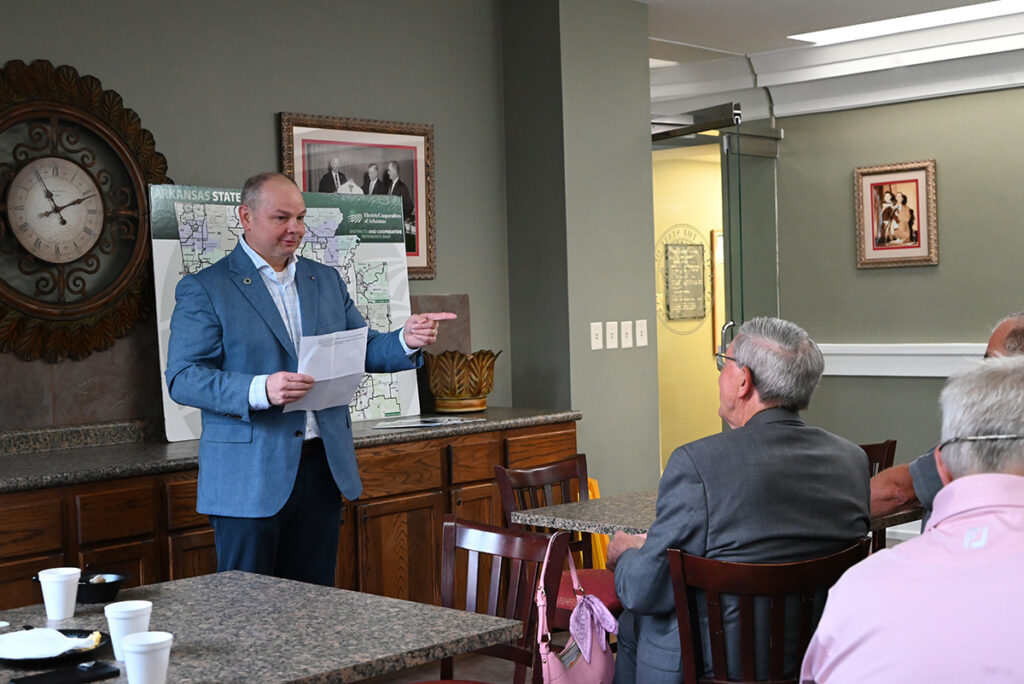
Arkansas lawmakers have created the state’s first-ever electric cooperative caucus to educate legislators on emerging technologies, rising energy demand and the critical need for reliable, affordable power.
The Arkansas Rural Electric Cooperative Caucus was formed by members of the Senate and House of Representatives in April, with about half of the state’s 135 total lawmakers joining so far, said state Sen. Matt McKee, co-chairman of the new caucus. Nearly all members of the Arkansas legislature have electric co-ops in their districts.
The caucus plans to meet on a regular basis to hear from energy experts and tour power plants and other facilities. McKee said the caucus will hold a one-day “electric university” event in August to educate members about how the electrical grid works.
“I think we take the electrical system for granted because it has worked really well in general,” McKee said.
“When we flip the light switch, the lights come on. But now, with utility rates and data centers on the front pages of newspapers, I feel we need to be better informed, especially if we’re going to be making decisions that affect ratepayers.”
At least one other state is doing something similar. Kentucky Electric Cooperatives helped create a co-op caucus in their state in 2024 and host events for their lawmakers.
McKee and state Rep. Jack Ladyman, a mechanical engineer, decided to form and co-chair their state’s caucus together after talking with leaders of the Electric Cooperatives of Arkansas.
“Arkansas is a very rural, very agriculture-heavy state,” said Ladyman. “Anything that we can do to help rural electric co-ops is going to help the state as a whole.”
Buddy Hasten, president and CEO of Arkansas Electric Cooperative Corp. and Arkansas Electric Cooperatives Inc., said co-ops are looking forward to working with the caucus.
“The caucus members will gain fact-based information about the energy industry, which involves many complicated components,” Hasten said.
He was invited to speak at the caucus’s first meeting at the state capitol, where he gave an overview of data centers’ energy demands and discussed the development of natural gas generation in Arkansas.
“I think the utility issue is probably the most complicated issue that we deal with as legislators,” McKee said. “It’s going to be an ongoing conversation.”
Electricity in Arkansas is 20% cheaper than the national average due to the state’s diverse fuel mix and regulations designed to keep costs down, McKee and Ladyman said.
“We want to maintain low utility costs to make sure our constituents have a good quality of life,” Ladyman said. “That’s our primary purpose.”
The chairmen believe that lawmakers who are well-informed about electricity will ultimately write better legislation.
“My goal is affordable, reliable power for Arkansans,” McKee said. “The electric co-ops have done a really good job with that and I applaud them. I think we have to be really vigilant moving forward about how we build new plants to generate more electricity.”
Erin Kelly is a staff writer for NRECA.