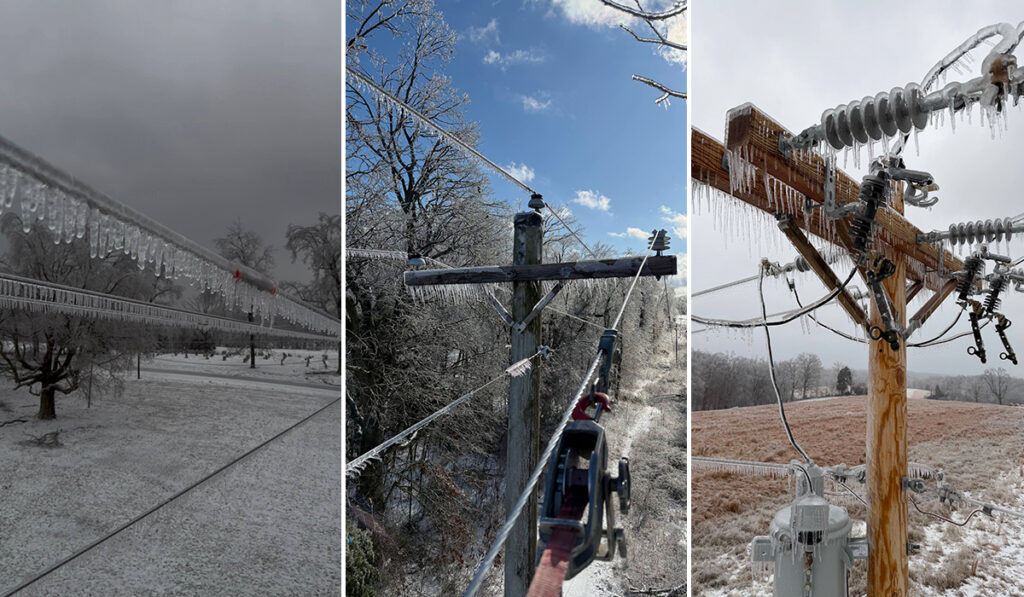
Photos of Winter Storm Fern’s icy aftermath highlight the perils facing line crews during power restoration efforts. For electric cooperative crews toiling in remote and rugged locations coated with rock-solid ice, the job is even more onerous.
It’s a marathon for co-op line crews, under pressure to restore service in tough environments while logging 16-hour workdays. Through it all, workers must maintain focus to work as safely and efficiently as possible. And that takes time, said NRECA Safety Director Ken Macken.

“This is not a race,” Macken said. “It’s about the safety of our line crews and making sure everybody gets home at the end of the day. And if I’m rushing because I need to get the lights back on, and somebody gets hurt or killed, was it really worth that rush?”
For several Southern states, Winter Storm Fern brought hours of sleet and freezing rain followed by punishing winds and days of sub-freezing temperatures. That has compounded mutual aid lead times and complicated already-tough working conditions.
“Ice build-up, wind and total weight of ice on structures is our arch-nemesis,” Macken said. “This storm had it all, and you can see that in the outage numbers and the images of the destruction.”
Macken took time to answer some questions about why Fern has been so destructive and the precautions that co-ops in the ice-impacted states are taking to restore power safely.
What are the key steps in getting the power back on safely after an ice storm?
Macken: We stress all the time that it’s the same steps regardless of what caused the outage: Assess the damage; understand what needs to be replaced; observe all steps of proper clearance and the safe working practices of lockout/tagout; proper use of gloves with sleeves. A huge last step is verifying all crews and equipment are in the clear before energizing. And then just great communication, like an effective tailgate session at each and every job.
What are some of the unique challenges that Fern has posed for co-ops?
Macken: This storm tore down a lot of trees, so right-of-way crews need to go in first to clear the damage so that line crews can get to the line. You need several informed “bird dogs” from your co-op to show visiting crews where they’re going to be working … where the clearance points and breaker stations are. Depending on the amount of trees down and line destruction, even just getting to these areas can be challenging.
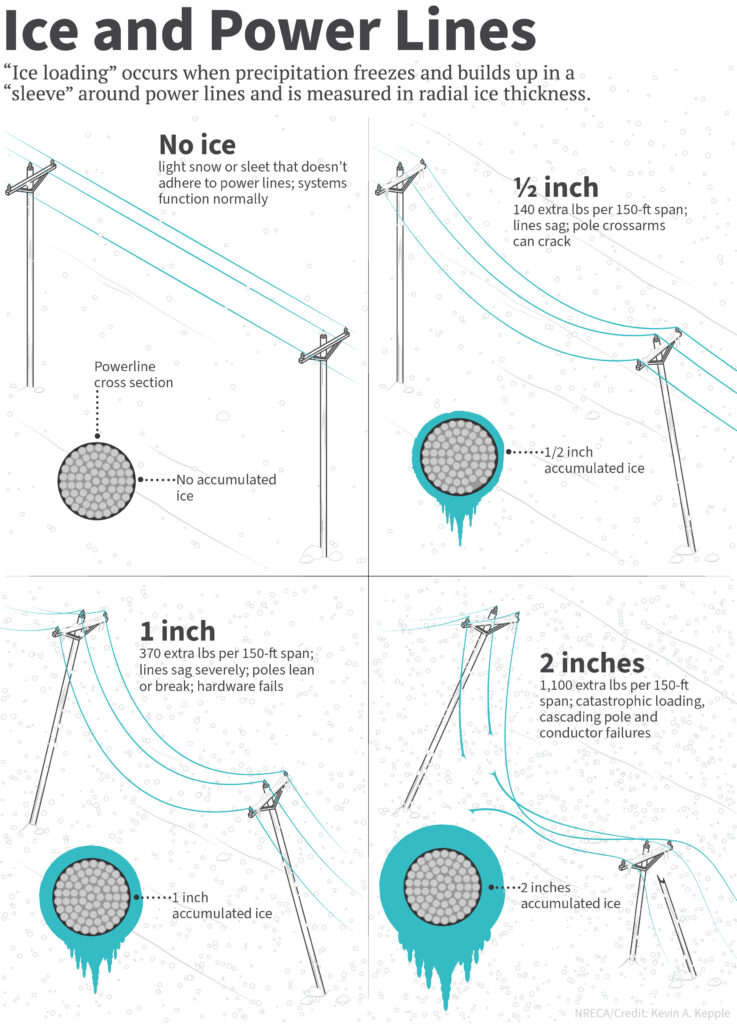
The bad part about Fern was the ice. Radial ice wraps all the way around the conductor. When you start getting three-eighths to a quarter-inch of buildup and the wind starts picking up, that’s when you start having outages. The thicker it is, it can start tearing and break poles and trees. When those trees come down, that’s what tears down your system as well.
Crews are pulling long workdays to restore power after Fern. How can that impact safety?
Macken: Typically, we like to see about a 16-hour work period followed by a rest period. Going past 16 hours is counter-productive and even dangerous. Fatigue can cause complacency and distraction. “Keep your head in the game and stay focused,” I tell guys. If they get to a point where they need to stop or aren’t functioning properly, they need to say something.
After a devastating storm, hard-hit utilities turn to crews outside their states for extra help. Can you explain how the process differs between co-ops and other utilities and how that might impact restoration times?
Macken: Electric co-ops rely on mutual aid crews from other states for assistance. By contrast, investor-owned utilities have quick access to contractors often ready at a moment’s notice. Co-ops have a bit of a different model, and it can sometimes take a while to get mutual aid up and running. And just the very nature of it being rural, snow and ice can make it harder for trucks to get there. Crews have to sometimes travel several days to reach the storm site. Back when we had the hurricanes, crews were coming from as far away as Washington state over to North Carolina. That’s not an overnight trip. And if there’s ice and snow, like there was with Fern, that adds to the travel time
And then the environment that you’re going into can be completely different than what you’re used to all the time. You may be from a warm climate area, going into a cold climate area. Our electric cooperatives don’t always have the advantage of having several contractor crews waiting for their call.
What’s the bottom line for you when it comes to managing a power outage?
Macken: We will never sacrifice safety for the speed of restoration.
Victoria A. Rocha is a staff writer for NRECA.
Related Content:
Electric Co-ops Restore Power Amid Frigid Temperatures in Winter Storm Aftermath
‘The Infrastructure Just Can’t Bear It’: Weather Veterans Weigh in on the Power of Ice, Wind