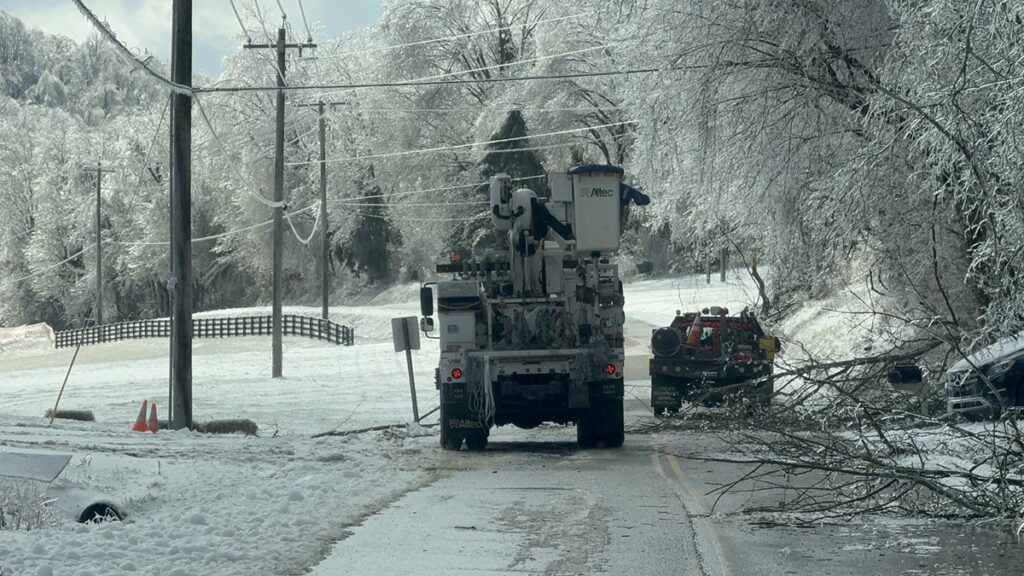
Winter Storm Fern’s icy ravages are reminding electric cooperatives they have good reason to dread the season’s potential havoc on power systems.
While some preparations like advance tree trimming can mitigate damage, “it’s really difficult—whether they’re investor-owned, municipally owned or electric cooperatives—to harden their systems, especially when ice is an inch or an inch and a half thick as it was during Fern,” said Sid Sperry, former marketing and member services director at the Oklahoma Association of Electric Cooperatives and co-creator of a tool that helps utilities predict potential infrastructure damage from ice.
The Sperry-Piltz Ice Accumulation Index (SPIA), which offers damage predictions starting several days before a snow and ice event, was created by Sperry and National Weather Service Meteorologist Steven Piltz in 2006 after back-to-back ice storms in Oklahoma.
A key feature is a color-coded chart listing damage potential on a scale of 0 to 5 based on likely ice buildup and wind speed. For example, a quarter-inch of radial ice—ice that wraps all the way around a power line—coupled with 30-mph winds would be a level 4 event with potential to cause “prolonged and widespread interruptions with extensive damage to main distribution feeder lines and some high voltage transmission lines/structures.”
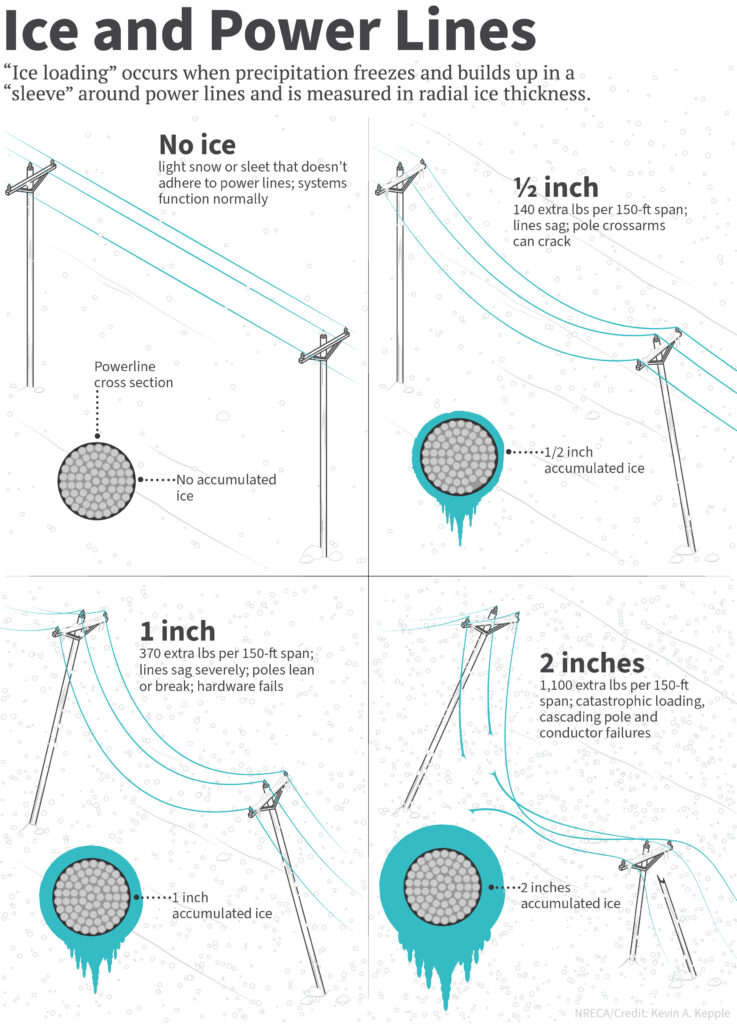
“Any kind of wind” worsens the situation, Sperry said. “Ice and wind loading can even bring concrete structures down.”
Michigan was spared the wrath of Winter Storm Fern, but the state is still recovering from a massive ice storm that hit the region in March 2025.
Joe McElroy, director of safety and loss control at the Lansing-based Michigan Electric Cooperative Association, helped coordinate the co-op response to the event, which hit power lines in the state with more than one and a half inches of ice and left thousands of co-op members with no power, some for weeks.
“Crews worked long, frustrating days, especially when trees fell on lines that they had just restrung,” McElroy said. The conditions sometimes resulted in crews being pulled from certain restoration sites. “It’s incredibly challenging to work when trees are actively falling.”
McElroy said he sees unfortunate similarities between the 2025 Michigan storm and what the impacted co-ops in the South are dealing with in the aftermath of Fern: downed limbs, persistent cold and slick conditions that make roads impassable and work areas unreachable. In those cases, “crews resort to good old-fashioned line work and ingenuity. Climbing and setting poles by hand when bucket trucks and specialized equipment couldn’t reach affected areas.”
He said images from the restoration work in the South remind him of the terrible destructive power of ice and wind.
“It’s an unbelievable amount of weight on those power lines, and the infrastructure just can’t bear it.”
Victoria A. Rocha is a staff writer for NRECA.
Related Content:
Electric Co-ops Restore Power Amid Frigid Temperatures in Winter Storm Aftermath
Q&A With NRECA’s Safety Head on Winter Storm Fern’s Power Restoration Challenges